
Druk Path
Trek
Bhutan's Most Popular Trek · Paro to Thimphu
Bhutan's Most Loved Mountain Trail
If you are new to trekking in Bhutan — or looking for a route that packs extraordinary scenery, cultural richness, and genuine adventure into a manageable timeframe — the Druk Path Trek is the perfect choice. Connecting Bhutan's two most important cities across a series of high mountain passes and pristine alpine lakes, it is consistently rated as the finest moderate trek in the kingdom.
The route starts above the Paro Valley, climbing steeply through blue pine and rhododendron forest before breaking out above the treeline into a world of open ridges, glacial lakes, and panoramic Himalayan views. On a clear day the great peaks of the Bhutanese Himalaya — including Jomolhari (7,326m), Jichu Drake (6,989m), and Tsherimgang — line the northern horizon in a breathtaking parade of ice and rock.
The trail passes the ruins of several ancient dzongs and meditation retreats, ghost dzongs abandoned centuries ago that now stand as silent witnesses to a long vanished world. High-altitude lakes — Jimilangtso, Janye Tso, and Simkota Tso — shimmer in shades of turquoise and cobalt, often frozen well into spring. And the descent into Thimphu through the memorial chorten and city outskirts gives the trek a satisfying sense of arrival — you have walked between two worlds.
This is the ideal first trek in Bhutan. It is challenging enough to feel like a genuine achievement, accessible enough for any reasonably fit adult, and scenically varied enough to satisfy even experienced mountain travellers.


Druk Path Trek Itinerary
A classic 5-day traverse from Paro to Thimphu. A 6th rest day can be added at Jimilangtso lake — highly recommended for photography and acclimatisation.
The trek begins with a steep but short ascent from just above Paro town, climbing through terraced barley fields and blue pine forest. The trail passes the ruins of Jele Dzong — a watchtower fortress used historically to monitor the Paro Valley below — before reaching the first camp on an open ridge with the first sweeping views back down the valley toward the Paro Dzong and the plains beyond. The initial climb is the hardest day in terms of gradient — subsequent days become more of a ridge traverse.
A magnificent day of high ridge walking above the treeline with continuous Himalayan panoramas. The trail follows the ridge northward, passing several small frozen lakes in spring and early autumn. The great peaks of Jomolhari, Jichu Drake, and Tsherimgang dominate the northern horizon. Camp is beside Jimilangtso — the largest and most beautiful of the Druk Path lakes, a deep glacial tarn reflecting the sky and surrounding ridges in perfect stillness on windless mornings.
Continuing north along the high ridge, the trail passes two more jewel-like lakes — Jimilangtso Chung and Janye Tso — and crosses the highest point of the trek at around 4,210m on the ridge above. The landscape here is stark and beautiful — lichen-covered boulders, wind-sculpted dwarf juniper, and the vast silence of the high Himalaya. Herds of yaks often graze on the surrounding slopes. Camp beside Janye Tso with extraordinary sunset views across the mountains.
The trail descends from the high ridge through a landscape that becomes progressively warmer and more sheltered, passing the last of the high lakes — Simkota Tso — before arriving at the extraordinary monastic complex of Phajoding. This cluster of meditation retreats and temples clings to a steep hillside above Thimphu and has been a place of Buddhist practice since the 13th century. Spend the evening exploring the complex and watching the monks' evening prayers as the lights of Thimphu twinkle in the valley far below.
A final morning of trekking down through rhododendron and pine forest brings you back to civilisation — the sounds of traffic, the smell of momos frying, the sight of monks in red robes walking through the city. The descent into Thimphu takes 3–4 hours and ends near the Memorial Chorten in the heart of the capital. Celebrate with a well-earned lunch at one of Thimphu's finest restaurants before exploring the city at your leisure — you have earned it.
Included & Excluded
- Licensed, English-speaking trekking guide throughout
- All tented accommodation and sleeping equipment
- All meals during the trek (breakfast, lunch, dinner)
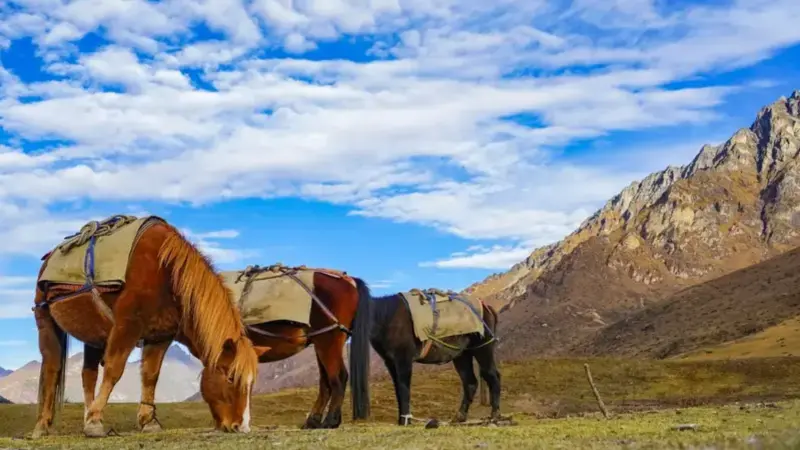
- Pack horses or mules for equipment transport
- All camping equipment (tents, dining tent, kitchen tent)
- Bhutan Tourism Visa and SDF (Sustainable Development Fee)
- Trekking permit fees
- Emergency evacuation plan and first aid kit
- Airport transfers and all ground transport
- City sightseeing in Paro and Thimphu (pre/post trek)
- International flights to/from Paro (PBH)
- Travel and medical insurance (strongly recommended)
- Personal trekking gear and clothing
- Sleeping bag rated to -10°C (can be rented locally)
- Alcoholic beverages and personal snacks
- Tips for guides, cooks, and horse handlers
- Personal expenses and souvenirs
- Costs from itinerary changes due to weather or health
Essential Tips for the Druk Path Trek
The Druk Path Trek is rated moderate — suitable for any reasonably fit adult with some walking experience. The first day involves a steep 1,200m climb, which is the most demanding section. Begin regular walking and light cardio training 4–6 weeks before your trip. No technical climbing skills are required at any point on the route.
The trek reaches a maximum of 4,210m. Spend at least one night in Paro (2,280m) before starting to allow initial acclimatisation. The ascent profile is gradual enough for most people but drink plenty of water, eat light meals at high altitude, and inform your guide immediately if you experience persistent headaches or nausea. Descend if symptoms worsen.
Temperatures at camp can drop below freezing even in spring and autumn — bring a sleeping bag rated to at least -10°C and warm layers including thermal base layers, a fleece, and a waterproof shell jacket. Days can be warm and sunny at altitude so pack sun protection (SPF 50+ sunscreen, UV-protective sunglasses, a sun hat). Weather can change rapidly — always carry your rain gear.
Spring (March–May) is spectacular for rhododendron blooms and pleasant temperatures, and coincides with the Paro Tsechu festival. Autumn (October–November) offers the clearest mountain visibility and most stable weather for photography. The route is not recommended during monsoon (June–August) as trails become muddy and leeches are active. Winter is very cold above 3,500m.
Day pack essentials: 2 litres water (refilled at camp), snacks, rain jacket, sunscreen, lip balm, trekking poles (highly recommended for the descent), headlamp, camera. Your main luggage is carried by pack horses — keep your day pack under 8kg. Trekking poles make a significant difference on the steep first-day ascent and final descent into Thimphu.
The Druk Path is one of Bhutan's finest photography routes. Carry extra batteries (cold temperatures drain them fast), a polarising filter for the lake reflections, and a wide-angle lens for the Himalayan panoramas. The best light is in the hour after sunrise — set your alarm early and walk up to the ridgeline above camp for golden hour shots of Jomolhari and the lakes below.
Ready to Walk from Paro to Thimphu?
Book Your Druk Path Trek
with Found Bhutan
Bhutan's most beloved trek, expertly guided. Every camp, meal, permit, and mountain moment is taken care of — you just bring your boots and your sense of wonder.