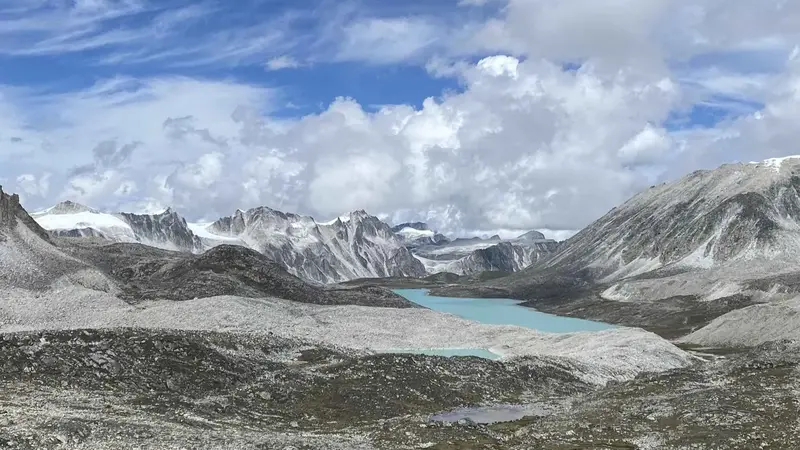
Snowman
Trek
The World's Most Difficult Trek · Bhutan's Ultimate Challenge
The Last Great Himalayan Challenge
There are difficult treks. There are very difficult treks. And then there is the Snowman Trek — a route so remote, so sustained, and so demanding that fewer people complete it each year than summit Everest. Of those who attempt it, a significant number are turned back by early snowfall, altitude sickness, or the sheer physical and mental attrition of spending nearly a month at altitude in one of the world's most isolated mountain environments.
The Snowman Trek traverses the length of Bhutan's northern border — a vast, barely inhabited wilderness of glaciers, sacred lakes, ancient yak trails, and peaks above 7,000 metres. The route crosses 11 high mountain passes, all above 4,500 metres, and spends the majority of its duration above 4,000 metres. It passes through communities so remote that the nearest road may be a week's walk away.
The name comes from the legendary Yeti — the Snowman — whose mythical realm this high wilderness is said to be. Whether or not you encounter the Snowman himself, you will almost certainly feel his presence in the profound silence of these high valleys, broken only by the crack of a glacier shifting and the howl of wind across a pass.
Yet for those who complete it, the Snowman Trek is a life-defining experience. The landscapes are unlike anywhere on Earth — a sustained, overwhelming grandeur that makes even experienced Himalayan trekkers fall silent. The communities you pass through — Laya, Lunana — live in a way that has changed little in centuries, their warmth and hospitality all the more extraordinary for the harshness of their environment. And the sense of achievement at the end is simply without parallel in trekking anywhere in the world.
This is not a trek to be undertaken lightly. But if you have the fitness, the experience, and the determination — it will be the greatest journey of your life.

Snowman Trek Itinerary
The Snowman Trek is divided into three major stages. The full route takes 25–30 days depending on weather, acclimatisation needs, and optional rest days. Below is a stage overview — contact our team for the detailed day-by-day itinerary.
The first stage follows the Jomolhari Trek route from Paro up through the Jigme Dorji National Park to Jangothang Base Camp beneath Mount Jomolhari (7,326m) — crossing the Nyele La pass at 4,890m — before descending to Lingzhi Dzong and continuing northward to the remote village of Laya (3,800m). Laya is one of Bhutan's most isolated communities, home to the Layap people — a semi-nomadic tribe known for their distinctive conical bamboo hats and yak-herding lifestyle. This stage already constitutes one of the finest treks in Bhutan in its own right. Days 8–10 allow for acclimatisation and rest in Laya, with optional day hikes into the surrounding meadows.
The heart of the Snowman Trek — and the most demanding section by far. From Laya the route climbs over the Karakachu La (4,897m) and enters the Lunana district, one of the most remote inhabited regions on Earth. The Lunana cluster of villages — Chozo, Thanza, Tshochena — are home to only a few hundred people who live entirely cut off from the road network for most of the year. The landscape here is almost unbearably beautiful: vast glacial valleys, turquoise lakes, glaciers calving into rivers, and the great Bhutanese peaks — Gangkhar Puensum (7,570m, the world's highest unclimbed mountain), Zongophu Gang, and Table Mountain — dominating the skyline. This stage crosses five high passes including the brutal Keche La (4,890m) and Thole La (4,890m). Rest days in Thanza allow recovery and exploration of the extraordinary Lunana landscape.
The final stage crosses the highest pass of the entire trek — the Rinchen Zoe La at 5,320m — before beginning the long, glorious descent toward civilisation. The trail passes through the remote Thampe Tso lake (one of the most sacred and beautiful lakes in Bhutan), crosses the Juele La (4,950m) and Chukarpo La (5,090m), and gradually descends into increasingly lush forest as altitude drops. The final days bring the sounds and smells of the lowlands — pine resin, wood smoke, the sound of water in a wider river — before the trek ends either at Nikka Chhu (vehicle access) or continues to Bumthang, the spiritual heartland of Bhutan. The sense of completion at the end of the Snowman Trek is unlike anything else in trekking.
Included & Excluded
- Highly experienced, English-speaking lead guide and assistant guides
- All tented accommodation and high-altitude sleeping equipment
- All meals throughout the trek (breakfast, lunch, dinner, snacks)
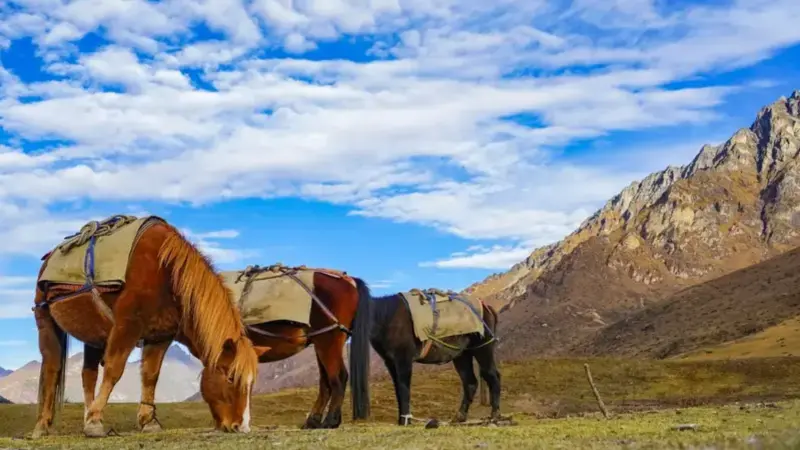
- Pack horses and yaks for equipment transport
- Full camping kitchen setup (tents, cooking equipment, dining tent)
- Bhutan Tourism Visa and Sustainable Development Fee (SDF)
- Trekking permit, Jigme Dorji NP fees, and Lunana restricted area permit
- Satellite phone for emergency communication
- Emergency evacuation protocol and comprehensive first aid kit
- All airport transfers and ground transport
- Pre-trek briefing and detailed route documentation
- International flights to/from Paro (PBH)
- Comprehensive travel and medical insurance — mandatory, must cover high-altitude trekking and emergency helicopter evacuation
- Personal high-altitude trekking gear and technical clothing
- High-altitude sleeping bag rated to -20°C (can be rented)
- Alcoholic beverages and personal snacks beyond what is supplied
- Gratuities for guides, cooks, and horse handlers
- Any costs from weather-related itinerary changes or medical evacuation
- Personal medication including altitude sickness drugs (consult your doctor)
Essential Tips for the Snowman Trek
The Snowman Trek requires exceptional physical fitness. You must be able to walk 6–8 hours per day for up to 10 consecutive days at altitude, carrying a loaded day pack. Begin a dedicated training programme at least 6 months in advance: long-distance hiking with elevation, strength training, and cardiovascular conditioning. If you cannot hike 25km with 1,500m elevation gain in a single day comfortably, you are not ready for the Snowman.
The Snowman Trek spends weeks above 4,000m and crosses passes above 5,000m. Serious altitude sickness is a genuine risk. Spend at least 3–4 days acclimatising in Paro and Thimphu before starting. Follow the golden rule: never ascend more than 300–500m per day above 3,500m. Consult your doctor about acetazolamide (Diamox) well before departure. Your guide carries a pulse oximeter — use it daily. If your SpO2 drops below 70% or symptoms worsen, descend immediately regardless of how far you have come.
The Snowman Trek has only a 6–8 week viable weather window each year: mid-September through late October. Before this, the monsoon makes passes dangerously slippery. After October, early winter snowfall closes the high passes and makes the route impassable. Even within the season, early snowfall can occur — your itinerary must include buffer days for weather delays. Do not book non-flexible return flights.
For the Snowman Trek, your gear is your safety system. Non-negotiables: a sleeping bag rated to -20°C, waterproof and windproof shell jacket and trousers, insulated down jacket, gaiters, crampon-compatible waterproof boots, trekking poles (essential), UV-protective glacier glasses, a balaclava, and high-altitude gloves. Do not cut corners on gear quality for this trek — your life may depend on it in a white-out at 5,000m.
The Snowman Trek is as much a mental challenge as a physical one. Days of rain, trail-less terrain above snowline, altitude fatigue, and the sheer isolation of Lunana can test even the most experienced trekker's resolve. Develop mental resilience strategies before you go: mindfulness practice, journalling, a clear understanding of your personal "why" for undertaking the trek. Discuss the psychological demands openly with our team when planning your trip.
Comprehensive travel insurance covering emergency helicopter evacuation from remote high-altitude locations is absolutely mandatory for the Snowman Trek — not optional. Helicopter evacuation from Lunana can cost USD 10,000–20,000 or more. Verify that your policy explicitly covers high-altitude trekking above 5,000m and emergency evacuation from remote areas in Bhutan. Your Found Bhutan guide carries a satellite phone and has emergency protocols in place.
The Snowman Trek requires a standard Bhutan Tourism Visa and SDF, plus a trekking permit, Jigme Dorji National Park permit, and a special Lunana restricted area permit. The Lunana permit requires additional processing time. We recommend beginning your booking at least 6 months before your intended departure date — both for permit processing and to ensure availability of experienced guides for this demanding route.
The Snowman Trek is not a first Himalayan trek. We recommend that you have previously completed at least one multi-day high-altitude trek above 4,500m — ideally in Bhutan, Nepal, or India — before attempting the Snowman. If you have not, consider doing the Jomolhari Trek or Druk Path Trek with us first to assess your readiness. Our team will honestly advise you on whether you are prepared.
Ready for the World's Greatest Trek?
Book Your Snowman Trek
with Found Bhutan
Only a handful of operators in Bhutan have the expertise and experience to safely guide the Snowman Trek. Our team has done it — and we will get you there and back.