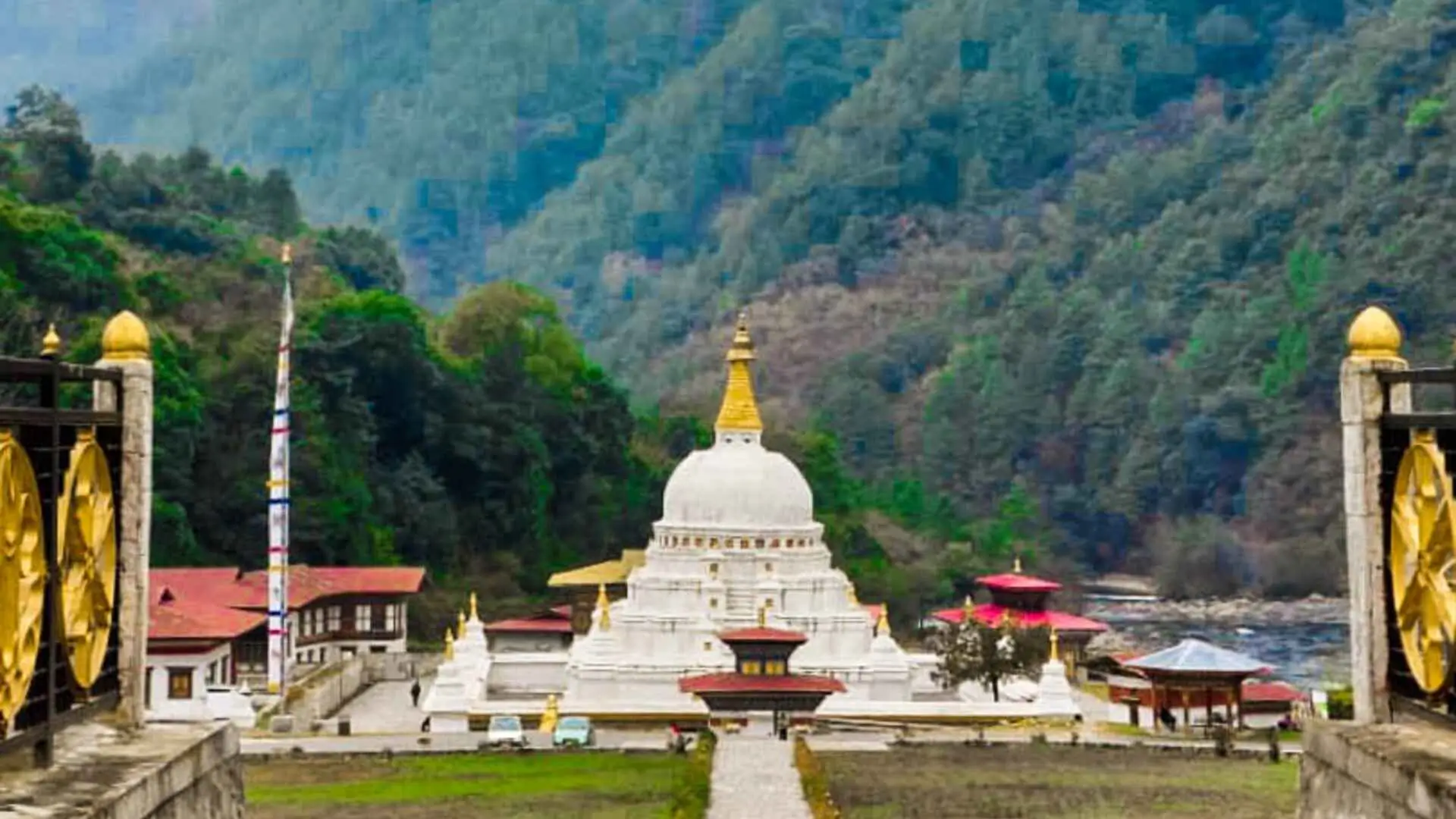
Chorten Kora
Festival
About the Festival
Chorten Kora — The Great Stupa That Connects Two Nations
Chorten Kora is one of the most remarkable pilgrimage sites in eastern Bhutan — a great white stupa modelled after the Boudhanath Stupa of Nepal, standing beside the Kholongchu river in the Yangtse Valley of Trashi Yangtse at 1,725 metres. It was built in 1740 by Lama Ngawang Loday, the third abbot of Rigsum Goenpa and nephew of Zhabdrung Ngawang Namgyal, in memory of his late uncle Lam Jangchub Gyeltshen, and to subdue a demon that had been terrorising the valley. The model for the stupa was carved from a radish during Lama Ngawang’s visit to Boudhanath in Nepal — and because the radish shrank and distorted on the return journey, Chorten Kora is not an exact copy; its galleries differ in a way that makes it architecturally unique.
The festival is held not once but twice — on two separate dates 21 days apart. The first gathering, the Dakpa Kora, is attended by pilgrims of the Dakpa community from the Tawang district of Arunachal Pradesh, who make a three-day pilgrimage across the border to circumambulate the stupa. The second, the Drukpa Kora, is for Bhutanese pilgrims from Trashiyangtse, Trashigang, and Kurtoe. Together, the two festivals make Chorten Kora one of the most significant cross-border pilgrimage gatherings in the entire Himalayan world.
When
See dates below
Where
Chorten Kora, Trashi Yangtse
For
All Visitors Welcome
Guide Required
Yes — Mandatory
Festival Highlights
What Makes This Festival Special
01
Circumambulating the Stupa
A key ritual of the festival is the act of circumambulating the Chorten. Pilgrims dressed in their finest traditional attire walk clockwise around the stupa, spinning prayer wheels, offering butter lamps, and pressing their foreheads against the base for blessings. A single circumambulation of Chorten Kora is considered highly meritorious — equivalent to completing the kora at Boudhanath itself.
02
Dakpa Kora: A Unique Pilgrimage Tradition
One of the most notable features of the Chorten Kora Festival is the Dakpa Kora, which is held on a specific day for the Dakpa community from Arunachal Pradesh. This tradition honours a young girl from Tawang, believed to have been a Dakini (Khandro), who entombed herself inside the stupa during its construction as Yeshe Semba — to meditate within on behalf of all beings. Hundreds of Dakpa pilgrims make a three-day journey across the border each year for this circumambulation.
03
Traditional Bhutanese Dances
The festival showcases mesmerizing Cham dances, performed by monks in elaborate masks and costumes. These dances, rooted in Buddhist mythology, are not only entertaining but also deeply symbolic, believed to purify the karma of all who witness them. The Cham dances at Chorten Kora are secondary to the circumambulation but add colour and sacred energy to the gathering.
04
Community Gathering and Festivities
The Chorten Kora Festival is a joyous occasion where locals and pilgrims come together to celebrate their shared spirituality. Families picnic near the stupa, markets sell traditional crafts, prayer flags, and Arunachali and Bhutanese textiles. The confluence of two communities from different nations, in the same sacred space, creates an atmosphere unlike any other festival in Bhutan.
05
The Radish That Changed Architecture
The story of Lama Ngawang Loday carrying a radish carving of Boudhanath all the way from Nepal, only to find it shrunken and distorted on arrival, is one of the most charming founding legends in Bhutanese religious history. It is also why Chorten Kora looks different from Boudhanath: the modified galleries are a direct result of working from a distorted model. It is an imperfect copy that became perfect in its own right.
06
A Stupa with a Twin in Tawang
When Lama Ngawang Loday brought the radish model back from Nepal, his companion Lama Zangpo from Tawang used the same model to build a twin stupa across the border — the Gorsam Chorten at Zemithang in Arunachal Pradesh. The two stupas, built from the same imperfect model at the same time, mirror each other across the Himalayan frontier. Visiting Chorten Kora is to stand at one end of a sacred architectural pair that spans two nations.
Practical Information for Visitors
Plan Ahead
March is a popular time for tourism in Bhutan, so book your travel and accommodations early.
What to Wear
While attending a festival, it’s important to dress respectfully. Bhutanese people wear their traditional Gho and Kira during Tshechus, and it’s customary for visitors to dress modestly. Avoid wearing revealing clothing and wear comfortable layers — February and March mornings in the Yangtse Valley can be cool. The kora path around the stupa is on flat ground beside the river, so comfortable walking shoes are sufficient. The valley is subtropical and warms quickly by midday.
Photography
Photography is allowed at most festivals, but it’s always polite to ask before taking pictures, especially of monks or religious figures. Be respectful of the rituals, and avoid using flash photography during performances.
Engage a Guide
A knowledgeable guide can enrich your understanding of the rituals and their significance. Also a certified tour guide is mandatory to attend festivals and visit most of the major tourist attractions and monuments in Bhutan
Food Options
Bhutan offers a diverse range of food options, from delicious traditional Bhutanese dishes to international cuisines, including plenty of vegetarian choices to suit every taste.
Respect Local Customs
Follow the guidance of your guide and observe the rules of the area.
The Stupa, Its Legend & the Two Festivals
How Chorten Kora Came to Be Built
The valley where Chorten Kora now stands was once known as Duerong Drak — the Valley of Demons. Travellers feared to cross it alone even in daylight. The local people of upper, middle, and lower Kholong appealed to Lama Ngawang Loday, the third abbot of Rigsum Goenpa, to find a remedy. He proposed constructing a replica of the Boudhanath Stupa — the Jarung Khashor — one of the most sacred objects in the Buddhist world, believed to have been built by Guru Rinpoche and associated figures in their previous lives. The replica would subdue the demon, memorialise his late uncle Lam Jangchub Gyeltshen, and spare the people of Trashiyangtse from the long and dangerous journey to Nepal.
Lama Ngawang Loday travelled to Boudhanath with Lama Zangpo from Tawang, Arunachal Pradesh. At the stupa, he carved a scale model of the design from a radish. The two lamas then returned to their respective valleys. By the time Lama Ngawang Loday arrived in Trashiyangtse, the radish had shrunk and distorted — and so the stupa he built from its model differs from Boudhanath in subtle ways, most notably in the design of its galleries. The construction took 12 years, with voluntary contributions from people across Trashiyangtse, Trashigang, Kurtoe, and the Dakpa communities of Tawang. It was consecrated by Je Yonten Thaye during his tenure (1771–1775). The original name, Duerong Chorten, was eventually superseded by the popular name Chorten Kora — the Circumambulation Stupa.
Lama Zangpo meanwhile built the same design at Zemithang in Tawang — the Gorsam Chorten — from his own version of the radish model. The two stupas, built at the same time from the same source, mirror each other across what is now the India–Bhutan border. This architectural kinship is part of what draws the Dakpa pilgrims to Chorten Kora each year.
The Dakpa Kora — A Three-Day Pilgrimage from Arunachal
The Dakpa Kora is held on the 15th day of the first lunar month. For the Dakpa community of Tawang district, this is a three-day pilgrimage — they travel on foot over mountain paths that have been walked for generations. The reason they come is inseparable from the legend of the stupa’s construction.
According to the tradition, during the building of Chorten Kora, a young girl from Tawang — believed to have been a Dakini, a celestial being of the Vajrayana tradition — agreed of her own will to be entombed alive within the stupa’s dome. She entered in the role of Yeshe Semba, meditating within the structure on behalf of all beings. The Dakpa Kora commemorates this act of supreme self-sacrifice. Hundreds of Dakpa pilgrims, many in traditional dress specific to their community, circumambulate the great stupa in an unbroken stream, offering prayers and butter lamps. The atmosphere is intensely devotional and entirely different from any festival in western Bhutan.
The Drukpa Kora — For the Bhutanese, 21 Days Later
The Drukpa Kora is held on the 30th day of the same lunar month — exactly 21 days after the Dakpa Kora. This is the Bhutanese pilgrimage, attended by people from Trashiyangtse, Trashigang, and Kurtoe. It commemorates the successful completion and consecration of the stupa. Bhutanese pilgrims in their finest Gho and Kira circumambulate the chorten, spin the large prayer wheels that line its base, and offer incense and butter lamps. A Bhutanese film titled Chorten Kora was made about the Dakpa girl’s legend, and the stupa’s story is widely known across eastern Bhutan.
Visitors can attend either or both festivals depending on timing. The Drukpa Kora tends to attract more Bhutanese from across the east, giving it a larger and more festive atmosphere. The Dakpa Kora is more intense in its devotional character, with the long-distance pilgrimage element adding emotional weight to the circumambulation.
Eastern Bhutan Around Chorten Kora
- Gomphu Kora — 23km south toward Trashigang, the sacred meditation cave of Guru Rinpoche where the great Gomphu Kora festival is also held in March/April. Both festivals can potentially be combined in one eastern Bhutan visit.
- Trashi Yangtse town — 8km further north from Chorten Kora, the small dzongkhag capital known for its woodturning craft — the wooden bowls of Trashi Yangtse are among the finest in Bhutan.
- Rigsum Goenpa — the monastery of Lama Ngawang Loday, founded in the 18th century on a ridge above the valley, guarding the northern approaches to Bhutan.
- Omba Ney — known as the “Taktsang of the East,” a cliffside pilgrimage temple above the Kholongchu river where the sacred mantra OM is visible in the rock face.
- Getting there — Chorten Kora is reached by driving north from Trashigang through Gomphu Kora toward Trashi Yangtse, about 40km and 1.5 hours from Trashigang. The nearest airport is Yongphulla, about 80km from Trashigang town.
When is this Festival in 2026?
The Chorten Kora Festival Bhutan is held annually following the Bhutanese lunar calendar. Contact us for confirmed dates and to book your trip well in advance — festival time is the busiest travel period in Bhutan.
Get Festival Dates & BookBook Your Festival Tour with Found Bhutan
Everything handled — visa, SDF, flights, accommodation, certified guide, and festival access.
Seamless Planning
We handle your Bhutan visa, SDF, flights, accommodation, certified guide, meals, and in-country transportation from arrival to departure.
Personalised Itineraries
Festival days combined with the experiences that matter most to you — treks, monasteries, village visits, or simply time to absorb Bhutan at your own pace.
Expert Local Guides
Our certified guides know every dance and every ritual. They bring the festival alive with context, stories, and insider access you won't find on your own.
You're a Guest, Not a Client
At Found Bhutan, we build relationships — not transactions. Many of our travellers return year after year, and many become lifelong friends.
Book Early
Festival tours sell out months in advance. Early bookings secure the best accommodation and guarantee your place at one of Bhutan's most extraordinary events.
Licensed & Local
Found Bhutan is a fully licensed Bhutanese tour operator. We are local, accountable, and deeply invested in showing you Bhutan at its most authentic.
Customise Your
Bhutan Tour Today
Fill in the form and our expert team will get back to you within 24 hours.
Stay in the loop
Travel stories from the Last Shangri-La
Join fellow Bhutan enthusiasts. Get our latest guides, travel tips and exclusive insights delivered to your inbox.
No spam, ever. Unsubscribe anytime.