Spring
A Symphony of Blossoms and Festivals
Spring is Bhutan's most celebrated travel season — and for good reason. The Paro Tshechu (late March or early April, dates follow the lunar calendar) is the country's most attended festival, drawing thousands of Bhutanese in traditional dress to the courtyard of Rinpung Dzong for five days of sacred Cham mask dances, culminating in the unfurling of a giant Thongdrel at dawn. The Punakha Drubchen and Tshechu (February–March) open the spring festival calendar at the country's most beautiful dzong, with a dramatic historical battle re-enactment unique in Bhutan. The Rhododendron Festival is held at Lamperi Botanical Park, 35km from Thimphu on the road to Punakha, celebrating Bhutan's 46 rhododendron species — four of which are endemic to the country.
Bhutan's rhododendrons bloom in sequence by altitude: lower valleys from March, treeline forests through May, high alpine scrub through June. At Chelela Pass (3,988m) the bloom peaks in late April and early May, with the entire hillside turning crimson, pink, and white against the snow peaks. For trekkers, spring offers dry trails, warming temperatures, and the most wildflower diversity of any season. The Druk Path Trek (Paro to Thimphu, 5–6 days) and the Tiger's Nest hike are excellent in March and April.
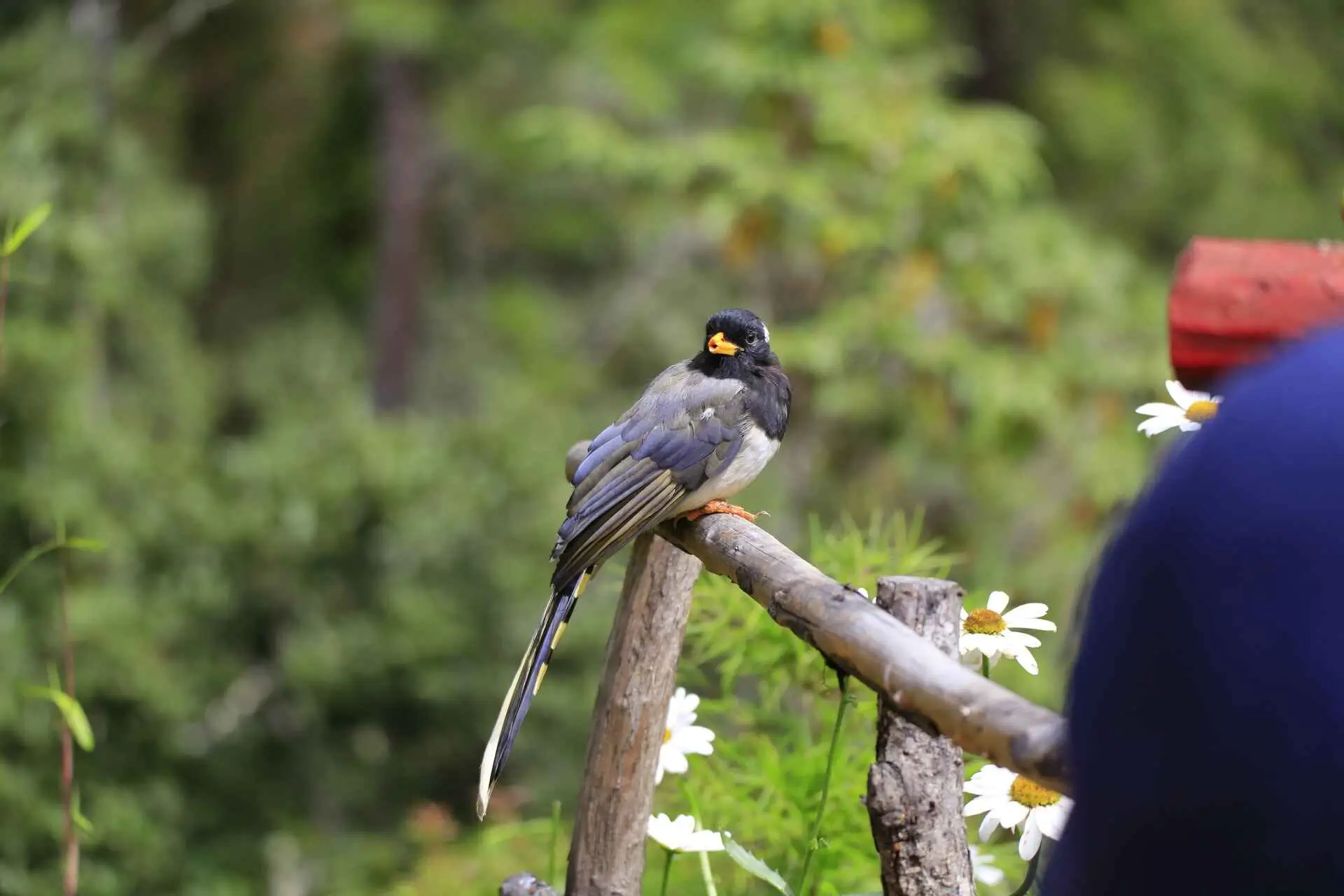
Five days of sacred Cham mask dances at Rinpung Dzong, culminating in the dawn unfurling of the Guru Rinpoche Thongdrel on the final morning. Exact dates follow the Bhutanese lunar calendar — in 2026: 29 March – 2 April.
Bhutan has 46 recorded rhododendron species blooming from 1,200m to 4,800m elevation. Lower valleys peak in March, Chelela Pass (3,988m) peaks in late April. The Rhododendron Festival is held at Lamperi Botanical Park, 35km from Thimphu.
In February–March, Punakha hosts two consecutive festivals: the Drubchen (a historical battle re-enactment unique in Bhutan) followed by the Tshechu. Both are held at the most beautiful dzong in the country, where the Mo Chhu and Pho Chhu rivers meet.
Autumn
A Golden Canvas of Tranquility
October is widely considered Bhutan's single best month. The monsoon has cleared, leaving the atmosphere washed and crystalline — the Himalayan peaks are visible from the valleys with a clarity that does not exist at any other time of year. The Thimphu Tshechu (September) and Gangtey Tshechu (September/October) anchor the autumn festival calendar. The Jambay Lhakhang Drup (October/November) in Bumthang is among Bhutan's most extraordinary festivals, featuring the nocturnal Mewang fire blessing and the Tercham — the midnight naked dance — at one of the country's oldest temples.
For trekkers, September–November is the optimal window. High passes are clear of summer snow, trails are dry after the monsoon, and visibility is exceptional. The Jomolhari Trek (9–12 days, maximum elevation 4,890m) reaches the base camp of Mt Jomolhari (7,326m) in October conditions that are among the finest mountain photography opportunities in Asia. The Black-Necked Cranes begin arriving in Phobjikha Valley in late October, turning the transition between autumn and early winter into one of the best times to visit Wangdue district.
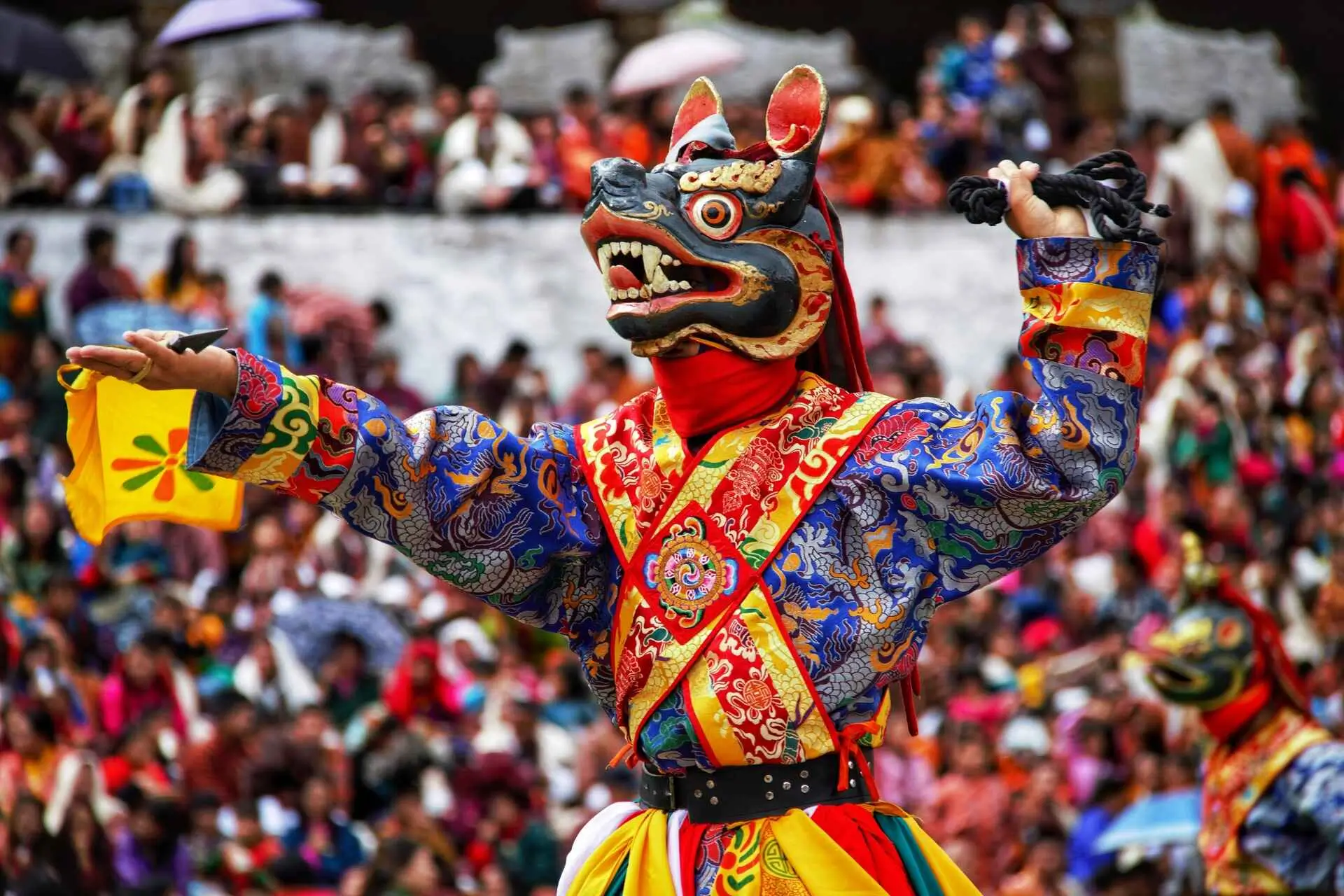
Three days of Cham dances at Tashichho Dzong in the capital — the most accessible major Tshechu for most visitors. Exact dates follow the lunar calendar (2026: 21–23 September). The largest single gathering of Bhutanese in traditional dress in the country.
Post-monsoon October skies offer the best Himalayan visibility of any season. From Dochula Pass (3,100m), the 108 chortens stand against a backdrop of snow peaks including Masagang (7,158m), Tsendagang (6,960m), and Jejekangphu Gang (7,158m) with extraordinary clarity.
Bumthang's most extraordinary festival features the Mewang fire blessing (jump over the bonfire — three jumps protects you for a year) and the Tercham midnight naked dance at one of Bhutan's oldest temples. Photography of the Tercham is strictly prohibited.
Winter
A Serene and Snow-Kissed Wonderland
December through February is Bhutan's quietest travel period — and for the right traveller, it is extraordinary. The dzongs are almost empty of tourists. The Trongsa Tshechu and Lhuentse Tshechu (both December) take place in winter mist and cold at two of the most dramatic festival settings in the country. The Druk Wangyel Tshechu (13 December) at Dochula Pass is uniquely positioned: Cham dances at 3,100m with the snow peaks of the eastern Himalayan chain as backdrop. Accommodation prices drop and the pace slows to something that feels genuinely contemplative.
Cold is the trade-off. Thimphu and Paro nights regularly drop to -2°C to -5°C in January. Bumthang nights can reach -10°C. A down jacket, thermals, hat, and gloves are essential. High mountain roads and passes may close after heavy snowfall. The Punakha Drubchen and Tshechu in late February mark the end of the winter festival calendar — at this point the cold is easing, the jacaranda trees begin their first hints of spring, and Punakha valley feels like a reward for having endured the cold months.
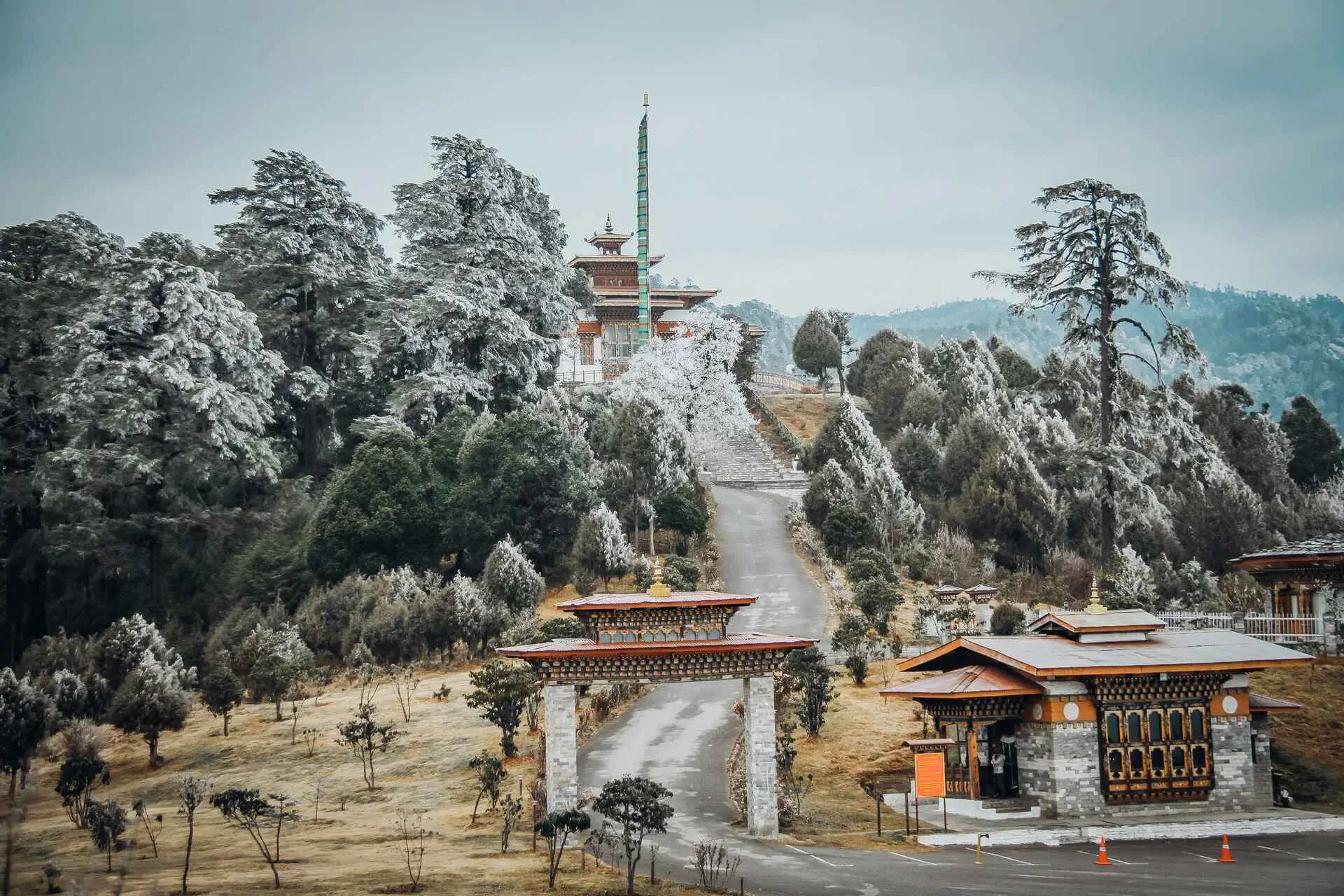
The winter season closes with Bhutan's most dramatic festival pairing at its most beautiful dzong. The Drubchen re-enacts a 17th-century battle defeat of Tibetan invaders using 136 Pazap warriors. The Tshechu follows immediately. In 2026: Drubchen 24–26 Feb, Tshechu 27 Feb – 1 March.
The cranes arrive from Tibet in late October and stay through February–March. Winter is when Phobjikha Valley is at its most serene — the cranes are present in large numbers, the valley is frost-kissed each morning, and tourist numbers are minimal. The Black-Necked Crane Festival (11 November) sits at the autumn/winter boundary.
Held at 3,100m on the Dochula Pass on 13 December, with the 108 memorial chortens and the snow peaks of the eastern Himalayan chain as backdrop. One of the most visually dramatic festival settings in Bhutan, and much less crowded than the spring and autumn festivals.
Summer
A Green and Rain-Kissed Retreat
June through August is Bhutan's monsoon season and its quietest tourist period. Rain falls most afternoons, trails become slippery, and high mountain passes may be closed by cloud and road damage. Trekking is not recommended. But the landscape is extraordinary — rice paddies are a saturated green, rivers run high and powerful, waterfalls appear on hillsides that are dry the rest of the year, and the forests are at their most lush. This is the Bhutan that photographs like a painting.
The Haa Summer Festival (July) is a genuine highlight — held at Haa Dzong in the Haa Valley, it celebrates the nomadic highland culture with yak racing, traditional sports, folk music, and local cuisine. The Nimalung Tshechu (June) and Kurjey Tshechu (June) in Bumthang are both held in the early monsoon, when the valleys are spectacularly green. Accommodation prices are lower, dzongs and temples are uncrowded, and the experience of having a famous site essentially to yourself is increasingly rare in Bhutan.
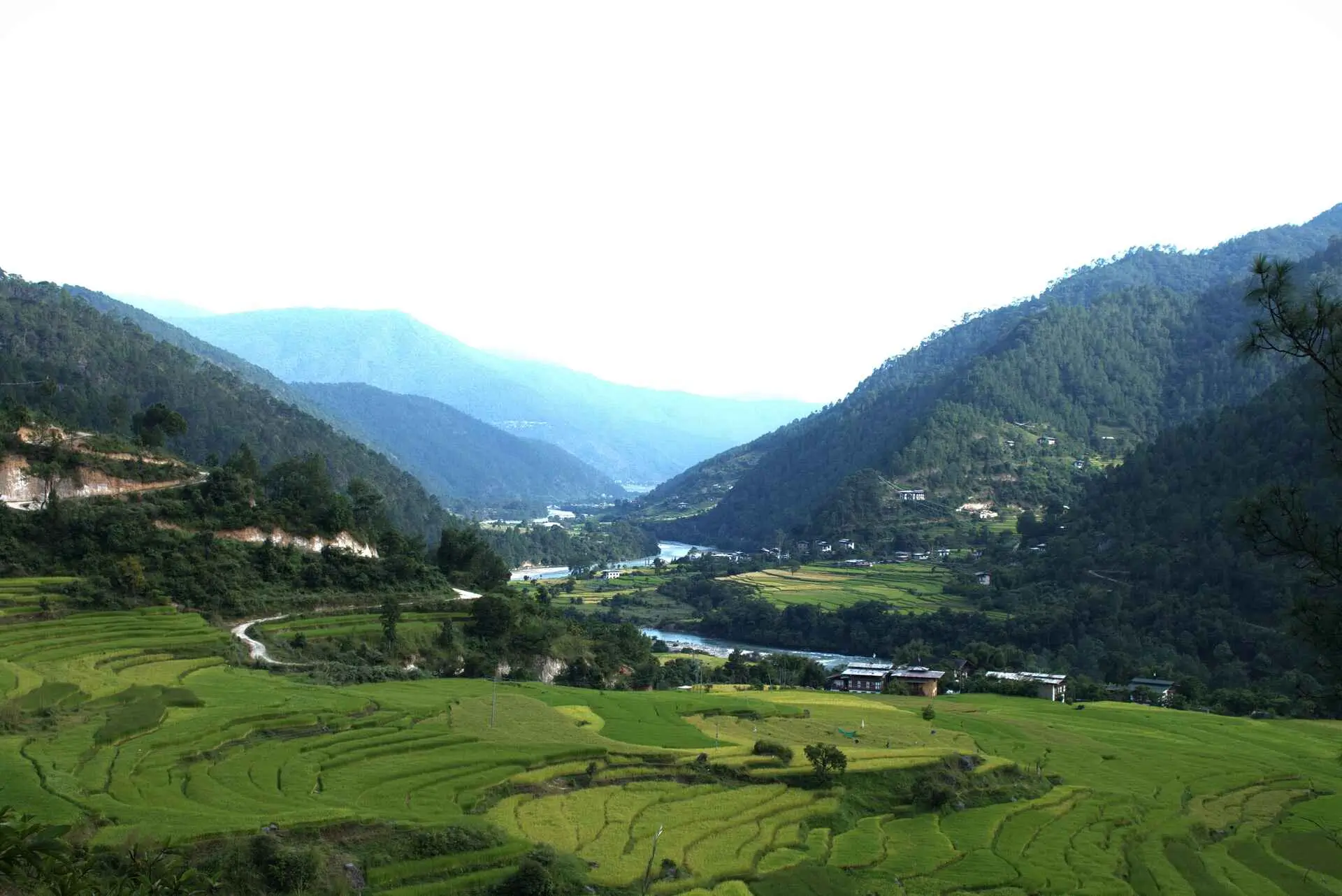
The monsoon transforms Bhutan's valleys into a saturated deep green — rice paddies, rushing rivers, temporary waterfalls, and forests dripping with moisture. The visual quality is unlike any other season. Best experienced from a car window or hotel terrace rather than a hiking trail.
Held at Haa Dzong in the Haa Valley, celebrating the nomadic highland culture with yak racing, traditional sports, archery, folk music, and local food. One of Bhutan's most culturally specific festivals — the only one dedicated to the life of the highland communities west of Chelela Pass.
Monsoon is low season — accommodation prices are lower and famous sites receive a fraction of their usual visitors. Tiger's Nest on a misty July morning, with cloud drifting through the valley below, is an entirely different experience from the crowded spring visit.
Bhutan Weather by Month
Temperatures below are daytime/nighttime averages for Paro and Thimphu, Bhutan's main western valleys and the region nearly all visitors pass through. Eastern districts run slightly warmer; high-altitude trekking routes are significantly colder than valley floors. Figures are long-term averages, not forecasts.
| Month | Day / Night °C | Rainfall | Good for |
|---|---|---|---|
| January | 11° / −2°C | Low (~15mm) | Clear skies, Trongsa & Lhuentse Tshechu, fewest crowds |
| February | 13° / 0°C | Low (~25mm) | Punakha Drubchen & Tshechu, dry and bright days |
| March | 17° / 4°C | Low (~35mm) | Paro Tshechu, early rhododendrons, Tiger's Nest hike |
| April | 19° / 7°C | Moderate (~55mm) | Peak rhododendron bloom, Druk Path Trek |
| May | 21° / 10°C | Moderate (~110mm) | High-altitude rhododendrons, fewer crowds than April |
| June | 22° / 13°C | High (~190mm) | Nimalung & Kurjey Tshechu, lush green valleys |
| July | 22° / 14°C | Highest (~250mm) | Haa Summer Festival, cultural touring, lowest prices |
| August | 21° / 13°C | High (~200mm) | Lush landscapes, monsoon tapering by late month |
| September | 20° / 11°C | Moderate, clearing (~120mm) | Thimphu Tshechu, Gangtey Tshechu, skies clearing |
| October | 18° / 7°C | Low (~45mm) | Clearest mountain views of the year, peak trekking |
| November | 15° / 1°C | Very low (~10mm) | Jambay Lhakhang Drup, black-necked cranes arrive |
| December | 12° / −1°C | Very low (~10mm) | Druk Wangyel Tshechu, quietest dzongs, snow on peaks |
Source: long-term climate averages for Paro and Thimphu, compiled from multiple meteorological datasets. Individual years vary, especially monsoon onset and high-pass snow closures.
Tips for Planning Your Bhutan Trip
When planning your visit to Bhutan, consider these essential tips to make the most of your trip:
Paro Tshechu (March/April) and Thimphu Tshechu (September/October) are Bhutan's most popular festival periods. Hotels in Paro and Thimphu fill up months in advance. If your trip is timed around a specific festival, contact Found Bhutan at least 3–6 months before your dates. Last-minute festival bookings often mean accommodation 2–3 hours from the festival venue.
All international tourists need a Bhutan e-visa arranged through a licensed operator. The Sustainable Development Fee (SDF) is USD 100 per person per night, fixed until 31 August 2027. Indian nationals pay INR 1,200/night with an entry permit instead of an e-visa. The SDF applies regardless of season — there is no discount for visiting in the off-season. Full visa guide →
Paro Airport sits at 2,235m — you are at significant altitude the moment you land. Acclimatise on day one: avoid strenuous activity, drink plenty of water, avoid alcohol. Pack layers regardless of season — evenings require a jacket year-round at the central valley altitudes. A down jacket is essential for Bumthang and for any December–February visit. Full packing guide →
Strongly recommended for all Bhutan travel; essential for trekking. Emergency medical facilities outside Thimphu are limited. Ensure your policy covers emergency evacuation — medevac by helicopter from a remote trekking location is expensive without cover. Adventure activities (trekking, rafting) must be specifically included in the policy.
All Bhutanese festivals are set by the lunar calendar and shift by 2–6 weeks each year in the Gregorian calendar. The dates listed on this page are for 2026 where specified. For confirmed dates for your travel year, see the Bhutan Festival Dates calendar — updated annually from the official ABTO calendar.
Frequently Asked Questions
What is the best time to visit Bhutan?
The two best times to visit Bhutan are spring (March–May) and autumn (September–November). Spring offers blooming rhododendrons and the famous Paro Tshechu festival. Autumn has clear skies, excellent mountain views, and the Thimphu Tshechu festival. Both seasons offer stable weather and ideal trekking conditions.
Can you visit Bhutan in winter?
Yes. Winter (December–February) is a great time to visit Bhutan if you prefer fewer crowds and lower prices. Temperatures are cold, especially at night, but daytime skies are often crystal clear with stunning Himalayan views. The Black-Necked Crane Festival in Phobjikha Valley takes place in November, bridging autumn and winter.
Should I avoid visiting Bhutan during monsoon season?
The monsoon season in Bhutan runs from June to August. Trekking is not ideal due to leeches and muddy trails, but cultural tours can still be enjoyed. The landscape is lush and green, and the Haa Summer Festival takes place in July. Prices are lower during the monsoon and the country is at its most vivid and photogenic.
When is the best time to visit Bhutan for trekking?
The best seasons for trekking in Bhutan are spring (March–May) and autumn (October–November). Spring brings wildflowers and rhododendron blooms on high-altitude trails. Autumn offers the clearest mountain views and the most stable weather. Winter trekking is possible at lower elevations, while high passes are often snow-blocked. The monsoon season (June–August) makes trekking difficult.
Which month has the best weather in Bhutan?
October and November are widely considered the best months for weather in Bhutan. Skies are clear and deep blue after the monsoon, mountain views including Jhomolhari and Gangkhar Puensum are at their sharpest, and temperatures are comfortable for sightseeing and trekking. March and April are a close second for spring travellers.
Which Season Is Right for You?
Go in spring (March–May) if: you want to attend the Paro Tshechu, see the rhododendrons in bloom, combine cultural and natural highlights, or trek in wildflower season. April is the single most popular month and the closest thing to a universally "best" answer.
Go in autumn (September–November) if: you want the clearest mountain views of the year, the Thimphu Tshechu, the extraordinary Jambay Lhakhang Drup in Bumthang, the best trekking conditions, and golden harvest landscapes. October is the second most popular month and arguably rivals April for overall quality.
Go in winter (December–February) if: you want solitude, the Trongsa and Druk Wangyel Tshechus, black-necked cranes in Phobjikha, snow-capped peaks from the valleys, and a contemplative pace. Cold is real — pack accordingly — but the reward is a Bhutan that most visitors never see.
Go in summer (June–August) if: you want the extraordinary monsoon landscape, the Haa Summer Festival, lower prices, empty dzongs, and the experience of having famous places to yourself. Not for trekkers. Perfect for cultural travellers who do not mind rain.