Dechenphu
Tshechu
About the Festival
Dechenphu Tshechu — The Festival That Names Thimphu
The Dechenphu Tshechu is a one-day festival held at Dechenphu Lhakhang in the northern Thimphu Valley, dedicated to Geynyen Jagpa Melen — the warrior guardian deity of Bhutan and the spirit whose disappearance into a rock gave the Thimphu valley its name. The connection is etymological and literal: when the 7th abbot of Ralung Monastery, Jamyang Kuenga Sengye, arrived at Dechenphu in 1345, Geynyen appeared to him in human form and then dissolved into a hillside rock. In Dzongkha, thim means disappeared and phu means hill — and so Thimphu, capital of Bhutan, takes its name from this moment of divine dissolution.
The festival was initiated in 2003 by the Fourth King, Jigme Singye Wangchuck, and is the only day each year when the Dechenphu Lhakhang is open to foreign visitors. For Bhutanese people, Geynyen Jagpa Melen is the deity they pray to before undertaking any crucial life journey — before a business venture, a long journey, a difficult undertaking. The Dechenphu Tshechu is the annual occasion on which the community formally renews that relationship with the deity, through the Genyen Kuncham and other sacred dances performed in his honour.
When
November
Where
Dechenphu Lhakhang, Thimphu
For
All Visitors Welcome
Guide Required
Yes — Mandatory
Festival Highlights
What Makes This Festival Special
01
Sacred Mask Dances (Cham)
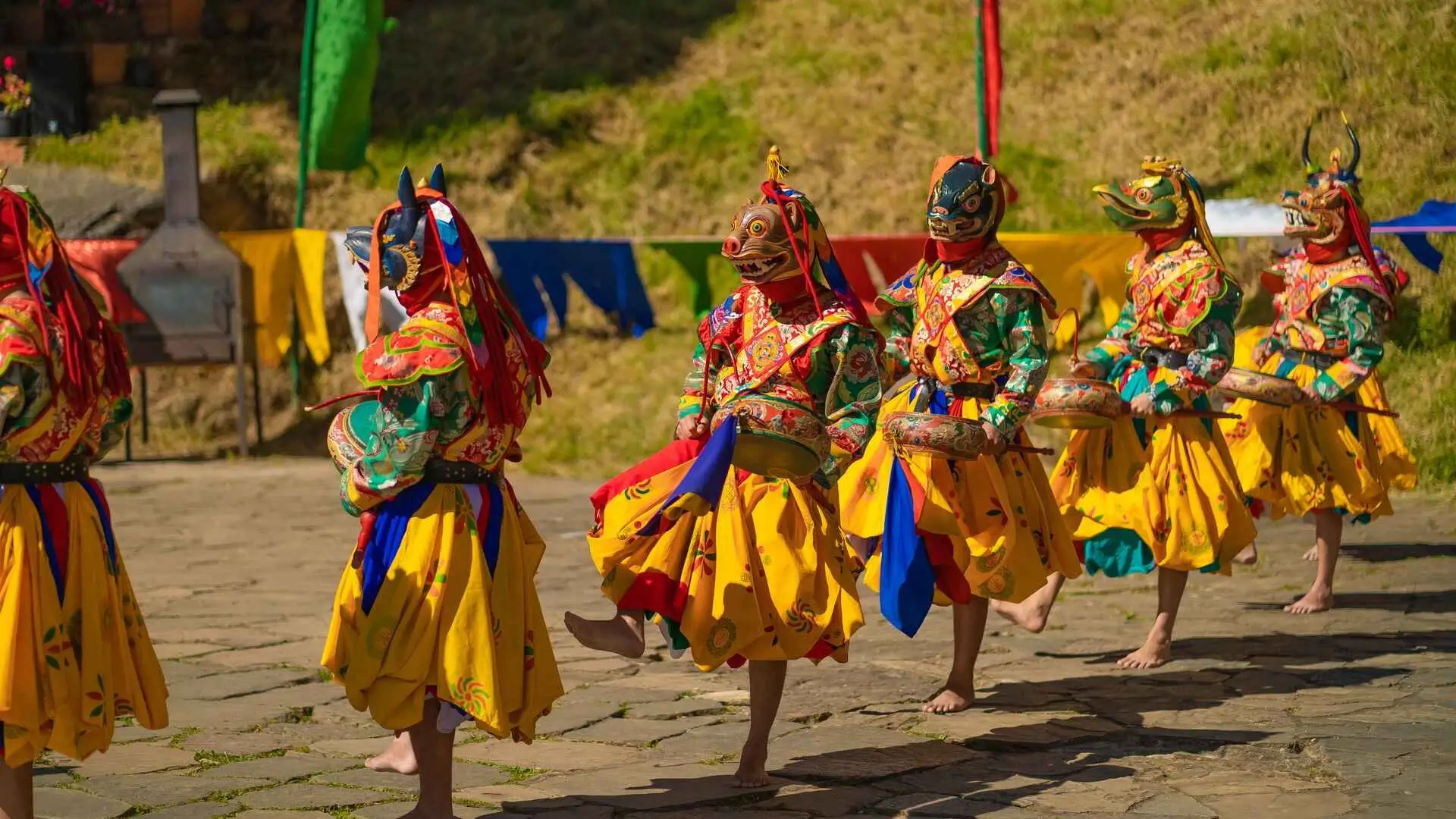
The centerpiece of the Dechenphu Tshechu is the performance of Cham dances, a sacred art form in Bhutan. These mask dances are performed by monks, symbolizing the triumph of good over evil and narrating the subjugation of demons and the triumph of the Dharma. The Genyen Kuncham — the Dance of Geynyen — is the centrepiece of the day and is performed only at Dechenphu, making this the sole festival in Bhutan where this dance can be witnessed.
02
Rituals to Honor Ap Genyen
The festival includes elaborate rituals to honor Ap Genyen, invoking his blessings for the well-being and protection of the community. Monks perform prayers and offerings, accompanied by traditional instruments. The ceremony is a formal renewal of the protective relationship between the community and the deity — Geynyen Jagpa Melen is believed to guard Bhutan with unwavering vigilance from his residence in the mountains above the temple.
03
Community Bonding and Devotion
The Dechenphu Tshechu is more than just a religious event; it is a celebration of community and cultural identity. Locals from all walks of life gather at the temple, dressed in their finest traditional Gho and Kira to offer prayers, seek blessings, and witness the dances. The one-day format and the restricted access of the temple give the gathering an intensity and focus not found at multi-day festivals.
04
The Only Day Foreigners May Enter
Dechenphu Lhakhang is closed to foreign visitors for the entire year except on the day of the Tshechu. This makes the Dechenphu Tshechu the single opportunity to enter one of Bhutan’s most significant guardian deity temples — a temple whose founding is directly tied to the naming of the capital itself.
05
Dances Performed Only Here
The Genyen Kuncham — the sacred dance of Geynyen — is not performed at any other festival in Bhutan. Alongside it, the Zhana Nga Cham, Shazam Cham, and Nga Cham are performed in the temple courtyard. Attending the Dechenphu Tshechu is the only way to witness the Genyen Kuncham.
06
The Rock That Is Geynyen’s Abode
Inside Dechenphu Lhakhang, a shrine contains the rock into which the deity Geynyen dissolved in 1345. It is believed that he resides within until Bhutan faces a time of great need. Pilgrims press their foreheads against the shrine and offer prayers for protection. This rock — and the festival that honours the deity within it — connects the present directly to a founding moment of Bhutanese spiritual and political geography.
Practical Information for Visitors
Plan Ahead
November is a peak tourist season in Bhutan and most festivals draw large crowds, so book your trip early to secure accommodations and passes and flight tickets.
Arrive Early
Once you are in Bhutan, try to arrive early at the Festival location. The best spots to view the performances fill up quickly.
What to Wear
While attending a festival, it’s important to dress respectfully. Bhutanese people wear their traditional Gho and Kira during Tshechus, and it’s customary for visitors to dress modestly. Avoid wearing revealing clothing and wear warm, layered clothing — November in Thimphu is cool to cold, and the temple courtyard is open to the mountain wind. Arrive early as the temple becomes crowded by mid-morning and the festival is a single day only.
Photography
Photography is allowed at most festivals, but it’s always polite to ask before taking pictures, especially of monks or religious figures. Be respectful of the rituals, and avoid using flash photography during performances.
Engage a Guide
A knowledgeable guide can enrich your understanding of the rituals and their significance. Also a certified tour guide is mandatory to attend festivals and visit most of the major tourist attractions and monuments in Bhutan
Explore Beyond the Festival
Include visits to nearby attractions like the Motithang Takin Preserve, Punakha Dzong, and Thimphu’s vibrant markets.
Food Options
Bhutan offers a diverse range of food options, from delicious traditional Bhutanese dishes to international cuisines, including plenty of vegetarian choices to suit every taste.
Respect Local Customs
Follow the guidance of your guide and observe the rules of the Temple (Lhakhang) premises.
Geynyen Jagpa Melen & Dechenphu Lhakhang
The Deity Who Named the Capital
Geynyen Jagpa Melen — also written as Gay Ngyen Jakpa Melen or Ap Genyen — is one of the most important protective deities in Bhutan. He is a warrior deity: fierce in form, mounted on horseback, armed with bow and arrow, and dressed in armour. He is understood to reside in the mountains above Dechenphu, watching over the Thimphu valley and the kingdom beyond. Bhutanese people pray to him before undertaking anything that carries risk or significance — a long journey, a business venture, an exam, a surgery. He is a deity of protection in the fullest, most practical sense.
The story of how Geynyen came to give his name to Thimphu begins with the arrival of Jamyang Kuenga Sengye — the 7th abbot of Ralung Monastery and one of the most important figures in the early Drukpa Kagyu tradition in Bhutan — at Dechenphu in 1345. Upon his arrival, Geynyen appeared to Kuenga Sengye in human form, welcoming him. Then, before witnesses, the deity dissolved into a rock at the hillside site. In Dzongkha: thim (disappeared) + phu (hill) = Thimphu. The name of the capital of Bhutan encodes this moment of divine disappearance. Kuenga Sengye subsequently subdued and formally appointed Geynyen as the protector of Drukpa Kagyu teachings and built the goenkhang (protective deity chapel) that stands within the complex today.
The rock into which Geynyen dissolved is enshrined in the temple. A belief held across Bhutan is that the deity remains within the rock, dormant, and will emerge if the kingdom faces a time of great need. Every year at the Tshechu, the community gathers to make offerings, renew the protective relationship, and ensure that Geynyen’s presence in the valley remains active.
Dechenphu Lhakhang — History and Setting
The monastery was founded in the 12th century by Dampa, son of Phajo Drugom Zhigpo — the Tibetan lama who established the Drukpa school of Buddhism in Bhutan and is considered one of the most important figures in the country’s religious history. Dampa became the first chief abbot. The monastery sits in the northern Thimphu Valley near Dechencholing, surrounded by dense forest and visible from the ridgeline above the capital. Its setting is austere and forested — deliberately remote from the bustle of Thimphu below.
The name Dechenphu means “Temple of the Blissful Peak.” In the past, a biannual ceremony was held in Geynyen’s honour: once on the summer solstice and once on the 18th day of the 8th month. That ceremony was led in procession from Tashichho Dzong, with monks marching to Dechenphu under the guidance of the Depai Zimpon Nangma, the king’s chamberlain. The ritual no longer takes place in this form, but the annual Tshechu maintains the continuity of the relationship between the state, the community, and the guardian deity.
What to Expect at the Dechenphu Tshechu
The festival is a single day, typically in late October or November based on the Bhutanese lunar calendar. Arrive early — the small temple grounds fill quickly and the best viewing positions for the Cham dances are taken before midday. The Genyen Kuncham is the centrepiece performance: a masked dance depicting the deity himself, performed only at this festival. The Zhana Nga Cham (Dance of the Black Hats and Drums), the Shazam Cham, and the Nga Cham are also performed in the enclosed courtyard. In between the formal dances, the Artists of the Royal Academy of Performing Arts perform traditional and classical music pieces.
After the formal programme, the temple is open for pilgrims and visitors to enter and offer prayers at the shrines. The goenkhang — the protective deity chapel housing the rock of Geynyen’s abode — is the most sacred space in the complex. Visit it with your guide and with the same quiet respect you would offer at any sacred site.
Things to Do in and Around Thimphu
- Tashichho Dzong — the seat of Bhutan’s government and the Thimphu Tshechu venue, about 3km south of Dechenphu. Worth visiting on the same day if time allows.
- Buddha Dordenma — the 54-metre gilded bronze Buddha on a hilltop south of the city, visible from much of the valley. A 30-minute drive from Dechenphu.
- Changangkha Lhakhang — one of Thimphu’s oldest temples, on a ridge above the city, with commanding views. Parents bring newborns here to receive blessings and names.
- National Memorial Chorten — the large stupa in central Thimphu built in memory of the third King. A continuous stream of Thimphu residents circumambulates it throughout the day.
- Tango and Cheri monasteries — further up the northern valley from Dechenphu, reachable by a 45-minute hike from the road. Cheri Goenba (1619) was built by Zhabdrung Ngawang Namgyal; Tango Goenba was founded by Drukpa Kunley.
When is this Festival in 2026?
The Dechenphu Tshechu is typically held in November, though the exact dates vary each year based on the Bhutanese lunar calendar. The crisp autumn weather and vibrant colors of the season add to the charm of this spiritual festival.
Get Festival Dates & BookBook Your Festival Tour with Found Bhutan
Everything handled — visa, SDF, flights, accommodation, certified guide, and festival access.
Seamless Planning
We handle your Bhutan visa, SDF, flights, accommodation, certified guide, meals, and in-country transportation from arrival to departure.
Personalised Itineraries
Festival days combined with the experiences that matter most to you — treks, monasteries, village visits, or simply time to absorb Bhutan at your own pace.
Expert Local Guides
Our certified guides know every dance and every ritual. They bring the festival alive with context, stories, and insider access you won't find on your own.
You're a Guest, Not a Client
At Found Bhutan, we build relationships — not transactions. Many of our travellers return year after year, and many become lifelong friends.
Book Early
Festival tours sell out months in advance. Early bookings secure the best accommodation and guarantee your place at one of Bhutan's most extraordinary events.
Licensed & Local
Found Bhutan is a fully licensed Bhutanese tour operator. We are local, accountable, and deeply invested in showing you Bhutan at its most authentic.
Customise Your
Bhutan Tour Today
Fill in the form and our expert team will get back to you within 24 hours.
Stay in the loop
Travel stories from the Last Shangri-La
Join fellow Bhutan enthusiasts. Get our latest guides, travel tips and exclusive insights delivered to your inbox.
No spam, ever. Unsubscribe anytime.