Jakar Tshechu
Festival
About the Festival
Jakar Tshechu — Festival at Bhutan’s Largest Dzong
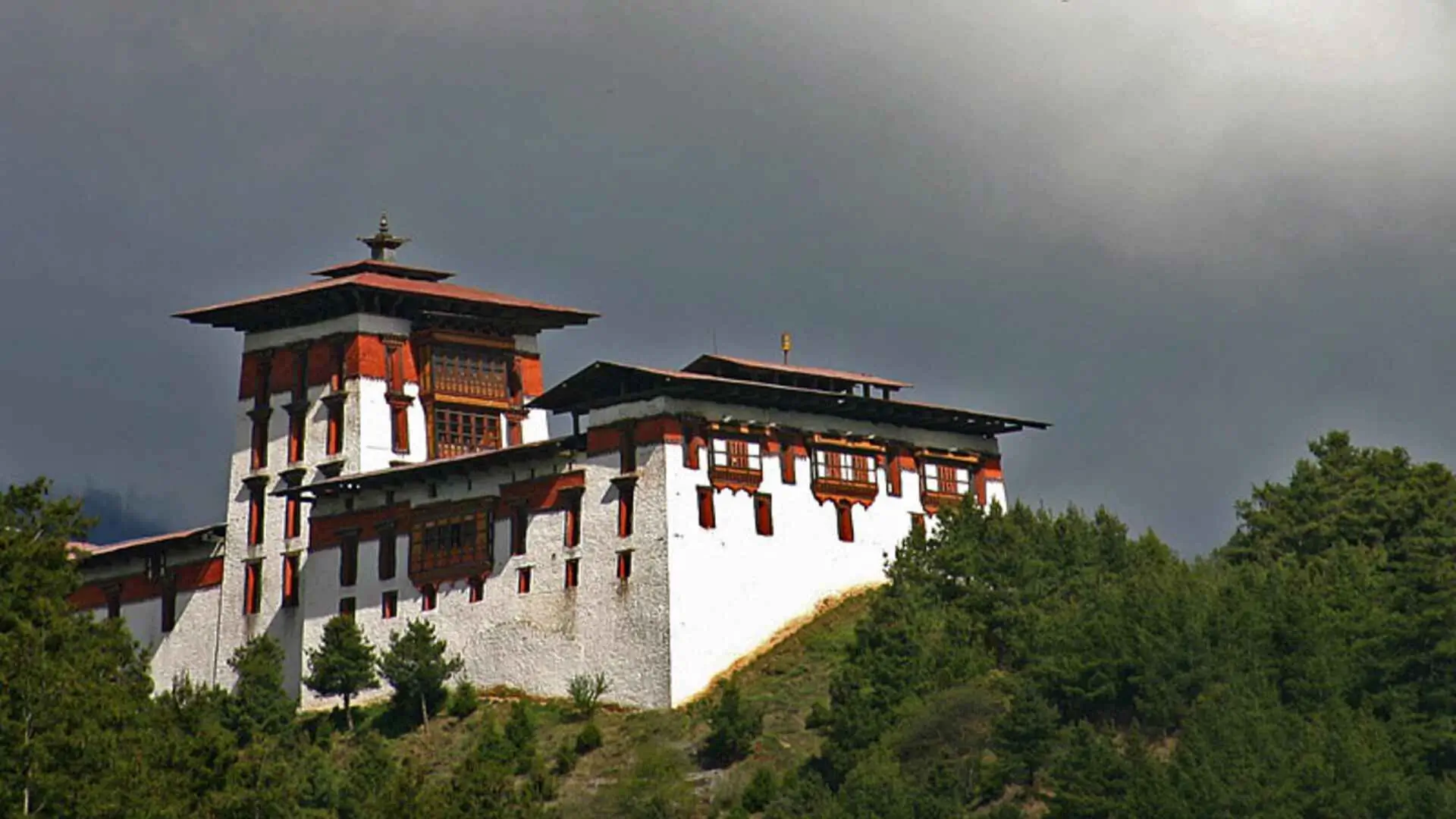
The Jakar Tshechu is a five-day festival held at Jakar Dzong — the Castle of the White Bird — perched on a ridge above the Chamkhar Valley in Bumthang. Built in 1549 by the Tibetan lama Ngagi Wangchuk and reconstructed to its current form in 1667, Jakar Dzong is the largest dzong in Bhutan. Its official name is Yuelay Namgyal Dzong, given in honour of the victory over the troops of Tibetan ruler Phuntsho Namgyal. It was also the seat of the first King of Bhutan in 1646, the year Zhabdrung Ngawang Namgyal firmly established his authority over the kingdom.
Despite this ancient setting, the Jakar Tshechu is one of the newest major Tshechus in Bhutan, instituted only in 1999 by the Jakar Dzong monastic community. It is held from the 7th day of the 9th Bhutanese lunar month — typically late October to early November. The festival features the core Cham dances of the Bhutanese tradition: the Guru Tshengye Cham (the Eight Manifestations of Guru Rinpoche), the Drametse Nga Cham (the UNESCO-listed drum dance from eastern Bhutan), and the Raksha Mangcham (the Dance of the Judgement of the Dead). The Guru Thongdrel is unfurled on the final day for the assembled community to receive its blessing.
Festival Highlights
What Makes This Festival Special
01
Sacred Mask Dances (Cham)
At the heart of the Jakar Tshechu are the Cham dances, performed by monks dressed in vibrant costumes and masks. These dances depict Buddhist stories and symbolize the triumph of good over evil. The Guru Tshengye Cham, Drametse Nga Cham, and Raksha Mangcham are performed by the monks of the Jakar Dzong monastic body according to the precise choreographic instructions of past Buddhist masters.
02
The Unfurling of the Thongdrel
One of the most anticipated moments of the festival is the unfurling of the Thongdrel, a massive tapestry depicting Guru Rinpoche. Viewing the Thongdrel is believed to cleanse sins and bring immense blessings to all who witness it. The Jakar Thongdrel depicts Guru Rinpoche in his eight manifestations and is unveiled on the fifth and final morning of the festival.
03
Community Gatherings
The Jakar Tshechu is not just a religious event but also a social occasion. Locals from across Bumthang gather in their finest traditional attire, creating a colorful and joyous atmosphere. Visitors are warmly welcomed to join the gatherings, share in the atmosphere, and witness traditions that — though the festival was only instituted in 1999 — are rooted in centuries of Bhutanese Buddhist practice.
04
Traditional Music and Songs
The festival features enchanting traditional music played on instruments like horns, drums, and cymbals, adding to the festive ambiance. Accompanied by folk songs and dances, the music enriches the cultural and spiritual tapestry of the festival. The Atsaras — red-masked jesters — keep the crowd entertained between formal dances, maintaining the playful balance of sacred and comic that defines all major Bhutanese festivals.
05
The Unique Architecture of Jakar Dzong
Jakar Dzong has a feature found at no other dzong in Bhutan: its utse (central tower) stands not in the middle of the courtyard but on an exterior wall, rising approximately 50 metres. This means it cannot be circumambulated — a unique architectural circumstance in a tradition where circumambulation is central to devotional practice. The tower’s position offers commanding views over the Chamkhar Valley.
06
The White Bird Legend
The name Jakar derives from bjakhab, meaning white bird. When lamas assembled in 1549 to choose a site for a new monastery, a large white bird — described in oral tradition as the king of geese — rose into the air and settled on a spur of hillside. The lamas took this as an auspicious omen, chose the hill, and named their monastery after the bird. That story, encoded in the dzong’s name and the festival held within its walls, is still told today.
Practical Information for Visitors
Plan Ahead
The festival draws large crowds, so book your trip early to secure accommodations and passes and flight tickets.
Arrive Early
Once you are in Bhutan, try to arrive early at the Festival location. The best spots to view the performances fill up quickly.
What to Wear
While attending a festival, it’s important to dress respectfully. Bhutanese people wear their traditional Gho and Kira during Festivals, and it’s customary for visitors to dress modestly. Avoid wearing revealing clothing and wear warm layers — October and November in Bumthang at 2,600m are cool and can be cold, especially in the mornings and evenings. The dzong’s ridge location above the valley can be windy. A down jacket for early mornings is recommended.
Photography
Photography is allowed at most festivals, but it’s always polite to ask before taking pictures, especially of monks or religious figures. Be respectful of the rituals, and avoid using flash photography during performances. Also, the large courtyards of Jakar Dzong give excellent sightlines. Bring a zoom lens for close shots of the masks and costumes. The view of the Chamkhar Valley from the dzong walls is also worth photographing.
Engage a Guide
A knowledgeable guide can enrich your understanding of the rituals and their significance. Also a certified tour guide is mandatory to attend festivals and visit most of the major tourist attractions and monuments in Bhutan
Explore Beyond the Festival
Include visits to nearby attractions like the Bumthang Kurjey Lhakhang, Kyichu Lhakhang, Mebar Tsho (The Burning Lake), and more...
Food Options
Bhutan offers a diverse range of food options, from delicious traditional Bhutanese dishes to international cuisines, including plenty of vegetarian choices to suit every taste.
Respect Local Customs
Follow the guidance of your guide and observe the rules of the Temple (Lhakhang) premises.
The Dzong & Its History
Jakar Dzong — Castle of the White Bird
Jakar Dzong dominates the Chamkhar Valley from its ridge above Jakar town, visible from almost everywhere in the Bumthang district. It is the largest dzong in Bhutan and one of the most historically significant: it served as the seat of the first King of Bhutan in 1646, the year Zhabdrung Ngawang Namgyal consolidated his authority over the eastern dzongkhags, and it played the role of defensive fortress for the entire eastern region for generations.
The dzong was first built in 1549 by Ngagi Wangchuk, a Tibetan lama who came to Bumthang to spread the Drukpa Kagyu teachings — the same tradition that Zhabdrung Ngawang Namgyal would later use as the foundation for the unified Bhutanese state. The founding legend is one of the most memorable in Bhutan: as a group of lamas sat debating where to establish a new monastery, a large white bird — described in oral tradition as the king of geese — rose from the ground and settled on a spur of the ridge above the valley. This was read as a decisive auspicious omen, and the hill was chosen. The dzong takes its name from the bird: bjakhab, white bird, became Jakar.
The current structure dates from 1667 and bears the official name Yuelay Namgyal Dzong — given in honour of the Bhutanese victory over the troops of Tibetan ruler Phuntsho Namgyal who attacked the dzong. The dzong is architecturally unusual in one specific way: its utse (central tower) stands not in the middle of the main courtyard, as at every other dzong in Bhutan, but on an exterior wall, rising approximately 50 metres. This placement makes circumambulation of the tower impossible — a unique circumstance in a tradition where walking clockwise around sacred objects is one of the fundamental acts of devotion.
The Jakar Tshechu — A Relatively New Festival
Despite the great antiquity of Jakar Dzong, the Tshechu held within its walls is one of Bhutan’s newest major festivals, instituted only in 1999 by the Jakar Dzong monastic community. This reflects a broader pattern in Bhutanese festival culture: new Tshechus continue to be established as communities and monastic bodies formalise celebrations that may have existed informally for longer. The 1999 date also coincides with the period when Bumthang was beginning to receive more international visitors, suggesting an awareness of the festival’s cultural and economic significance.
The five-day festival is scheduled from the 7th day of the 9th Bhutanese month, typically falling in late October or early November. The programme follows the standard major Tshechu structure: Cham dances across all five days, the Atsaras throughout, and the Guru Thongdrel unveiled on the final morning. The specific dances — Guru Tshengye Cham, Drametse Nga Cham, and Raksha Mangcham — have been selected from the repertoire of past Buddhist masters and are performed by the monks of the Jakar Dzong monastic body with the precision that comes from institutional training and long practice.
Bumthang — The Spiritual Heart of Bhutan
Attending the Jakar Tshechu means spending several days in Bumthang district — one of the most rewarding destinations in Bhutan for those interested in religious history, landscape, and traditional culture. Bumthang comprises four valleys: Choekhor (where Jakar Dzong stands), Chumey, Tang, and Ura. Each contains important temples and monasteries.
- Kurjey Lhakhang — the temple built around Guru Rinpoche’s body imprint, 5km from Jakar. One of the holiest sites in Bhutan.
- Jambay Lhakhang — 7th-century temple, one of the oldest in Bhutan, a few minutes from Kurjey. The Jambay Lhakhang Drup — with its midnight Tercham and fire ceremony — is held here in October/November, potentially overlapping with the Jakar Tshechu.
- Tamshing Lhakhang — founded by Pema Lingpa in 1501, with original 500-year-old murals. Pema Lingpa’s chain mail coat is kept here.
- Mebar Tsho (Burning Lake) — the sacred gorge in the Tang Valley where Pema Lingpa retrieved terma from the water by diving in with a lit torch. About 45 minutes from Jakar.
- Wangduechhoeling Palace — the palace of the first and second Kings of Bhutan, now a heritage museum in the Chamkhar valley below the dzong. An essential companion visit.
When is this Festival in 2026?
The Jakar Tshechu Festival Bhutan is held annually following the Bhutanese lunar calendar. Contact us for confirmed dates and to book your trip well in advance — festival time is the busiest travel period in Bhutan.
Get Festival Dates & BookBook Your Festival Tour with Found Bhutan
Everything handled — visa, SDF, flights, accommodation, certified guide, and festival access.
Seamless Planning
We handle your Bhutan visa, SDF, flights, accommodation, certified guide, meals, and in-country transportation from arrival to departure.
Personalised Itineraries
Festival days combined with the experiences that matter most to you — treks, monasteries, village visits, or simply time to absorb Bhutan at your own pace.
Expert Local Guides
Our certified guides know every dance and every ritual. They bring the festival alive with context, stories, and insider access you won't find on your own.
You're a Guest, Not a Client
At Found Bhutan, we build relationships — not transactions. Many of our travellers return year after year, and many become lifelong friends.
Book Early
Festival tours sell out months in advance. Early bookings secure the best accommodation and guarantee your place at one of Bhutan's most extraordinary events.
Licensed & Local
Found Bhutan is a fully licensed Bhutanese tour operator. We are local, accountable, and deeply invested in showing you Bhutan at its most authentic.
Customise Your
Bhutan Tour Today
Fill in the form and our expert team will get back to you within 24 hours.
Stay in the loop
Travel stories from the Last Shangri-La
Join fellow Bhutan enthusiasts. Get our latest guides, travel tips and exclusive insights delivered to your inbox.
No spam, ever. Unsubscribe anytime.