Pemagatshel
Tshechu
About the Festival
Pemagatshel Tshechu — Festival in the Blissful Land of the Lotus
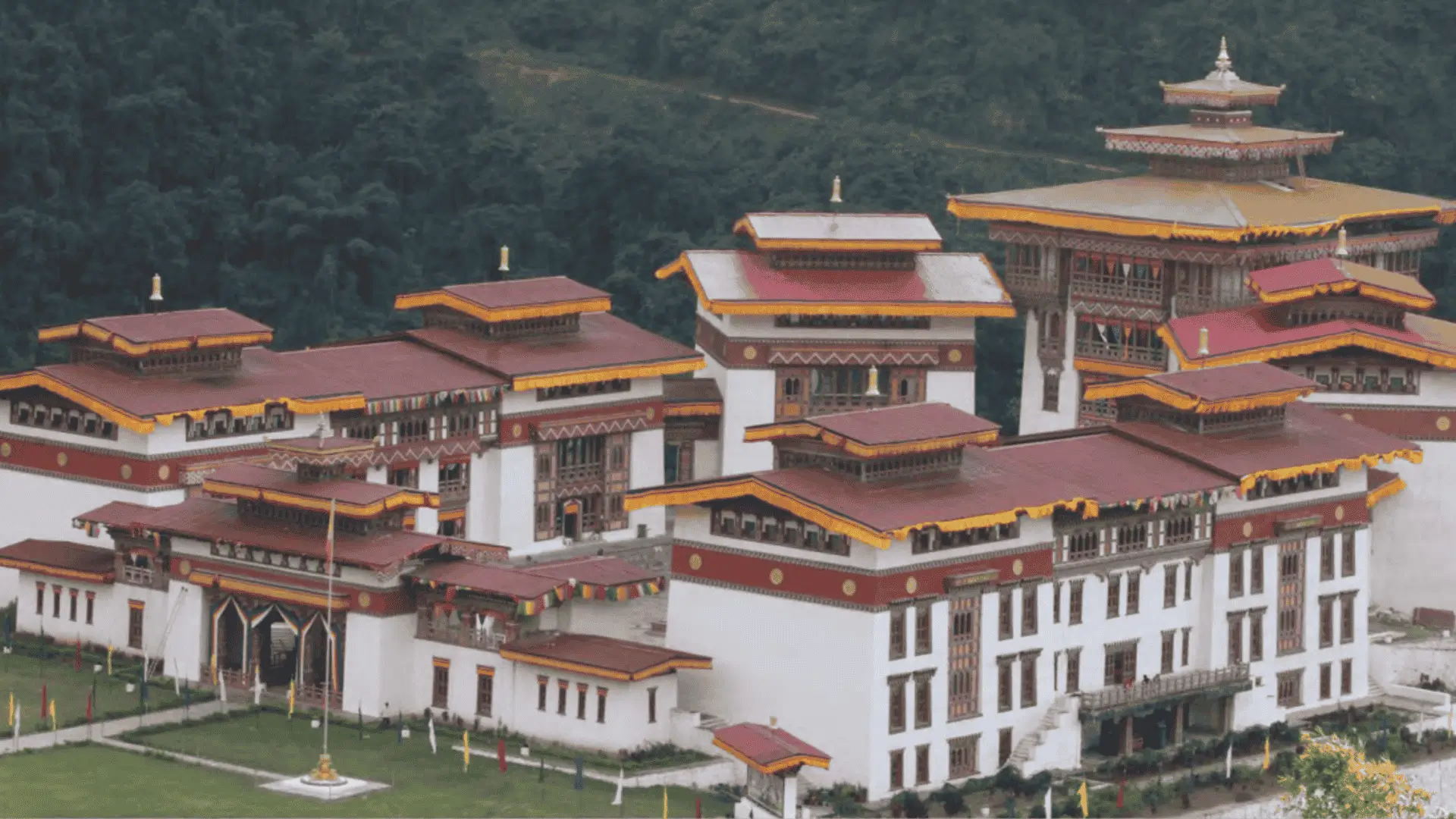
The Pemagatshel Tshechu is a three-day festival held in the open square in front of Pemagatshel Dzong in southeastern Bhutan. The district’s name itself encodes something beautiful: until 1970 it was known simply as Khoi Dung. It was Dudjom Rinpoche — one of the greatest Nyingma masters of the 20th century — who renamed it Pemagatshel, the Blissful Land of the Lotus. The site of the old dzong, viewed from the right angle, is said to resemble a fully bloomed lotus. The new dzong’s official name, Druk Migyur Dechen Dzong (Fortress of Unwavering Bliss), was given by the Je Khenpo Jigme Chhoeda.
Pemagatshel is also linguistically unique: it is the only district in eastern Bhutan where a single language — Tshangla — is spoken across the entire population. There are no other dialects. This homogeneity gives the community a strong cultural coherence, and the Tshechu reflects it: all public offices close for the three days, the entire district comes to the dzong square, and the Ausa — the traditional farewell folk song unique to Pemagatshel — is sung throughout. The Tshechu began in the early 1980s, when the new dzong was constructed, making it one of the more recently established Tshechus in Bhutan.
When
See dates below
Where
Pemagatshel Dzong
For
All Visitors Welcome
Guide Required
Yes — Mandatory
Festival Highlights
What Makes This Festival Special
01
Sacred Mask Dances (Cham)
At the heart of the Pemagatshel Tshechu are the mesmerizing Cham dances, which are an essential part of any Bhutanese festival. Performed by both monks and lay dancers, these sacred dances represent the triumph of good over evil, the protection of the Dharma, and the manifestations of Guru Rinpoche. Performed by both monks and lay dancers in the open courtyard before the dzong, the dances are believed to confer blessings and protection from misfortune on all who witness them.
02
Ritual Prayers and Offerings
The Pemagatshel Tshechu is a deeply religious event, and as such, it includes various ritual prayers and offerings. Monks and community members engage in recitations of sacred texts, prayers, and mantras, invoking the protection and blessings of Guru Rinpoche and the Dharma protectors upon the assembled community. The ritual programme reflects the deeply religious character of the Tshangla community of Pemagatshel.
03
The Thongdrol Ceremony
Similar to other Tshechus in Bhutan, the Pemagatshel Tshechu features the Thongdrol ceremony, where a large sacred tapestry of Guru Rinpoche and other revered Buddhist figures is unfurled. this is a deeply significant moment for the assembled community, who believe that even a single glimpse of the Thongdrel carries the blessing of liberation from the cycle of rebirth.
04
Community and Local Traditions
The Pemagatshel Tshechu is not just a religious event; it is a celebration of the strong sense of community that defines life in Bhutan. The locals, dressed in their finest traditional attire—the Gho for men and the Kira for women — gather in the dzong square. All government offices and public institutions in the district close for the three festival days, ensuring the fullest possible community attendance.
05
Jalings, Dhungs, and Bura Silk
Pemagatshel is one of Bhutan’s most important centres for religious instrument making. The Jalings (oboe-like woodwind instruments) and Dhungs (long ritual trumpets) made here are prized and used across Bhutan’s monastic institutions. The district’s weavers also produce fine Kiras from Bura (raw silk) — including two regional specialty patterns: the Lungsermo and the Aiekapur.
06
The Ausa — A Song for Farewells
The most distinctive folk tradition of Pemagatshel is the Ausa — a song sung whenever family members, friends, or relatives depart on a journey. It is a song of blessing and longing, specific to the Tshangla community of this district. The Ausa is performed during the Tshechu, threading a thread of specifically local cultural identity through the broader religious festival.
Practical Information for Visitors
Plan Ahead
The festival is popular among locals and tourists alike, so it’s best to book accommodation and transportation early.
What to Wear
While attending a festival, it’s important to dress respectfully. Bhutanese people wear their traditional Gho and Kira during Tshechus, and it’s customary for visitors to dress modestly. Avoid wearing revealing clothing and wear comfortable layers — October and November in Pemagatshel at around 1,500–2,000m are warm by day and cool in the evenings. The festival is held in an open square, so be prepared for sun or rain. Pemagatshel’s subtropical climate means sudden showers are possible.
Photography
Photography is allowed at most festivals, but it’s always polite to ask before taking pictures, especially of monks or religious figures. Be respectful of the rituals, and avoid using flash photography during performances.
Engage a Guide
A knowledgeable guide can enrich your understanding of the rituals and their significance. Also a certified tour guide is mandatory to attend festivals and visit most of the major tourist attractions and monuments in Bhutan
Food Options
Bhutan offers a diverse range of food options, from delicious traditional Bhutanese dishes to international cuisines, including plenty of vegetarian choices to suit every taste.
Respect Local Customs
Follow the guidance of your guide and observe the rules of the area.
The Blissful Land of the Lotus
Pemagatshel — A District Named by a Rinpoche
The name Pemagatshel was given to this district by Dudjom Rinpoche — one of the foremost Nyingma masters of the 20th century and a scholar of extraordinary depth — when the district was formally constituted in 1970, replacing the old name Khoi Dung. Pema means lotus and gatshel means blissful land. The renaming was not arbitrary: the site of the old dzong, when viewed from above, is said to resemble a fully bloomed lotus in the landscape of ridges and valleys. The new dzong’s official ceremonial name — Druk Migyur Dechen Dzong, the Fortress of Unwavering Bliss — was given by the Je Khenpo Jigme Chhoeda, continuing the tradition of poetic naming.
Pemagatshel occupies 517.8 sq km of southeastern Bhutan, with altitudes ranging from 1,000 to 3,500 metres. More than half the district is under broadleaf and coniferous forest; most of the remainder is farmland. The principal crops are maize, potatoes, oranges, and bananas, grown in a subtropical climate with annual rainfall between 1,500 and 3,000 mm. The district is home to 11 gewogs and a population of around 23,600. It is the only district in eastern Bhutan where exclusively Tshangla is spoken — no other dialects exist within the community.
The Festival in Detail
The Pemagatshel Tshechu began in the early 1980s, shortly after the construction of the dzong. Before the dzong was built, the district had no central administrative or monastic focal point of this kind, and the Tshechu gave the community a shared annual gathering for the first time. Since then, it has grown into the largest community event of the year in the district. For three days, all public offices close. The entire population of the surrounding area converges on the open square in front of the dzong.
The festival programme follows the standard Bhutanese Tshechu structure: Cham mask dances by monks and lay performers over three days, traditional folk performances between the formal dances, and the Thongdrel ceremony on the final morning. What distinguishes the Pemagatshel Tshechu is the folk music programme woven throughout — including the Ausa, the farewell song specific to the Tshangla community of this district.
Pemagatshel’s Craft Traditions
The district has two overlapping craft traditions that make it materially important beyond its religious significance. The first is religious instrument making. Pemagatshel is one of Bhutan’s primary production centres for Jalings — woodwind instruments resembling an oboe, used in monastic ceremonies — and Dhungs, the long straight ritual trumpets whose drone is one of the defining sounds of a Bhutanese festival. Instruments made in Pemagatshel are prized across Bhutan and exported to monasteries throughout the country. The Tshechu itself is accompanied by Jalings and Dhungs from local makers.
The second tradition is Bura silk weaving. Pemagatshel weavers produce fine Kiras (women’s traditional dress) from raw silk, including two patterns specific to the district: the Lungsermo and the Aiekapur. These fabrics are traded at the festival and at markets throughout eastern Bhutan.
There is also a celebrated local sweet: Tsatsi Buram, made from the district’s abundant sugarcane. It is produced in the district and sold throughout Bhutan. Festival time is the best moment to try it fresh from the makers in the market stalls around the dzong.
Things to See Near Pemagatshel
- Yongla Goenpa — one of the oldest and holiest shrines in eastern Bhutan, situated on a dagger-shaped mountain ridge with exceptional views. A significant pilgrimage site for the Tshangla community.
- Kheri Goemba — a monastery in the district with important religious significance for the local community.
- Trumpet Making Centre — workshops in Pemagatshel town where Jalings and Dhungs are made by hand. One of the few places in Bhutan where visitors can watch this craft in practice.
- Trashigang — the main town of eastern Bhutan, about 2–3 hours by road from Pemagatshel. A natural base for visiting the district, with the Trashigang Tshechu held in November/December.
- Samdrup Jongkhar — the border crossing with India to the south, about 3 hours from Pemagatshel. A gateway for travellers entering eastern Bhutan from Assam.
When is this Festival in 2026?
The Pemagatshel Tshechu is held annually following the Bhutanese lunar calendar. Contact us for confirmed dates and to book your trip well in advance — festival time is the busiest travel period in Bhutan.
Get Festival Dates & BookBook Your Festival Tour with Found Bhutan
Everything handled — visa, SDF, flights, accommodation, certified guide, and festival access.
Seamless Planning
We handle your Bhutan visa, SDF, flights, accommodation, certified guide, meals, and in-country transportation from arrival to departure.
Personalised Itineraries
Festival days combined with the experiences that matter most to you — treks, monasteries, village visits, or simply time to absorb Bhutan at your own pace.
Expert Local Guides
Our certified guides know every dance and every ritual. They bring the festival alive with context, stories, and insider access you won't find on your own.
You're a Guest, Not a Client
At Found Bhutan, we build relationships — not transactions. Many of our travellers return year after year, and many become lifelong friends.
Book Early
Festival tours sell out months in advance. Early bookings secure the best accommodation and guarantee your place at one of Bhutan's most extraordinary events.
Licensed & Local
Found Bhutan is a fully licensed Bhutanese tour operator. We are local, accountable, and deeply invested in showing you Bhutan at its most authentic.
Customise Your
Bhutan Tour Today
Fill in the form and our expert team will get back to you within 24 hours.
Stay in the loop
Travel stories from the Last Shangri-La
Join fellow Bhutan enthusiasts. Get our latest guides, travel tips and exclusive insights delivered to your inbox.
No spam, ever. Unsubscribe anytime.