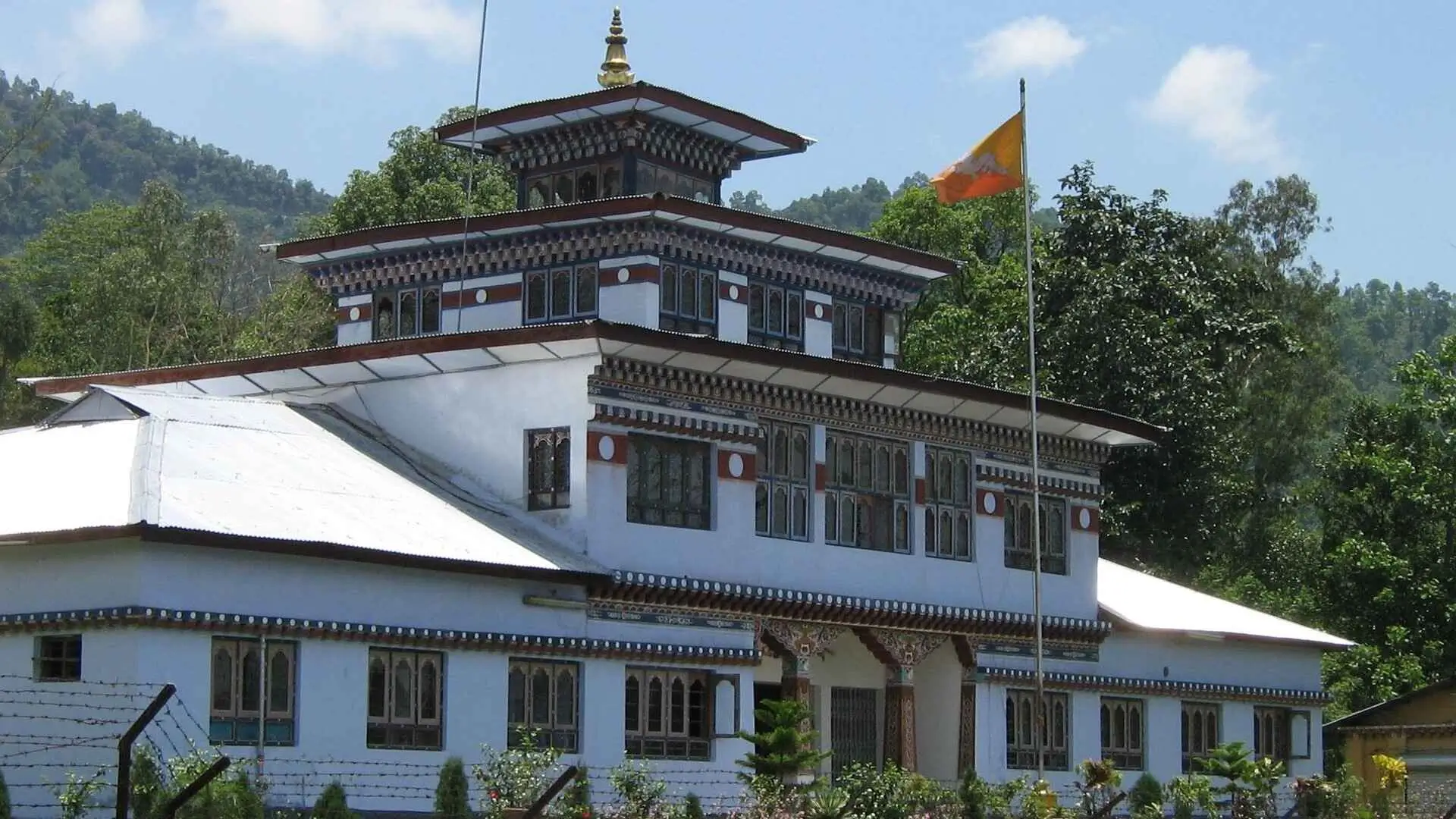
Samtse Tshechu
Festival
About the Festival
Samtse Tshechu — Festival in Bhutan’s Most Diverse Southern District
The Samtse Tshechu is held at Samtse Dzong in Bhutan’s westernmost district, bordering West Bengal and sharing cultural affinities with Darjeeling and the Duars to the south. Samtse is the most ethnically diverse district in southern Bhutan: the two main communities are the Lhotshampas and the Doyas (Lhop) — the latter considered by many Bhutanese to be the original aboriginal inhabitants of western and central Bhutan, now concentrated in the Dorokha Gewog of Samtse. Both Buddhism and Hinduism are actively practised, giving the district a religious mosaic unlike anywhere else in the kingdom.
The district spans an altitude range from 600 metres at the Indian border to 3,800 metres in the northern highlands, producing a subtropical climate with hot, humid valleys, abundant rainfall, and forests rich with oranges, cardamom, ginger, and areca nuts — cash crops exported to West Bengal and Bangladesh. Samtse is also the district where the Lhop Community Radio broadcasts in Lhopu — one of Bhutan’s most endangered indigenous languages. The Tshechu, held at the dzong in the district headquarters, brings together this extraordinary human and cultural mosaic for the largest annual gathering of the year.
When
See dates below
Where
Samtse Dzong
For
All Visitors Welcome
Guide Required
Yes — Mandatory
Festival Highlights
What Makes This Festival Special
01
Sacred Mask Dances (Cham)
The Cham dance is the centerpiece of the Samtse Tshechu festival. Performed by monks, the dance is both a sacred ritual and a dramatic storytelling performance that captures the essence of Bhutanese Buddhist tradition, depicting the triumph of the Dharma and the manifestations of Guru Rinpoche. Performed in the subtropical warmth of the Samtse dzong courtyard, surrounded by forested hills that descend to the West Bengal border, the dances carry a setting unlike any other Tshechu in Bhutan.
02
Religious Rituals and Blessings
In addition to the dances, the Samtse Tshechu is marked by several religious rituals that provide spiritual blessings to the community. The festival begins with the unveiling of the thangka, sacred textile depicting Guru Rinpoche and his eight manifestations. This ceremony draws the entire community together in a moment of collective blessing before the Cham dances begin.
03
Local Traditions and Cultural Exhibitions
The Samtse Tshechu is not only about the religious aspects but also about showcasing the rich local culture and Bhutanese traditions. During the festival, visitors can experience a variety of cultural performances, folk dances, and handicraft displays. The Lhop (Doya) community — who practice a blend of Buddhism, animism, and Bon and wear their distinctive white cloth dress — attend alongside the Lhotshampa and other communities. The Tshechu is one of the few occasions when the full ethnic diversity of the district is visible in one place.
04
Cultural Immersion
The Samtse Tshechu provides a unique opportunity to experience the culture, spirituality, and traditions of Bhutan. Visitors can witness the intricacies of the Cham dance and the religious rituals that carry the Drukpa Kagyu tradition of Guru Rinpoche into one of Bhutan’s most subtropical and culturally layered settings. Samtse’s position on the edge of the Bhutanese world — where the Himalayan kingdom meets the Indian subcontinent — gives the festival a frontier quality entirely distinct from the high-altitude dzong festivals of the north.
05
The Lhop (Doya) — Bhutan’s Aboriginal Community
The Lhop (Doya) people, numbering around 3,600, are believed by Bhutanese to be the country’s oldest aboriginal inhabitants, now concentrated in Dorokha Gewog in Samtse. They speak Lhopu, practice a blend of Buddhism, animism, and Bon, trace descent matrilineally, and wear distinctive white cloth dress. Attending the Samtse Tshechu offers a rare opportunity to encounter this community in its home district.
06
Scenic Location
The festival takes place in the stunning Samtse district, surrounded by lush greenery, rolling hills, and peaceful landscapes. The scenic beauty of the area adds to the charm of the festival, creating a festival experience that is both genuinely Buddhist and uniquely southern Bhutanese. The forested hills of Samtse — draped with cardamom, orange groves, and subtropical forest — are a world away from the barley fields and high passes of the festivals most visitors attend.
Practical Information for Visitors
Plan Ahead
The festival is popular among locals and tourists alike, so it’s best to book accommodation and transportation early.
What to Wear
While attending a festival, it’s important to dress respectfully. Bhutanese people wear their traditional Gho and Kira during Tshechus, and it’s customary for visitors to dress modestly. Avoid wearing revealing clothing and wear light, breathable clothing — Samtse’s subtropical climate is warm and humid year-round at the town’s altitude of around 600–1,000m. Sun protection and a light rain layer are advisable. The festival is a rare opportunity to visit a district that sees very few international travellers.
Photography
Photography is allowed at most festivals, but it’s always polite to ask before taking pictures, especially of monks or religious figures. Be respectful of the rituals, and avoid using flash photography during performances.
Engage a Guide
A knowledgeable guide can enrich your understanding of the rituals and their significance. Also a certified tour guide is mandatory to attend festivals and visit most of the major tourist attractions and monuments in Bhutan
Food Options
Bhutan offers a diverse range of food options, from delicious traditional Bhutanese dishes to international cuisines, including plenty of vegetarian choices to suit every taste.
Respect Local Customs
Follow the guidance of your guide and observe the rules of the area.
Bhutan’s Westernmost District
Samtse — Where the Himalayas Meet the Indian Plains
Samtse is Bhutan’s westernmost district, sharing its southern and western borders with the Indian state of West Bengal and its eastern border with Chukha district. It is the third most populous district in Bhutan with 62,590 people, and covers 1,304 sq km across an altitude range of 600 to 3,800 metres. The lower elevations — subtropical foothills at 600–1,000m — are hot, humid, and richly forested, producing the oranges, cardamom, ginger, and areca nuts that are the district’s principal cash crops, exported to West Bengal and Bangladesh. Historically, the district was sparsely populated: mountain-dwelling Bhutanese considered the lowland heat and mosquitoes inhospitable. It was only in the 20th century that significant settlement expanded.
The district is unique in Bhutan for its religious diversity. Both Buddhism and Hinduism are widely practised; visitors will find both Buddhist lhakhangs and Hindu temples in the same valley. Buddhist festivals — Losar, Thrue, Lomba, and the Tshechu — are celebrated alongside Hindu festivals including Diwali and Dussehra. This coexistence gives Samtse a cultural character unlike the predominantly Buddhist districts of central and eastern Bhutan.
The Lhop (Doya) — Bhutan’s Oldest Aboriginal Community
Samtse is home to the Lhop people, also known as the Doya — the community considered by Bhutanese tradition to be the country’s original aboriginal inhabitants, the people who settled these valleys before the Tibetan Buddhist migration that shaped the mainstream Bhutanese culture. They are now concentrated in Dorokha Gewog in Samtse, in small villages including Jigme, Singye, and Wangchuck, numbering around 3,600 people.
The Lhop speak Lhopu, a language unrelated to Dzongkha or the languages of the Lhotshampa community, and broadcast on their own community radio station established in 2016 — one of the only indigenous-language radio stations in Bhutan. Their religion is a blend of Tibetan Buddhism, animism, and Bon that reflects their pre-Buddhist roots. They are related to the Lepcha people of Sikkim and Darjeeling, trace descent matrilineally, and wear a distinctive plain white cloth dress — women in the manner of a Kira, men tied at the waist. Their main cash crop is cardamom, which grows abundantly in the subtropical forest around their villages.
The Tshechu is one of the few occasions in the year when the Lhop community mixes with the broader population of the district at a large gathering. Encountering the Lhop at the Samtse Tshechu is a specific opportunity that no other festival in Bhutan offers.
Wildlife and the Border Landscape
The subtropical forests of Samtse are rich with wildlife. Wild elephants are present in the district, and some have historically been domesticated. The forests descend through subtropical broadleaf forest to the Duars plain at the Indian border, creating a landscape reminiscent of Assam and Darjeeling rather than the high Bhutanese valleys most visitors know. Birdwatching is excellent, particularly during the winter months when migratory species join the subtropical resident avifauna.
Getting to Samtse
Samtse is reached by road from Phuntsholing (approximately 3 hours on mountain roads) or from Chukha. The nearest international airport is Paro, approximately 200km away. There are no direct tourist circuits commonly run to Samtse, which is part of what makes the Tshechu here so uncommercialised: almost all attendees are from the district itself, and international visitors are rare. Found Bhutan can build a custom itinerary incorporating the Samtse Tshechu into a broader southern or western Bhutan tour.
When is this Festival in 2026?
The Samtse Tshechu Festival Bhutan is held annually following the Bhutanese lunar calendar. Contact us for confirmed dates and to book your trip well in advance — festival time is the busiest travel period in Bhutan.
Get Festival Dates & BookBook Your Festival Tour with Found Bhutan
Everything handled — visa, SDF, flights, accommodation, certified guide, and festival access.
Seamless Planning
We handle your Bhutan visa, SDF, flights, accommodation, certified guide, meals, and in-country transportation from arrival to departure.
Personalised Itineraries
Festival days combined with the experiences that matter most to you — treks, monasteries, village visits, or simply time to absorb Bhutan at your own pace.
Expert Local Guides
Our certified guides know every dance and every ritual. They bring the festival alive with context, stories, and insider access you won't find on your own.
You're a Guest, Not a Client
At Found Bhutan, we build relationships — not transactions. Many of our travellers return year after year, and many become lifelong friends.
Book Early
Festival tours sell out months in advance. Early bookings secure the best accommodation and guarantee your place at one of Bhutan's most extraordinary events.
Licensed & Local
Found Bhutan is a fully licensed Bhutanese tour operator. We are local, accountable, and deeply invested in showing you Bhutan at its most authentic.
Customise Your
Bhutan Tour Today
Fill in the form and our expert team will get back to you within 24 hours.
Stay in the loop
Travel stories from the Last Shangri-La
Join fellow Bhutan enthusiasts. Get our latest guides, travel tips and exclusive insights delivered to your inbox.
No spam, ever. Unsubscribe anytime.