Tangbi Mewang
Festival
About the Festival
Tangbi Mewang — Bumthang’s Village Fire Festival
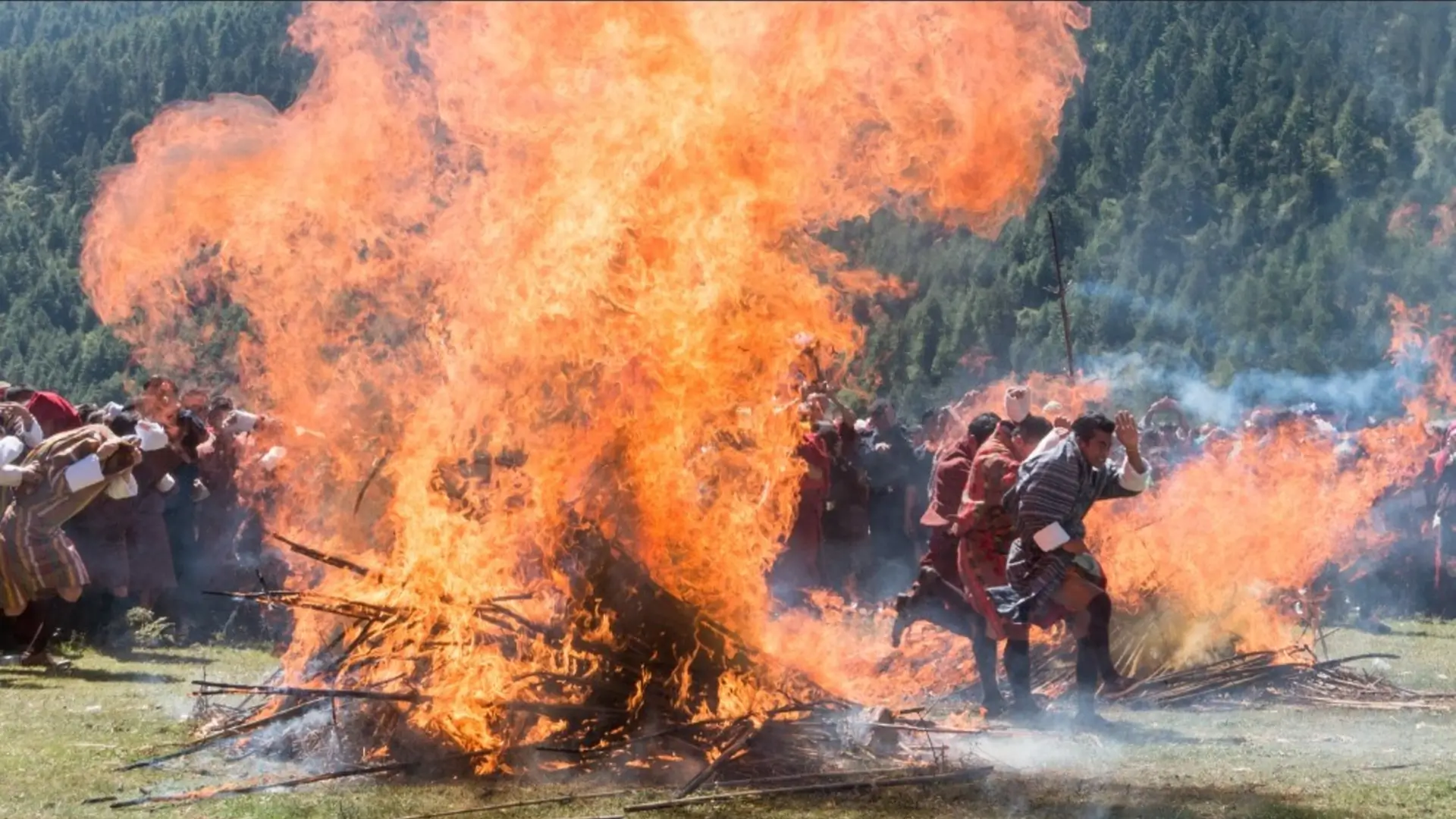
The Tangbi Mewang is one of the most genuine and community-rooted festivals in all of Bhutan — a three-day celebration organised entirely by the villages of Thangbi, Goling, and Kharsath in the Chhoekhor Valley of Bumthang, without state or institutional management. Held on the 14th to 16th days of the 8th Bhutanese lunar month, its centrepiece is the Mewang: a fire blessing ceremony performed by Gomchens (lay monks) in an open field, during which the entire assembled community — locals and visitors alike — leaps over flames three times to cleanse accumulated sins and ward off misfortune for the year ahead.
Tangbi Lhakhang, where the festival is held, was founded in 1470 by the 4th Shamar Rinpoche, Choki Drakpa — one of the heads of the Karma Kagyu tradition. The iron curtain at the monastery entrance is said to have been cast by the Rinpoche himself. The monastery was later taken over by Terton Pema Lingpa, whose Nyingma lineage still shapes the festival’s ritual character. The Gomchens who manage the monastery and conduct its ceremonies are lay monks — not ordained monks — and their management of the entire festival, from its rituals to its organisation, gives Tangbi Mewang a distinctly lay and village character found at very few other festivals in Bhutan.
When
September or October
For
All Visitors Welcome
Guide Required
Yes — Mandatory
Festival Highlights
What Makes This Festival Special
01
The Fire Blessing Ritual
The defining moment of the festival is the Mewang, or fire ritual, performed after sunset. A large bonfire is lit in the courtyard of Tangbi Lhakhang, and attendees leap over the flames to purify themselves of accumulated sins and ward off misfortune. The belief is specific: jumping the flames three times removes ill luck for the entire year. People of all ages attempt it — the elderly helped by relatives, children encouraged by parents, visitors welcomed alongside locals.
02
Mask Dances (Cham)
The festival features elaborate Cham dances performed by monks and laymen in colorful costumes and intricate masks. These sacred dances narrate stories from Buddhist mythology, including the Goem Bernak — a dark-masked dance specific to Tangbi. These are performed by young men and women of the village in the enclosed courtyard of Tangbi Lhakhang after the open-air Mewang ceremony.
03
The Grand Procession
The festival begins with a solemn procession of monks carrying sacred relics and artifacts, accompanied by traditional music played on horns, drums, and cymbals. The procession marks the commencement of the sacred proceedings. The procession moves from the lhakhang to the open ground where the Mewang fire is set up — a practical and ceremonial transition that marks the shift from monastery to community space.
04
Community Celebration
Tangbi Mewang is as much a social gathering as it is a religious one. Locals dressed in their finest Gho and Kira come together to celebrate, creating a vibrant and welcoming atmosphere. Traditional songs, folk dances, and shared food mark a festival that is as much a community reunion as a religious event. Because the festival is village-organised, it retains an unhurried and intimate quality entirely unlike the large state-managed festivals.
05
A Festival Run by Villagers
Tangbi Mewang is one of the few major festivals in Bhutan organised entirely by the local community — not by the state, the Department of Culture, or a monastic institution. The three villages of Thangbi, Goling, and Kharsath bear collective responsibility for the festival each year. This communal ownership is visible in everything: the informality of the proceedings, the warmth of the welcome, and the sense that visitors are guests at a family gathering rather than spectators at a managed event.
06
The Iron Curtain of Shamar Rinpoche
The entrance to Tangbi Lhakhang is guarded by an iron curtain said to have been cast by the founding Shamar Rinpoche, Choki Drakpa, in 1470. It remains in place today — one of the oldest material relics at any festival site in Bhutan. Looking at it, visitors are standing at the same threshold the monastery’s visitors have crossed for over 550 years.
Practical Information for Visitors
Arrive Early
The Mewang ceremony is performed after sunset, but it’s best to arrive early to secure a good viewing spot.
What to Wear
While attending a festival, it’s important to dress respectfully. Bhutanese people wear their traditional Gho and Kira during Tshechus, and it’s customary for visitors to dress modestly. Avoid wearing revealing clothing and wear comfortable layers — September and October evenings in Bumthang at 2,730m can be cold, especially after sunset when the Mewang ceremony takes place. Bring a warm jacket and shoes you don’t mind getting dusty in the open-air fire ceremony area.
Photography
Photography is allowed at most festivals, but it’s always polite to ask before taking pictures, especially of monks or religious figures. Be respectful of the rituals, and avoid using flash photography during performances.
Engage a Guide
A knowledgeable guide can enrich your understanding of the rituals and their significance. Also a certified tour guide is mandatory to attend festivals and visit most of the major tourist attractions and monuments in Bhutan
Food Options
Bhutan offers a diverse range of food options, from delicious traditional Bhutanese dishes to international cuisines, including plenty of vegetarian choices to suit every taste.
Respect Local Customs
Follow the guidance of your guide and observe the rules of the area.
The Festival in Detail
How the Three Days of Tangbi Mewang Unfold
The festival begins at around 7am on the first day, when the Gomchens open proceedings inside the lhakhang with prayers and ritual preparations. The day moves between the monastery courtyard and the open ground nearby. Folk dances and early mask performances take place in the courtyard. The first day runs through until midnight — longer than almost any other festival in Bhutan.
On the second day, at around 10am, a ceremonial procession departs from the lhakhang and moves to the open festival ground where the Mewang fire has been prepared. The Gomchens conduct the purification rituals — prayers, incense offerings, and the invocation of protective forces — before the fire is lit. As the flames rise, the crowd moves forward. People jump over the fire in a continuous stream, each person completing three crossings. The belief is direct and widely held: jumping three times removes accumulated misdeeds and protects the jumper from ill fortune for the entire year. There is no age limit, no hierarchy, no special access — everyone jumps together, and the atmosphere is simultaneously solemn and joyful.
After the Mewang, the programme continues in the enclosed courtyard of the monastery. The Cham mask dances — including the Goem Bernak, a dark-masked dance specific to Tangbi — are performed by young men and women of the village rather than ordained monks. The folk dances are equally village in character: energetic, earthy, and clearly beloved by the local audience. The third day brings the festival to a close with further dances and the gradual dispersal of the community back to their farms and homes.
Tangbi Lhakhang — The Monastery and Its History
Tangbi Lhakhang was founded in 1470 by Choki Drakpa, the 4th Shamar Rinpoche — one of the most senior lamas of the Karma Kagyu tradition, sometimes called the “Red Hat Karmapa.” The iron curtain at the monastery entrance is said to have been cast by the Rinpoche himself during the monastery’s founding, and it remains in place today — one of the oldest surviving material relics at any active festival site in Bhutan. The monastery sits at 2,730m in Chhoekhor Gewog, beyond Kurjey Lhakhang in the Choekhor Valley.
In subsequent years the monastery came under the influence of Terton Pema Lingpa — the great 15th-century treasure discoverer from Bumthang whose spiritual legacy permeates virtually every valley and festival in the region. The Nyingma character that Pema Lingpa brought to Tangbi sits alongside the original Karma Kagyu foundation, giving the monastery a layered history unusual even by Bumthang’s standards. Today the monastery is managed by Gomchens — lay monks who have taken partial vows and live within the community rather than in a formal monastic community. This lay management is reflected in the festival itself, which is organised by villagers and feels fundamentally different from the grand state-managed Tshechus of the western dzongs.
What Makes Tangbi Mewang Different from Other Bhutanese Festivals
Most major festivals in Bhutan — the Paro Tshechu, the Thimphu Tshechu, the Punakha Tshechu — are organised and managed by the Department of Culture or the central monastic body. Tangbi Mewang is not. It is organised entirely by the people of three villages: Thangbi, Goling, and Kharsath. There is no department issuing permits, no official programme booklet, no ticketing. The festival exists because the community chooses to hold it, year after year, as it has done since the monastery’s founding over 550 years ago.
The result is a festival with a quality of authenticity that is rare in the modern Bhutanese festival calendar. Visitors who attend Tangbi Mewang are not an audience watching a performance — they are guests at a community event. They jump the fire alongside the villagers. They watch dances performed by the same families who organised the festival. They eat the same food prepared for the gathering. It is, in the truest sense, an experience of Bhutanese community life rather than Bhutanese cultural display.
Things to Do in Bumthang Around the Festival
- Kurjey Lhakhang — just down the road from Tangbi, one of the holiest sites in Bhutan. The body imprint of Guru Rinpoche is preserved in a cave inside the temple complex. Essential.
- Jambay Lhakhang — one of the oldest temples in Bhutan (7th century), a few km from Tangbi. The Jambay Lhakhang Drup, with its midnight Tercham naked dance and Mewang fire ceremony, is held in October/November at this same temple — offering a different Mewang experience in the same valley.
- Tamshing Lhakhang — founded by Pema Lingpa in 1501. Original 500-year-old murals survive. Pema Lingpa’s chain mail coat is kept here for pilgrims to wear as a blessing.
- Mebar Tsho (Burning Lake) — the sacred gorge in the Tang Valley where Pema Lingpa retrieved terma from the water by diving in with a lit torch. About 45 minutes from Tangbi.
- Jakar Dzong — the administrative centre of Bumthang, built in the 17th century. Worth visiting for its architecture and valley views.
When is this Festival in 2026?
The Tangbi Mewang Festival Bhutan is held annually following the Bhutanese lunar calendar. Contact us for confirmed dates and to book your trip well in advance — festival time is the busiest travel period in Bhutan.
Get Festival Dates & BookBook Your Festival Tour with Found Bhutan
Everything handled — visa, SDF, flights, accommodation, certified guide, and festival access.
Seamless Planning
We handle your Bhutan visa, SDF, flights, accommodation, certified guide, meals, and in-country transportation from arrival to departure.
Personalised Itineraries
Festival days combined with the experiences that matter most to you — treks, monasteries, village visits, or simply time to absorb Bhutan at your own pace.
Expert Local Guides
Our certified guides know every dance and every ritual. They bring the festival alive with context, stories, and insider access you won't find on your own.
You're a Guest, Not a Client
At Found Bhutan, we build relationships — not transactions. Many of our travellers return year after year, and many become lifelong friends.
Book Early
Festival tours sell out months in advance. Early bookings secure the best accommodation and guarantee your place at one of Bhutan's most extraordinary events.
Licensed & Local
Found Bhutan is a fully licensed Bhutanese tour operator. We are local, accountable, and deeply invested in showing you Bhutan at its most authentic.
Customise Your
Bhutan Tour Today
Fill in the form and our expert team will get back to you within 24 hours.
Stay in the loop
Travel stories from the Last Shangri-La
Join fellow Bhutan enthusiasts. Get our latest guides, travel tips and exclusive insights delivered to your inbox.
No spam, ever. Unsubscribe anytime.