Tangsibi Mani
Festival
About the Festival
Tangsibi Mani — Bumthang’s Oldest Prayer Gathering
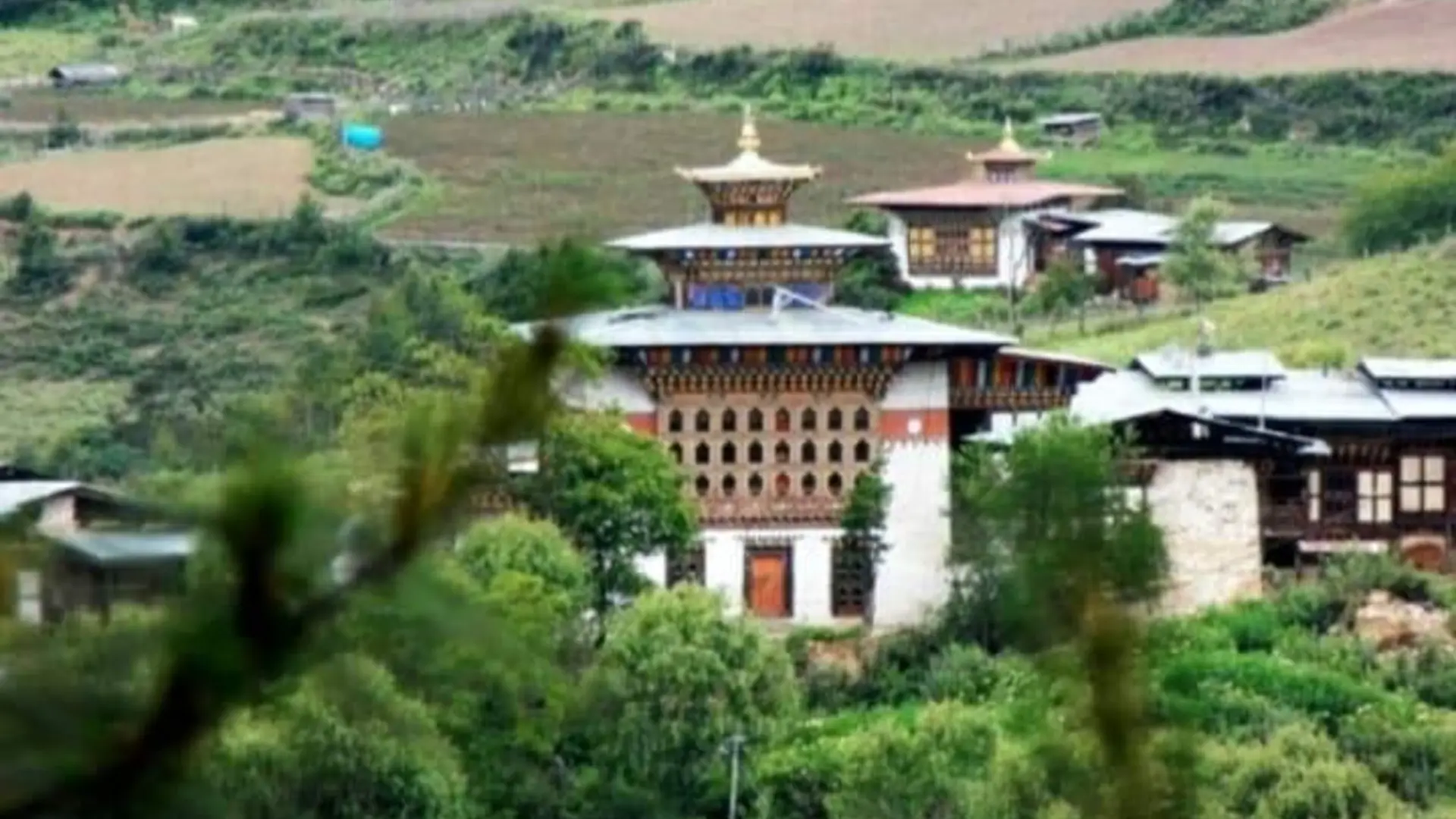
The Tangsibi Mani is one of the oldest festivals in Bumthang, with origins traced to the 14th century. It is held annually on the 15th day of the 1st Bhutanese lunar month — the full moon day — at Dechenling Lhakhang, a three-storied temple in Tangsibi village about half an hour’s drive east of Jakar. Unlike the dramatic Cham dance festivals that dominate Bhutan’s festival calendar, the Tangsibi Mani is centred on communal recitation: the entire village gathers to chant the sacred mantra Om Mani Padme Hum — the mantra of Chenrizig (Avalokiteshvara), the Bodhisattva of Compassion — in a continuous, rhythmic accumulation of merit.
Oral traditions connect the festival to Terton Sherab Mebar, a revered treasure-discoverer from Kham in eastern Tibet, who visited Bhutan and identified Dechenling Lhakhang as a holy site. He is said to have introduced the systematic recitation of the Mani mantra at this location — a practice that has continued unbroken for over six centuries. The Mani is the fundamental mantra of Tibetan Buddhism: it invokes Chenrizig’s compassion on behalf of all sentient beings, and its recitation is believed to purify negative karma, generate merit, and bring blessings of peace, health, and prosperity.
When
February or March
Where
Tangsibi Village
For
All Visitors Welcome
Guide Required
Yes — Mandatory
Festival Highlights
What Makes This Festival Special
01
Mani Prayer Chanting
At the heart of the festival is the rhythmic chanting of Mani prayers, creating a serene and meditative atmosphere. Monks and villagers gather at the local temple to perform this sacred ritual, seeking blessings from Chenrizig for themselves, their families, and their community. The continuous drone of the Mani mantra rising from the temple creates an atmosphere of collective devotion quite unlike the dramatic energy of a Cham dance festival. It is one of the most purely contemplative festival experiences available in Bhutan.
02
Mask Dances (Cham)
The festival features vibrant Cham dances, performed by monks wearing elaborate masks and costumes. These dances depict stories from Bhutanese mythology, showcasing the triumph of good over evil and invoke the compassion of Chenrizig on all who witness them. The Cham dances at the Tangsibi Mani are secondary to the prayer recitation but add colour and sacred energy to the gathering in the Dechenling Lhakhang courtyard.
03
Traditional Songs and Dances
Locals dress in their finest Gho and Kira and perform traditional songs and dances. These lively performances, accompanied by Bhutanese folk instruments, celebrate the rich cultural heritage of the Choekhor Valley. The Tangsibi Mani is a festival where the agricultural and spiritual calendars of Bumthang converge: the 1st lunar month falls in late winter or early spring, when the valley’s farming families have time to gather before the planting season begins.
04
Community Feast
The Tangsibi Mani is also a time for communal feasting. Families share traditional Bhutanese delicacies including Ema Datshi, Jasha Maru, and Red Rice in a spirit of unity and shared belonging. The full moon setting adds a dimension of natural beauty — the bright winter moon illuminating the valley and the white walls of Dechenling Lhakhang.
05
The Mani Mantra — Six Syllables, Infinite Compassion
Om Mani Padme Hum is the most widely recited mantra in Tibetan Buddhism. The six syllables are associated with the six realms of existence and the six perfections; together they invoke Chenrizig’s compassion across all realms simultaneously. At the Tangsibi Mani, the community’s collective recitation is understood to accumulate merit not just for the individuals present but for all sentient beings in the surrounding region.
06
Dechenling Lhakhang — Six Centuries of Continuous Practice
Dechenling Lhakhang has been the site of the Mani recitation tradition since the 14th century, when Terton Sherab Mebar identified it as sacred. Six hundred years of unbroken annual prayer recitation at the same site is a remarkable continuity. The three-storied temple is also worth visiting outside festival time.
Practical Information for Visitors
Arrive Early
Secure a good spot to witness the rituals and performances
What to Wear
While attending a festival, it’s important to dress respectfully. Bhutanese people wear their traditional Gho and Kira during Festivals, and it’s customary for visitors to dress modestly. Avoid wearing revealing clothing and wear warm layers — February and early March in the Choekhor Valley at around 2,600m are cold, and the full moon night can be very cold indeed. The morning and afternoon prayer sessions are indoors; dress warmly enough for standing or sitting in the temple courtyard for extended periods.
Photography
Photography is allowed at most festivals, but it’s always polite to ask before taking pictures, especially of monks or religious figures. Be respectful of the rituals, and avoid using flash photography during performances. Also, the full moon setting of the Tangsibi Mani offers beautiful light for photography of the temple exterior and the gathered community. Inside the temple, ask before photographing the sacred objects. The community in prayer — rows of people turning prayer wheels and chanting in unison — is one of the most moving photographic subjects in Bhutan.
Engage a Guide
A knowledgeable guide can enrich your understanding of the rituals and their significance. Also a certified tour guide is mandatory to attend festivals and visit most of the major tourist attractions and monuments in Bhutan
Explore Beyond the Festival
Include visits to nearby attractions like the Bumthang Kurjey Lhakhang, Kyichu Lhakhang, Mebar Tsho (The Burning Lake), and more...
Food Options
Bhutan offers a diverse range of food options, from delicious traditional Bhutanese dishes to international cuisines, including plenty of vegetarian choices to suit every taste.
Respect Local Customs
Follow the guidance of your guide and observe the rules of the Temple (Lhakhang) premises.
Om Mani Padme Hum — The Heart of the Festival
The Mani Mantra and Why It Matters
The mantra Om Mani Padme Hum is the most widely recited mantra in Tibetan Buddhism and one of the most ancient in the world. It is the mantra of Chenrizig — Avalokiteshvara, the Bodhisattva of Compassion — and its recitation is understood to invoke his compassion on behalf of all beings in all six realms of existence simultaneously. The six syllables correspond to the six realms (gods, demigods, humans, animals, hungry ghosts, hell beings) and the six perfections (generosity, ethics, patience, diligence, meditation, wisdom). Together they form a complete statement of compassionate intention toward all forms of life.
In Bhutanese Buddhist practice, the Mani mantra is everywhere: carved on mani walls (long stone walls with the mantra carved on individual stones), inscribed on prayer flags and prayer wheels, worn as jewellery, and recited continuously by the elderly. But the Tangsibi Mani takes this daily individual practice and scales it: an entire village, plus pilgrims from across Bumthang, gathering to recite together in the presence of the Dechenling Lhakhang sacred site, on the most auspicious day of the lunar month — the full moon.
Terton Sherab Mebar and the Festival’s Origins
The founding of the Tangsibi Mani tradition is attributed to Terton Sherab Mebar, a treasure-discoverer (terton) from Kham in eastern Tibet who visited Bhutan and identified several sacred sites in the region. At Dechenling Lhakhang in Tangsibi village, he declared the site to be of particular spiritual power — an auspicious location for the practice of Chenrizig — and established the systematic community recitation of Om Mani Padme Hum. This was in the 14th century. The tradition has continued annually without interruption since then.
The connection to Chenrizig rather than Guru Rinpoche is significant: while most Bhutanese festivals honour Guru Rinpoche’s birth anniversary on the 10th day of a lunar month, the Tangsibi Mani honours Chenrizig on the 15th day — the full moon. This places it in a different devotional tradition from the Tshechu festivals, one oriented toward the Bodhisattva of Compassion rather than the master of tantric power.
What to Expect at the Tangsibi Mani
The festival is held over several days in February or March, centred on the 15th day of the 1st Bhutanese lunar month. The core activity is communal Mani recitation: monks, Gomchens (lay monks), and villagers sit together in the Dechenling Lhakhang temple and its courtyard, turning prayer wheels and chanting Om Mani Padme Hum in unison. The rhythm of hundreds of voices in continuous recitation creates an atmosphere of deep collective practice unlike any other festival in Bhutan.
Alongside the prayer recitation, traditional Cham dances are performed in the courtyard, folk songs are sung, and communal feasts are shared. But the dances and performances are secondary here to the prayer work — this is one of the few festivals in Bhutan where the devotional practice is the centrepiece rather than the spectacle. For visitors interested in the interior life of Bhutanese Buddhism — what it actually feels like to participate in the tradition rather than watch it from the outside — the Tangsibi Mani is among the most rewarding experiences in the country.
The drive from Jakar is about half an hour east. The village of Tangsibi is in the wider Choekhor Valley, and the surrounding landscape of buckwheat fields, prayer flags, and forested ridgelines provides a setting of quiet beauty appropriate to the contemplative character of the festival.
Things to Do in Bumthang Around the Festival
- Kurjey Lhakhang — one of the holiest sites in Bhutan, 20 minutes west of Tangsibi. The body imprint of Guru Rinpoche is preserved in a cave inside the temple complex.
- Jambay Lhakhang — one of the oldest temples in Bhutan (7th century), a few minutes from Kurjey. The Jambay Lhakhang Drup (October/November) with its midnight fire dance is held here.
- Tamzhing Lhakhang — founded by Pema Lingpa in 1501, with original 500-year-old murals. Pema Lingpa’s chain mail coat is kept here.
- Mebar Tsho (Burning Lake) — in the Tang Valley, the sacred gorge where Pema Lingpa retrieved terma by diving with a lit torch. About an hour from Tangsibi.
- Jakar Dzong — Bhutan’s largest dzong, the Castle of the White Bird, 30 minutes west of Tangsibi.
When is this Festival in 2026?
The Tangsibi Mani Festival Bhutan is held annually following the Bhutanese lunar calendar. Contact us for confirmed dates and to book your trip well in advance — festival time is the busiest travel period in Bhutan.
Get Festival Dates & BookBook Your Festival Tour with Found Bhutan
Everything handled — visa, SDF, flights, accommodation, certified guide, and festival access.
Seamless Planning
We handle your Bhutan visa, SDF, flights, accommodation, certified guide, meals, and in-country transportation from arrival to departure.
Personalised Itineraries
Festival days combined with the experiences that matter most to you — treks, monasteries, village visits, or simply time to absorb Bhutan at your own pace.
Expert Local Guides
Our certified guides know every dance and every ritual. They bring the festival alive with context, stories, and insider access you won't find on your own.
You're a Guest, Not a Client
At Found Bhutan, we build relationships — not transactions. Many of our travellers return year after year, and many become lifelong friends.
Book Early
Festival tours sell out months in advance. Early bookings secure the best accommodation and guarantee your place at one of Bhutan's most extraordinary events.
Licensed & Local
Found Bhutan is a fully licensed Bhutanese tour operator. We are local, accountable, and deeply invested in showing you Bhutan at its most authentic.
Customise Your
Bhutan Tour Today
Fill in the form and our expert team will get back to you within 24 hours.
Stay in the loop
Travel stories from the Last Shangri-La
Join fellow Bhutan enthusiasts. Get our latest guides, travel tips and exclusive insights delivered to your inbox.
No spam, ever. Unsubscribe anytime.