Bhutan, a kingdom in the Eastern Himalayas, offers stunning landscapes, vibrant festivals, rich culture, and a deep spiritual heritage. Visiting Bhutan requires a thorough understanding of its tourism policy — and planning ahead is not just recommended, it is essential.
Below is your complete step-by-step guide to planning the perfect trip to the Kingdom of Bhutan — from choosing the right season to the moment you land at Paro International Airport.
Planning Your Trip
Why Bhutan requires advance planning
Bhutan is not a destination you wing. Its "High Value, Low Impact" tourism philosophy means that every visitor must plan ahead — securing a licensed tour operator, a valid visa, and a confirmed itinerary before boarding a single flight. Think of the planning process not as a chore, but as the beginning of the journey itself.
Here is your ultimate 14-step guide to planning the perfect trip to the Kingdom of Bhutan.
Know the Best Time to Visit Bhutan
Season affects cost more than any other planning variable
Bhutan has two peak seasons — spring (March–May) and autumn (September–November) — and two shoulder/off-peak seasons — monsoon (June–August) and winter (December–February). Peak season means higher accommodation rates, advance bookings filling up faster, and the most popular festivals. Off-peak can reduce accommodation costs by 20–30% and guarantees far more flexibility, but comes with trade-offs: monsoon means rain and closed trekking routes; winter means cold and fewer festivals.
The SDF (USD 100/night) does not change by season — it is fixed regardless of when you travel. The variable costs are accommodation, flights, and availability. For a full month-by-month breakdown of weather, festivals, and what each season costs, see our Best Time to Visit Bhutan guide.
| Season | Months | SDF Rate | Accommodation | Notes |
|---|---|---|---|---|
| Peak Spring | Mar–May | USD 100/night | Higher — book 3–4 months ahead | Paro Tsechu, rhododendrons, best weather |
| Peak Autumn | Sep–Nov | USD 100/night | Higher — book 3–4 months ahead | Thimphu Tsechu, clearest skies, ideal trekking |
| Monsoon | Jun–Aug | USD 100/night | Lower — 20–30% discounts possible | Rain, leeches, no trekking; Haa Summer Festival |
| Winter | Dec–Feb | USD 100/night | Lower — 15–25% discounts possible | Cold, clear, peaceful; Punakha Drubchen in Feb |
Align Your Trip with Your Interests
Your interests shape your itinerary — and your itinerary shapes your cost
Bhutan is a country of extraordinary depth — you can spend a week seeing the main cultural sights or several weeks trekking into remote valleys. Your interests directly determine where you go and how long you stay, both of which drive your total trip cost. A trekking-focused 12-day itinerary will cost more than a 7-day cultural tour, not because Bhutan charges more for trekking, but because more nights means more SDF, and longer itineraries require more guide and accommodation days.
Fix Your Travel Date
Booking early directly reduces your total trip cost
Once you have a season in mind, fixing a specific date as early as possible protects you from two cost-inflating forces: accommodation price increases as availability shrinks, and the risk of your preferred festival date selling out entirely. The most popular dates in Bhutan — Paro Tsechu in March/April, Thimphu Tsechu in September/October, Punakha Drubchen in February/March — can be fully booked at the hotel level six or more months in advance at peak season.
The SDF itself does not require early booking — it is charged per night regardless. But the accommodation component of your trip cost is significantly lower if you book 3–4 months before your arrival date rather than 4–6 weeks before. Found Bhutan advises booking at least 3 months ahead for peak season and 6–8 weeks ahead for shoulder/off-peak.
Decide the Number of Days
From a 5-day highlight to a full 14-day expedition
A typical Bhutan tour runs 5 to 10 days. A 7-day itinerary will comfortably cover Thimphu, Paro, and Punakha — the country's cultural heartland — with room for trekking and key monasteries. Longer stays open up the less-visited eastern and central regions.
| Duration | What You Can Cover | Best For |
|---|---|---|
| 5 Days | Paro, Thimphu, Tiger's Nest hike | First-time visitors, short trips |
| 7 Days | Paro, Thimphu, Punakha, festivals | Most popular itinerary |
| 10 Days | Above + Bumthang, Haa Valley | Deep cultural exploration |
| 14+ Days | Full country, multi-day treks | Serious trekkers, repeat visitors |
We recommend deciding on duration based on your interests rather than budget alone. There is no guarantee of a second visit to Bhutan — aim for the experience you truly want.
Plan Your Budget
SDF, visa fees, and daily tour costs explained
Bhutan's "High Value, Low Impact" tourism policy means costs are structured differently from most destinations. Two mandatory government charges apply to all visitors before any tour expenses:
When budgeting for your complete Bhutan trip, plan on approximately $250–$300 per person per day. This includes the SDF, visa fee, a luxury SUV with driver, a professional licensed guide, three-star hotel accommodation, and meals.
| Budget Category | Approx. Daily Budget (USD) | Accommodation |
|---|---|---|
| Standard | $250 – $300 | 3-star hotels |
| Comfort | $300 – $450 | 4-star hotels & boutique lodges |
| Luxury | $450+ | 5-star & Six Senses properties |
Choose a Tour Operator
Your tour operator is your single most important choice in Bhutan
All tourists visiting Bhutan must book through a licensed Bhutanese tour operator — it is a legal requirement, not an option. Your operator handles your visa, SDF payment, guide, driver, accommodation, and all logistics. Found Bhutan's tour packages include the SDF, visa fee, a professional licensed guide, a private luxury SUV with driver, three-star or above hotel accommodation, and all meals from arrival to departure — quoted as a single transparent price. Request a personalised quote for your dates and interests.
Confirm Your Itinerary
A confirmed itinerary locks your costs before you book flights
Once you have chosen your operator and agreed on dates, confirming your itinerary is the next step. This locks in your accommodation bookings, guide assignment, permits, and the exact number of SDF nights. Your final total trip cost is only calculable after your itinerary is confirmed. See our complete Bhutan tour planning guide for the step-by-step itinerary-building process.
Apply for Your Bhutan Visa
USD 40 per person — one-time, non-refundable
The Bhutan visa fee is USD 40 per person, paid once for your entire stay regardless of length. Processing takes 5 working days from submission of a completed application. Found Bhutan handles the entire visa application process on your behalf as part of every tour package — you provide your passport details and we manage the rest. For full step-by-step instructions if you prefer to apply yourself, see our Bhutan visa application guide.
Book Your Flight Tickets
Paro flights are limited — early booking saves money
Paro International Airport is served exclusively by Drukair and Bhutan Airlines — no other carriers operate into Bhutan. Routes connect Paro to Bangkok, Delhi, Kathmandu, Kolkata, and Singapore, with limited weekly frequencies. Seat availability is genuinely constrained — particularly on peak season dates — and fares increase significantly as departure approaches. Booking flights 2–3 months ahead at minimum is strongly recommended. See our Bhutan flights guide for current routes, prices, and booking tips.
Book Your Hotels
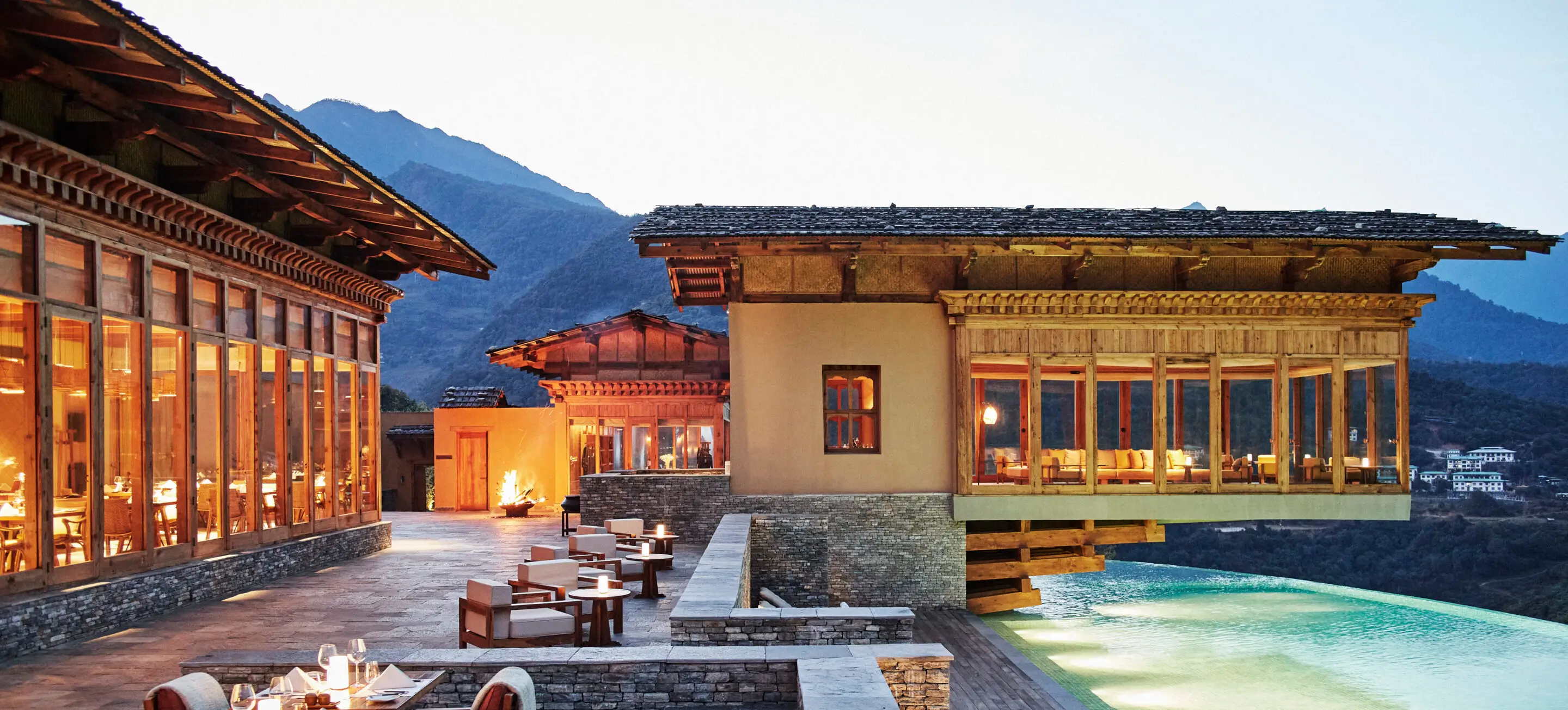
Accommodation in Bhutan — from farmhouse to Five Stars
Accommodation is included in all Found Bhutan packages. The tier you choose has a significant effect on your daily cost above the SDF floor:
| Tier | Price per Night (USD) | Examples |
|---|---|---|
| 3-Star Standard | USD 60–80 | Mid-range Bhutanese hotels |
| 4-Star Comfort | USD 100–200 | Boutique lodges, heritage properties |
| 5-Star Luxury | USD 300–600 | Amankora, Taj Tashi, Uma Paro |
| Ultra-Luxury | USD 700–1,200+ | Six Senses Bhutan (5-lodge circuit) |
See our Bhutan hotels guide for a full directory of options at every price point.
What to Pack
Bhutan-specific packing affects your comfort — and your costs on arrival
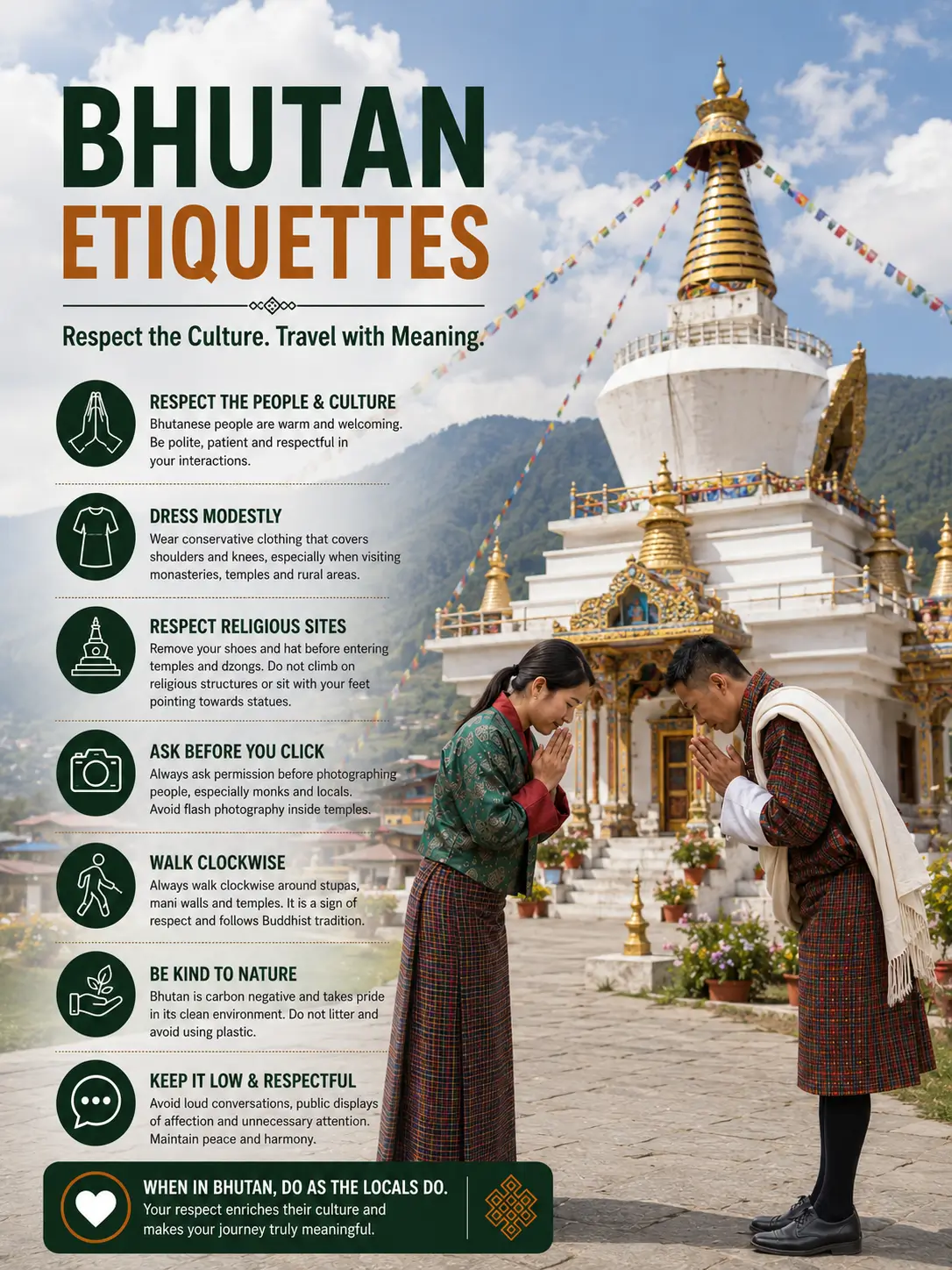
Packing correctly for Bhutan means you will not need to buy expensive gear on arrival. Key things to bring: layers for Bhutan's extreme temperature variation between valley floors and mountain passes; modest clothing for monastery visits (long sleeves, long trousers/skirts); sturdy walking shoes for monastery and temple visits; and a down jacket if visiting between October and March. Plastic bags are banned by law — bring reusable bags. See our complete Bhutan packing guide for a full season-by-season checklist.
Learn About Bhutan Before You Go
A little context makes every Ngultrum go further
Bhutan is not a destination you can fully understand from a brochure. The country's Gross National Happiness philosophy, its Buddhist heritage, and the role of its monarchy in everyday life all shape what you will see — and understanding them will make every temple, festival, and encounter richer. Your Found Bhutan guide will bring Bhutan's history and culture alive throughout your trip. To begin your preparation, explore our full Bhutan travel guide.
Visit Bhutan
You are ready
With your operator confirmed, itinerary agreed, visa approved, flights booked, and bags packed — the only thing left is to arrive. From the moment your plane banks over the mountain ridges on the approach to Paro Airport — one of the most dramatic arrivals in commercial aviation — Bhutan will not disappoint. Found Bhutan's team will be at Paro to meet you. Start planning today.
Found this helpful?
Share this guide with fellow travellers



Customise Your
Bhutan Tour Today
Fill in the form and our expert team will get back to you within 24 hours.