
Visit Bhutan
The Last Shangri-La · Land of the Thunder Dragon

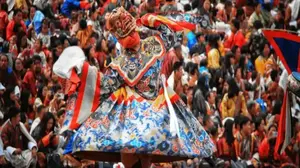
A Journey Unlike Anywhere Else
Bhutan is one of the world's most extraordinary destinations — a tiny Himalayan kingdom that has fiercely protected its culture, environment, and identity while the world modernised around it. Here, ancient monasteries cling to cliff faces, crimson-robed monks chant in centuries-old courtyards, and snow-capped peaks tower over pristine valleys.
Guided by its philosophy of Gross National Happiness (GNH), Bhutan measures progress not by wealth but by the wellbeing of its people. It is constitutionally required to keep at least 60% of its land forested — it currently sits above 70%. The result is a kingdom that feels untouched, deeply spiritual, and profoundly human.
Best Time to Visit Bhutan
Bhutan is a year-round destination with each season offering something uniquely beautiful. Here's your seasonal guide to help you choose the perfect time. Full month-by-month guide →
Heavy rainfall makes the landscape lush and intensely green. Fewer tourists mean lower demand, and the valleys are strikingly beautiful. Treks are limited, but cultural visits thrive. Ideal for budget-conscious travellers.
The undisputed prime season. Crystal-clear skies offer breathtaking views of Himalayan peaks, golden foliage blankets the valleys, and major festivals like Thimphu Tshechu come alive. Perfect for trekking and photography.
Cold and peaceful, winter reveals a mystical Bhutan dusted in snow. The air is crisp and brilliantly clear, with dramatic mountain views. The Punakha Drubchen and Tshechu is a winter highlight. Very few tourists.
Top Destinations in Bhutan
From dramatic dzong fortresses and sacred monasteries to lush river valleys — these are the places every traveller to Bhutan must experience.
Tiger's Nest Monastery
Bhutan's most iconic landmark, Taktsang Monastery perches impossibly at 3,120m. The hike up takes around 4–5 hours and offers one of the most rewarding views in the Himalayas.
Explore Paro
Punakha Dzong
The "Palace of Great Happiness" sits where two rivers meet. One of the finest dzong fortresses in Bhutan, it was the nation's historic capital and remains the winter residence of the Je Khenpo.
Explore Punakha
Thimphu Capital City
Bhutan's charming capital blends ancient tradition with a gentle modernity — no traffic lights, handwoven textiles in artisan shops, the vast Buddha Dordenma statue, and excellent local cuisine.
Explore Thimphu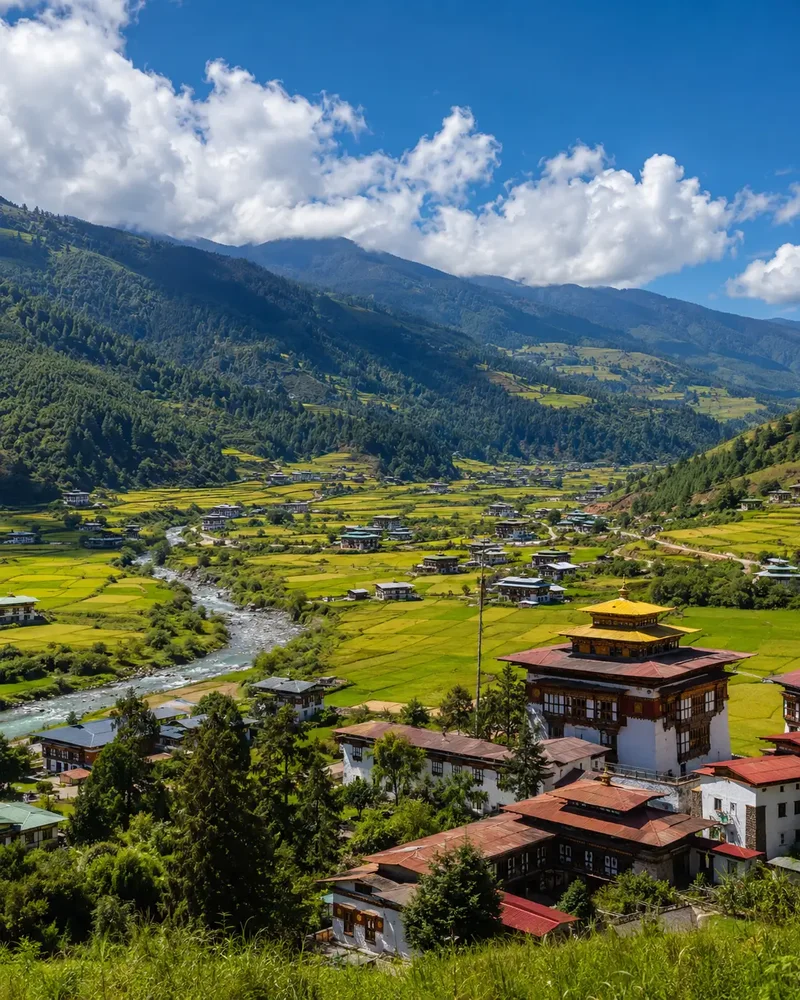
Bumthang Valley
The spiritual heartland of Bhutan — home to some of its oldest and most revered temples, apple orchards, buckwheat fields, and a deeply meditative atmosphere. Often described as Bhutan's soul.
Explore Bumthang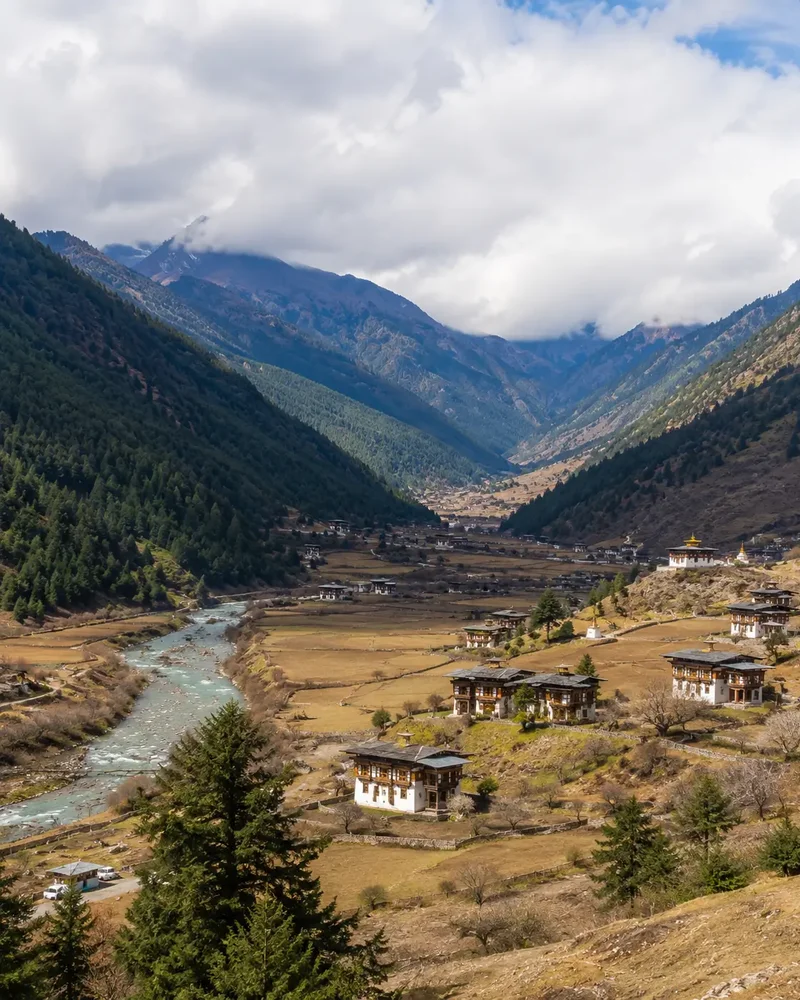
The Hidden Valley
One of Bhutan's most remote and beautiful valleys, Haa only opened to tourists in 2002. Ancient fortresses, traditional yak herding villages, and stunning alpine meadows await those willing to venture off the main trail.
Explore Haa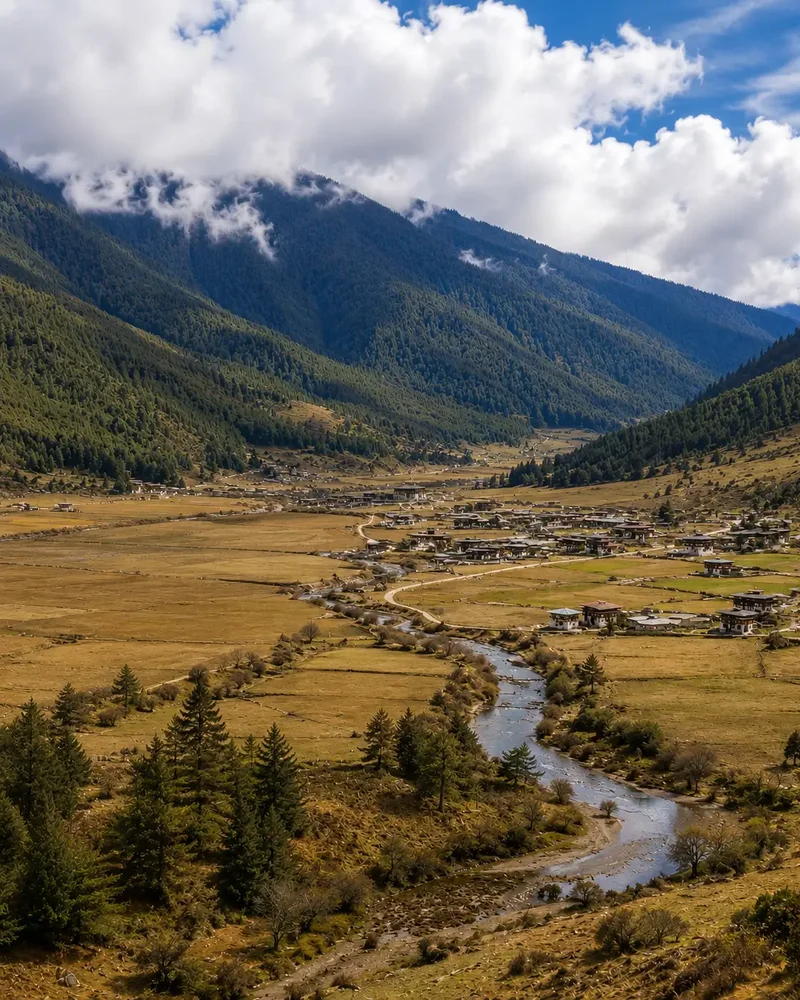
Phobjikha Valley
A glacial valley and one of Bhutan's most important wildlife preserves. Every winter, it becomes a haven for the rare and endangered black-necked crane — a sight of profound natural beauty and cultural significance.
Explore Phobjikha
Gasa & the Hot Springs
Bhutan's most remote and least-visited district — home to natural hot springs, the imposing Gasa Dzong, and the Royal Highland Festival. The gateway to the country's high northern reaches.
Explore Gasa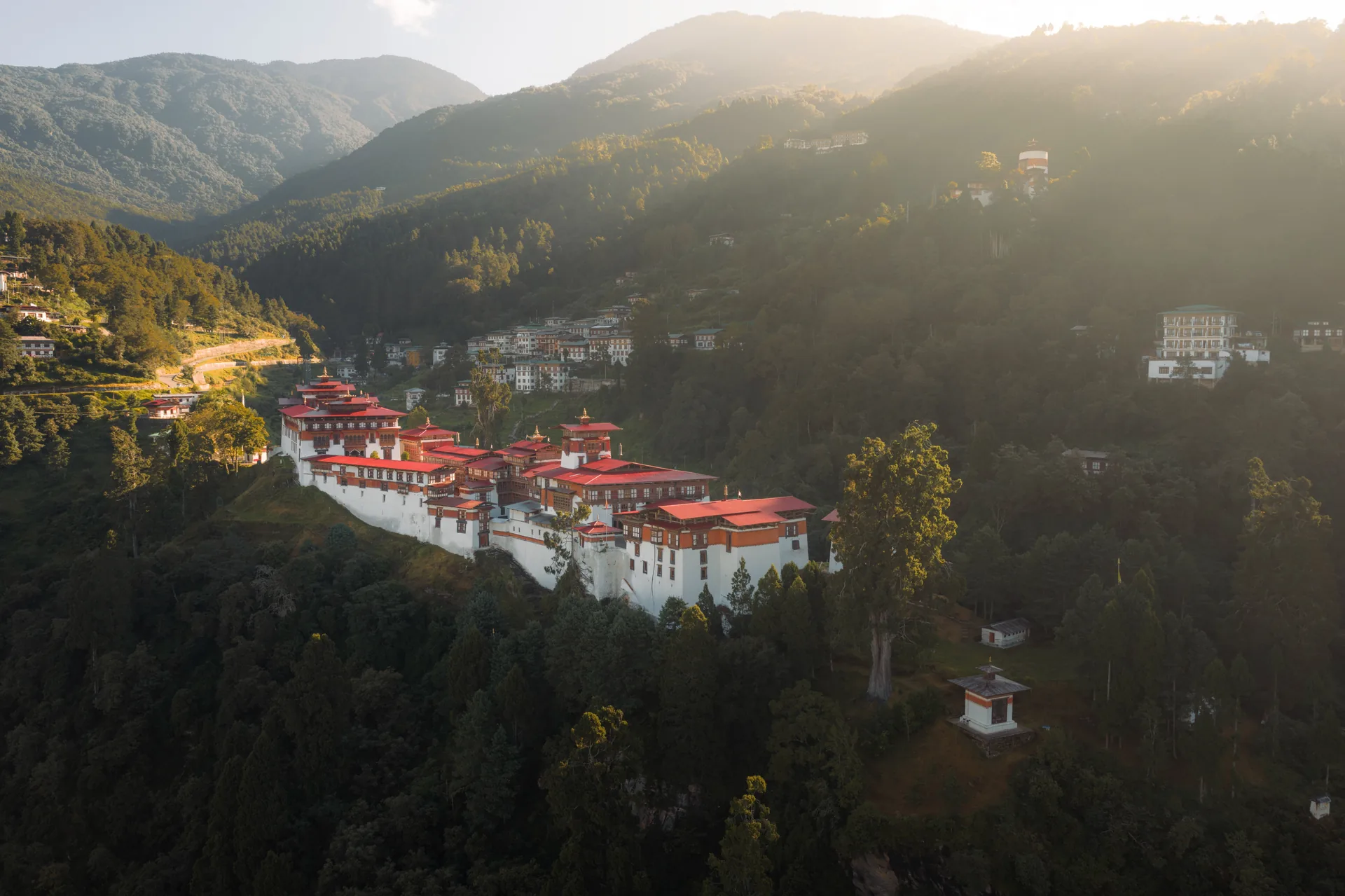
Trongsa, the Ancestral Seat
Home to Bhutan's largest dzong and the ancestral seat of the royal family. The Ta Dzong museum and Chendebji Chorten make Trongsa the essential gateway to central Bhutan.
Explore Trongsa
Wangdue Phodrang
Bhutan's warmest district and gateway to Phobjikha Valley's black-necked cranes. River rafting on the Punakha-Wangdue rivers adds an adventurous edge to this scenic valley.
Explore WangdueVisa & SDF
Every visit to Bhutan requires a Tourism Visa and the Sustainable Development Fee (SDF), booked through a licensed operator like Found Bhutan — you can't arrange either independently. For the full breakdown of costs, processing times, and country-specific rules for Indian, Bangladeshi, and Maldivian nationals, see the complete visa & SDF section in our Bhutan Travel Guide.
Iconic Treks in Bhutan
Bhutan's trail network cuts through some of the world's most untouched Himalayan wilderness. These legendary routes are life-changing experiences for any adventure traveller.
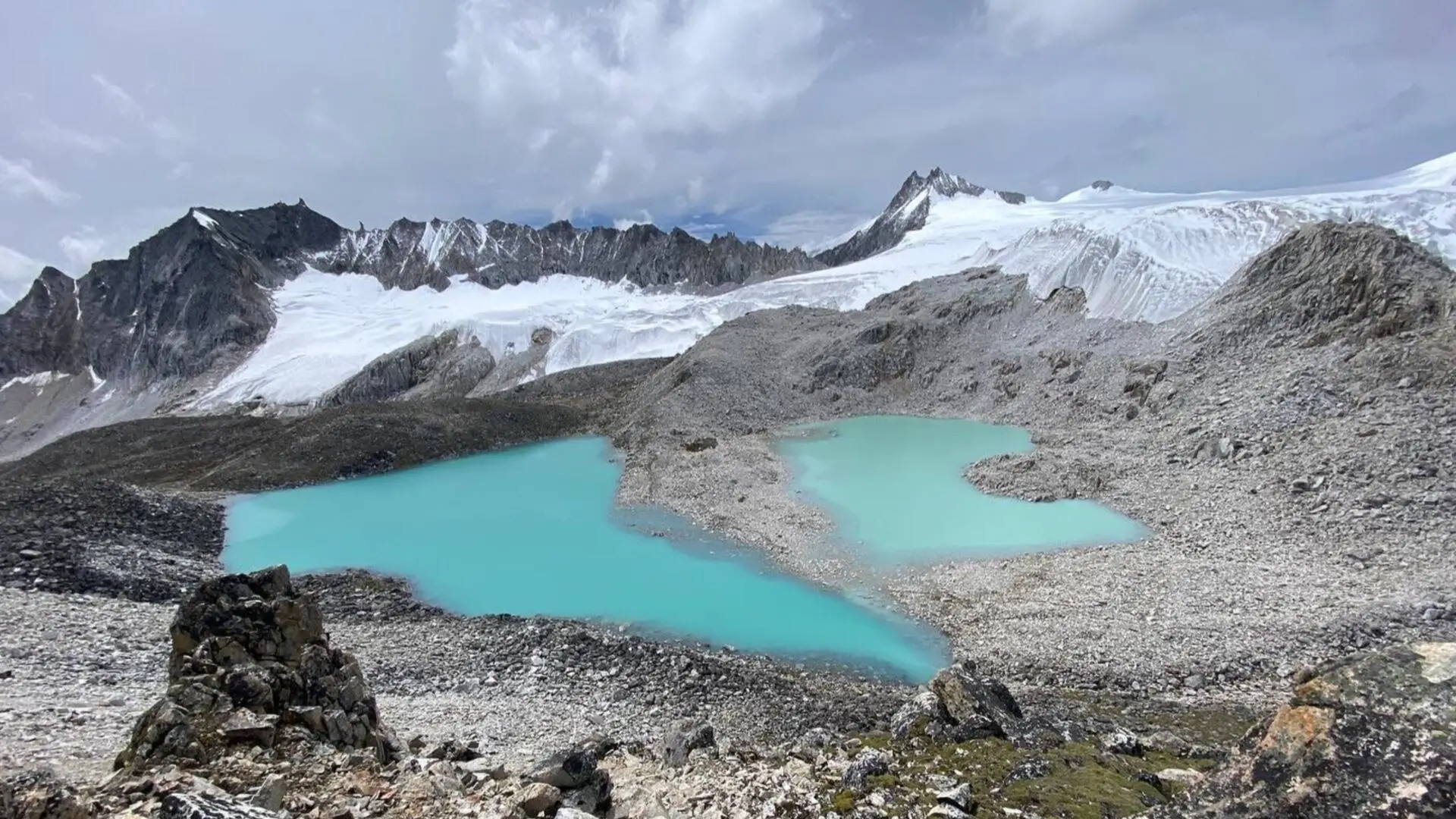
Snowman Trek
Often called the world's most difficult trek, the Snowman crosses 11 high-altitude passes above 4,500m. An extreme undertaking through Bhutan's remotest wilderness — only a handful complete it each year.
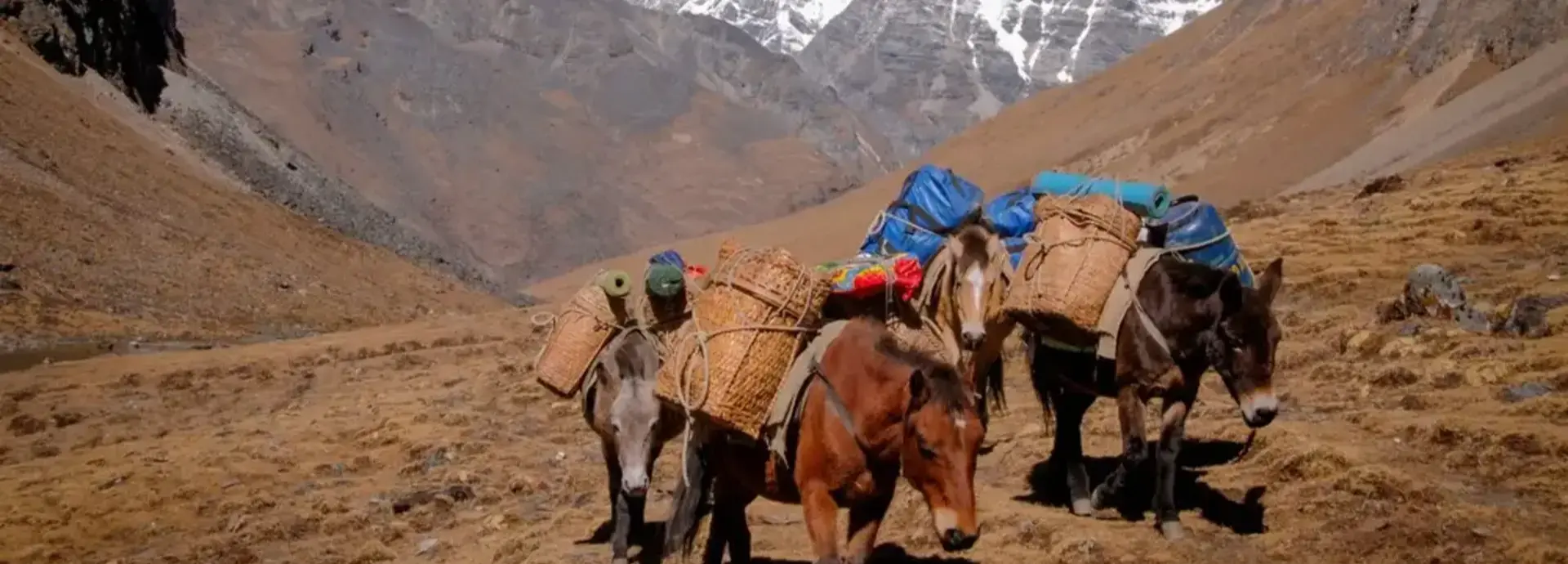
Druk Path Trek
The most popular trek in Bhutan runs from Paro to Thimphu through alpine meadows, ancient ruins, and pristine high-altitude lakes. A perfect introduction to Bhutanese trekking with spectacular mountain views.

Jomolhari Trek
A classic high-altitude route to the base camp of Mount Jomolhari (7,326m). Passes through yak herder camps, remote valleys, and the 15th-century Jomolhari Base Camp with awe-inspiring glacial scenery.
Festivals Not to Miss
Bhutan's colourful Tshechus are among the world's most extraordinary cultural events — sacred masked dances, silk thangkas, and centuries of living tradition, all performed in ancient fortress courtyards. Full festival calendar →

Paro Tshechu
The most attended festival in Bhutan, held in the courtyards of the magnificent Paro Dzong. Vibrant masked Cham dances re-enact stories from the life of Guru Rinpoche. The festival culminates in the unfurling of the Thongdrel — a massive silk appliqué thangka — at dawn, which is said to liberate all who behold it from sin. An unmissable experience.

Thimphu Tshechu
Held at the Tashichho Dzong in the capital, Thimphu Tshechu is a three-day celebration of Guru Rinpoche. The festival draws thousands of Bhutanese in their finest traditional attire — an ocean of silk and gold kira and gho. Sacred mask dances, atsaras (jesters), and vibrant pageantry fill the dzong courtyard for three unforgettable days.
Punakha Drubchen & Tshechu
Unique to Punakha Dzong, the Drubchen is a dramatic war re-enactment celebrating Bhutan's 17th-century victory over Tibetan invaders. Warriors on horseback, ancient armour, and fierce mock battles make this one of Bhutan's most theatrical and spine-tingling events, followed immediately by the Punakha Tshechu.
Haa Summer Festival
A secular, culturally rich festival celebrating the nomadic heritage of the Haa Valley. Yak herding demonstrations, traditional food stalls, archery competitions, and folk performances showcase a side of Bhutanese life rarely seen by tourists. Held in the stunning meadows of the Haa Valley, it's an authentic window into highland Bhutanese culture.
Culture & Cuisine
A Living Buddhist Kingdom
Bhutanese culture is inseparable from Vajrayana Buddhism, introduced by the Indian saint Guru Rinpoche in the 8th century. The faith permeates every aspect of daily life — from the prayer flags fluttering on every hilltop to the butter lamps burning in every home.
The national dress is compulsory in government buildings and dzongs: the gho (a knee-length robe worn by men) and the kira (an ankle-length dress worn by women). Woven in handloomed silk and wool, these garments are masterpieces of Bhutanese artistry.
- Archery is Bhutan's national sport — watch a village match for pure joy
- Masked Cham dance is a sacred performing art form, not mere entertainment
- Dzongs serve as both administrative and religious centres simultaneously
- Prayer wheels, mani walls, and chortens line every trail and roadside
- Phallus symbols painted on house walls are traditional good-luck charms
Fiery, Earthy & Deeply Satisfying
Bhutanese food is a revelation. Forget bland tourist fare — Bhutanese cuisine is bold, deeply flavourful, and built around red chilli peppers, which are treated not as a spice but as a vegetable. The national dish, Ema Datshi (chilli and yak cheese), is served at every meal.
Red rice (a nutty, earthy strain grown in Paro) is the staple grain, accompanied by simple but intensely flavourful dishes cooked with local dairy, foraged mushrooms, and dried meats. Don't miss trying Ara, the traditional home-brewed rice wine.
- Ema Datshi — chilli and yak cheese, the national dish
- Phaksha Paa — stir-fried pork with red chillies and bok choy
- Red Rice — nutty, fibre-rich, and unique to Bhutan
- Jasha Maru — spiced minced chicken with tomato and ginger
- Suja — traditional butter tea, an acquired taste worth trying
- Hoentay — buckwheat dumplings filled with turnip from Haa
Respectful Travel in Bhutan
Bhutanese people are gracious and warm hosts, and a little cultural awareness goes a long way. Following a few simple customs will enrich your interactions and show respect for this deeply spiritual kingdom.
At religious sites, dress modestly and remove your shoes before entering temples. Always walk clockwise around chortens, mani walls, and prayer wheels. Avoid pointing at religious statues or touching sacred objects without permission.
- Dress modestly — shoulders and knees covered when visiting dzongs and temples
- Remove shoes and hats before entering any religious building
- Do not photograph people without asking permission first
- Accept food and gifts with both hands or with your right hand
- Avoid public displays of affection — Bhutan is a conservative society
- Bargaining is not common practice in Bhutan — respect fixed prices
Now Handle the Practical Side
Flights and routes, currency and payments, what to pack, altitude and health, connectivity, getting around, and shopping — every practical detail for turning this into a real trip lives in one place. Already picturing your route? See our day-by-day itinerary guides for 5, 7, 10, and 14-day plans.
Read the Complete Bhutan Travel Guide
Customise Your
Bhutan Tour Today
Fill in the form and our expert team will get back to you within 24 hours.