Haa Summer
Festival
About the Festival
Haa Summer Festival — Nomadic Culture in Bhutan’s Hidden Valley
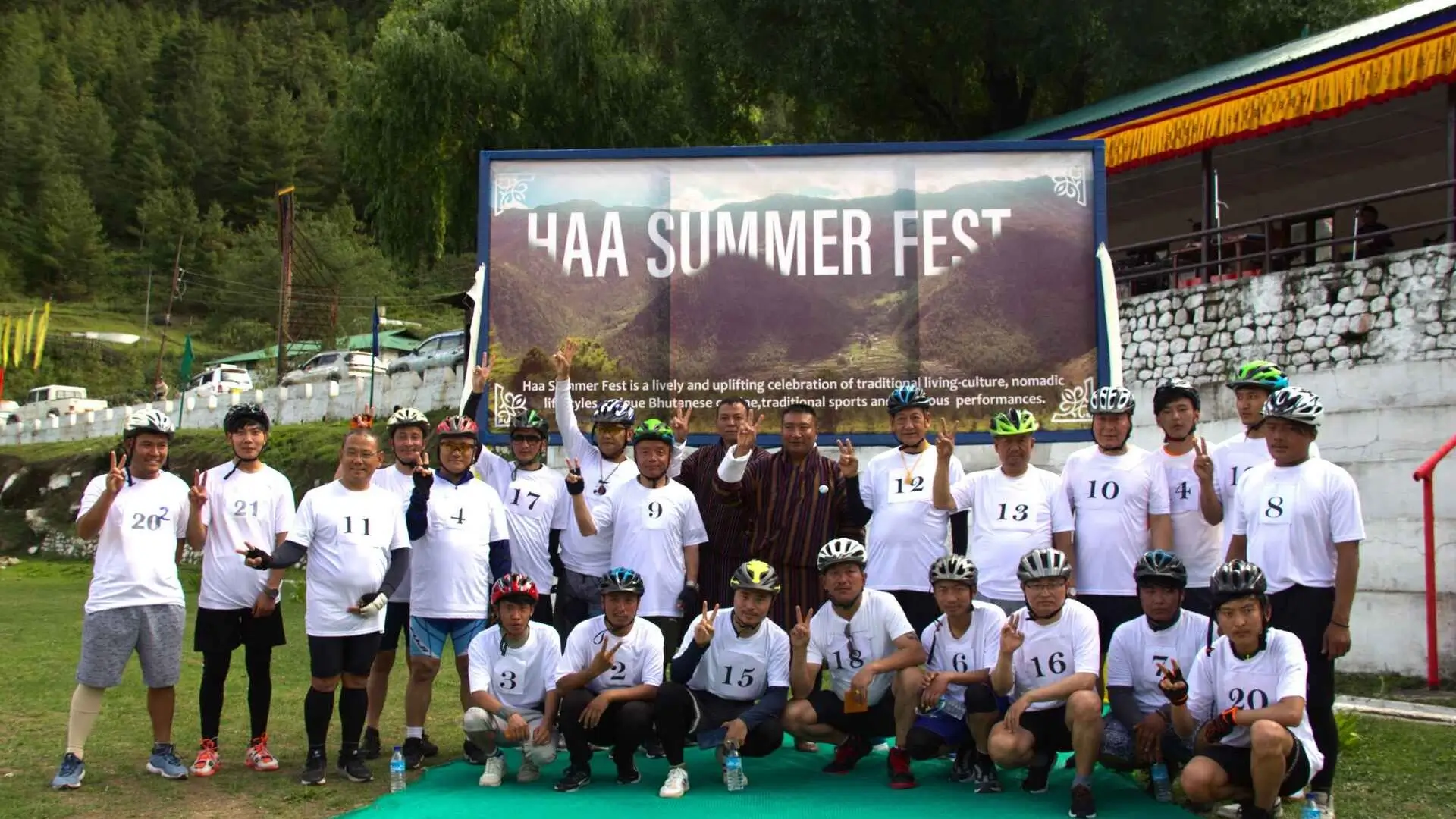
The Haa Summer Festival is one of Bhutan’s newest festivals, established around 2011–2012 to celebrate the living culture of the nomadic yak herders of Haa Valley and to open this long-isolated district to visitors. Unlike the great religious Tshechus held elsewhere in Bhutan, the Haa Summer Festival is not centred on Buddhist ceremony — it is a two-day celebration of highland pastoral life: yak sports and demonstrations, traditional food, folk songs, local crafts, and the rich blend of Buddhist and Bon shamanic traditions that make the Haaps — the people of Haa — culturally distinct from any other community in Bhutan.
Haa Valley sits at around 2,700 metres in Bhutan’s westernmost district, accessible only by road over Chelela Pass (3,988m) — Bhutan’s highest drivable road pass — from Paro, about 65km and two hours away. The valley only opened to foreign tourists in 2002. It remains one of the least-visited parts of the country, and the festival is one of the few occasions when outsiders can connect directly with its people, its food, and its extraordinary traditions.
When
July or August
Where
Bhutan\'s Haa Valley
For
All Visitors Welcome
Guide Required
Yes — Mandatory
Festival Highlights
What Makes This Festival Special
01
Traditional Bhutanese Dances and Music
One of the most captivating aspects of the Haa Summer Festival is the traditional Bhutanese dance and music that form the heart of the event. Yak Cham mask dances performed by local villagers open the festivities, alongside folk songs and dances unique to the highlanders of western Bhutan. These are not the formal monastic Cham of the Tshechus — they carry the earthier, more improvisational flavour of nomadic highland culture.
02
Traditional Bhutanese Food and Local Cuisine
Food is an essential part of the Haa Summer Festival, and visitors will have the opportunity to sample some of Bhutan’s most delicious and authentic dishes. The festival is the best place in Bhutan to try Haaps cuisine: Hoentey (buckwheat dumplings stuffed with cheese and turnip leaves), Khuley (buckwheat pancakes), Puta (buckwheat noodles), Yaksha Kam (dried yak meat), and Tse Thu (local porridge). Local Ara — the homemade spirit distilled from grains — flows freely.
03
Traditional Crafts and Handicrafts
The Haa Summer Festival also features displays of traditional Bhutanese crafts and handicrafts, highlighting the artistic skills of the local community. Visitors can purchase handmade items such as woven yak-hair textiles, wooden bowls, jewellery, and thangka paintings. Artisans also demonstrate the making of the traditional yak-hair tent — a living craft that is disappearing even in Haa.
04
Cultural Exhibitions and Agricultural Displays
The festival also showcases cultural exhibitions and agricultural displays that reflect the farming heritage of the Haa Valley. Visitors can see traditional farming tools, learn about organic high-altitude farming in one of Bhutan’s most isolated agricultural communities. Yak shearing and wool-processing demonstrations give visitors a hands-on glimpse of the nomadic economy.
05
Traditional Sports You Can Join
Unlike most Bhutanese festivals, visitors are actively encouraged to participate. Try Khuru (the traditional dart game), Soksum (javelin throw), archery, or yak riding. Competitive archery tournaments are held throughout the two days, and picking up a bow alongside Bhutanese archers is one of the more memorable things a visitor can do in Haa.
06
Ap Chhundu — Guardian Spirit of Haa
The people of Haa maintain a unique spiritual tradition that blends Vajrayana Buddhism with ancient Bon shamanic beliefs. Their guardian deity, Ap Chhundu, is believed to protect all who are born in Haa. Rituals and offerings to Ap Chhundu are woven into the fabric of local life and are visible during the festival for those who know to look.
Practical Information for Visitors
Plan Ahead
The festival is popular among locals and tourists alike, so it’s best to book accommodation and transportation early.
What to Wear
While attending a festival, it’s important to dress respectfully. Bhutanese people wear their traditional Gho and Kira during Tshechus, and it’s customary for visitors to dress modestly. Avoid wearing revealing clothing and wear comfortable, layered clothing — mornings in Haa at 2,700m can be cool even in summer, and the weather is changeable. The festival is outdoors so bring a light waterproof layer. Sturdy shoes are essential if you plan to explore the valley.
Photography
Photography is allowed at most festivals, but it’s always polite to ask before taking pictures, especially of monks or religious figures. Be respectful of the rituals, and avoid using flash photography during performances.
Engage a Guide
A knowledgeable guide can enrich your understanding of the rituals and their significance. Also a certified tour guide is mandatory to attend festivals and visit most of the major tourist attractions and monuments in Bhutan
Food Options
Bhutan offers a diverse range of food options, from delicious traditional Bhutanese dishes to international cuisines, including plenty of vegetarian choices to suit every taste.
Respect Local Customs
Follow the guidance of your guide and observe the rules of the area.
The Valley & Its People
Haa Valley — Bhutan’s Last Opened District
Haa District was the last in Bhutan to be opened to foreign tourists, only becoming accessible to international visitors in 2002. Before that, its position on the border with Tibet and its strategic military significance kept it closed. The result is a valley that retains a quality of pristine isolation not found anywhere else in western Bhutan. The valley floor sits at around 2,700 metres and is flanked by ridges rising to over 4,000m, with the sacred peak of Jomolhari (7,326m) visible to the north on clear days. The road over Chelela Pass (3,988m) that connects Haa to Paro is Bhutan’s highest drivable road. The pass itself — draped in thousands of prayer flags, with panoramic views of Jomolhari and Jichu Drake — is one of the most spectacular road crossings in the Himalayas.
The people of Haa — known as Haaps — are strong-boned, resilient yak herders and high-altitude farmers who cultivate wheat, potatoes, barley, and millet on the valley slopes. Their culture is distinctive within Bhutan: it blends the mainstream Drukpa Buddhist tradition with older Bon shamanic practices, and their guardian deity, Ap Chhundu, is unique to the valley. The shamanistic rituals associated with Ap Chhundu, the oral legends of the valley, and the specific material culture of the Haaps — their food, their textiles, their yak economy — are what the Haa Summer Festival was created to preserve and share.
The Full Festival Programme
The Haa Summer Festival runs for two days and is structured around interaction as much as observation. Visitors are not seated spectators — they are invited to try the food, pick up a bow, ride a yak, and handle the tools of highland pastoral life. This distinguishes it from every other major festival in Bhutan.
The yak demonstrations are the centrepiece: handlers show the full cycle of nomadic yak management — shearing the thick double coat, processing the fibre into wool, and weaving the traditional black yak-hair tent that has sheltered highland families for centuries. A single yak tent can take months to complete. Watching the demonstration, visitors understand immediately that this is a skill at serious risk of disappearing.
Sports competitions run throughout both days. Archery — Bhutan’s national sport — is taken very seriously, with competitive tournaments between local teams. Khuru, the traditional dart game played with heavy darts thrown at a target 20 metres away, is one of the most accessible for visitors to try. Soksum (javelin throw) is a highland sport less common at other festivals. Yak riding is available and enormously popular with visitors and children alike.
The food stalls are among the best reasons to attend. Hoentey — Haa’s signature dish, a buckwheat dumpling filled with a mixture of soft cheese, turnip greens, and spices — is one of the finest things to eat in Bhutan and is almost impossible to find outside the valley. Khuley (buckwheat pancakes), Puta (buckwheat noodles), and Yaksha Kam (sun-dried yak meat seasoned with chilli) are all on offer, along with Ara, the locally distilled grain spirit. A photography competition runs in parallel with the main programme, with participants judged on images taken in and around the festival.
Getting to Haa for the Festival
Haa is reached by road from Paro via Chelela Pass. The 65km journey takes approximately two hours in good conditions, though the mountain road requires a capable vehicle and an experienced driver. The pass itself — at 3,988m — is the highest drivable point in Bhutan and is worth the journey alone. On a clear day, Jomolhari dominates the northern horizon from the pass, and the descent into the Haa Valley reveals a landscape of pine forest and river meadow entirely unlike the western valleys.
Accommodation in Haa town is limited compared to Paro and Thimphu. The festival draws visitors from across Bhutan and a growing number of international tourists — rooms fill up several weeks in advance. Found Bhutan can arrange accommodation, the Chelela drive, and a full programme around the festival including hikes to Katsho village, the white and black Lhakhangs, and day walks in the high alpine meadows above the valley.
Things to Do in Haa Beyond the Festival
- Chelela Pass — at 3,988m, Bhutan’s highest drivable road. The pass is thick with prayer flags and offers views of Jomolhari and Jichu Drake on clear mornings. Worth arriving at dawn.
- Lhakhang Karpo and Lhakhang Nagpo — the White Temple and Black Temple in Haa town are two of the oldest religious sites in the valley, associated with the three brothers who are said to have introduced Buddhism to Haa.
- Katsho village — a traditional Haaps village about 30 minutes above Haa town, with farmhouses unchanged for centuries and views across the whole valley.
- High-altitude hiking — the ridges above Haa offer some of the finest day-hiking terrain in western Bhutan, through alpine meadows filled with wildflowers in summer. Routes connect to the Haa-Paro trek, a multi-day journey through high passes.
- Wangchulo Dzong — the small dzong in Haa town that serves as the festival’s main venue. A modest but atmospheric fortress with a quiet interior away from festival crowds.
When is this Festival in 2026?
The Haa Summer Festival is held annually following the Bhutanese lunar calendar. Contact us for confirmed dates and to book your trip well in advance — festival time is the busiest travel period in Bhutan.
Get Festival Dates & BookBook Your Festival Tour with Found Bhutan
Everything handled — visa, SDF, flights, accommodation, certified guide, and festival access.
Seamless Planning
We handle your Bhutan visa, SDF, flights, accommodation, certified guide, meals, and in-country transportation from arrival to departure.
Personalised Itineraries
Festival days combined with the experiences that matter most to you — treks, monasteries, village visits, or simply time to absorb Bhutan at your own pace.
Expert Local Guides
Our certified guides know every dance and every ritual. They bring the festival alive with context, stories, and insider access you won't find on your own.
You're a Guest, Not a Client
At Found Bhutan, we build relationships — not transactions. Many of our travellers return year after year, and many become lifelong friends.
Book Early
Festival tours sell out months in advance. Early bookings secure the best accommodation and guarantee your place at one of Bhutan's most extraordinary events.
Licensed & Local
Found Bhutan is a fully licensed Bhutanese tour operator. We are local, accountable, and deeply invested in showing you Bhutan at its most authentic.
Customise Your
Bhutan Tour Today
Fill in the form and our expert team will get back to you within 24 hours.
Stay in the loop
Travel stories from the Last Shangri-La
Join fellow Bhutan enthusiasts. Get our latest guides, travel tips and exclusive insights delivered to your inbox.
No spam, ever. Unsubscribe anytime.