Let’s start with the mistake almost every first-time visitor to Bhutan makes: they overpack.
They read somewhere that Bhutan has “unpredictable weather” and “dramatic altitude changes” and “strict dress codes” — all of which is true — and they arrive with a 35 kilogram suitcase containing everything from thermal long underwear to a rain poncho to a dress shirt for nice dinners. Then they spend two weeks being driven around by their guide, staying in hotels that do laundry, visiting temples in the same modest clothing every day, and lugging their massive bag up and down steps that were never designed for wheeled luggage.
Pack less than you think. Far less.
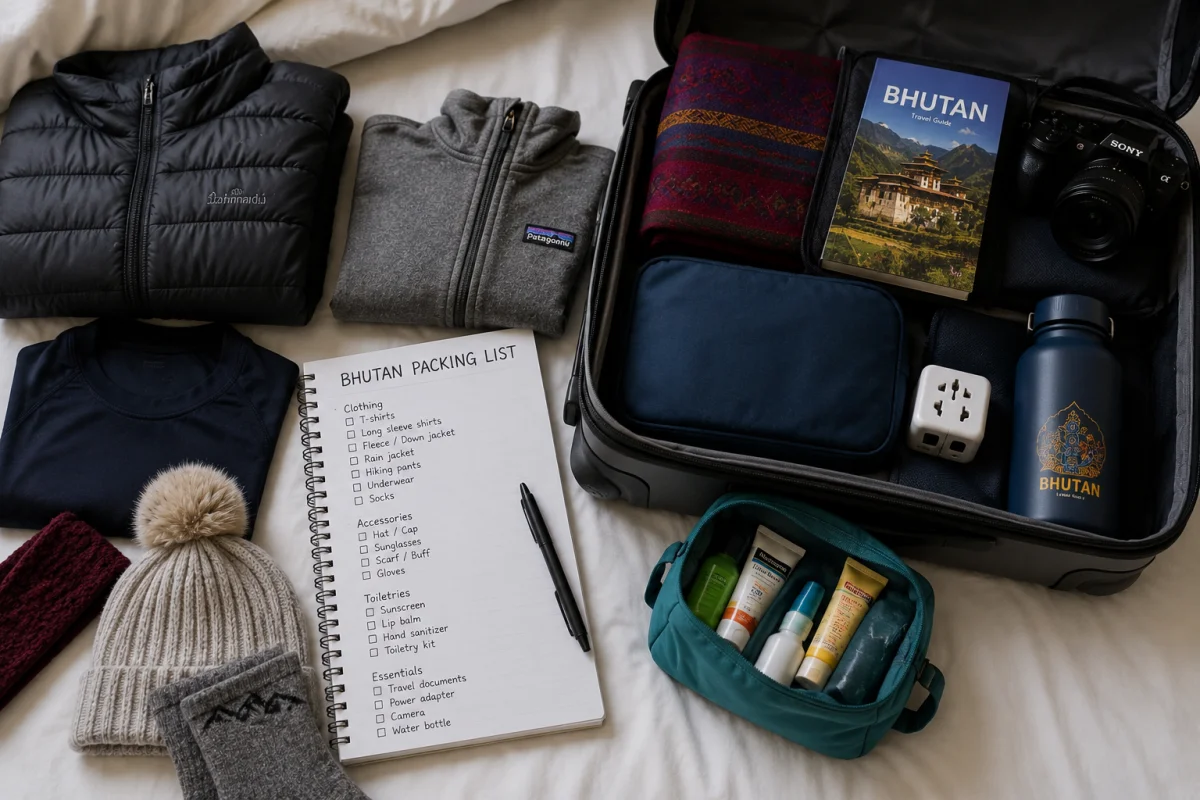
That said, what you do pack matters more in Bhutan than almost anywhere else. The altitude is real. The dress requirements for temples are non-negotiable. And the weather genuinely does shift — sometimes within a single day. So, here’s the honest version of what to bring, broken down by season, with the things most packing guides either forget to mention or just get wrong.
The One Rule That Overrides Everything Else
Before the lists: understand the layering principle. Bhutan’s temperatures can swing dramatically between morning, afternoon, and evening — especially in autumn and spring. A morning that starts at 5°C can become a 20°C afternoon, then drop again at sunset. Rather than packing for every extreme separately, you pack layers that combine and separate as needed.
The three-layer system:
- Base layer — moisture-wicking, close to skin (merino wool is ideal; it doesn’t smell after a day of walking)
- Mid layer — warmth when you need it (a lightweight fleece or down jacket that compresses small)
- Outer layer — wind and rain protection (a packable waterproof jacket)
These three layers, combined correctly, handle almost every condition Bhutan throws at you. Everything else on this list builds around them.
Packing by Season
Spring (March–May)
Spring is one of Bhutan’s best seasons — rhododendrons blooming, clear skies, moderate temperatures. Days in the valleys are pleasantly warm (15–20°C), evenings cool down noticeably, and higher elevations like Bumthang or the Dochula Pass can still have cold mornings.
What you actually need:
- Light base layers (2–3 t-shirts or long-sleeved shirts)
- Fleece or light down jacket for mornings and evenings
- Packable rain jacket (spring can bring afternoon showers, especially in April)
- Comfortable walking shoes — broken in before you arrive
- One pair of long trousers that look reasonably presentable (for temples)
- Sunscreen and lip balm with SPF — the UV at altitude is severe even on cloudy days
- Light scarf or shawl (useful for covering shoulders at religious sites)
What you don’t need: A heavy winter coat. Thermal base layers. An umbrella — the rain jacket is enough and far less awkward.
Autumn (September–November)
Peak season. The most popular time to visit, and for good reason: clear skies, golden light, comfortable temperatures. September still carries the tail of monsoon season — pack accordingly.
What you actually need:
- Same layering system as spring
- Slightly warmer mid-layer for October/November when evenings get cooler
- Windproof outer layer (autumn winds can be biting at higher elevations)
- Sun hat — October sun in Bhutan is strong and you’ll be outside for long stretches
Winter (December–February)
Bhutan in winter is spectacularly clear — the best visibility of the year, snow on the mountain peaks, and a stillness in the temples that’s hard to find in peak season. It’s also cold. Seriously cold, especially in Bumthang and Haa.
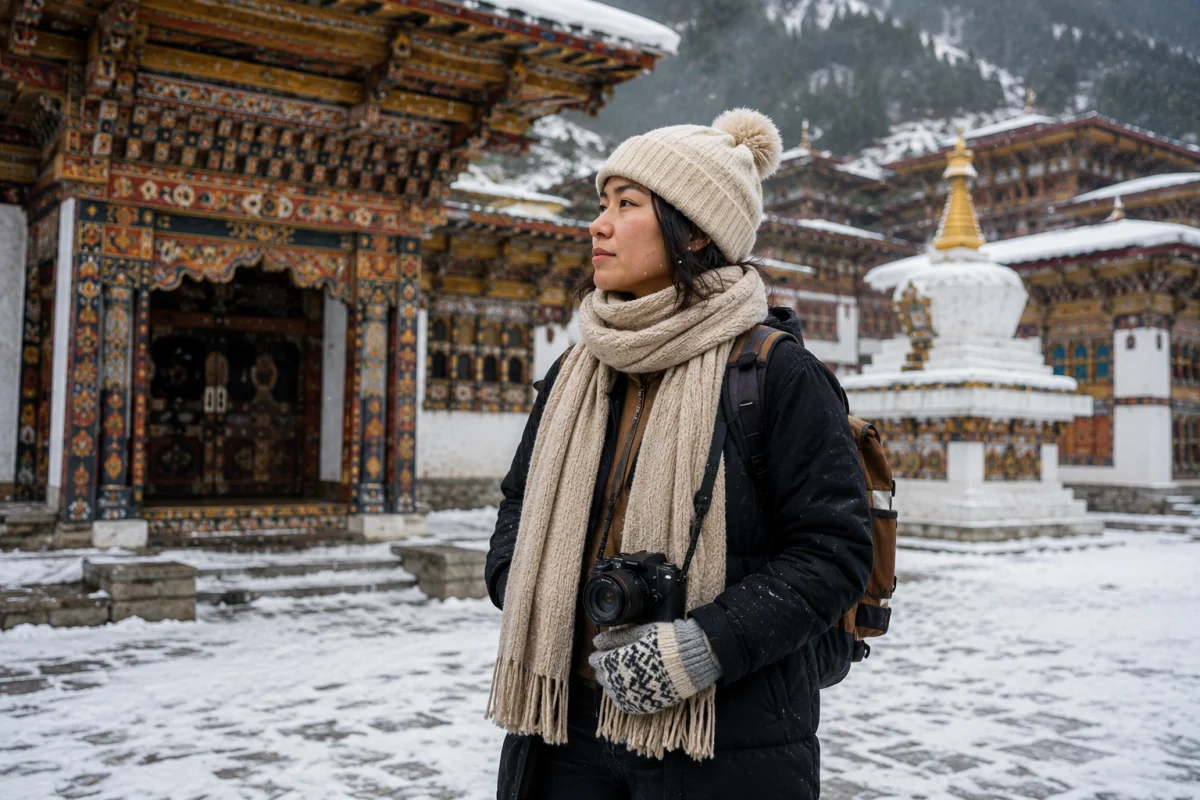
What you actually need:
- Thermal base layers (top and bottom) — non-negotiable for Bumthang
- Heavyweight fleece or down jacket
- Waterproof outer layer that blocks wind as well as rain
- Warm hat and gloves — you’ll wear them, not just carry them
- Thermal socks
- Hand warmers — invaluable in temples where heating is minimal
Important: Hotels in Bhutan — especially homestays and farmhouses — often have minimal central heating. What keeps you warm at night is what you wear to bed. Pack a pair of thermal long underwear for sleeping.
Monsoon (June–August)
If this is your first visit to Bhutan, try not to come during monsoon. The landscapes are lush, but roads become difficult, flights are disrupted, and leech socks become a genuine packing requirement.
- A good waterproof jacket is more essential than at any other time
- Quick-dry everything — clothes that stay wet for days in humidity are miserable
- Leech socks if you plan to walk through forested areas
- Waterproof bag covers or dry bags for your camera and electronics
- Accept that some plans will change due to weather, and pack flexibility alongside everything else
The Clothing That Actually Matters: Temple Visits
Here’s the practical truth: you will visit temples and dzongs almost every single day in Bhutan. At every religious site, you must cover your shoulders and your knees. That is not a no exception rule, but a sign of respect.
What this means in practice:
- At least 2–3 long-sleeved shirts or blouses
- Long trousers or long skirts
- A light scarf or shawl that can be thrown over bare shoulders in a hurry
You don’t need to bring smart clothes. Bhutan is not a place where anyone is looking at fashion. Clean, modest, and respectful is everything.
You remove your shoes at every temple — many times a day. Shoes with laces that take a minute to undo become genuinely tedious. Slip-on shoes or boots with side zips make life significantly easier.
Footwear: Get This Right
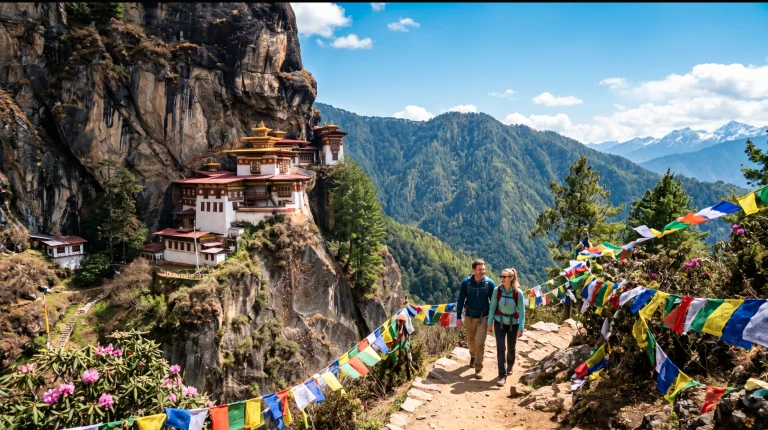
Bhutan involves more walking than most visitors expect — across uneven cobblestones, up steep monastery steps, along dirt paths between temple complexes. The Tiger’s Nest hike alone is 2–3 hours each way on a rocky trail.
The minimum you need:
- One pair of well broken-in walking shoes or light hiking boots — broken in before you arrive, not during your trip
- One pair of slip-on shoes or sandals for evenings and temple visits
If you’re trekking, bring proper hiking boots. Your feet on the Druk Path or Jomolhari Trek are not the place to test new gear.
Documents and Money
- Passport — valid at least 6 months beyond your travel dates
- Visa clearance letter — your tour operator provides this; keep a printed copy in your hand luggage
- Cash — Ngultrum (BTN) or Indian Rupees (INR) for day-to-day; ATMs exist in larger towns but are unreliable in remote areas
- Travel insurance — specifically one that covers medical evacuation; non-optional in a country with limited hospitals
- Printed copies of everything — not just digital
Electronics
- Camera with extra batteries — cold temperatures drain batteries faster than expected
- Universal adapter — Bhutan uses type D, F, and G plugs at 230V
- Power bank — essential for long days away from charging points
- Offline maps downloaded before you leave — mobile data is patchy on mountain roads
Health Essentials
- Prescription medications — bring more than you need; pharmacies outside Thimphu and Paro are limited
- Altitude medication — if your itinerary includes Bumthang or trekking above 3,000m, discuss Diamox with your doctor
- Basic first aid — plasters, antiseptic, ibuprofen, rehydration sachets, anti-diarrheal tablets
- Sunscreen SPF 50+ — UV at altitude is much stronger than at sea level
- Insect repellent — essential during monsoon, less critical in autumn and winter
The Things Most Guides Forget to Mention
- A small day bag — your main luggage stays at the hotel or in the car most days. A lightweight daypack for water, camera, documents, and a layer is something you’ll use every single day.
- Reusable water bottle — Bhutan has extraordinarily clean mountain water and hotels will refill filtered water for you. A filtered bottle or simple reusable one is all you need.
- Small denomination notes for temple donations — most temples have donation boxes. Having a supply of small notes (10–20 BTN or INR equivalent) means you don’t have to fumble for change.
- Earplugs — monastery prayer bells, dogs, and the occasional early-morning puja can be loud. Earplugs weigh nothing and have saved many a good night’s sleep.
What to Leave at Home
- Hair dryers (most hotels have them)
- Excessive toiletries (hotels provide basics; laundry service is available)
- Anything you’d be devastated to lose or damage
- More than two pairs of shoes
- Jeans — heavy, slow to dry, and long quick-dry trousers are more comfortable and equally acceptable everywhere
One Final Thought
Leave room in your bag for whatever you buy in Bhutan — because you will buy things. A hand-woven textile from a Bumthang weaver. A wooden mask from a Thimphu market. A bag of Bhutanese red rice that your guide insists you take home and cook.
The best souvenirs are always the ones you didn’t plan for.