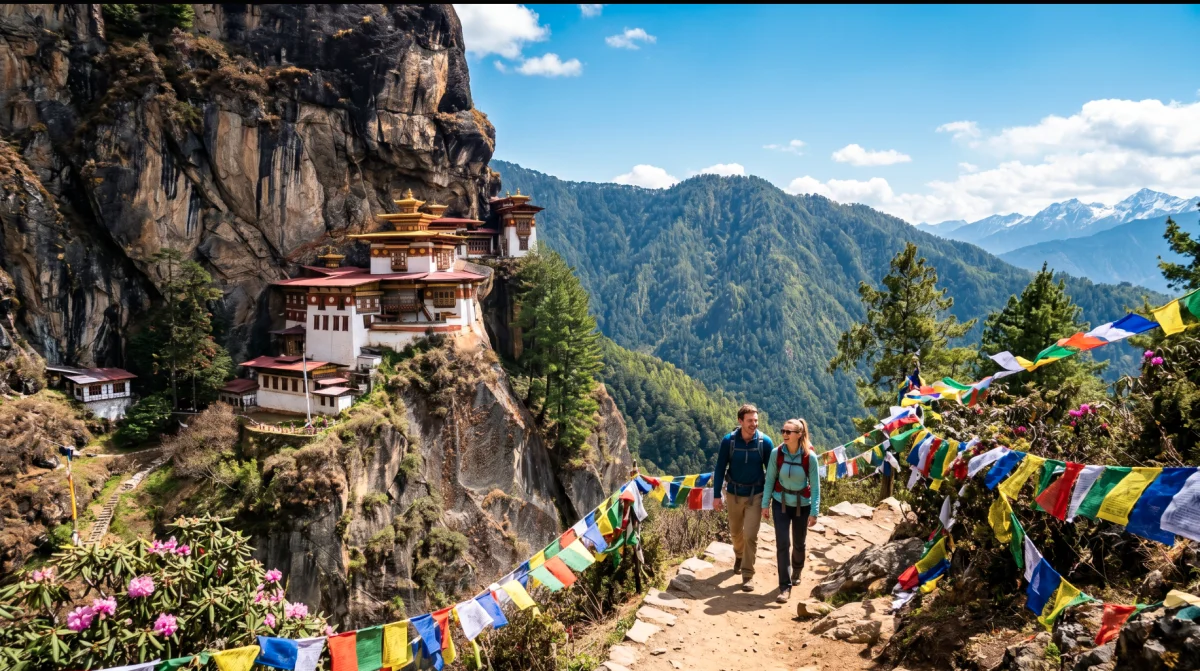
There are places you visit. And then there are places that visit you — that stay somewhere behind your eyes long after you've come home.
Bhutan is the second kind.
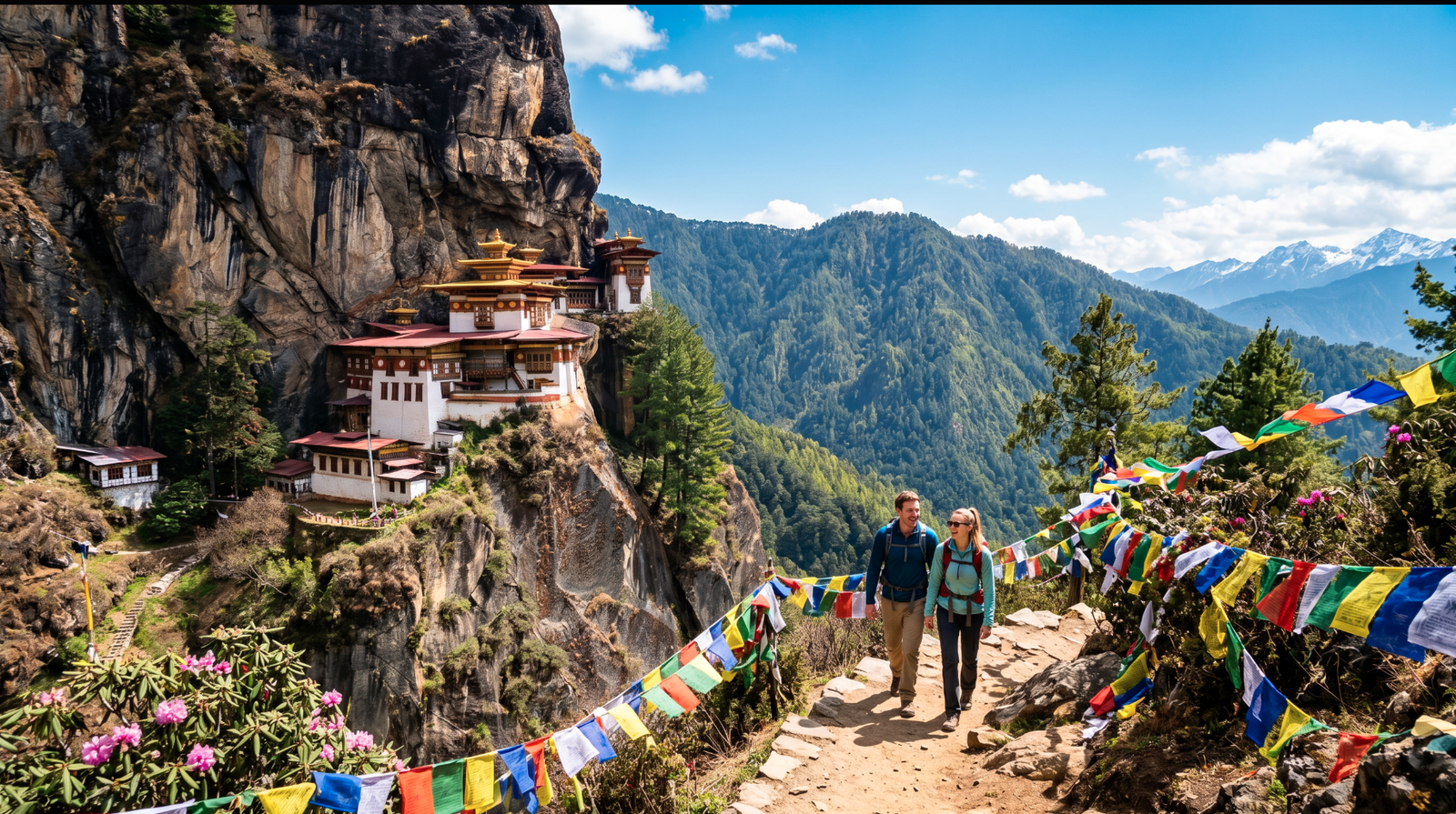
I know that sounds like a line from a brochure. But spend even a few days in this small Himalayan kingdom and you'll understand what I mean. It isn't the monasteries — though they are extraordinary. It isn't the mountains — though they are humbling. It's something quieter than that. A pace. A gentleness. A country that has made a conscious, courageous decision to measure its success not in numbers on a spreadsheet, but in the wellbeing of its people and the health of its forests.
We've been organising tours in Bhutan for years. We are Bhutanese. We live here. And in this guide, I want to give you something most travel articles don't: the real picture. Not a press-release version of Bhutan, but the country as it actually is in 2026 — what it costs, how the visa truly works, what surprises first-time visitors, and what will make you want to come back before you've even left.
Let's go.
WHAT'S IN THIS GUIDE
- Is Bhutan actually worth the cost and the effort?
- The visa — how it really works in 2026
- The Sustainable Development Fee (SDF) — the honest truth
- When to go: a month-by-month honest breakdown
- Getting here: flights, connections and the Paro landing
- The 6 regions every first-timer should know
- How much a Bhutan trip actually costs (real numbers)
- The three sample itineraries worth considering
- Culture, customs, and what not to do
- What to pack (and what to leave at home)
- Health, altitude, safety — the stuff that matters
- The 12 questions every first-timer asks
Is Bhutan Actually Worth It?
This is the first question almost everyone asks, and it's a fair one. Bhutan is not cheap. It requires planning. It can't be done on a whim. So before we get into the logistics, let's address the thing sitting at the back of your mind.
Yes. It is worth it.
But not for the reasons most travel content tells you.
Bhutan isn't worth visiting because it's Instagram-perfect (though it is). It isn't worth it because Tiger's Nest is incredible (though it absolutely is). It's worth visiting because it is the only country in the world that has remained genuinely itself in the face of globalization. The buildings look the way they do not because someone thought it'd be charming for tourists, but because Bhutanese law requires it. The forests are intact not because nobody built roads, but because the constitution mandates that 60 percent of the land must stay forested — forever.
When you walk through a dzong in Bhutan, you are not in a museum. You are in a living building where monks pray, government officials work, and festivals have been held for centuries. That is not something you can manufacture.
Compared to every other Himalayan destination, Bhutan offers something increasingly rare: quiet. Uncrowded trails. Monasteries where you might be the only visitor. Festivals that haven't been repackaged for tourism. A guide who is genuinely proud of where they come from — and it shows.
Is it expensive? Yes. But you are not paying a luxury markup. You are contributing directly to the systems that keep this country this way. Free healthcare. Free education. Forest rangers. Environmental conservation. The SDF (which we'll explain shortly) is, in an honest sense, one of the most meaningful travel fees you'll ever pay.
★ What sets Bhutan apart from every other destination
It is the world's only carbon-negative country. Over 70% is forested. It has never been colonized. It opened to tourists only in 1974. And it still has no traffic lights in its capital city — by choice, not by accident. That tells you something about what this country values.
The Bhutan Visa — How It Really Works in 2026
The Bhutan visa confuses more people than almost any other aspect of planning a trip here. Let me clear it up in plain English.
The basic rule
Almost all international visitors need a visa to enter Bhutan. The only exceptions are citizens of India, Bangladesh, and the Maldives, who can enter on a national ID or passport and obtain an entry permit on arrival — though they still need to register and pay the SDF.
Can you apply independently now?
Yes — and this is a 2023 update that many travel guides still haven't caught up with. Bhutan now has an online visa portal (bhutan.travel) where you can apply directly. You no longer have to go through a tour operator to get a visa.
However — and this is important — if you plan to visit anywhere beyond Paro and Thimphu, you are still required to be accompanied by a licensed Bhutanese tour guide. Since the vast majority of what makes Bhutan worth visiting lies beyond those two cities, most travellers still use a tour operator. Not because they have to, but because it simply makes far more sense.
Working through a licensed operator like Found Bhutan also means we handle all the documentation, coordinate your visa submission, manage your itinerary, and have local support available to you 24/7 throughout your trip. The peace of mind alone is worth it.
How the visa process works step by step
- Choose your dates and itinerary with a licensed Bhutanese operator (or apply independently via bhutan.travel if staying only in Paro/Thimphu).
- Submit your passport details and pay the visa fee (USD 40) and the Sustainable Development Fee (SDF) for your full stay.
- Receive your e-visa clearance letter by email within 3–5 working days (allow 7–10 during peak festival season).
- Print the clearance letter (Soft copy will also work) — you will need it at the airline check-in desk before boarding your flight.
- On arrival at Paro airport, your actual visa stamp is placed in your passport at immigration (very recently, Bhutan introduced e-stamps whereby you don't need to get the visa stamped on your passport).
Key visa facts for 2026
| Visa Fee | USD 40 per person (one-time, non-refundable) |
| Where Applied | Online at bhutan.travel, or through your licensed operator |
| Processing Time | 3–5 working days (7–10 during peak season) |
| Passport Validity | Must be valid for at least 6 months from your arrival date |
| Visa Stamp | Issued in your passport on arrival at Paro International Airport |
| Guide Requirement | Required outside Paro and Thimphu — mandatory, not optional |
| Exceptions | India, Bangladesh, Maldives — permit on arrival, lower SDF |
| Travel Insurance | No longer required for visa processing (removed Jan 2024) — but strongly recommended |
⚠ A word of caution about unofficial sites
The words 'Bhutan visa' draw a large number of dubious third-party websites charging commission fees for what is a direct government application. Always apply through bhutan.travel directly, or through a TCB-licensed operator whose license number you can verify. Found Bhutan Tours is fully licensed by the Department of Tourism.
Sustainable Development Fee — The Honest Truth
The SDF is the most discussed, most misunderstood, and most argued-about aspect of visiting Bhutan. Let me give you a straight answer on all of it.
What is it?
The Sustainable Development Fee is a daily fee charged to all tourists visiting Bhutan. It is not a tour package fee. It is not accommodation. It is a government levy that goes directly into funding Bhutan's free healthcare system, its free education system, and its extensive environmental conservation programmes.
When you pay the SDF, you are not padding a hotel group's margins. You are funding the infrastructure that makes Bhutan what it is. Every school a Bhutanese child attends for free, every hospital appointment that costs a Bhutanese family nothing — the SDF is part of what makes that possible.
What does it cost in 2026?
| International tourists (all nationalities except Indian) | USD 100 per person, per night |
| Indian nationals | INR 1,200 per person, per night (approx. USD 14–15) |
| Bangladeshi & Maldivian nationals | Same process as Indian nationals — contact operator for current rates |
| Children under 6 | Exempt — no SDF |
| Children aged 6–12 | 50% discount (USD 50 per night for international visitors) |
| Children 13 and above | Full adult SDF applies |
| Confirmed until | August 31, 2027 (current government policy) |
Is the SDF refundable?
Yes, partially. If you need to cancel or cut your trip short after paying, you can request a refund for unused nights through the official visa portal. The USD 40 visa fee is non-refundable. SDF refunds are processed after your departure from Bhutan.
How does it factor into your total cost?
For a 7-night trip, the government's mandatory minimum cost is USD 700 (SDF) + USD 40 (visa fee) = USD 740 per adult. That is before your hotel, meals, guide, vehicle, flights, or activities. We'll break down the full real cost picture in the budgeting section below.
✓ Why the SDF is not as painful as it sounds
Compare it this way: many luxury African safaris charge USD 400–800 per person per day in park fees alone. The Bhutan SDF at USD 100 per night — which directly funds a country's social systems — starts looking less like a tax and more like an investment in something genuinely worth preserving.
When to Go — An Honest, Month-by-Month Breakdown
Most guides tell you 'spring or autumn' and leave it there. That's true but incomplete. Here's what each season is actually like on the ground.
Spring — March to May
This is the season most people mean when they say 'the best time to visit Bhutan'. And in many ways, they're right. The rhododendrons are in full bloom from mid-March through April — the hillsides around Dochula Pass and in the valleys above Paro turn vivid shades of crimson, pink, and white. Temperatures are warm and very comfortable. Skies are usually clear.
More importantly, spring is festival season. The Paro Tshechu typically falls in late March or April — and this is one of the most spectacular cultural events anywhere in Asia. Book as far in advance as possible if you want to coincide with it.
The trade-off: spring is peak season, so accommodation books up fast and prices are at their highest. Book 4–6 months ahead for festival weeks.
Autumn — September to November
For pure landscape photography and trekking conditions, autumn edges ahead of spring. The monsoon clears in late September, leaving behind an air so clean and clear that the Himalayan peaks feel close enough to reach out and touch. Temperatures are crisp and perfect for walking.
October brings the Jambay Lhakhang Drup festival in Bumthang — a profound, atmospheric event that includes a midnight fire dance performed by torchlight. The black-necked cranes begin arriving in Phobjikha Valley from Tibet, and the Thimphu Tshechu typically falls in late September. This is, overall, the single most rewarding month to visit Bhutan.
Monsoon — June to August
Let me be honest about monsoon season in a way most operators won't be. It rains. Sometimes heavily. Leeches appear on forest trails after rain. Roads occasionally close due to landslides. High-altitude treks become genuinely difficult.
That said — Bhutan in monsoon has its own extraordinary character. The valleys are impossibly green. Waterfalls thunder down cliffs that are dry the rest of the year. There are almost no other tourists. If you're flexible, unbothered by weather, and want to experience a quieter, wilder side of Bhutan, June to August can be remarkable. Pricing is also lower.
Winter — December to February
Cold, yes — especially at altitude. But Bhutan in winter is a genuinely underrated experience. The lower valleys of Paro and Punakha remain mild and comfortable. The mountains are sharper and more dramatic than at any other time of year, dusted in fresh snow. Crowds are at their lowest.
The black-necked cranes are still in residence in Phobjikha through February. Fly fishing is excellent in winter rivers. And there is a stillness to Bhutan in winter — a quietness in the monasteries and markets — that some travellers find even more moving than the peak season energy.
Quick-reference season table
| Season | |||
| 🌸 Spring | Mar–May | Warm & clear | Paro Tshechu • Rhododendrons • Tiger's Nest hike • Peak crowds — book early |
| 🍂 Autumn | Sep–Nov | Crisp & brilliant | Thimphu Tshechu • Jambay Drup fire dance • Black-necked cranes • Trekking at its finest |
| 🌧 Monsoon | Jun–Aug | Wet & warm | No crowds • Lower prices • Lush valleys • Leeches on trails • Some closures |
| ❄ Winter | Dec–Feb | Cold & peaceful | Snow peaks • Cranes remain • Fly fishing • Fewest visitors • Most serene |
Getting to Bhutan — Flights, Connections & the Paro Landing
Bhutan has one international airport: Paro International Airport (IATA: PBH), nestled in the Paro valley at 2,235 metres above sea level. It is served by two airlines: Druk Air (Bhutan's national carrier) and Bhutan Airlines. No other international carriers fly here.
Where to fly from
You cannot fly directly to Paro from most Western countries. You connect through one of the following regional hubs:
- Delhi (Indira Gandhi International) — the most common connection for most international travellers
- Kathmandu (Tribhuvan International) — popular for those combining Bhutan with Nepal
- Bangkok (Suvarnabhumi) — good option from Southeast Asia, Australia, and some European connections
- Singapore (Changi) — often the cleanest option for long-haul travellers
- Kolkata, Mumbai, Bagdogra — useful for Indian connections
The Paro landing — what to expect
Only a small number of pilots in the world are certified to fly the Paro approach. The valley is narrow, steep-walled, and the runway appears suddenly on the valley floor between peaks that rise thousands of metres above the aircraft. On a clear day, you feel like you could touch the mountains from your window.
It is, genuinely, one of the great flight experiences in the world. Sit on the left side of the aircraft on the approach for the best views. The window seat is worth fighting for.
Book flights early
Druk Air and Bhutan Airlines operate with limited seat capacity and limited frequency — and they sell out. For spring travel (March–May) and autumn festival season (September–November), I strongly recommend booking your flights 4–6 months in advance. Your tour operator can advise on the best connections once your dates are confirmed.
Entering by land
Land entry from India is possible at several border crossings: Phuentsholing (from West Bengal), Gelephu (from Assam), and Samdrup Jongkhar (also Assam). The same visa and SDF requirements apply. Land entry is used mostly by travellers combining Bhutan with a longer India itinerary, and by budget-conscious travellers looking to minimise flight costs.
The 6 Regions Every First-Timer Should Know
Bhutan is small — roughly the size of Switzerland — but geographically and culturally diverse in ways that surprise most visitors. Here are the regions that matter most.
Paro — where almost every journey begins
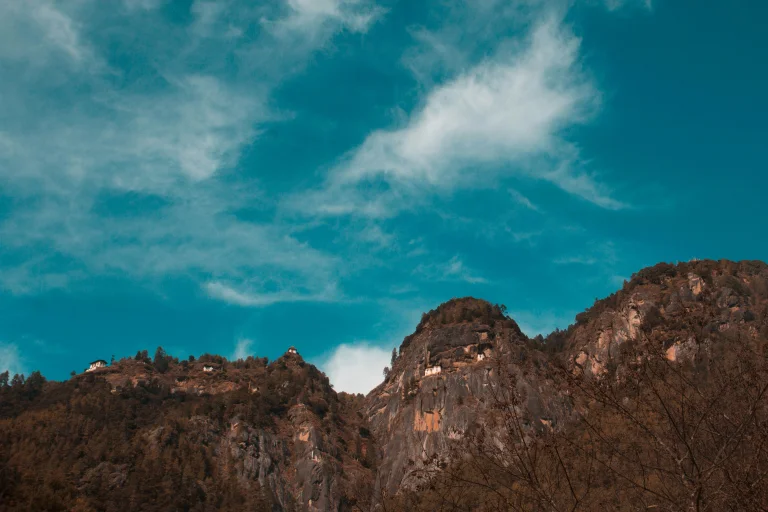
Paro is the entry point — it's where you land — but don't let that fool you into treating it as just a starting corridor. The Paro valley is home to Bhutan's most iconic sight: Paro Taktsang, the Tiger's Nest Monastery, clinging to a sheer cliff 900 metres above the valley floor. The hike up takes 3–4 hours return and is one of those experiences that earns the word 'unforgettable' honestly.
Also in Paro: Rinpung Dzong (the atmospheric dzong that overlooks the valley), the National Museum of Bhutan (housed in a former watchtower), and Kyichu Lhakhang — one of the oldest temples in the country, built in the 7th century and still an active place of worship.
Thimphu — the world's only capital without a traffic light
Bhutan's capital is a fascinating contradiction: a city that is genuinely modern in its infrastructure and economy, but has chosen — deliberately — to remain traditional in its architecture, its dress code, and its pace. There are no traffic lights, not because Thimphu hasn't heard of them, but because when one was installed at a busy intersection, residents complained it was impersonal. A traffic policeman was reinstated.
Visit the Buddha Dordenma statue (one of the largest Buddhas in the world, and utterly stunning at sunrise), the National Memorial Chorten, Tashichho Dzong, and the vibrant weekend market by the river. Thimphu's handicraft shops — selling hand-woven textiles, thangka paintings, and traditional lacquerware — are the best in the country.
Punakha — the ancient capital
Three hours east of Thimphu, over the dramatic Dochu La pass, the Punakha valley is warmer, lower, and remarkably beautiful. It was Bhutan's capital for centuries and it's still home to the country's most breathtaking building: Punakha Dzong, the Palace of Great Happiness, set at the confluence of the Pho Chhu and Mo Chhu rivers. In spring, jacaranda trees flower along the dzong's outer walls in vivid purple. In winter, the rivers run low and clear.
From Lobesa (Punakha), it's a gentle walk across rice fields to Chimi Lhakhang — the Temple of the Divine Madman — a revered and wonderfully unusual monastery dedicated to the 15th-century saint Drukpa Kunley, known for using humour and irreverence to spread Buddhist teachings.
Bumthang — the soul of Bhutan
If Bhutan is the heart of the Himalayas, then Bumthang is the heart of Bhutan. A cluster of four valleys in the country's central highlands, Bumthang holds some of the oldest and most sacred temples in the country — Jambay Lhakhang (7th century), Kurjey Lhakhang (where Guru Rinpoche left the imprint of his body in stone), and the sacred Mebar Tsho, the Burning Lake. The valley is pastoral and pine-scented, and in autumn it hosts the Jambay Lhakhang Drup — one of the most extraordinary festivals anywhere on earth.
Gangtey & Phobjikha — the valley of the cranes
Set around the beautiful Gangtey Monastery, the wide, bowl-shaped Phobjikha Valley is one of Bhutan's most serene landscapes — and in October and November, it becomes one of its most wildlife-rich. Thousands of endangered black-necked cranes migrate here from the Tibetan plateau to spend the winter, and watching them glide in at dusk across the valley is a sight that doesn't leave you quickly.
Haa Valley — the one most visitors miss
Haa is off the standard tourist circuit. It only opened to visitors in 2002, and many travellers still don't include it in their itineraries — which is exactly why you should. The valley is pristine, the villages are traditional, and the two ancient temples at the valley's end — Lhakhang Karpo (White Temple) and Lhakhang Nagpo (Black Temple) — are among the most atmospherically located in the country. If you want to feel like you've genuinely stepped away from the modern world, Haa is where you go.
📍 First-time visitor recommended route
7 days: Paro (2 nights) → Thimphu (2 nights) → Punakha (2 nights) → Paro departure. This covers the three most essential regions without feeling rushed. Add 3 nights in Bumthang for a 10-day trip — the extra days are absolutely worth it.
How Much Does a Bhutan Trip Actually Cost? (Real Numbers for 2026)
This is where most travel guides get vague. I'm going to give you real numbers.
Bhutan's costs break into three layers. Understanding all three is how you budget accurately.
Layer 1 — Mandatory government fees (non-negotiable)
| Visa fee | USD 40 per person (one-time) |
| SDF — 5 nights | USD 500 per adult |
| SDF — 7 nights | USD 700 per adult |
| SDF — 10 nights | USD 1,000 per adult |
| SDF — children 6–12 | 50% of above (USD 50/night) |
| SDF — children under 6 | USD 0 |
Layer 2 — Tour package costs (hotels, meals, guide, vehicle)
This is where you have the most choice. Your tour package covers your accommodation, all meals, your guide, and your private vehicle. The cost varies enormously based on hotel category:
| Standard (3-star certified hotels) | Approx. USD 30–50 per person/night |
| Mid-range (4-star boutique properties) | Approx. USD 50–180 per person/night |
| Luxury (5-star resorts, e.g. Amankora) | USD 300–600+ per person/night |
| Solo traveller supplement | Single rooms and solo guide cost more — expect 25–40% higher per-person rate |
| Group of 3–4 | Best value — guide and vehicle cost is shared |
Layer 3 — Personal expenses
- Tips for guide and driver — USD 50–80++ per person for guide, USD 30–50++ for driver (for a 7-day trip)
- Shopping, handicrafts, and souvenirs
- Alcoholic beverages (not included in most packages)
- International flights — varies wildly by origin, but budget USD 400–900 from most Asian hubs
- Travel insurance — strongly recommended, USD 50–150 depending on policy
What a real 7-night trip costs (worked example, 2 people)
| SDF (2 people × 7 nights × USD 100) | USD 1,400 |
| Visa fees (2 people × USD 40) | USD 80 |
| Tour package — standard hotel (2 people, 7 nights) | USD 2,800–3600 |
| Flights Delhi–Paro–Delhi (approx. per person) | USD 400–600 × 2 = USD 800–1,200 |
| Tips, shopping, extras (estimate per person) | USD 200–300 × 2 = USD 400–600 |
| TOTAL (approximate, 2 people, 7 nights, standard) | USD 5,480 – 6,880 |
| Per person | USD 2,740 – 3,440 |
💡 How to get better value
Travel in a group of 3–4 to share guide and vehicle costs. Visit in the low season (June–August or December–January) when accommodation prices are lower. Combine your Bhutan trip with Nepal or India to spread your international flight cost across more days of travel.
Three Sample Itineraries Worth Considering
Every itinerary we build at Found Bhutan is custom-made. But to give you a starting point, here are three frameworks that work well for different types of travellers.
The Classic — 7 Days/6 Nights
Perfect for first-timers who want the essential Bhutan experience without feeling rushed.
- Day 1 — Arrive Paro. Transfer to hotel. Afternoon: Rinpung Dzong and the old Paro town walk.
- Day 2 — Drive to Thimphu via Chhuzom. Buddha Dordenma, National Memorial Chorten, Tashichho Dzong.
- Day 3 — Drive over Dochu La to Punakha. Lunch with mountain views. Chimi Lhakhang.
- Day 4 — Punakha Dzong, Punakha suspension bridge and Khamsum Yulley Namgyel Hike.
- Day 5 — Paro valley: Ta Dzong Museum, Kyichu Lhakhang. Afternoon at leisure.
- Day 6 — Tiger's Nest Monastery hike (full day). This is the one you came for. Traditional Hot stone Bath. Handicraft Shopping
- Day 7 — Drive to Airport for Departure transfer.
The Cultural Deep-Dive — 10 Days
Adds Bumthang — the part of Bhutan that stays with you longest.
- Days 1–3 — Paro (Tiger's Nest + valley sights)
- Days 4–5 — Thimphu and Punakha
- Days 6–8 — Drive through Trongsa to Bumthang. Jambay Lhakhang, Kurjey Lhakhang, Tang Valley, Mebar Tsho.
- Day 9 — Gangtey and Phobjikha Valley (crane season Oct–Nov) or Haa Valley excursion
- Day 10 — Return to Paro. Departure.
The Festival Specialist — 7–12 Days (timing-dependent)
Built around a specific festival. Timing is everything — we coordinate the itinerary around confirmed festival dates each year.
- Paro Tshechu — March/April — 7 days based in and around Paro
- Thimphu Tshechu — September — 7 days, Thimphu-centred with Paro and Punakha
- Jambay Lhakhang Drup — October/November — 10 days, includes the midnight fire dance in Bumthang
- Royal Highlander Festival — October — 8 days including Gangtey and Phobjikha
★ Talk to us before you decide
Every itinerary on our website is a starting point, not a fixed product. Tell us what matters to you — festivals, photography, trekking, spirituality, or simply slowing down — and we'll build something around that. That's how good Bhutan trips happen.
Culture, Customs & What Not to Do
Bhutan is one of the most welcoming countries in the world to visitors. The Bhutanese are genuinely warm, generous, and proud to share their country. A little cultural awareness goes a long way toward making your interactions more meaningful — and ensuring you never accidentally offend.
At temples, dzongs and monasteries
- Remove your shoes before entering any temple or monastery — there will usually be a rack or area near the door.
- Cover your shoulders and knees. Long trousers and a sleeved top are sufficient — you don't need traditional Bhutanese dress as a visitor.
- Remove your hat inside all religious buildings.
- Do not point at religious statues, murals, or sacred objects — if you want to indicate something, use an open hand rather than a pointed finger.
- Photography inside altar rooms is almost always prohibited. Your guide will tell you where photography is permitted. When in doubt, ask before pointing a lens.
- Walk clockwise around chortens (stupas), Mani walls, and monastery courtyards. This mirrors the direction of prayer in Tibetan Buddhist tradition.
In daily interactions
- Accept anything offered — food, a drink, a gift — with both hands or with your right hand. Using only the left hand is considered disrespectful.
- Don't touch anyone's head — in Buddhist culture, the head is sacred.
- Bhutanese people are generally reserved in public. Match that energy. Loud behaviour or public displays of frustration sit awkwardly in this culture.
- Tipping your guide and driver at the end of your trip is genuinely appreciated — it forms an important part of their income. USD 50–100++ for a guide and USD 30–80++ for a driver per person for a 7-day trip is a generous and appropriate range.
Dress
The Bhutanese national dress is a Gho (for men) and Kira (for women) — and Bhutanese citizens are expected to wear it in official settings. As a visitor, you are not required to wear traditional dress anywhere. But if you are offered the chance to try it — at a guesthouse, at a festival, or as part of a cultural experience — absolutely do. It's both beautiful and unexpectedly comfortable.
What to Pack — and What to Leave at Home
Packing for Bhutan is less complicated than most travel guides make it sound. The key is layers, good footwear, and a few Bhutan-specific items people often forget.
Clothing
- Layers, layers, layers — temperatures swing dramatically between mornings and afternoons, and between valley floors and high passes. A base layer, mid-layer fleece, and a warm outer jacket covers almost every situation.
- Comfortable walking shoes — you don't need full trekking boots for a standard cultural itinerary, but you will walk on uneven ground daily. A pair of sturdy, broken-in walking shoes or light hikers is essential.
- Modest temple clothes — one set of trousers and a long-sleeved shirt that covers your shoulders. These double as your general travel clothes.
- Waterproof layer — even outside monsoon season, mountain weather changes without warning.
Essentials that people forget
- Sunscreen (SPF 50+) — UV radiation is intense at high altitude, even on overcast days.
- Lip balm — the air in Bhutan is dry, especially in autumn and winter.
- A reusable water bottle — Bhutan takes environmental responsibility seriously. Reduce your plastic footprint. Filtered water is available throughout.
- Cash — USD or INR — ATMs exist in Thimphu and Paro but can be unreliable. Carry enough cash for tips, shopping, and any extras. Don't depend entirely on a card.
- A camera (and spare batteries) — Bhutan is extraordinarily photogenic. You will shoot more than you expect. Cold temperatures drain batteries faster at altitude.
What not to bring
- Drones — drone operation in Bhutan requires a government permit that is difficult and slow to obtain. Leave it at home unless you've arranged this months in advance.
- Plastic bags — Bhutan banned plastic bags long before it became fashionable. Bring a reusable tote.
- Hunting or fishing equipment — hunting is completely illegal. Fly fishing is permitted only with a licensed operator and in designated rivers.
Health, Altitude & Safety — The Practical Stuff
Is Bhutan safe?
Yes — emphatically. Bhutan consistently ranks among the safest countries in the world for travellers. Crime rates are extremely low. The political situation is stable. There is no history of civil unrest that affects visitors. You can walk alone after dark in Thimphu without a second thought. The primary risks in Bhutan are environmental: altitude, weather, and mountain roads.
Altitude — the one thing to take seriously
Paro sits at 2,235m. Thimphu is at 2,334m. Punakha is lower at 1,200m. Bumthang is at about 2,800m. None of these altitudes are dangerously high for healthy adults — but they are high enough to cause mild altitude symptoms in some people during the first day or two: headaches, fatigue, and slight breathlessness.
The simple rule: go slowly on your first day. Drink plenty of water. Avoid alcohol for the first 24–48 hours. Don't schedule the Tiger's Nest hike on your first day. If you're sensitive to altitude or planning to trek above 4,000m, speak to your doctor about Diamox (acetazolamide) before you travel.
Serious altitude sickness is rare at the elevations most visitors reach, but if you experience severe headache, confusion, loss of coordination, or persistent vomiting, descend and seek medical attention immediately. Tell your guide. They are trained for this.
Food and water
Bhutanese food is delicious — and often fiercely spicy. If you have a low spice tolerance, tell your guide and restaurant when ordering; most dishes can be adjusted. The national dish, Ema Datshi (chillies cooked with local cheese), is worth trying at least once even if you don't usually like spicy food. Just go in with eyes open.
Tap water quality varies. In major hotels and guesthouses, filtered or boiled water is always provided. Drink that rather than the tap. Bottled water is available everywhere. Your guide will always ensure you have access to safe drinking water.
Vaccinations
No mandatory vaccinations are required to enter Bhutan. Your doctor may recommend Hepatitis A, Typhoid, and a Tetanus update as sensible precautions for any Asian travel. If you are travelling from a country with active Yellow Fever transmission, a vaccination certificate may be required.
Travel insurance
Travel insurance is no longer required for your visa (that requirement was dropped in January 2024). But it remains strongly recommended. Ensure your policy covers medical evacuation — this can be expensive from remote mountain areas. If you are trekking above 4,000m, confirm that your policy explicitly covers high-altitude trekking.
🆘 Emergency contacts
Bhutan emergency numbers: Police 113 · Ambulance 112 · Fire 110. Your Found Bhutan guide will also carry a 24/7 emergency contact number for our operations team throughout your trip.
The 12 Questions Every First-Timer Asks
1. Can I visit Bhutan without a tour operator?
Technically yes, for the areas of Paro and Thimphu — you can now apply for a visa independently through bhutan.travel. But if you want to go anywhere else (and you do — Punakha, Bumthang, Gangtey, Haa are the whole point), you need a licensed guide. Most visitors find that working with an operator like us handles everything seamlessly and allows them to focus entirely on the experience.
2. How long should I spend in Bhutan?
Five days is the minimum if you want more than just Paro. Seven days gives you a well-rounded first experience covering Paro, Thimphu, and Punakha. Ten days lets you add Bumthang — and those extra days in central Bhutan are, for many people, the best of the whole trip. Longer than two weeks starts to feel like you're repeating yourself unless you are trekking or doing a deep photography expedition.
3. Do I need to be fit to visit Bhutan?
Not particularly — for a standard cultural itinerary. Most sightseeing involves moderate walking on uneven ground. The Tiger's Nest hike (3–4 hours return) is the most demanding activity on a classic itinerary, and it's achievable for most healthy adults at a comfortable pace. Horses are available for the lower section if needed. If you plan to trek, fitness requirements scale with the route.
4. What is Gross National Happiness?
GNH is Bhutan's development philosophy, introduced by the Fourth King in the 1970s. Instead of measuring national success by GDP, Bhutan measures it across nine pillars: living standards, health, education, governance, ecological diversity, time use, psychological wellbeing, cultural resilience, and community vitality. It is not a marketing slogan — it actively shapes Bhutanese law, land-use policy, and the tourism model you are participating in when you visit.
5. Can I use credit cards in Bhutan?
Major hotels and some larger shops in Thimphu and Paro accept Visa and Mastercard. Outside these settings, cash is king. Carry USD or INR for exchange, and withdraw Bhutanese ngultrum (pegged to the Indian Rupee) from ATMs in Thimphu or Paro on arrival. Do not rely entirely on ATMs — they can be out of service.
6. What currency does Bhutan use?
The Bhutanese ngultrum (BTN), pegged at 1:1 to the Indian Rupee. Indian Rupees are accepted almost universally. USD is the easiest foreign currency to exchange. EUR, GBP and other major currencies can be exchanged in Thimphu.
7. Is Bhutan safe for solo female travellers?
Extremely. Bhutan has one of the lowest crime rates in Asia. Solo female travellers consistently report feeling completely safe throughout the country, including in rural and remote areas. Your guide will be with you throughout any areas requiring one, and the general culture of the country is respectful and warm toward all visitors.
8. Can I get internet access in Bhutan?
Yes. 5G coverage is available in Thimphu, Paro, and Punakha. Coverage becomes patchy in more rural areas like Bumthang and Haa. Local SIM cards (B-Mobile or Tashi Cell) are available at the airport and cost very little — around 200 ngultrum for a card plus data. Standard SIM size only (not nano or micro) — check your phone's compatibility before you go. eSIM options are also available for some operators.
9. What language do Bhutanese people speak?
The national language is Dzongkha. But English is taught in schools from a young age and is the language of government and business. You will have absolutely no difficulty communicating in English with your guide, hotel staff, or most people you meet. In remote villages, your guide becomes invaluable as a translator.
10. Are there special rules I should know about?
A few things that surprise visitors: tobacco products are technically banned for import (you can bring a small personal amount but not a carton). Bhutan observes occasional 'dry days' on certain Buddhist holidays when meat cannot be sold. Some temples are closed to visitors on specific auspicious days — your guide will always know and plan around these. Climbing peaks above 6,000 metres is prohibited for religious reasons.
11. What's the food like?
Better than you've probably heard. Bhutanese cuisine has historically had an unfair reputation because visitors were served bland hotel buffets rather than actual local food. If your guide takes you to the right places — and a good guide always does — you'll eat wonderfully: red rice (nutty and distinctive), Ema Datshi, Phaksha Paa (pork with dried chillies), Kewa Datshi (potatoes with cheese), momos (dumplings), and buckwheat dishes in Bumthang. Ask for local recommendations every day. The best meals in Bhutan are not in the biggest restaurants.
12. Should I tip? How much?
Tipping is not mandatory but is expected in the tourism sector and genuinely important to the people who work incredibly hard to make your trip exceptional. For a 7-day trip with two travellers, a fair tip is USD 50–100++ per person for your guide, and USD 30–80++ per person for your driver. At restaurants where a service charge isn't already included, rounding up or leaving a small tip is appreciated. Hotel housekeeping: USD 2–3 per room per day is generous and appropriate.
One Last Thing Before You Go
I've tried to write this guide the way I'd explain Bhutan to a friend — honestly, with real numbers, without the fluff. Because Bhutan deserves better than generic travel content, and so do you.
The truth is that no guide fully prepares you for Bhutan. The moment the aircraft banks between the peaks on the Paro approach and the valley opens up below you, something shifts. You'll feel it. And you'll spend the rest of your trip trying to understand what it is.
It's the feeling of being somewhere that has chosen to remain itself. That has said no — quietly, firmly, consistently — to the parts of the modern world that would diminish it. In an era when everywhere seems to be becoming everywhere else, that's an extraordinary thing.
If you're ready to start planning, we're ready to help. Tell us your dates, your interests, your group size, and what matters most to you — and we'll build something around that. That's how we've always done it.
Start Planning Your Bhutan Trip
We're a Bhutan-based, DOT-licensed operator. We live here. We know this country intimately. Every trip we build is made from scratch — for you, around you.