Durdag
Cham
Four Guardians of the Cremation Grounds
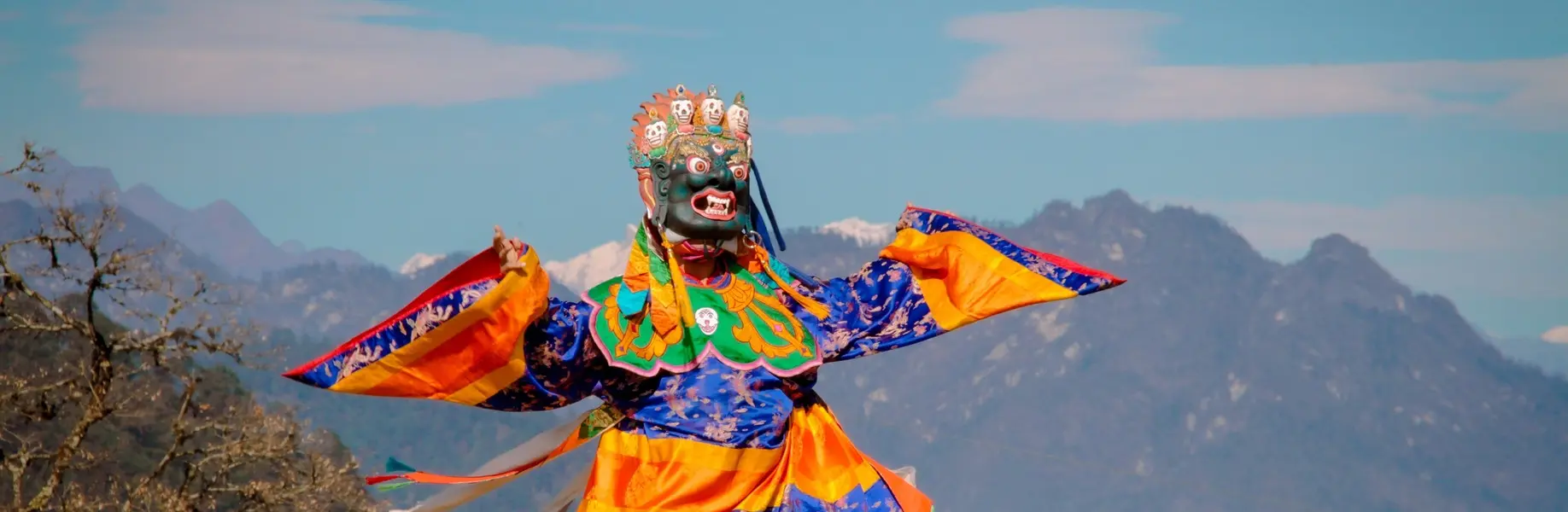
Four dancers perform the Durdag Cham, wearing white skeleton masks, white shirts with long sleeves, long trousers, and — a detail easy to miss from a distance — deep red fingernails, symbolising the stain of blood from the cemetery. The costume is a deliberate reminder of death, and through it, of the inevitable truth of impermanence. The four skeletons are understood as emanations of Avalokiteshvara, the bodhisattva of compassion, and of Buddha Vajraheruka, dwelling at the cemetery specifically to help liberate the consciousness of the departed. Some sources instead identify them as emanations of Lhamo Dudsolma, or Mahakali.
According to Vajrayana Buddhism, there are three types of cemeteries — outer, inner, and secret. The outer type consists of eight great cemeteries spread across the earth, each containing its own lord of the earth and retinue, together known in Vajrayana texts as the lords of the cremation ground. This group is sometimes called Zhingkyongma, meaning field protector. The completely white costume worn by the Durdag dancers exemplifies the purity of liberating both action and mind — even though their outer appearance is frightening, they have themselves released all attachment to outer forms.
The Ritual: What Actually Happens
During the performance, the four dancers carry an iron triangular form out from the temple shrine. They emerge into the courtyard carrying it inside a black square of cloth, each performer holding one corner. Inside the black bundle is an effigy known as a linga, made of dough, representing the evil spirit. Other performers summon the evil spirits into the triangle and dissolve them into it, then sever the limbs of the effigy with a sword or dagger, offering the remaining pieces to the guardian deities of the ten directions. This action is understood to liberate the negative spirits toward the pure land — and once complete, it is believed no obstruction will trouble the minds of those who witnessed it, making the path toward enlightenment more accessible to all present.
Throughout the performance, the dancers shake their hands and feet repeatedly, movements that represent both the calling and the subjugation of spirits. At a key moment, they bend deeply backward, touching the ground behind and beneath them with the very tip of their mask — a gesture that calls the earth deity to witness their power to subdue attachment and successfully liberate the spirits of the deceased. This same act is performed once a corpse has been brought to the cremation ground for its own funeral rites, linking the dance directly to Bhutan's actual funerary practice rather than leaving it purely symbolic.
Death as a Teacher
The tradition of charnel-ground practice traces to India and the Mahasiddhas — the tantric adepts who deliberately sought out cremation grounds as places of practice, using the constant physical presence of death to contemplate impermanence and the unreliability of the body directly, rather than abstractly. In Bhutan, this orientation carries through into an approach to death that many visitors find striking: openly discussed, accepted as inevitable, and treated as among the most valuable teachings available to a practitioner.
The Durdag Cham brings this orientation into the public festival space — placing the skeleton in the courtyard not to frighten spectators but to remind them. The warmth with which Bhutanese audiences typically receive the dance reflects a tradition that has genuinely absorbed this teaching, rather than merely tolerating an unavoidable subject.
Where to See the Durdag Cham
The Durdag Cham appears at major Tshechu festivals across Bhutan, typically earlier in a festival's programme, before the more elaborate performances that follow. Found Bhutan will make sure your festival day itinerary places you in position for it, along with the full context to understand what you're watching.
Customise Your
Bhutan Tour Today
Fill in the form and our expert team will get back to you within 24 hours.
Stay in the loop
Travel stories from the Last Shangri-La
Join fellow Bhutan enthusiasts. Get our latest guides, travel tips and exclusive insights delivered to your inbox.
No spam, ever. Unsubscribe anytime.