
Bhutan
Travel Guide
Your Complete Guide to Visiting Bhutan
Bhutan is unlike anywhere else on Earth — a Himalayan kingdom that has chosen happiness over GDP, forests over factories, and culture over mass tourism. Planning a trip here requires a little more preparation than most destinations, but the reward is a journey most travellers describe as life-changing. This guide is your starting point for everything: understanding what Bhutan is, how to get there, what it costs, and how to plan every detail of your trip.
New to Bhutan? Discover the Destination First
Before diving into logistics, get to know Bhutan. Our destination guide covers why this kingdom is unlike anywhere else on Earth — the philosophy of Gross National Happiness, the best seasons to visit, the top places to see from Tiger’s Nest to Punakha Dzong, iconic treks, living festivals, food and culture, and what daily life actually feels like in the Land of the Thunder Dragon.
Read the Destination GuideHow to Plan a Trip to Bhutan
Bhutan isn't a destination you book like a normal holiday — every visit runs through a licensed operator, which actually makes planning simpler once you know the steps. Here's the process from first decision to departure gate.
Choose Your Dates & Trip Length
Most first-time visitors spend 7–10 days in Bhutan. Decide roughly when you want to go — autumn and spring are busiest and most popular, winter and summer are quieter and more affordable. Not sure how many days you actually need? See our day-by-day itinerary guides for 5, 7, 10, and 14-day routes. For what each time of year is actually like, see our season-by-season guide.
Pick a Licensed Tour Operator
This is not optional — it's the only way to obtain a visa and travel in Bhutan. Your operator arranges your visa, SDF, accommodation, guide, driver, and internal transport as one package. Found Bhutan is a licensed agency based in Thimphu.
Apply for Your Visa & Pay the SDF
Your operator submits your visa application (USD 40, 5–7 business days) and arranges payment of the Sustainable Development Fee. You'll receive a visa clearance letter to present on arrival. Full details in the Visa & SDF section below.
Book Your Flights
Paro is Bhutan's only international airport. Book your international leg to a hub city, then your Drukair or Bhutan Airlines flight into Paro — see Getting to Bhutan below for routes.
Prepare & Pack
Sort travel insurance with emergency evacuation cover, pack for layered mountain weather, and confirm your itinerary with your operator. Our packing guide covers exactly what to bring.
Visa & SDF Explained
Bhutan requires all international visitors (except Indian, Bangladeshi, and Maldivian nationals) to obtain a Tourism Visa and pay the Sustainable Development Fee (SDF). These fund Bhutan's free healthcare, free education, and conservation programmes, and are core to its "high value, low impact" tourism model. Neither can be arranged independently — both go through your licensed operator.
Per adult, per night, for most nationalities. Under 5s exempt; ages 6–12 pay 50%. Included in all Found Bhutan packages.
One-time fee, paid online when your operator submits your application.
You'll receive a visa clearance letter to present at your port of entry.
Entry Permit issued at the border. SDF still applies: INR 1,200/night for Indian nationals, USD 15/night for the first 15,000 Bangladeshi nationals annually, and USD 100/night for Maldivian nationals.
Applies to accommodation, guiding, and transport within your package — not to the SDF itself.
What Does a Trip to Bhutan Cost?
Bhutan isn't a budget destination, but the pricing model is more transparent than most — almost everything is bundled into one package rather than adding up piecemeal. Here's what actually makes up the cost:
The land package (accommodation, meals, guide, driver, and internal transport) is where cost varies most, depending on hotel category and how many days you travel. See our complete cost breakdown for detailed pricing by trip length and hotel tier, or get a free personalised quote.
Getting to Bhutan
Paro International Airport (PBH) is Bhutan's only international airport, served exclusively by Drukair and Bhutan Airlines — no other carriers fly here. Direct flights operate from Delhi, Mumbai, Kolkata, Kathmandu, Bangkok, Singapore, and Dhaka. The final approach into Paro, threading between Himalayan peaks, is one of the most dramatic landings in commercial aviation and an experience in itself.
Overland entry from India is also possible at three border crossings: Phuentsholing (the main gateway, closest to Paro and Thimphu), Gelephu, and Samdrup Jongkhar. This route is mostly used by Indian nationals or those combining Bhutan with an eastern Himalayan itinerary.
Practical Travel Tips
The everyday logistics of being in Bhutan — money, packing, health, and getting around.
💰 Currency & Payments
🌵️ What to Pack
🏥 Health & Altitude
📱 Connectivity & SIM Cards
🚗 Getting Around Bhutan
🛍 Shopping & Souvenirs
Looking for cultural do's and don'ts, dress customs, and etiquette? See the Etiquette & Dress section of our destination guide.

Explore Our
Full Guide Library
Everything above gives you the complete picture. Here are a few of our most-read guides for going deeper on any single topic — from the full visa walkthrough to hotel options by budget. Browse all 18 guides →

Bhutan Visa
Requirements & online application guide
Explore
Sustainable Development Fee
Bhutan's daily SDF explained
Explore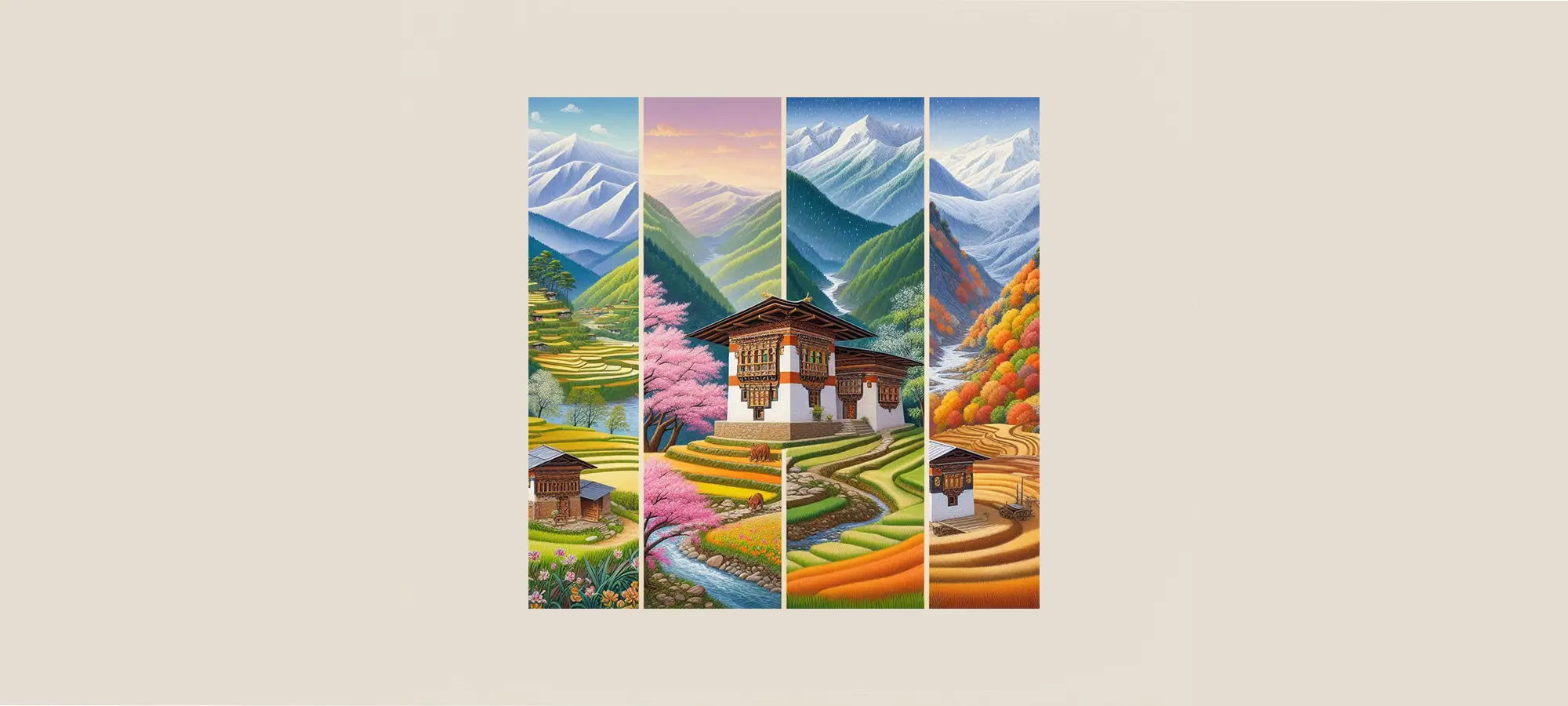
Best Time to Visit
Seasons, festivals & weather guide
Explore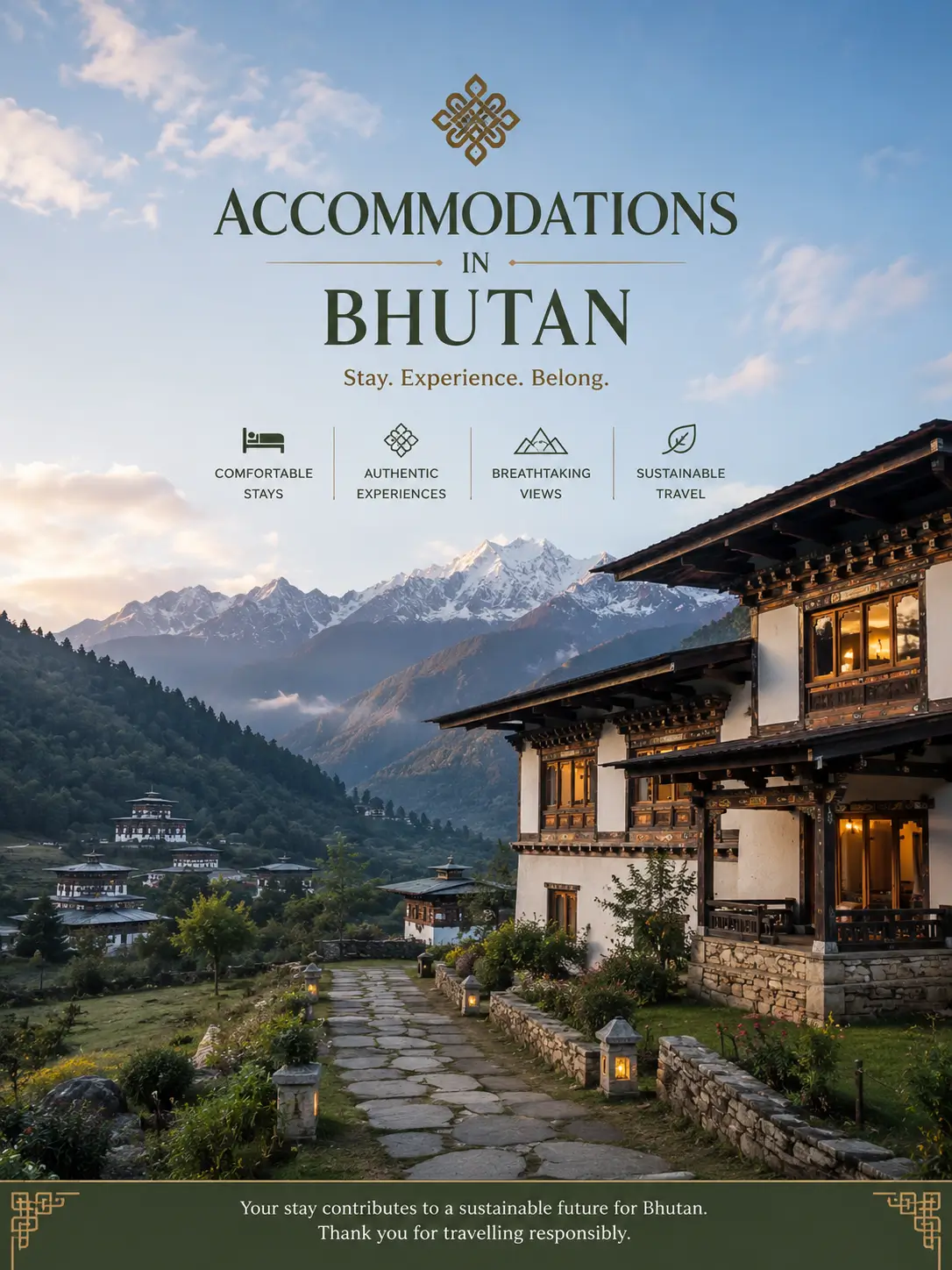
Accommodation
Hotels, resorts & stay options
Explore
Flights to Bhutan
Airlines, routes & entry points
Explore
Tour Packing Guide
How to pack wisely for your trip
Explore
Budget Travel Tips
Cheapest ways to reduce your costs
Explore
Transferring Money
Wise, wire transfer & card payments
Explore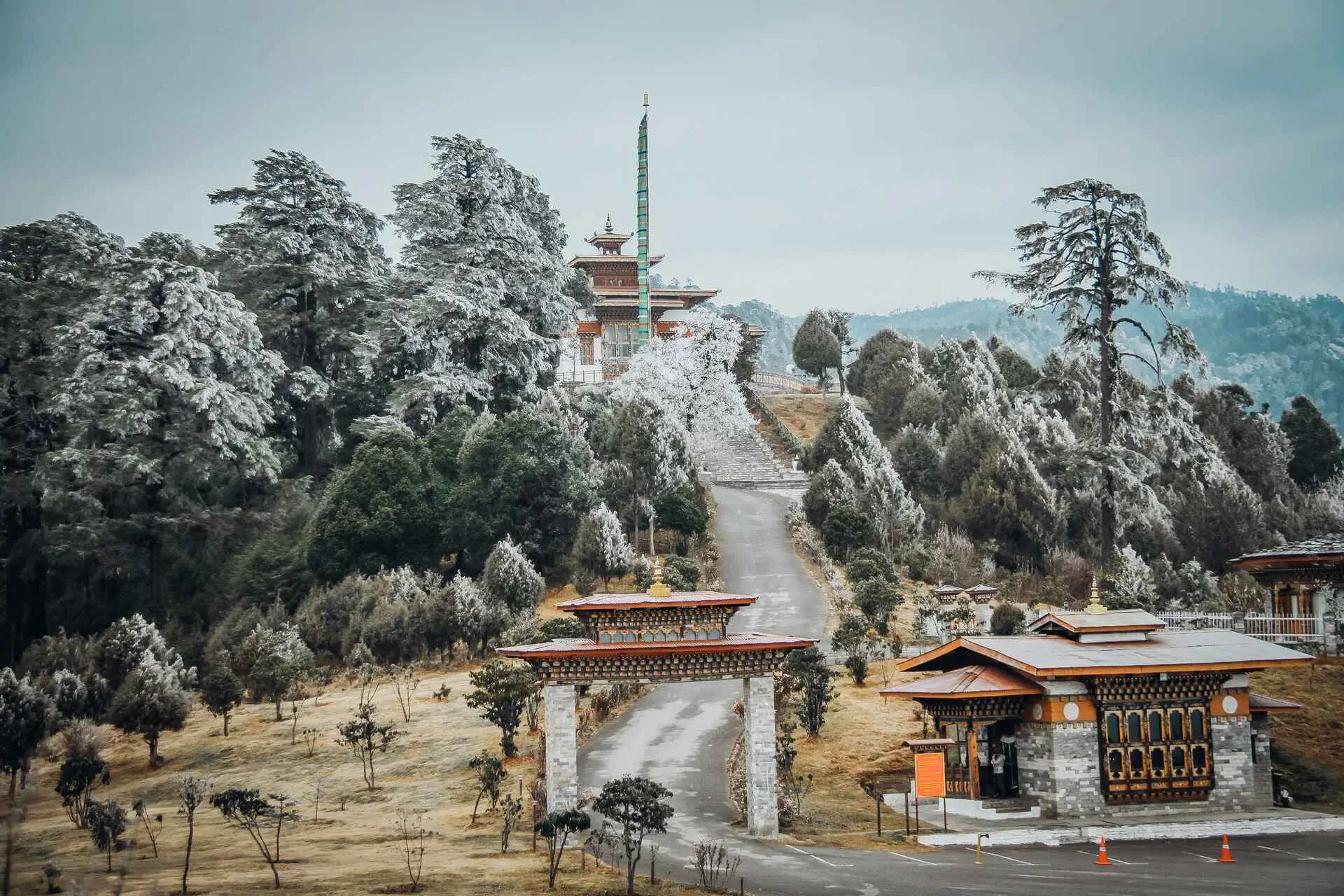
Weather by Month
Climate & seasons, month by month
Explore
How to Plan Your Tour
Step-by-step planning guide
Explore
Cancellation Policy
Terms & refunds explained
Explore
Festival Dates Calendar
All Tshechus & festival dates
Explore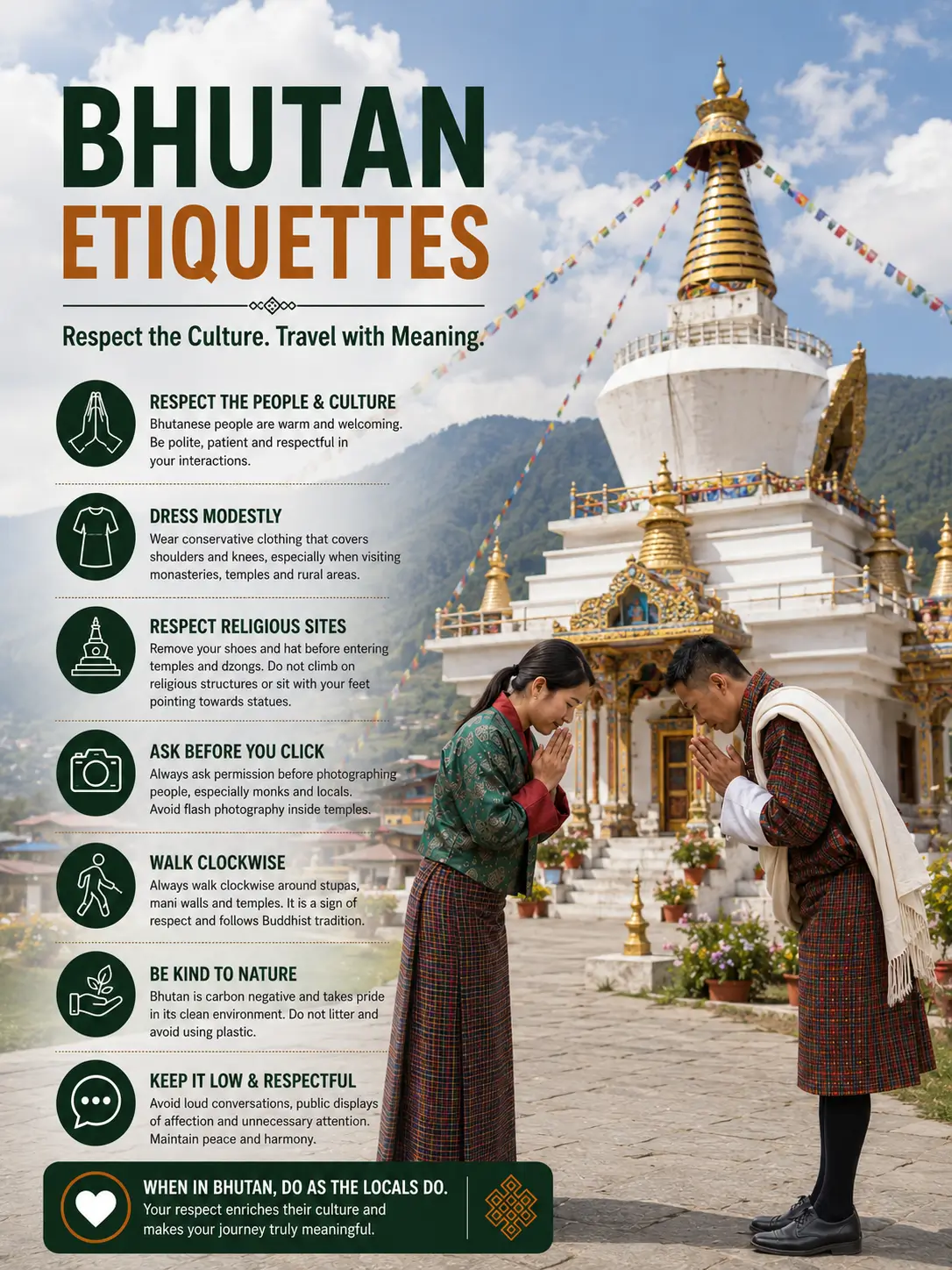
Bhutan Etiquettes
Dos and Don'ts while in Bhutan
Explore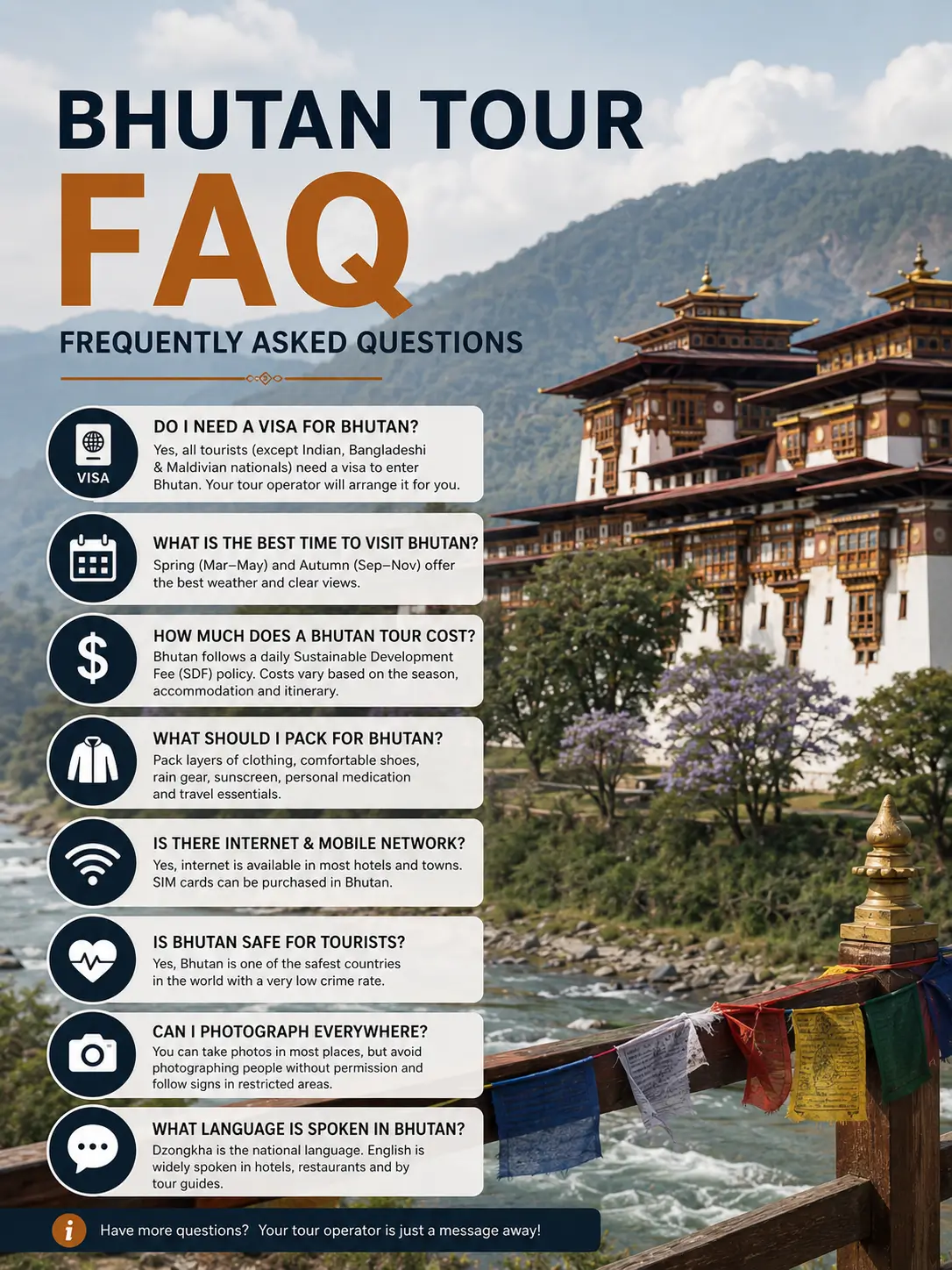
Frequently Asked Questions
Common questions about Bhutan tours
Explore