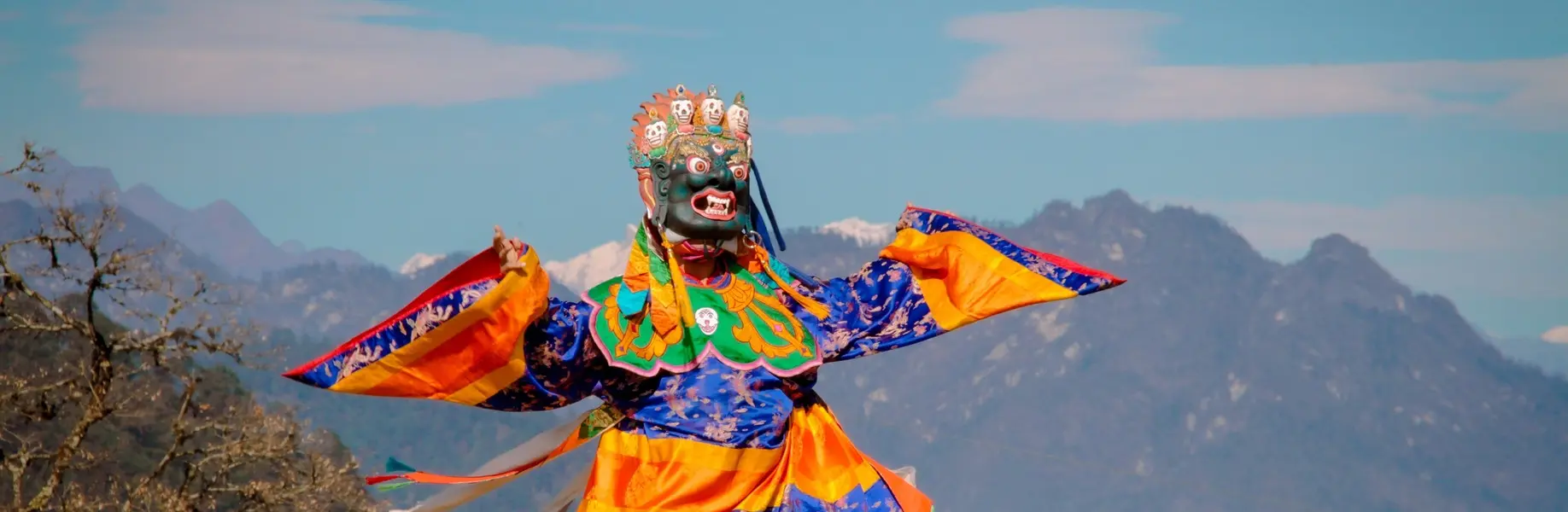
A Deity Disguised as a Hog
As jindag, or patron, Chokhor Deb offered land to Pema Lingpa to establish the temple, explaining that Vajravarahi had influenced his mind to make the offering. At the time, Vajravarahi appeared disguised as a hog, and in that form levelled the ground on which the monastery now stands. Tradition holds that Vajravarahi provided full support for the entire construction project, from its very beginning through to the final consecration ceremony.
To honour Vajravarahi and commemorate the groundbreaking, Pema Lingpa developed and introduced this dance. A single dancer wearing a hog-headed mask performs, carrying fresh plants in the right hand — a gesture symbolising the removal of obstacles, echoing the deity's own clearing of the ground centuries before.
Pema Lingpa himself was actively involved throughout the temple's construction, supervising the erection of the external structure and overseeing both the wall murals and the crafting of the key images inside. His biography records that during the consecration ceremony itself, Chokhor Deb and the other guests present took part in a horse race on the upper ground area of the monastery as entertainment — an area now occupied by a number of stupas built for Pema Lingpa's own reincarnations. Alongside the Peling Phag Cham, several other sacred dances were performed during that same consecration, including the Tshangmai Gingcham, the Peling Ging Sum, and the Dance of Heroes.