Rigma Chu Drug
Dance of the Sixteen Dakinis
Sixteen Offerings to Guru Rinpoche
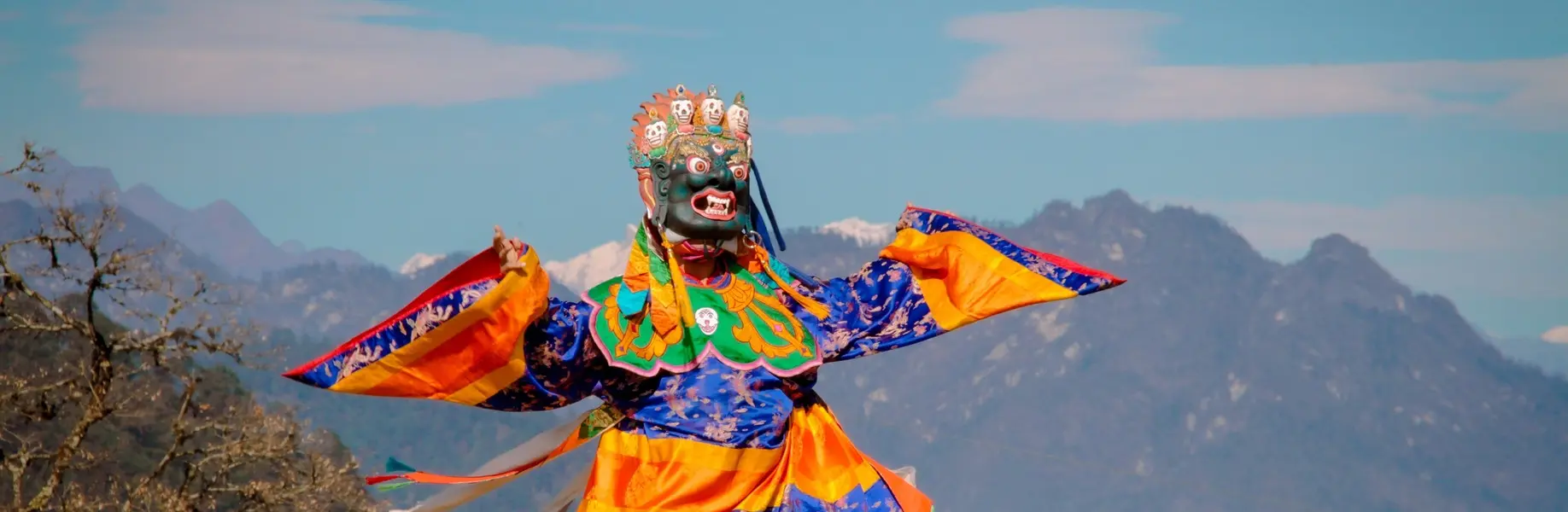
The Rigma Chu Drug — the Dance of the Sixteen Dakinis — is performed to further honour Guru Rinpoche during the Guru Tshengye Cham. The dakinis are enlightened goddesses, and sixteen distinct offering objects are presented over the course of the dance, each pleasing the enlightened ones in a different way — among them singing, dance itself, flower garlands, lit butter lamps, incense, fine oils and scents, delicious food, beautiful cloth, ornaments, a parasol, a victory banner, and musical instruments including harp, trumpet, drum, and cymbals.
The sixteen dakinis embody all female Buddhas and the wisdom-emptiness that is the source of every good quality and form of knowledge. When the dancers rattle their drums or ring their bells, the gesture is understood to encourage all sentient beings to awaken from ignorance; the beat of the hand drum specifically emphasises that victory over delusion is possible through earnest practice. Performing the dance is therefore a mechanism for accumulating merit as much as it is a performance to be watched.
The Two Sessions
The dakinis arrive wearing bone ornaments and elaborate costumes, silver crowns on their heads, carrying an ivory hand drum and a silver bell. There are two distinct sessions within the single performance, each with its own steps and movements. The first session, called Rigma Chudruk, has the dancers clasping a hand drum in the left hand and a drumstick in the right. The second, called Rig-nga Chudruk, is performed with a small drum in the right hand and a bell in the left. Between sessions, the dancers return to the dance chamber and re-emerge in the same costumes, ready for the second sequence.
Each of the sixteen dakinis has a specific role in the offering — a goddess-singer sings a melody to please the ear of the enlightened ones, a goddess-dancer performs to please the eyes, a goddess who carries flowers offers a garland to the crown ornament, and so on through the full set of sixteen. Broadly, their offerings work through speech, body movement, and sound together, and throughout both sessions all sixteen dance and chant in front of Guru Rinpoche as they play their drums and bells.
Why Monks, Not Women, Perform the Dance
Though the Sixteen Dakinis' dance should properly be performed by females, it has always in practice been performed by young monks and novices, since there are no women resident within the dzongs where the dance takes place. This is a longstanding, practical accommodation rather than a change to the dance's meaning — the young, slender build favoured for the role is chosen specifically to approximate the dakinis' own graceful form as closely as possible.
Where to See the Rigma Chu Drug
The Rigma Chu Drug is performed as part of the Guru Tshengye Cham sequence, and so appears wherever that dance is performed in full — typically on the closing day of a Tshechu. Because it is embedded within the larger performance, it is not always listed as a separate item in printed festival programmes. Found Bhutan will make sure your guide identifies the moment the sixteen dakinis enter within the wider sequence.
Customise Your
Bhutan Tour Today
Fill in the form and our expert team will get back to you within 24 hours.
Stay in the loop
Travel stories from the Last Shangri-La
Join fellow Bhutan enthusiasts. Get our latest guides, travel tips and exclusive insights delivered to your inbox.
No spam, ever. Unsubscribe anytime.