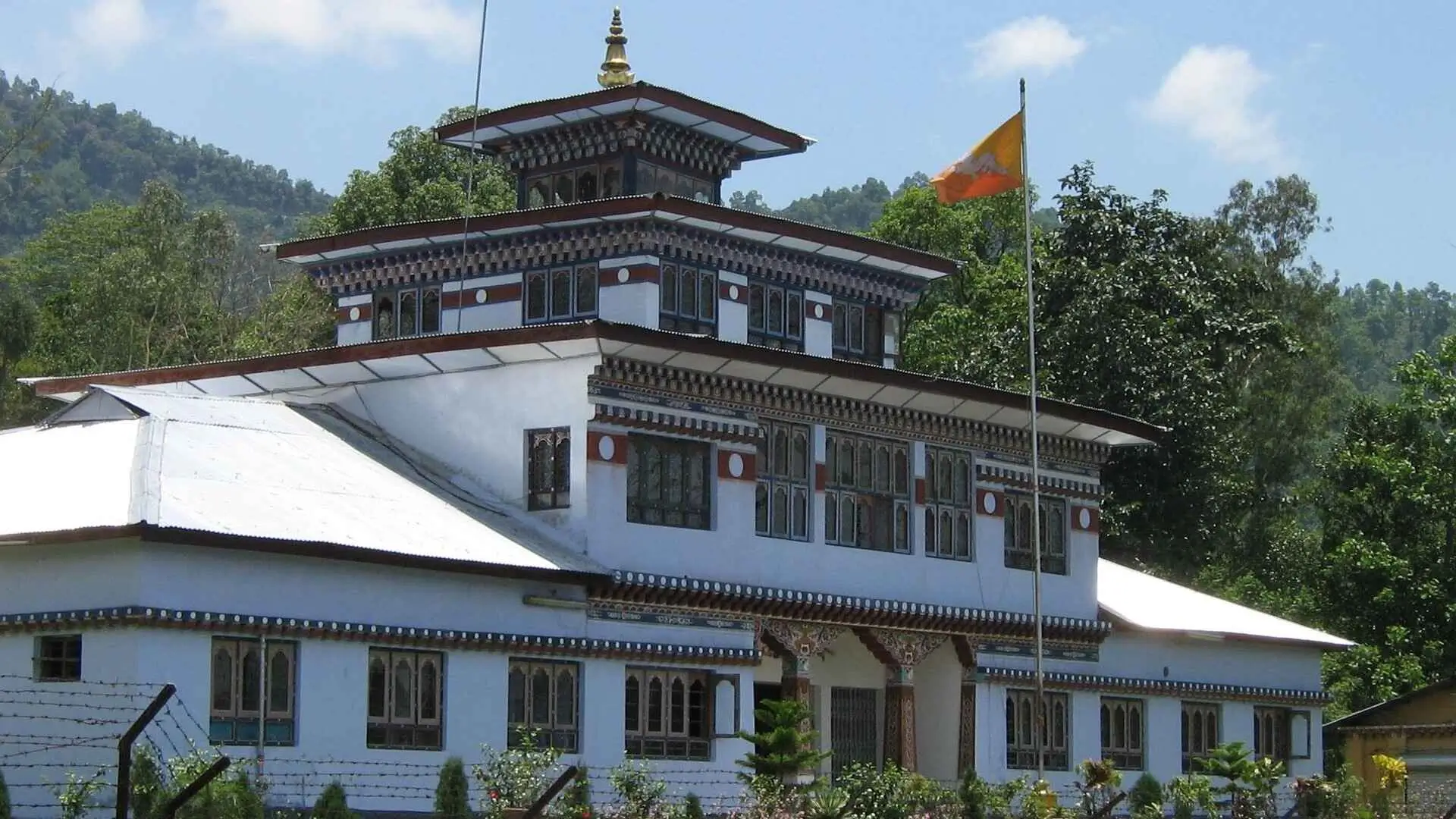
Samtse, Bhutan
Bhutan's Westernmost District · A Living Ethnic Mosaic
Bhutan's Westernmost Frontier
Samtse is Bhutan's westernmost district, bordering India's West Bengal and sharing cultural affinities with Darjeeling and the Duars to the south. It's the third most populous district in the country and the second most densely populated, a striking contrast to its history: the low-lying region was historically sparsely settled, as mountain-dwelling Bhutanese considered it prone to tropical disease, before a large influx of Nepali settlers arrived in the early 20th century to help clear the forest.
That history has made Samtse the most ethnically diverse district in southern Bhutan. Alongside the Lhotshampa community, Samtse is home to the Lhop, or Doya — a little-studied people of roughly 2,500 persons, considered by many Bhutanese to be among the original aboriginal inhabitants of western and central Bhutan, now concentrated in the district's Dorokha area. The Lhop practise a blend of Buddhism, animism, and Bon, wear distinctive white cloth dress, and speak Lhopu, one of Bhutan's most endangered indigenous languages — broadcast today by a local community radio station.
The district's elevation ranges from 600 metres at the Indian border to 3,800 metres in the northern highlands, producing a hot, humid, subtropical climate with heavy rainfall and forests rich in oranges, cardamom, ginger, and areca nuts — cash crops exported to West Bengal and Bangladesh.
Must-See Places in Samtse
Bhutan's most ethnically layered district, where Buddhism and Hinduism coexist and one of the country's oldest indigenous communities still keeps its own language alive.
Samtse Dzong
Samtse Dzong, in the district headquarters, is the administrative and religious heart of Bhutan's westernmost district, and the venue for the annual Samtse Tshechu — the largest annual gathering of the district's extraordinary human and cultural mosaic.
The Lhop (Doya) People of Dorokha
Concentrated in Samtse's Dorokha area, the Lhop — also known as Doya — are considered by many Bhutanese to be among the original aboriginal inhabitants of western and central Bhutan. A little-studied community of roughly 2,500 people, they practise a distinctive blend of Buddhism, animism, and Bon, wear their own white cloth dress, and speak Lhopu, one of Bhutan's most endangered indigenous languages — now kept alive in part through a dedicated community radio station.
A Living Religious Mosaic
Samtse is one of the few places in Bhutan where Buddhism and Hinduism are both actively and visibly practised, alongside the Lhop's own animist and Bon traditions. That layering, born of Samtse's history as a low-altitude district resettled by diverse communities over the past century, gives the district a religious character unlike anywhere else in the country.
Samtse Tshechu
Held at Samtse Dzong, the festival opens with the unveiling of a sacred thangka depicting Guru Rinpoche and his eight manifestations, before Cham dances performed in the subtropical warmth of the dzong courtyard, surrounded by forested hills descending toward the West Bengal border — a setting unlike any other Tshechu in Bhutan. The Lhop community attend in their distinctive white dress alongside Lhotshampa and other groups, making this one of the few occasions the district's full ethnic diversity is visible in one place.
Getting to & Around Samtse
Getting There
Samtse is reached via Phuentsholing, Bhutan's main southwestern gateway town, along winding roads through the district's forested foothills. As one of Bhutan's more remote southern districts, it's best combined with a wider western or southern circuit rather than visited as a standalone stop.
Where to Stay
Accommodation in Samtse is limited, including options such as Hotel Thunphel. Most visitors treat the district as a day trip or short stop from Phuentsholing rather than a dedicated multi-night base.
Weather & Best Time
Samtse's low-altitude, subtropical climate is hot and humid with heavy rainfall year-round. October through March brings the most comfortable, driest conditions for visiting, while the summer monsoon brings intense rain typical of the southern foothills bordering West Bengal.
A Fertile Border District
Samtse's forests and farmland produce oranges, cardamom, ginger, and areca nuts, much of it exported across the border to West Bengal and Bangladesh — a reminder of how closely tied this district is to its Indian neighbours, economically as well as culturally.
Ready to Experience Bhutan?
Let Found Bhutan Plan
Your Perfect Journey
Every itinerary we craft is personalised, expertly guided, and designed to give you deeper access to Bhutan's magic than any standard tour.
Festivals in Samtse
The Samtse Tshechu is one of the few occasions the district's full ethnic diversity — Lhotshampa, Lhop, and beyond — comes together in one place.
View All Bhutan Festivals & Dates →