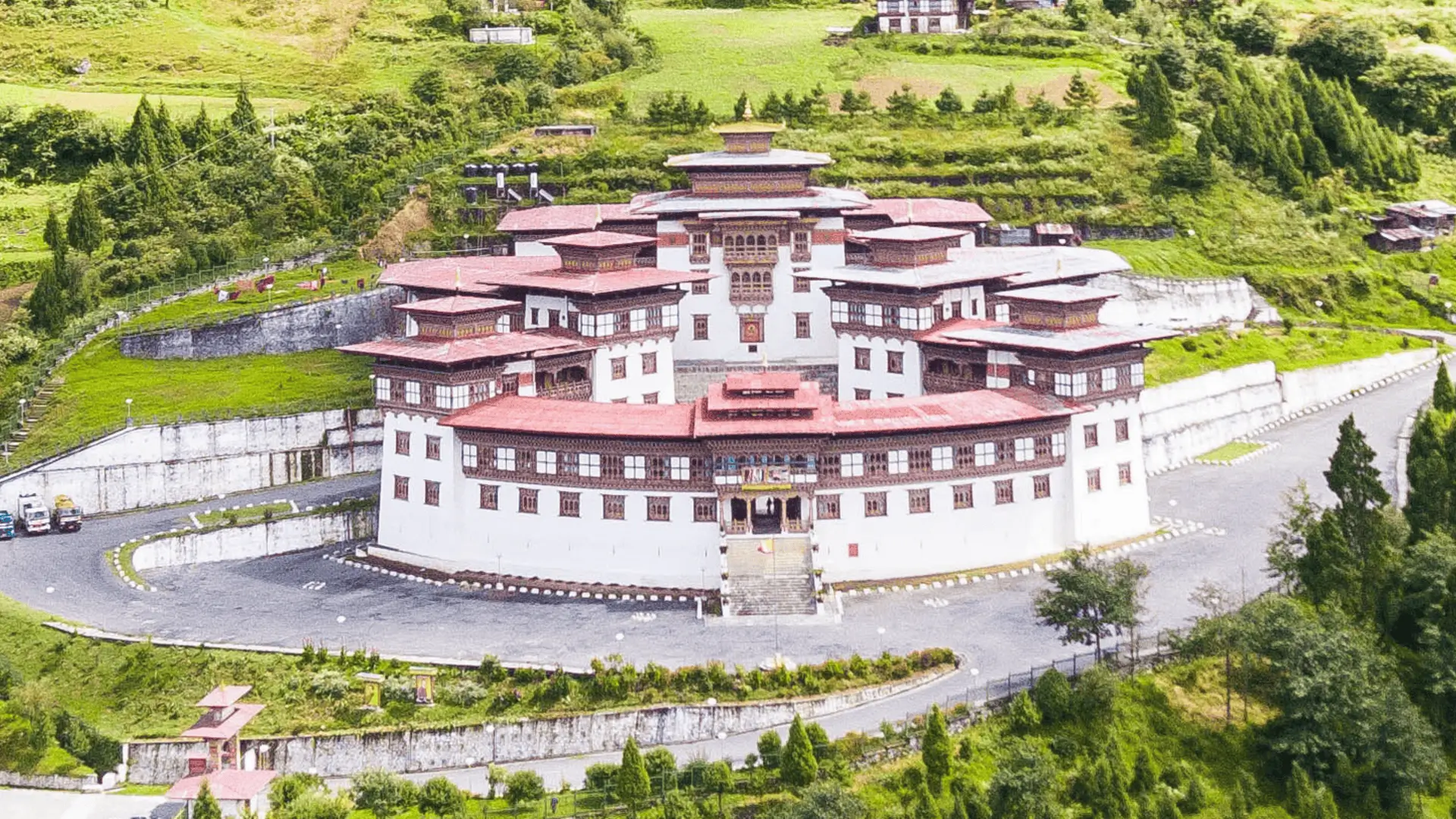
Chhukha & Phuentsholing, Bhutan
Bhutan's Western Gateway · Powerhouse of the Economy
Bhutan's Western Gateway
Chhukha district is where most overland visitors first set foot in Bhutan. It contains Phuentsholing — the country's busiest border town, adjoining the Indian town of Jaigaon, where the road from Siliguri and Kolkata crosses into the kingdom and climbs rapidly from the subtropical Duars plains into the Bhutanese highlands. With a population of nearly 69,000, Chhukha is Bhutan's second most populous district after Thimphu.
Chhukha is also, quite literally, the powerhouse of Bhutan's economy. The Chhukha Hydropower Project — Bhutan's first mega power project, commissioned in 1986 — and the larger 1,020MW Tala Hydroelectric Project both draw on the Wangchu river here, together generating over 1,350 megawatts. Exported to India, that electricity funds a substantial share of Bhutan's national development budget, making this unassuming district one of the most economically important in the country.
Beyond the border crossing and the power plants, Chhukha holds real cultural weight too: Zangto Pelri Lhakhang in the centre of Phuentsholing, Kharbandi Monastery on the hill above town, and Chhukha Dzong itself, home to a relatively young Tshechu first instituted in 1988. For most travellers, Chhukha is the first taste of Bhutan — modern, commercially active, and physically dramatic all at once.
Must-See Places in Chhukha
The first taste of Bhutan for most overland visitors, combining a major border crossing, national infrastructure, and genuine religious heritage.
Phuentsholing
Bhutan's busiest border town, Phuentsholing sits directly against the Indian town of Jaigaon and is the first stop for most overland visitors entering the country. From here, the road to Thimphu snakes visibly up the hillside — a striking first impression of Bhutan's mountain terrain after the flat plains of the approach from India.
Zangto Pelri Lhakhang
In the centre of Phuentsholing, this temple was built as a replica of Guru Rinpoche's celestial paradise by Dasho Aku Tongmi, composer of Bhutan's national anthem. It's a genuinely active place of worship — locals and visitors alike circumambulate the temple and spin its prayer wheels — set among flower gardens and a small park with a fountain.
Kharbandi Monastery
Also known as Rinchending Goemba, this Buddhist monastery sits on a hill roughly 400m above sea level, just below the Phuentsholing–Thimphu highway. It's an easy, worthwhile stop before the long climb north, offering sweeping views back down over Phuentsholing and the plains beyond.
Chhukha & Tala Hydropower Plants
The Chhukha Hydropower Project, commissioned in 1986 as Bhutan's first mega power project, and the larger 1,020MW Tala Hydroelectric Project both harness the Wangchu river here, together generating over 1,350 megawatts — the majority exported to India. Together they've funded a substantial share of Bhutan's development budget for decades, and the sheer scale of the infrastructure is visible from the highway as it follows the river north.
Chhukha Dzong
Formally known as Chhukha Ngedrup Tse Dzong, this is a relatively young dzong by Bhutanese standards, and the venue for the Chhukha Tshechu — itself only instituted in 1988. It anchors the district's religious life in a corner of Bhutan otherwise defined by industry and international trade.
Chhukha Tshechu
Held each September or October in the Chhukha Dzong courtyard, this three-day festival offers Cham dances performed by monks and lay dancers as a living offering to Guru Rinpoche, regional folk songs and dances specific to the Chhukha tradition, and a dawn Thongdrel unfurling on the final day. As one of Bhutan's newer Tshechus, it carries a slightly different, more community-driven energy than the country's centuries-old festivals.
Getting to & Around Chhukha
Getting There
Phuentsholing is roughly 176 km (7–8 hours) from Thimphu along the Lateral Road, one of Bhutan's main highways. Most travellers pass through Chhukha en route between the Indian border and Thimphu rather than stopping for an extended stay, though the drive itself — climbing rapidly from subtropical plains into forested highlands — is a memorable introduction to the country.
Where to Stay
Phuentsholing has a reasonable range of accommodation for a border town, including Park Hotel, Hotel Namgay, and Hotel Bhutan Ga Me Ga. Most visitors spend one night here at most, either arriving late from the border or departing early the next morning for Thimphu.
Weather & Best Time
Phuentsholing's low elevation means a warm, humid, subtropical climate for most of the year, in sharp contrast to the cooler highlands further north. September and October bring the Chhukha Tshechu along with more settled post-monsoon weather, while October through March generally offers the most comfortable conditions for the border crossing and the drive north.
Entering Bhutan via Phuentsholing
Phuentsholing is Bhutan's busiest overland entry and exit point, alongside Samdrup Jongkhar and Gelephu, and the natural choice for travellers arriving from Siliguri, Darjeeling, or Kolkata. See our visa guide for the entry requirements that apply at land border crossings.
Ready to Experience Bhutan?
Let Found Bhutan Plan
Your Perfect Journey
Every itinerary we craft is personalised, expertly guided, and designed to give you deeper access to Bhutan's magic than any standard tour.
Festivals in Chhukha
The Chhukha Tshechu brings community celebration to Bhutan's busiest border district.
View All Bhutan Festivals & Dates →