Black-Necked Crane Festival
About the Festival
Black-Necked Crane Festival — Phobjikha Valley
Unlike any other festival in Bhutan, the Black-Necked Crane Festival is not a religious Tshechu — it is a conservation celebration. Held every year on 11 November in the courtyard of Gangtey Monastery, it was initiated in 1998 by the Royal Society for Protection of Nature (RSPN) as part of the Integrated Conservation and Development Program, designed to connect the people of Phobjikha Valley with the endangered species they share their landscape with. The date also coincides with the birth anniversary of the Fourth King of Bhutan, Jigme Singye Wangchuck, adding national significance to the occasion.
The festival welcomes the annual arrival of the black-necked crane (Grus nigricollis) — the last of the world’s 15 crane species to be scientifically described, first recorded by Russian naturalist Count Przhevalski near Lake Koko Nor in Tibet in 1876. Each winter, some 300 to 500 of these birds migrate from the Qinghai-Tibetan Plateau to the wetland grasslands of Phobjikha, arriving from late October and remaining until mid-February. Phobjikha is their primary wintering habitat in Bhutan, and for the Bhutanese people, their arrival is a sacred event.
When
See dates below
Where
Phobjikha Valley
For
All Visitors Welcome
Guide Required
Yes — Mandatory
Festival Highlights
What Makes This Festival Special
01
Crane-Themed Dances and Performances
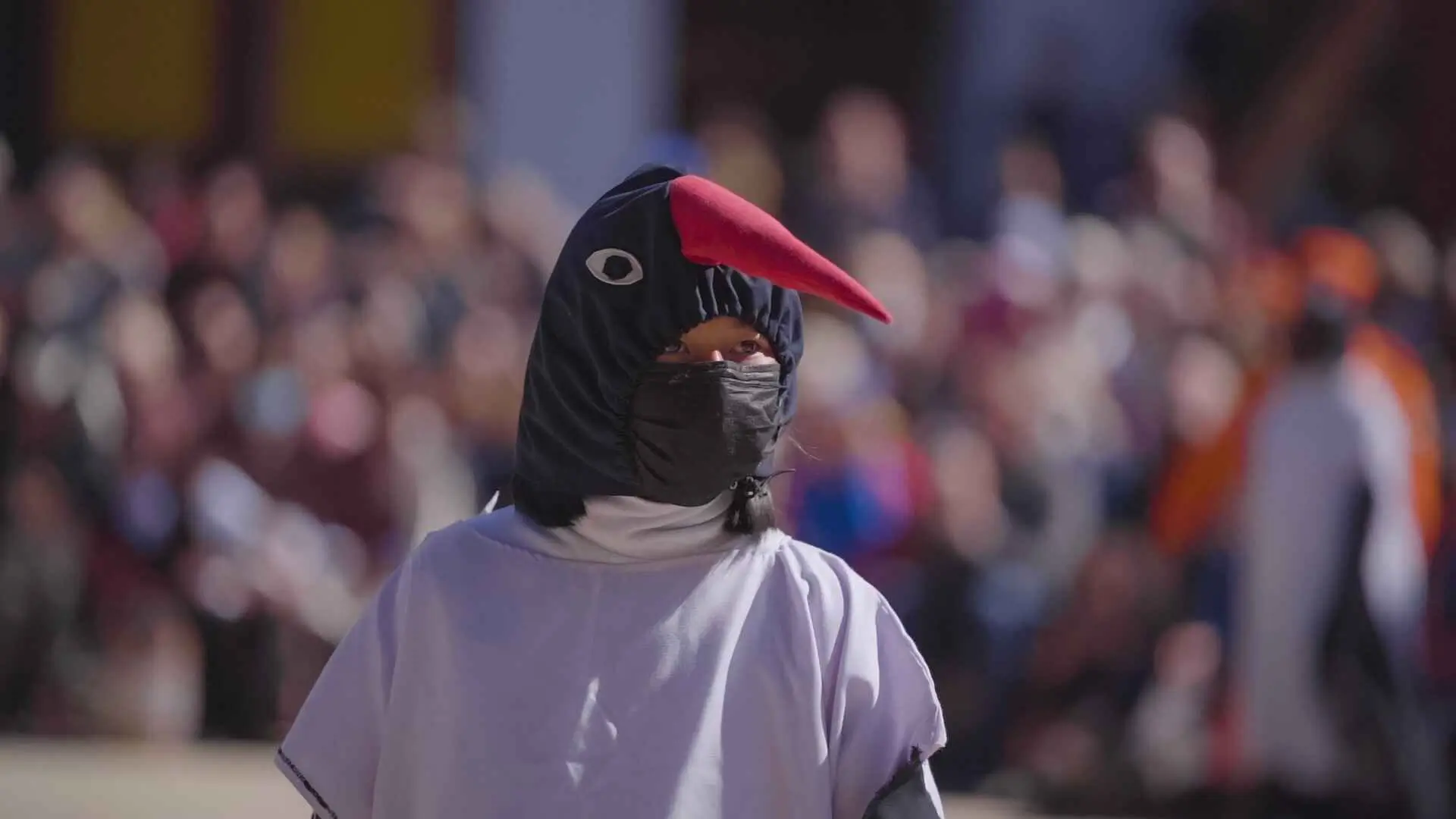
The festival begins with a special Black-Necked Crane Dance, performed by local schoolchildren dressed as cranes. This dance, accompanied by traditional music, mimics the graceful movements of the cranes with flaps, bows, and sweeping gestures. It is the most beloved performance of the entire festival and the moment that most visibly captures the union of culture and conservation that defines the day.
02
Educational and Conservation Activities
Visitors can participate in interactive sessions and exhibitions focused on the conservation of Black-Necked Cranes. These activities are designed to educate both locals and tourists about the threats facing the cranes — habitat loss, wetland degradation, power line collisions, and climate change. RSPN also runs art and essay competitions for local schoolchildren as part of its broader conservation education programme.
03
Local Art, Handicrafts, and Cuisine
The festival also features stalls offering traditional handicrafts, local art, and delicious Bhutanese cuisine. These stalls provide an opportunity for visitors to support the local economy while taking home a piece of Phobjikha’s distinctive craft tradition.
04
Scenic Beauty of Phobjikha Valley
The Phobjikha Valley, with its pristine wetlands and panoramic views, provides a breathtaking backdrop for the festival. Visitors can witness the cranes in their natural habitat, either during the festival or on early morning walks in the days around it. Dawn and dusk are the best times to see large flocks foraging in the fields and wetlands below the monastery.
05
A Village That Moves for the Cranes
One of the most extraordinary facts about Phobjikha is that each winter, the village community — including the Buddhist lamas — migrates to the warmer lowlands of Wangdue Phodrang, deliberately vacating the valley to leave the habitat undisturbed for the cranes. This annual act of communal deference to wildlife is almost without parallel anywhere in the world.
06
The Cranes Circle the Monastery
Local belief holds that the black-necked cranes circle Gangtey Monastery three times upon arriving in the valley and again upon departing for Tibet in spring — a gesture of reverence to the sacred site below. Whether observed literally or understood spiritually, it speaks to the deep connection between this community and its remarkable winter guests.
Practical Information for Visitors
Plan Ahead
November is a popular time for tourism in Bhutan, so book your travel and accommodations early.
What to Wear
While attending a festival, it’s important to dress respectfully. Bhutanese people wear their traditional Gho and Kira during Tshechus, and it’s customary for visitors to dress modestly. Avoid wearing revealing clothing and wear warm, layered clothing — Phobjikha is at 3,000 metres and November mornings are cold, often below 5°C. Bring a waterproof layer. Sturdy walking shoes are essential for the valley walks.
Photography
Photography is allowed at most festivals, but it’s always polite to ask before taking pictures, especially of monks or religious figures. Be respectful of the rituals, and avoid using flash photography during performances.
Engage a Guide
A knowledgeable guide can enrich your understanding of the rituals and their significance. Also a certified tour guide is mandatory to attend festivals and visit most of the major tourist attractions and monuments in Bhutan
Bring Binoculars
For an up-close view of the cranes in their natural habitat, binoculars are highly recommended.
Food Options
Bhutan offers a diverse range of food options, from delicious traditional Bhutanese dishes to international cuisines, including plenty of vegetarian choices to suit every taste.
Respect Local Customs
Follow the guidance of your guide and observe the rules of the area.
The Birds at the Heart of It All
The Black-Necked Crane — Bhutan’s Sacred Winter Guest
The black-necked crane (Grus nigricollis) is the only crane species that lives and breeds entirely on high-altitude plateaus. It breeds on the Qinghai-Tibetan Plateau during summer and migrates south each autumn to lower-altitude wintering grounds in Bhutan, southern Tibet, and the Yunnan-Guizhou plateau of China. In Bhutan, the birds are legally protected and their hunting is strictly prohibited. They are also deeply revered in Buddhist culture — the cranes are considered heavenly beings, symbols of longevity and good fortune, and their winter presence in the valley is treated as a blessing upon the community.
Phobjikha (also called Gangteng-Phobji valley) is Bhutan’s largest and most important black-necked crane wintering site, hosting approximately 300 to 500 birds each year. Other wintering sites in Bhutan include Khotokha in Wangdue Phodrang district, Bomdeling in Trashi Yangtse, and Gyatsa in Bumthang. The birds typically arrive from late October through mid-December and remain in the valley until mid-February, roosting in the wetland marshes and foraging in the ploughed agricultural fields. They feed primarily on barley, wheat, paddy, potatoes, and buckwheat left in the fields after harvest, as well as roots, tubers, and insects in the wetlands.
The IUCN Red List status of the black-necked crane was upgraded from Vulnerable to Near Threatened in 2020, reflecting a modest but real improvement in the global population, estimated at around 10,000–11,000 individuals. Bhutan’s conservation approach — combining legal protection, community stewardship, and the cultural reverence embedded in events like the festival — is widely cited as a model for coexistence between people and wildlife.
The Festival Programme — A Full Day of Culture and Conservation
The Black-Necked Crane Festival is a one-day event. It takes place in the large courtyard of Gangtey Monastery, which overlooks the wetlands of the valley floor where cranes are often visible foraging. The day opens with the crane dance performed by local schoolchildren in hand-painted crane costumes and masks. The children mimic the birds’ movements — their wide wing-flaps, their high-stepping walk, their slow bowing courtship gestures — with extraordinary accuracy and obvious joy.
Traditional Bhutanese mask dances (cham) are also performed, with monks adapting the sacred choreography to reflect the spirit and symbolism of the cranes. Folk songs are sung by local community members, and conservation-themed dramas and skits are staged, engaging the audience in the story of why these birds matter and what threatens them. RSPN sets up informational exhibitions and runs art competitions for children. Stalls selling local handicrafts, traditional food including spicy pork momo and butter tea, and conservation-awareness materials are set up around the perimeter of the courtyard.
The first festival in 1998 was held in the middle of the valley near the old school. As its popularity grew among both local communities and international visitors, it moved to the monastery courtyard, where it has been held ever since. Today it draws visitors from across Bhutan and from around the world — birdwatchers, cultural travellers, conservationists, and families.
Seeing the Cranes — When and Where
The festival falls on 11 November, which is reliably within the crane arrival window. By this date, birds will have been present in the valley for one to three weeks. The best crane viewing is in the early morning before 8am and in the late afternoon from around 4pm, when large flocks move between their roost sites and foraging fields. The wetland area at the valley floor — accessible via the Gangtey Nature Trail — is the prime location.
Visitors with binoculars will see the birds at close range; the cranes in Phobjikha are habituated to human presence at a distance and are not easily disturbed if approached quietly and slowly. The Black-Necked Crane Information Centre, run by RSPN near the monastery, has spotting scopes permanently set up overlooking the valley and staff on hand to help identify birds and explain the conservation work underway.
Things to Do Around the Festival
- Gangtey Nature Trail — a 5 km loop around the valley floor, passing through wetland meadows, traditional farmhouses, and pine forest. The trail is the best way to see the cranes at close range in the fields. Start at dawn for the best light and the most active birds.
- Black-Necked Crane Information Centre — open year-round, with spotting scopes, crane biology exhibits, and information about the valley’s conservation status. Entry is free.
- Gangtey Monastery — the main seat of the Peling tradition, founded in 1613. The monastery is open to visitors outside festival hours. The murals and the main assembly hall are exceptional.
- Staying in the valley — several guesthouses and one upscale eco-lodge operate in Phobjikha. Staying at least two nights gives you the full experience: festival day, a dawn walk with the cranes, and the atmosphere of the valley at dusk.
- Combining with Gangtey Tshechu — the Gangtey Tshechu (the religious Tshechu at the same monastery) is held in late September or early October. Planning a trip that includes both gives visitors the rarest possible double: a sacred Cham dance festival and a wildlife spectacle at the same extraordinary location.
When is this Festival in 2026?
The Black-Necked Crane Festival is held annually on November 11th, coinciding with the arrival of the cranes in the valley. This date also marks Bhutan’s Constitution Day, adding a layer of national significance to the celebrations.
Get Festival Dates & BookBook Your Festival Tour with Found Bhutan
Everything handled — visa, SDF, flights, accommodation, certified guide, and festival access.
Seamless Planning
We handle your Bhutan visa, SDF, flights, accommodation, certified guide, meals, and in-country transportation from arrival to departure.
Personalised Itineraries
Festival days combined with the experiences that matter most to you — treks, monasteries, village visits, or simply time to absorb Bhutan at your own pace.
Expert Local Guides
Our certified guides know every dance and every ritual. They bring the festival alive with context, stories, and insider access you won't find on your own.
You're a Guest, Not a Client
At Found Bhutan, we build relationships — not transactions. Many of our travellers return year after year, and many become lifelong friends.
Book Early
Festival tours sell out months in advance. Early bookings secure the best accommodation and guarantee your place at one of Bhutan's most extraordinary events.
Licensed & Local
Found Bhutan is a fully licensed Bhutanese tour operator. We are local, accountable, and deeply invested in showing you Bhutan at its most authentic.
Customise Your
Bhutan Tour Today
Fill in the form and our expert team will get back to you within 24 hours.
Stay in the loop
Travel stories from the Last Shangri-La
Join fellow Bhutan enthusiasts. Get our latest guides, travel tips and exclusive insights delivered to your inbox.
No spam, ever. Unsubscribe anytime.