Jomolhari Mountain
Festival
About the Festival
Jomolhari Mountain Festival — Conservation and Culture at 4,080m
The Jomolhari Mountain Festival is a two-day event held at Jangothang — the base camp of Mount Jomolhari (7,326m) at 4,080 metres above sea level — accessible only by a four-to-five-day trek from Paro. First held in 2013, the festival brings together the communities of Soe Yaksa, Soe Yutoed, Nubi, and Lingzhi in a celebration of highland culture explicitly designed around snow leopard conservation. It is organised by these communities in collaboration with Jigme Dorji National Park (JDNP), the Nature Recreation and Ecotourism Division (NRED), and with support from the Snow Leopard Conservancy and the Bhutan Foundation.
The setting is singular. Only about 28 households live in the Jangothang area; there is no electricity. The nearest paved road is several days’ walk away. The festival draws over 1,500 visitors — a remarkable number for a location that can only be reached on foot — and it brings the remote highlands of western Bhutan into contact with the wider world for two days each October. The purpose is specific: to generate conservation awareness about the snow leopard, to create sustainable livelihood opportunities for the highland communities who live alongside this endangered cat, and to share their culture with those who make the trek to reach them.
When
October
For
All Visitors Welcome
Guide Required
Yes — Mandatory
Festival Highlights
What Makes This Festival Special
01
Snow Leopard Conservation Awareness
The festival serves as a platform to educate locals and visitors about the importance of snow leopard conservation. Visitors can learn about ongoing efforts to protect these majestic predators and their extraordinary habitat. Only around 96 snow leopards are estimated to exist in all of Bhutan — and camera trap evidence has confirmed that the Jomolhari region is one of the best snow leopard habitats in the country. Conservation stalls, snow leopard-themed performances, and dedicated information sessions from JDNP staff and the Snow Leopard Conservancy make the festival a genuine education in what Bhutan’s conservation commitments mean on the ground.
02
Traditional Highland Games
The Jomolhari Mountain Festival features exciting traditional Bhutanese sports, such as Archery - Bhutan's National Sport, Pungdo (Stone Trowing) - a highland tradition that showcases strenght and precision. The games reflect the practical skills of the highland life — Khuru (dart throwing), shot-put, rope pulling, archery, and icy pole climbing. Yak and horse races are the most visually spectacular events of the programme. The games are competitive and popular; the energy of the high-altitude crowd watching them is one of the most infectious things about the festival.
03
Cultural Performances
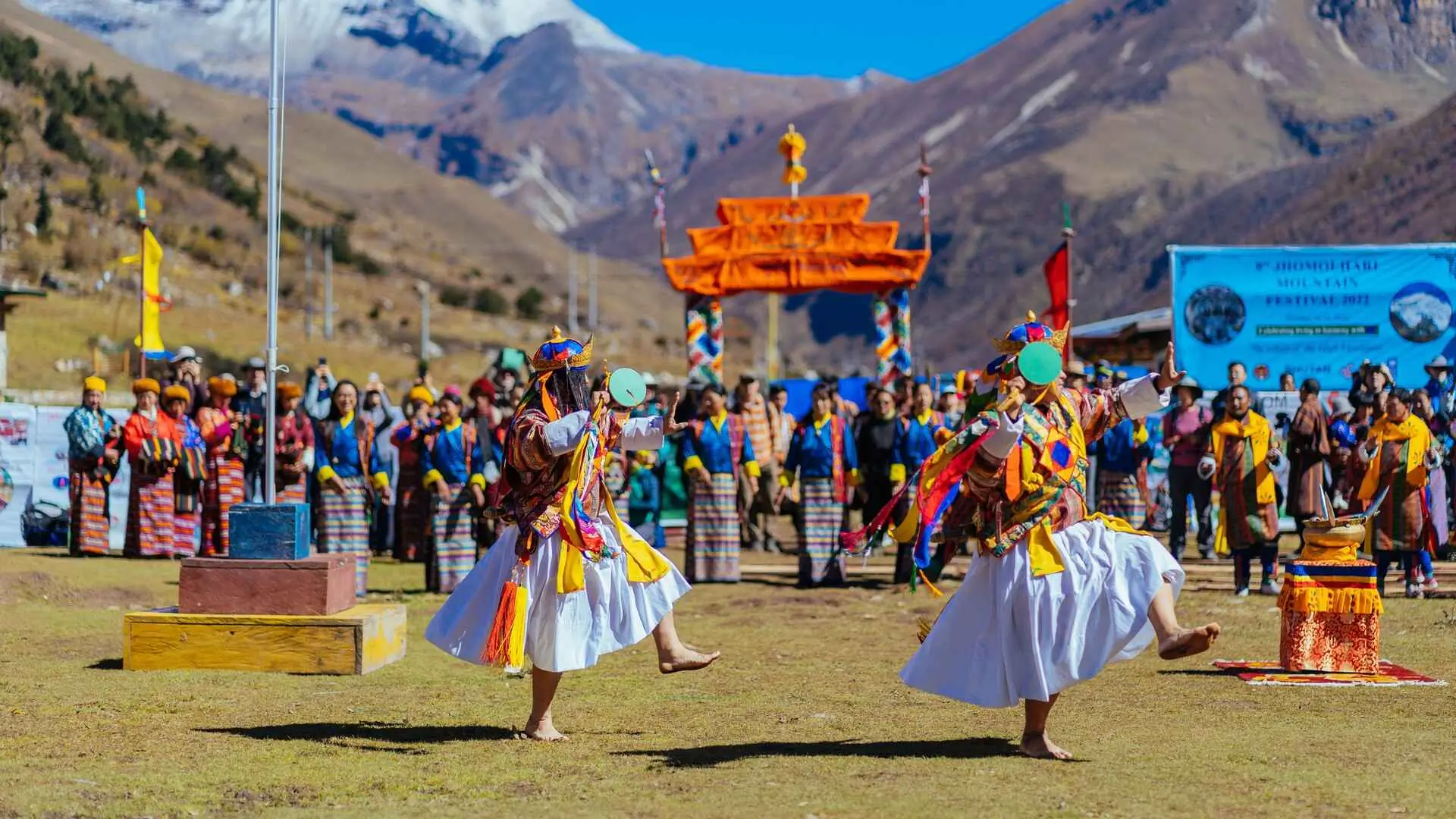
The festival includes mesmerizing folk dances and songs performed by the highland villagers, dressed in their traditional attire. The performances are a celebration of the region’s cultural heritage and a direct expression of the communities’ lives at altitude. Snow leopard-themed folk songs and dances are specific to this festival — composed and performed by the people of Soe Yaksa and Soe Yutoed whose sheep and yaks live alongside the cats in the same landscape.
04
Yak and Highland Livelihood Showcases
Yaks, integral to the livelihood of Bhutan’s highlanders, take center stage at the festival. Activities include: Yak Races, Yak Herding Demonstrations, Yak Product Displays.
05
Scenic Trekking Opportunities
For adventurous travelers, the journey to the Jomolhari Mountain Festival is as exciting as the event itself. Trekking routes such as the Jomolhari Trek offer breathtaking views of Mount Jomolhari and the surrounding peaks. The second day of the festival includes a guided hike to Tshophu — a pair of sacred twin lakes above the base camp — passing through the snow leopard’s habitat. Blue sheep, fat marmots, and migrating Himalayan bird species are regularly seen along the route.
06
Connect with Bhutan's Highland Communities
The festival provides a unique opportunity to meet and interact with the highland communities, learning about their traditions, resilience, and connection to the environment.
Practical Information for Visitors
Plan Ahead
The festival is held in a remote location, so careful planning and coordination with a travel agency are essential.
Prepare for Trekking
The journey to Soe Yaksa involves trekking, so bring appropriate gear and be ready for high-altitude conditions.
What to Wear
While attending a festival, it’s important to dress respectfully. Bhutanese people wear their traditional Gho and Kira during Festivals, and it’s customary for visitors to dress modestly. Avoid wearing revealing clothing and wear full mountain gear — Jangothang at 4,080m in October is cold, with sub-zero temperatures at night and wind chill. A good down sleeping bag, warm base layers, waterproofs, and sturdy trekking boots are essential for the multi-day approach. The festival itself is held outdoors in the open mountain meadow.
Photography
Photography is allowed at most festivals, but it’s always polite to ask before taking pictures, especially of monks or religious figures. Be respectful of the rituals, and avoid using flash photography during performances. Also, bring a telephoto lens for wildlife photography — blue sheep and marmots are regularly seen on the approach to the festival, and the snow leopard camera trap footage at the information stalls gives a sense of what the landscape holds. The Jomolhari backdrop at dawn is one of the finest mountain photography subjects in Bhutan.
Engage a Guide
A knowledgeable guide can enrich your understanding of the rituals and their significance. Also a certified tour guide is mandatory to attend festivals and visit most of the major tourist attractions and monuments in Bhutan.
Stay Eco-Friendly
Help preserve the pristine environment by avoiding littering and minimizing your ecological footprint.
Food Options
Bhutan offers a diverse range of food options, from delicious traditional Bhutanese dishes to international cuisines, including plenty of vegetarian choices to suit every taste.
Respect Local Customs
Follow the guidance of your guide and observe the rules of the premises.
The Ghost of the Mountains
The Snow Leopard — 96 Left in All of Bhutan
The snow leopard (Panthera uncia) is one of the most elusive large cats in the world — adapted to the high-altitude landscapes of Central and South Asia, with a coat of pale grey and gold that blends into the rock and snow so perfectly that the animal can be metres away without detection. In Bhutan, approximately 96 snow leopards are estimated to survive across the country’s protected areas. The Jomolhari region — the high valleys around the base camp, between 3,500 and 5,000 metres altitude — is one of the best documented habitats. Camera traps installed by Jigme Dorji National Park and the Snow Leopard Conservancy have repeatedly captured images of individual leopards in this landscape.
The tension the festival addresses is real. Snow leopards prey on blue sheep and occasionally on the yaks and horses that the highland families depend on for their livelihoods. A leopard that kills livestock causes direct economic damage to a family with few alternative income sources. The historical response to this conflict — retaliatory killing of the leopards — has contributed to the species’ decline across Asia. The Jomolhari Mountain Festival is part of a broader strategy to change that dynamic: by turning the snow leopard from an economic threat into a conservation asset — a reason for outsiders to trek to this remote landscape and spend money with local families — the festival makes the leopard’s presence valuable rather than threatening.
The Trek to the Festival
The Jomolhari Mountain Festival is reached only on foot. The standard approach follows the Jomolhari Trek from Paro: a four-to-five-day walk from the trailhead at Shana (2,900m), following the Paro Chhu river upstream through the villages of Soe, Takethang, and Dangochang to Jangothang base camp (4,080m) — with Mount Jomolhari (7,326m) and Jichu Drake (6,989m) filling the skyline ahead. The approach passes through Jigme Dorji National Park for its entire length.
The return journey options include retracing the route or continuing north via the Bhonte La pass (4,890m) to the village of Soe Yaksa (3,800m), crossing the Tshophu twin lakes — sacred alpine lakes at around 4,400m — before descending toward Thimphu. This extended route adds two-to-three days but passes through the most remote and dramatically beautiful section of the Jomolhari region.
What Happens at the Festival
The two-day programme is a mix of conservation education, cultural performance, and highland sport. On the first day, the community stalls open: handicrafts made from yak hair, felt, and wool; local delicacies cooked over open fires; information displays about snow leopard ecology and conservation from JDNP and Snow Leopard Conservancy staff. Then the yak and horse show — the most spectacular visual element — followed by yak riding, horse riding, Khuru (dart throwing), and shot-put competitions.
The conservation performances are the most specific cultural element of the festival: snow leopard-themed folk songs and dances performed by the people of Soe Yaksa and Soe Yutoed, composed around the relationship between the highland communities and the cat that shares their landscape. Children from the local school also perform. The second day includes a guided hike to the Tshophu twin lakes, through the habitat of the snow leopard, with JDNP naturalists identifying wildlife along the route.
Getting There
- Starting point — Shana village, accessible by vehicle from Paro (about 1 hour). The trek begins here.
- Day 1–2 — Shana (2,900m) to Thangthangkha (3,610m) to Jangothang (4,080m). Total approximately 5–6 hours walking per day.
- Altitude — Jangothang at 4,080m requires acclimatisation. Spend at least one day at intermediate altitude before the festival.
- Equipment — Full camping gear, warm sleeping bag, layers for sub-zero overnight temperatures. Found Bhutan provides all camping equipment and support for festival trek participants.
- Timing — The festival is held in October. Book well in advance; the combination of limited camping sites and the festival’s growing popularity means spaces fill months ahead.
When is this Festival in 2026?
The Jomolhari Mountain Festival Bhutan is held annually following the Bhutanese lunar calendar. Contact us for confirmed dates and to book your trip well in advance — festival time is the busiest travel period in Bhutan.
Get Festival Dates & BookBook Your Festival Tour with Found Bhutan
Everything handled — visa, SDF, flights, accommodation, certified guide, and festival access.
Seamless Planning
We handle your Bhutan visa, SDF, flights, accommodation, certified guide, meals, and in-country transportation from arrival to departure.
Personalised Itineraries
Festival days combined with the experiences that matter most to you — treks, monasteries, village visits, or simply time to absorb Bhutan at your own pace.
Expert Local Guides
Our certified guides know every dance and every ritual. They bring the festival alive with context, stories, and insider access you won't find on your own.
You're a Guest, Not a Client
At Found Bhutan, we build relationships — not transactions. Many of our travellers return year after year, and many become lifelong friends.
Book Early
Festival tours sell out months in advance. Early bookings secure the best accommodation and guarantee your place at one of Bhutan's most extraordinary events.
Licensed & Local
Found Bhutan is a fully licensed Bhutanese tour operator. We are local, accountable, and deeply invested in showing you Bhutan at its most authentic.
Customise Your
Bhutan Tour Today
Fill in the form and our expert team will get back to you within 24 hours.
Stay in the loop
Travel stories from the Last Shangri-La
Join fellow Bhutan enthusiasts. Get our latest guides, travel tips and exclusive insights delivered to your inbox.
No spam, ever. Unsubscribe anytime.