Lhamo Tsomo
Dance
A Dance Unique to Thimphu
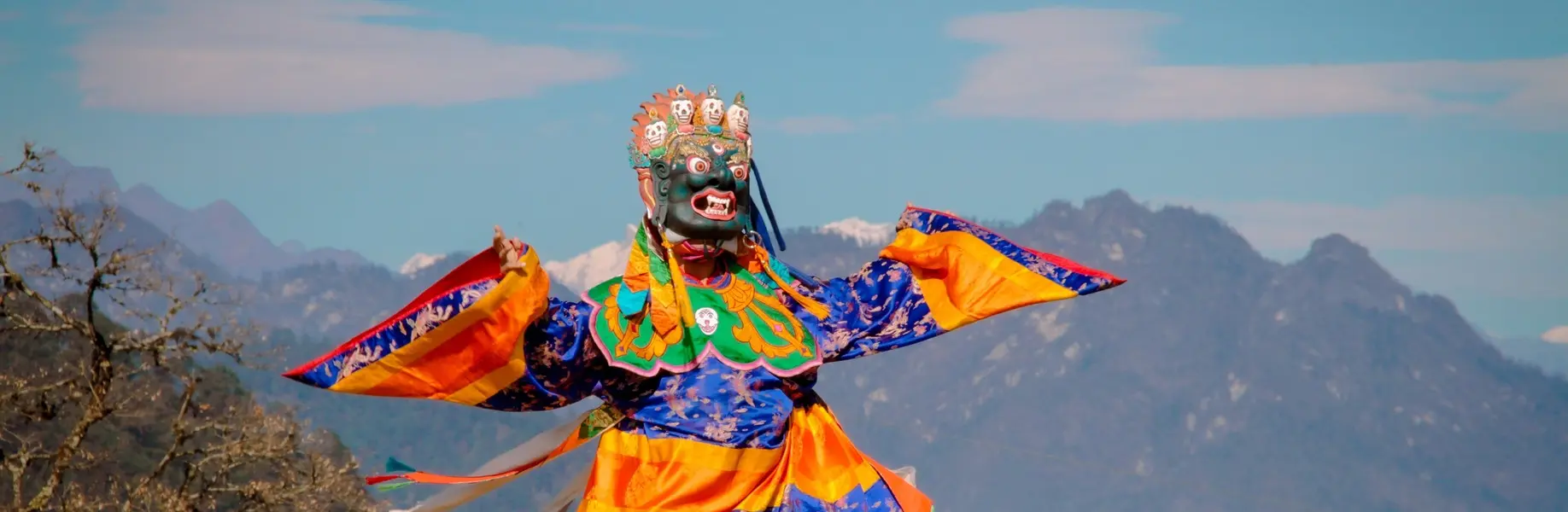
The Lhamo Tsomo Dance is a unique feature of the Thimphu festival calendar, performed nowhere else in Bhutan. It always takes place inside the dzong courtyard, immediately after the successful conclusion of the two-week-long dedication rites to Palden Lhamo held inside the main prayer hall of Trashichho Dzong — the same complex that houses the golden throne of the King and of His Holiness the Je Khenpo, the country's highest religious authority. On the second day of the festival, the Lhamo Tsomo Dance is revealed to the public for the first time that year.
Lhamo Tsomo, known in Sanskrit as Mahakali, is the main protective deity of the Mahasiddha Naropa, who lived in India in the 9th century CE. Having appeared before Naropa in physical form, Lhamo Dudsolma swore an oath to provide protection for his teachings and to guard closely the Six Yogas of Naropa. When Naropa transmitted this lineage to the Tibetan master Marpa Lotsawa Choki Lodroe (1012–1099), he also consigned Lhamo Dudsolma to Tibet as one of the lineage's principal protective deities — and she has remained a central protector of the Drukpa Kagyu tradition ever since.
A Vision at Chagri Monastery
The dance was introduced by Gyalse Ganapati, also known as Gyalse Kunga Gyaltshen (1689–1713), in 1710. The goddess appeared before him during a retreat at Chagri monastery in the early 18th century, and the choreography that followed was developed directly from what he witnessed in that vision — an act of honouring Lhamo Dudsolma's efforts in protecting the Buddha Dharma, translated into a form the public could witness for themselves.
Twenty-One Goddesses in Two Circles
Lhamo Dudsolma appears wearing a dark blue face mask, accompanied by four attendants in white, yellow, red, and green masks. She carries a sword in her right hand and a skull in her left. A further sixteen members of her retinue complete the full assembly of twenty-one — bird and animal-headed figures known collectively as the Dbongchengyed, among whom eight directional deities are specifically called the Gotshamgyed.
During the performance, the main deity Lhamo Dudsolma dances at the centre of the circle while her four close attendants perform around her; when all twenty-one goddesses dance together, this inner group remains at the centre while the remaining sixteen retinue members form a larger circle surrounding them. At the dance's climax, Lhamo Dudsolma subdues evil forces through the ritual act of cutting an effigy contained inside a black triangular box.
Where to See the Lhamo Tsomo Dance
The Lhamo Tsomo Dance is performed exclusively at Thimphu Tshechu, on the second day of the festival, immediately following the conclusion of the Lhamo Dromchoe retreat. Read our full guide to the Thimphu Drubchen for the complete story of Palden Lhamo and the retreat that precedes this dance.
Customise Your
Bhutan Tour Today
Fill in the form and our expert team will get back to you within 24 hours.
Stay in the loop
Travel stories from the Last Shangri-La
Join fellow Bhutan enthusiasts. Get our latest guides, travel tips and exclusive insights delivered to your inbox.
No spam, ever. Unsubscribe anytime.