Laya Gasa
Trek Guide
About the Trek
Bhutan's "Short Snowman" — Wilderness and Layap Culture
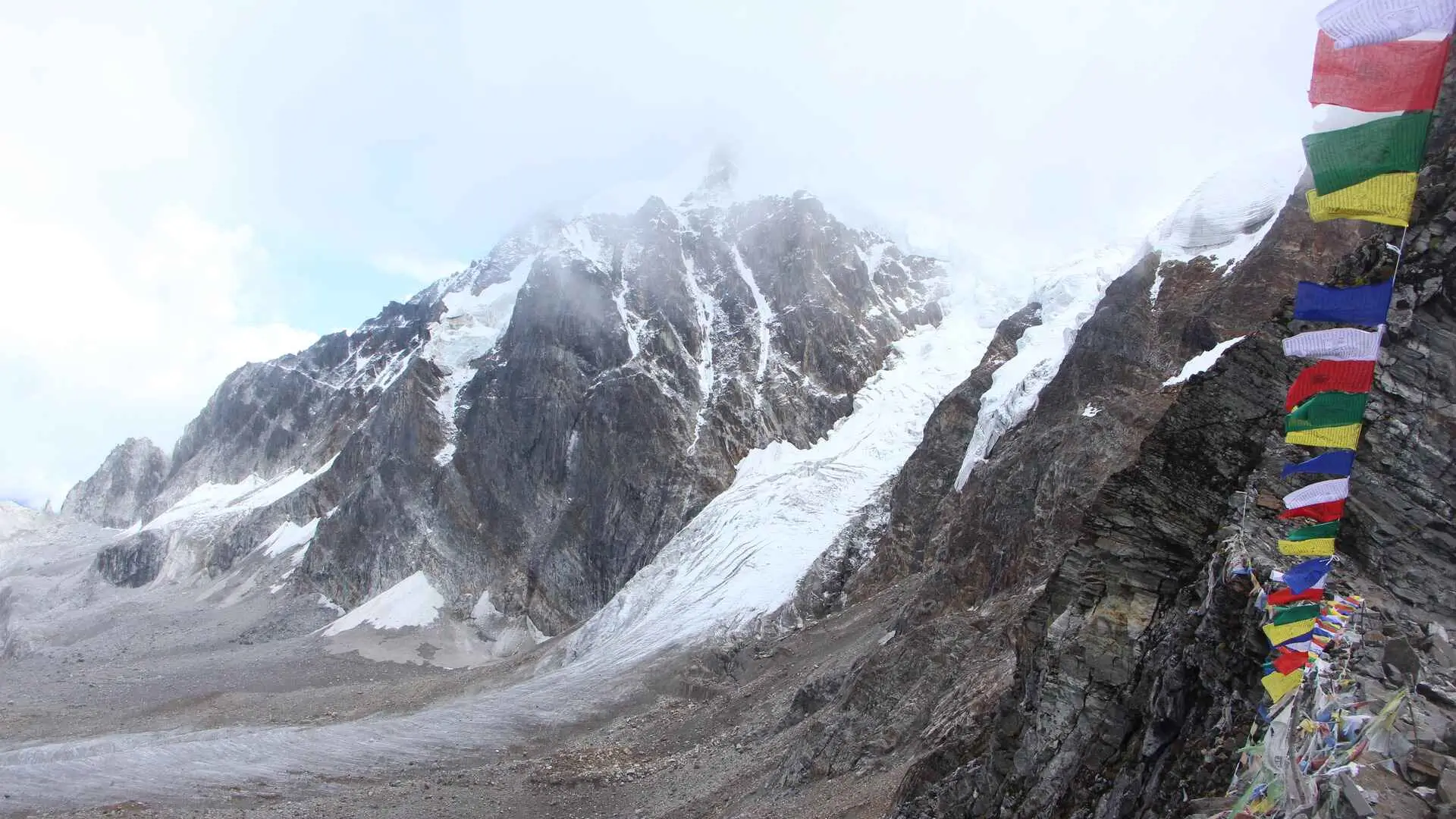
The Laya Gasa Trek follows the same opening route as the Jomolhari Trek — through Jigme Dorji National Park to Jangothang base camp — before continuing north into more remote country most visitors never see. The trail crosses several passes above 4,500m, including Sinche La at roughly 5,005m, before descending into the village of Laya, home to the semi-nomadic Layap people, and finishing at the natural hot springs of Gasa.
It's often described as the "short Snowman" — sharing a good stretch of that legendary route without the full month-long commitment. Expect 12 to 14 days of trekking, remote high-altitude terrain, and a level of cultural immersion few other Bhutan treks offer.
On the Trail
What You'll See Along the Way
01
Laya Village & the Layap People
Bhutan's second-highest permanent settlement, home to the semi-nomadic Layap — known for distinctive pointed bamboo hats decorated with turquoise and silver, worn by the women.
02
Gasa Tshachu Hot Springs
Natural mineral hot springs at trek's end, considered medicinal by Bhutanese visitors, who travel here specifically to bathe — a genuinely well-earned reward after two weeks on trail.
03
Jangothang Base Camp
Shared with the Jomolhari route, this is where the trek's opening days lead — camping directly beneath Mount Jomolhari (7,326m) before the trail diverges north.
04
Sinche La Pass
At approximately 5,005m, this is the trek's highest and most demanding crossing — beyond it, the route to Snowman Trek's Lunana region continues for those going further.
05
Takin & Blue Sheep Territory
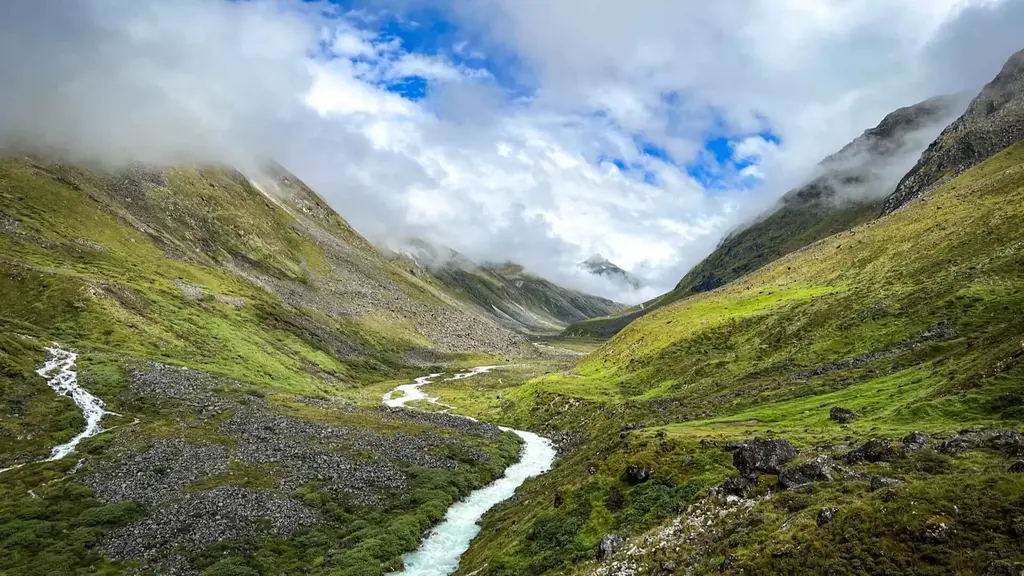
The Tsheri Jathang valley is a declared takin sanctuary — Bhutan's national animal migrates here for several months each year, alongside resident blue sheep herds.
06
Lingshi & Chebisa Villages
Lingshi Dzong, a 17th-century fortress once guarding the route to Tibet, and Chebisa, a small village known for its waterfall, mark two of the trek's most memorable overnight stops.
Day by Day
Sample Itinerary
This covers the core 12–14 day trek. Exact overnight stops and pacing vary by operator and group fitness — treat this as a representative outline, not a fixed schedule.
Drive from Paro to the ruins of Drukgyel Dzong, then a gentle riverside walk to the trailhead at Sharna Zampa, following the Paro Chhu through farmland and pine forest.
A longer day following the Paro Chhu deeper into Jigme Dorji National Park through pine and oak forest, entering Jomolhari's approach valley.
Climb above the treeline into Jangothang base camp, with Mount Jomolhari (7,326m) dominating the skyline directly ahead. Ruins of an old fortress sit nearby.
A built-in rest day to acclimatise before continuing north. Optional hikes toward Tshophu twin lakes or partway up toward Jomolhari or Jichu Drake base for closer views.
The route diverges from the Jomolhari trail here, crossing Nyile La before descending to Lingshi, with its 17th-century dzong perched above the valley.
A gentler day through yak herder camps and small villages, ending at Chebisa — known for the waterfall that cascades behind the village.
Climb to Gombu La, then descend through cedar and fir forest into the Jholethang valley before reaching camp at Shomuthang.
Cross Jari La into the Tsheri Jathang valley — a declared takin sanctuary — before climbing to the rocky meadow campsite at Robluthang.
The trek's highest and toughest day, crossing Sinche La — the last and highest pass before Laya. Beyond it, the route toward the Snowman Trek's Lunana section continues for those going further.
A pleasant, comparatively short descent through moss-covered forest to Laya — Bhutan's second-highest permanent settlement.
A full day to explore Laya village — meeting Layap residents, seeing the distinctive bamboo hats up close, and simply resting before the descent begins.
A long descending day following the river, dropping steadily in altitude through juniper and fir forest.
The final push to Gasa, finishing at the Tshachu hot springs — a well-earned soak after two weeks on trail. From here, it's a scenic drive out to Punakha.
Difficulty & Fitness
Is the Laya Gasa Trek Right for You?
This is rated a strenuous trek. Most days involve 6–8 hours of walking, and the route crosses several passes above 4,500m — Sinche La, at roughly 5,005m, is the highest point most trekkers reach on any Bhutan trek short of the full Snowman. Because the first five days follow the Jomolhari route exactly, anyone who has researched that trek's demands has a good reference point here — Laya Gasa asks for the same fitness and altitude tolerance, then continues for several more days into terrain that's noticeably more remote.
Acclimatisation matters more than raw fitness. You'll sleep above 4,000m for a large stretch of the route, and the trek includes a dedicated acclimatisation day at Jangothang before continuing. Prior experience trekking above 3,500m is genuinely useful preparation — this isn't a first-multi-day-trek kind of route.
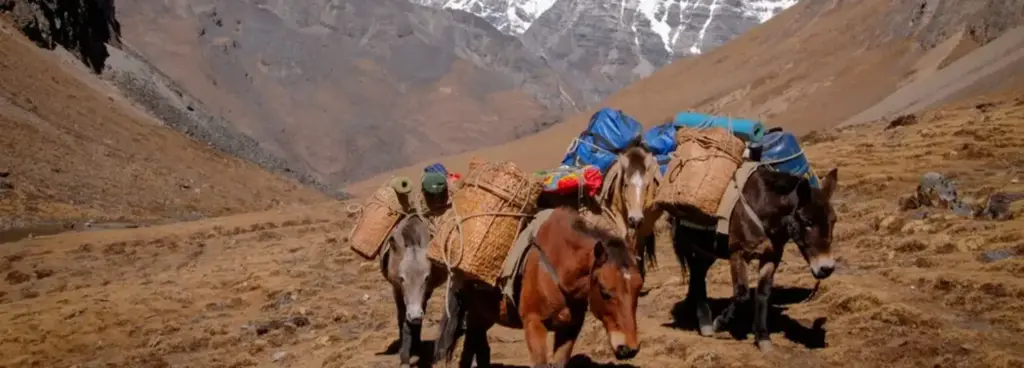
No technical climbing or scrambling is required anywhere on the trail. Pack animals (yaks or horses) carry your camping equipment and supplies, so you trek with only a day pack.
Best Time to Trek
Two Trekking Windows Each Year
Spring
Mar – May
Autumn
Late Sep – Nov
Avoid
Jun–Aug & Dec–Feb
Spring brings blooming rhododendron through the lower forest sections and generally stable weather. Autumn offers the clearest mountain views of the year. Summer monsoon (June–August) makes the lower trail muddy and leech-heavy; winter (December–February) can close Sinche La and the other high passes with heavy snow entirely.
Permits & What Bhutan Requires
Every trek in Bhutan is regulated — here's what's mandatory for Laya Gasa specifically.
Licensed Guide, Always
Independent trekking is not permitted anywhere in Bhutan. A licensed Bhutanese guide accompanies you for the entire route, arranged in advance.
National Park Permit
The route runs through Jigme Dorji National Park for its entire length, requiring a park entry permit alongside your trekking permit.
Restricted Area Clearance
Large sections of this trek run close to the Tibet border. Your operator arranges the necessary route clearance as part of your permit package.
Sustainable Development Fee
The standard SDF applies per night for the duration of your trek, in addition to your regular tourist visa fee.
Pack Animal Support
Yaks or horses carry camping equipment and supplies for the full route — you trek with just a day pack throughout.
Cultural Sensitivity in Laya
Laya village is a living community, not a tourist site. Ask before photographing residents, and dress modestly when visiting — your guide will brief you on local customs.
Preparation
What to Pack
Nights above 4,000m regularly drop well below freezing, so a sleeping bag rated to at least -15°C is essential — most operators can provide one if you don't own suitable gear. Layer for a significant daily temperature swing: a base layer, insulated mid-layer, and windproof/waterproof shell cover most conditions on trail.
Broken-in, ankle-supporting hiking boots matter given the sustained rocky and sometimes muddy terrain, particularly on the forested lower sections. Trekking poles help significantly on the steeper passes and stream crossings. A headtorch, water purification, and strong sun protection (UV is much stronger at altitude) round out the essentials — your guide will share a full checklist once your trek is confirmed.
Ready to Go
Plan Your Laya Gasa Trek
This trek isn't a fixed package on our site yet, but we build custom itineraries for exactly this kind of route. Get in touch and we'll put together a day-by-day plan and quote tailored to your dates, group size, and fitness level.
Request a Custom ItineraryConsidering the Jomolhari Trek Instead?
Laya Gasa shares its opening five days with the Jomolhari route before continuing further north — if you're deciding between the two, it's worth comparing them directly.
Common Questions
Laya Gasa Trek FAQ
How hard is the Laya Gasa Trek?
Rated strenuous. Expect 6–8 hours of walking most days, several passes above 4,500m — including Sinche La at roughly 5,005m — and extended time sleeping above 4,000m. It shares its opening days with the Jomolhari Trek before continuing into more remote country.
How long is the Laya Gasa Trek?
The core trek takes 12 to 14 days. With arrival, departure, acclimatisation, and cultural sightseeing added, most complete itineraries run 16 to 18 days.
What permits are required for the Laya Gasa Trek?
A trekking permit, a Jigme Dorji National Park entry permit, and a licensed Bhutanese guide for the entire route, plus restricted-area clearance given the trail's proximity to the Tibet border. Your operator arranges all of this.
When is the best time for the Laya Gasa Trek?
March to May, or late September to November — both windows sit outside the summer monsoon and the heaviest winter snow at the high passes.
Customise Your
Bhutan Tour Today
Fill in the form and our expert team will get back to you within 24 hours.