Bhutan
Birding Tour
16 days · 250–270 species · from alpine passes to tropical lowlands
A Kingdom Built
for Birdwatchers
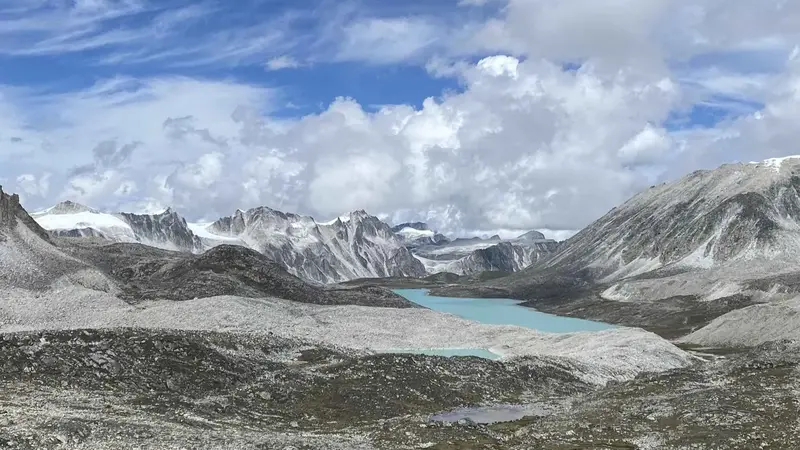
Bhutan is one of the world's most important birdwatching destinations — a fact that surprises no one who has spent time here. The kingdom harbours over 700 recorded bird species (760+ by the Clements 2022 checklist) across an extraordinary range of habitats: from the tropical lowland forests of Gelephu and Manas at 150 m elevation, through the temperate broadleaf and coniferous forests of the Black Mountains and Phrumshingla, to the alpine meadows and passes above 3,800 m near Chele-la and Sengor. Of these, approximately 460 are resident species, around 200 are migratory, and 21 are globally threatened — including four critically endangered: the White-bellied Heron, Baer's Pochard, White-rumped Vulture, and Red-headed Vulture. This concentration of habitats in a small, largely protected landscape creates birding conditions that are simply unmatched in the region.
Our 16-day Hornbill Haven birding expedition visits nine distinct districts and covers the full elevational range of Bhutanese bird habitats. You can expect to encounter 250–270 bird species and 10–15 mammal species, including flagship species such as the Great Hornbill, Rufous-necked Hornbill, Ward's Trogon, Himalayan Monal, Satyr Tragopan, Beautiful Nuthatch, Dark-rumped Swift, Fire-tailed Myzornis, and many more. Farmhouse and homestay experiences are woven throughout, placing you in direct contact with Bhutanese rural communities.
The tour concludes with a hike to Tiger's Nest Monastery — not just because it is one of the most remarkable structures on earth, but because the trail through Paro's pine forest is itself exceptional birding terrain.
Six Reasons Bhutan is
a Birding Paradise
700+ Species in One Kingdom
Bhutan hosts over 700 recorded bird species — roughly one tenth of all the world's bird species — in a country the size of Switzerland. The extraordinary density of species results from Bhutan's intact forest cover (over 72% of the country), varied elevation, and strict conservation laws protecting all wildlife.
Pristine, Intact Habitats
Bhutan has never industrialised its forests. Over 51% of the country is designated protected areas, connected by biological corridors. The birding habitats you walk through — from the lowland forests of Tsirang to the dark conifers of Sengor — are genuinely wild and largely undisturbed.
Flagship Himalayan Species
Bhutan is one of the very few places where the Great Hornbill and Rufous-necked Hornbill can be observed in their natural forest habitat. Ward's Trogon — arguably the most sought-after bird in the eastern Himalayas — is reliably found in the Zhemgang and Sengor areas. The Himalayan Monal, Satyr Tragopan, and Blood Pheasant add extraordinary colour.
Full Elevational Transect
This tour covers Bhutan's full elevational range — from the tropical lowlands at 150 m (Gelephu, Manas approaches) through subtropical, temperate and subalpine zones to alpine meadows at 3,890 m (Chele-la). Each zone holds entirely different species, and covering them all in one tour is something very few Bhutan itineraries achieve.
Farmhouse & Homestay Experiences
The birding route passes through remote agricultural communities where farmhouse and homestay accommodation is available. Sharing a meal cooked over a wood fire, sleeping under the same roof as a Bhutanese farming family, and waking to birds in the adjacent garden before dawn — these are experiences no hotel can replicate.
Mammals Too
Bhutan's intact wildlife corridors mean mammal encounters are a genuine bonus throughout the tour. Red pandas, golden langurs, Himalayan black bears, clouded leopards, barking deer, and — with exceptional luck — snow leopards have all been sighted by birding groups in the areas covered by this tour.
Tour Highlights
& Best Season
Spring (March–May): The peak birding season. Resident species are breeding and highly vocal, migratory species are moving through, and the forest canopy is alive with activity. Himalayan Monal and pheasant species are most visible in March–April. April–May is exceptional for mid-elevation forest species throughout Zhemgang and Sengor.
Autumn (September–November): Outstanding for lowland species in Gelephu and the Manas approach road, as well as the high-elevation passes. October is particularly strong for altitudinal migrants moving down from Tibet. Resident hornbill species are most active and visible.
Year-round: Unlike trekking, birding is productive in all seasons. Winter (December–February) brings exceptional high-altitude species to lower elevations. The monsoon (June–August) brings a different and equally rewarding set of species to the lowlands. Contact us to discuss the best timing for your target species.
Day by Day
Itinerary
This tour uses a fully equipped private vehicle throughout. All accommodation, meals, visa processing, dzong and site entry fees, and cultural guiding are included. A specialist Bhutanese ornithologist guide accompanies the group. Farmhouse and homestay options are available on request for selected nights. Please bring your binoculars, field guide (Inskipp & Inskipp Himalayan Birds is recommended), and appropriate clothing for all elevations.
Arrive at Paro International Airport — one of the world's most dramatic mountain approaches. Your guide meets you at the exit doors. After lunch, spend the afternoon birding along the Paro Chhu river valley and the surrounding farmland and forest edges — an excellent introduction to Bhutanese birdlife. Resident species along the river include Ibisbill, White-capped Water Redstart, Brown Dipper, and Plumbeous Water Redstart. The valley edges offer raptors, laughingthrushes, and woodpeckers. Evening at leisure. Overnight in Paro.
An early drive to Chele-la Pass (3,890 m) — one of Bhutan's highest motorable passes and one of the finest high-altitude birding sites in the entire Himalayas. The fir and rhododendron forest below the pass and the open alpine meadow at the summit are prime habitat for Himalayan Monal, Blood Pheasant, Fire-tailed Myzornis, Beautiful Rosefinch, Grandala, Rufous-breasted Accentor, and alpine swifts. Return to Paro for lunch, then drive to Thimphu (1.5 hrs). Evening birding at the Thimphu sewage treatment pond — an unlikely but reliable site for waders, wagtails, waterfowl, and occasionally scarce migrants. Overnight in Thimphu.
Early morning drive to Dochula Pass (3,150 m), with birding stops in the rhododendron and oak forest above Thimphu. Dochula and the descent to Lamperi Botanical Garden are superb for mixed feeding flocks of warblers, tits, nuthatches, treecreepers, and minivets. Lamperi itself — a protected botanical garden with a rich understorey — is one of the best sites in Bhutan for Bar-throated Siva, Rufous-winged Fulvetta, and various laughingthrush species. Afternoon drive to Punakha, with birding stops along the warm Punakha valley. Visit the magnificent Punakha Dzong. Overnight in Punakha.
Head south of Punakha into some of Bhutan's most pristine and least-visited forest. The road descends through subtropical broadleaf forest — increasingly warm, humid, and rich with low-elevation species not found further north. Afternoon birding in Tsirang and the Darachu area targets lowland species including bulbuls, barbets, drongos, and early hornbill encounters. The transition from temperate to subtropical habitat introduces an entirely new suite of birds. Overnight in Tsirang.
Early morning birding in the Tsirang and Darachu forests before descending to the lowland plains of Gelephu — the lowest birding terrain of the entire tour. At this elevation, the avian community transforms completely: hornbills, pittas, broadbills, minivets, leafbirds, and ioras inhabit a lush tropical world of extraordinary density and noise. Gelephu sits at the southern border with India — the birds here have affinities with the species of the Brahmaputra floodplains and Manas. Overnight in Gelephu.
A full day birding in and around Gelephu. Morning: the sewage pond and surrounding agricultural fields — an outstanding site for waders, wagtails, pratincoles, and occasionally scarce lowland raptors. Afternoon: the lush lowland forests north of Gelephu, renowned as some of the richest and most biodiverse birding habitat in the entire country. The forest here holds Great Hornbill, Rufous-necked Hornbill, Oriental Pied Hornbill, Wreathed Hornbill, Long-tailed Broadbill, Blue-naped Pitta, and various owl species at dusk. Overnight in Gelephu.
One of the most extraordinary days of the entire tour — a rapid ascent from 150 m at the Gelephu foothills to over 2,500 m in the Zhemgang region, passing through virtually every forest zone in a single day. The birding during this ascent is exceptional: the rapid habitat change means new species appear at every few hundred metres of elevation gain. Traverse through Tama-la and into the Zhemgang district — one of the most remote and least-visited birding areas in Bhutan. Overnight in Tingtibe.
Morning birding along the entire length of the Dakphel–Tingtibe road — a superb forest track through mixed broadleaf forest with exceptional species diversity. Afternoon: the Gomphu road, heading toward the Manas National Park boundary — one of the most productive birding roads in Bhutan and the most reliable site in the country for Ward's Trogon, one of the eastern Himalayas' most sought-after birds. The area also holds Brown Hornbill, Long-tailed Broadbill, Sultan Tit, and a variety of rare laughingthrushes. Overnight in Tingtibe.
Final morning birding in the remarkable Zhemgang habitat before heading north toward Bumthang — primarily a transit day but with active birding stops throughout. Lunch in Trongsa, the town dominated by Bhutan's largest dzong perched dramatically above a deep canyon. Continue to Bumthang valley — arriving in the spiritual heartland of Bhutan in the late afternoon. Overnight at your lodge in Bumthang.
Drive east from Bumthang, ascending to Phrumshingla Pass at 3,800 m — crossing the boundary into eastern Bhutan. The pass and surrounding subalpine conifer forest are excellent for Dark-rumped Swift (a great Bhutan speciality), various warblers, Spotted Wren-Babbler, and the beautiful Rufous-vented Yuhina. Descend to Sengor for afternoon and evening birding in the dark conifer forests and forest edges below the pass. This is prime habitat for scarce species including Beautiful Nuthatch and Fire-tailed Myzornis. Overnight in Sengor.
A full day of birding across the Sengor, Phrumshingla, Namling, and Yongkala areas — some of the least-visited and most productive birding terrain in all of Bhutan. The subalpine forests between Sengor and Namling are renowned as one of the finest sites in the eastern Himalayas for Beautiful Nuthatch, Fire-tailed Myzornis, Rufous-bellied Woodpecker, and Wedge-billed Wren-Babbler. Continue to Yongkala — the base for tomorrow's full birding day in the Lingmithang road area. Overnight in Yongkala.
A legendary day of birding — two full days are ideally spent here, but even one full day on the upper and lower Lingmithang road is extraordinary. This area is widely regarded as one of the premier birding destinations in the entire Himalayas. The combination of upper and lower road levels provides access to a complete series of mid-elevation eastern Himalayan forest habitats. Target species across the two road sections include Rusty-bellied and Bar-winged Wren-Babbler, Beautiful Nuthatch, Sultan Tit, Black-headed Shrike-Babbler, Grey-sided Laughingthrush, and many more. Overnight in Yongkala.
Begin the return journey westward, with active birding stops wherever significant bird activity is encountered along the way. The return route retraces some of the tour's most productive areas, offering a second opportunity for any species missed on the eastbound journey. By evening, arrive in the characterful town of Trongsa — dominated by Bhutan's largest dzong, which can be explored early the following morning. Overnight in Trongsa.
The long return drive from Trongsa to Paro — approximately 6 hours with active birding stops wherever productive flocks or interesting habitat is encountered. The journey retraces the route through the Black Mountain forests, offering second chances at species from Days 3–5. Arrive in Paro in the late afternoon. Tomorrow is Tiger's Nest. Overnight in Paro.
The tiger's nest hike is not just Bhutan's most iconic cultural experience — the pine forest trail is also excellent birding terrain. The moss-draped pines and mixed forest above Satsam Chorten hold Ward's Trogon (occasionally), Rufous-bellied Woodpecker, various flycatchers, and a range of forest species that reward careful observation on both the ascent and descent. The monastery complex itself — clinging to a sheer 900 m cliff face — is one of the Buddhist world's most extraordinary structures. Visit all the temples, including the sacred cave of Guru Rinpoche. Afternoon: optional traditional hot stone bath (Dotsho) in Paro. Overnight in Paro.
A final Bhutanese breakfast — and one last early morning scan of the hotel garden before your guide transfers you to Paro International Airport. The hotel gardens in Paro reliably produce several species at dawn including Eurasian Wryneck, various buntings, and Striated Prinia. As your flight climbs above the Himalayan peaks, your species list — 250+ birds, 10+ mammals, an extraordinary country — flies with you. Safe travels.
Our itineraries are always customisable — the tour can be shortened or extended, and specific target species can be incorporated into the routing. Contact us to build the perfect birding itinerary for your group.
Inclusions &
Exclusions
Included
- ✓Bhutan Sustainable Development Fee (SDF)
- ✓Specialist Bhutanese ornithologist guide throughout
- ✓Licensed cultural guide
- ✓All accommodation (hotel & farmhouse throughout)
- ✓All meals (breakfast, lunch & dinner)
- ✓Private vehicle & experienced driver
- ✓All internal transportation
- ✓Cultural, dzong & national park entry fees
- ✓Tiger's Nest entry & guide fees
- ✓Bhutan visa processing assistance
- ✓Bird species checklist provided
Not Included
- ✕ International airfare to/from Paro
- ✕ Travel insurance
- ✕ Binoculars & personal birding equipment
- ✕ Field guide (purchase recommended before travel)
- ✕ Hot stone bath (Dotsho) — available at extra cost
- ✕ Alcoholic and soft beverages
- ✕ Personal expenses & gratuities
- ✕ Any services not listed above
Tour
Cost
| Group Size | Price Per Person (USD) | Notes |
|---|---|---|
| Solo Birder (1 pax) | Contact for quote | Private expert guide |
| 2 Birders | Contact for quote | Shared private vehicle |
| 3–4 Birders | Contact for quote | Best value small group |
| 5+ Birders | Contact for quote | Group discount applicable |
All prices include Bhutan's Sustainable Development Fee (SDF), specialist ornithologist guide, all accommodation, all meals, and full transportation. Rates vary by season and group size. Contact us for a personalised quote — every birding tour is tailored to your target species, group experience level, and travel dates.
Payment &
Cancellation Policy
We believe in transparent, fair terms. Please review our complete Payment Terms and Tour Cancellation Policy before confirming your booking.
Read Full PolicyReal Photos from
Our Guests
These are real, unedited moments captured by travellers who explored Bhutan with Found Bhutan. Every photo tells a story — and your story is next.
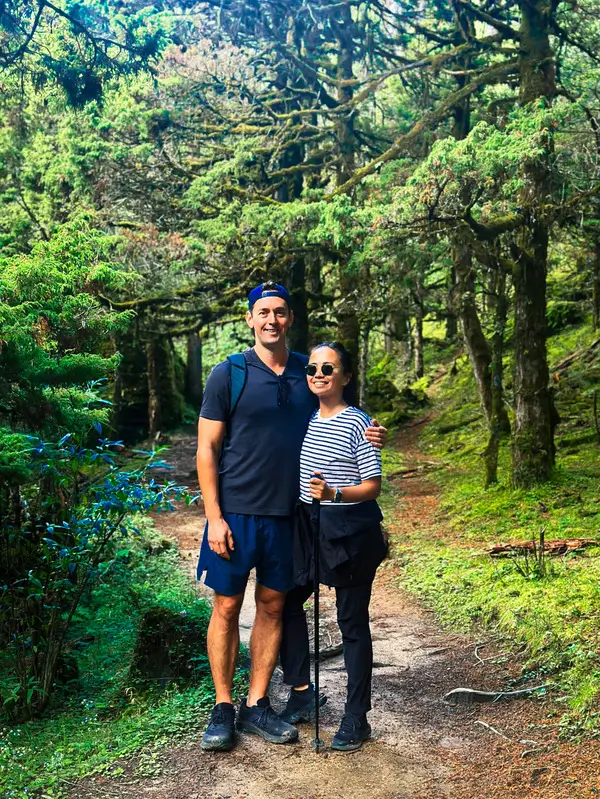
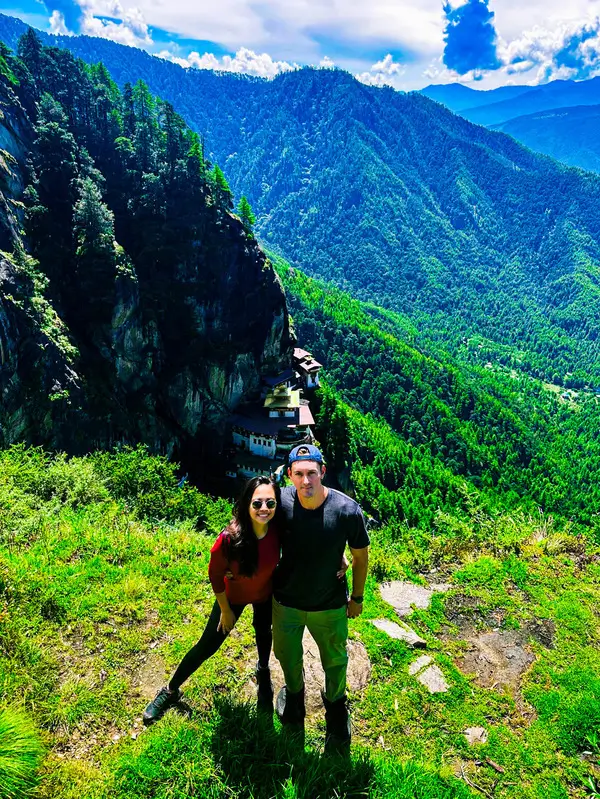
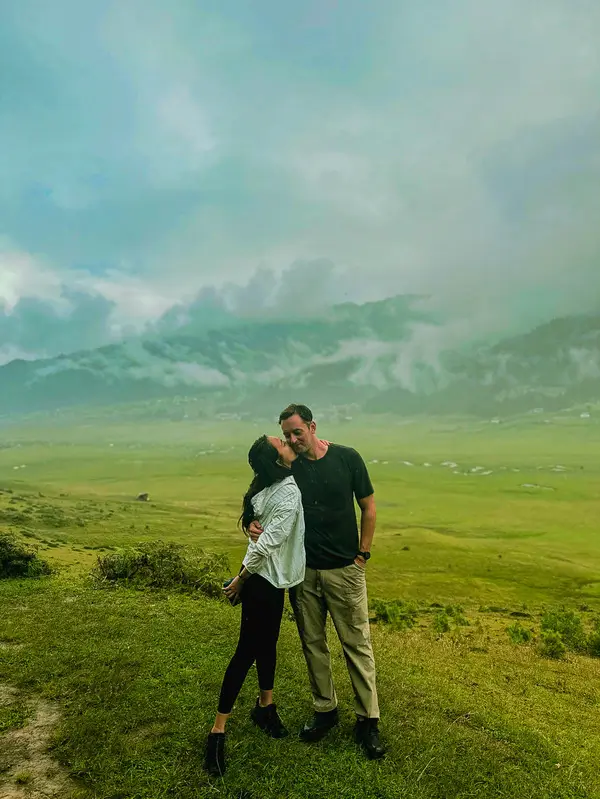
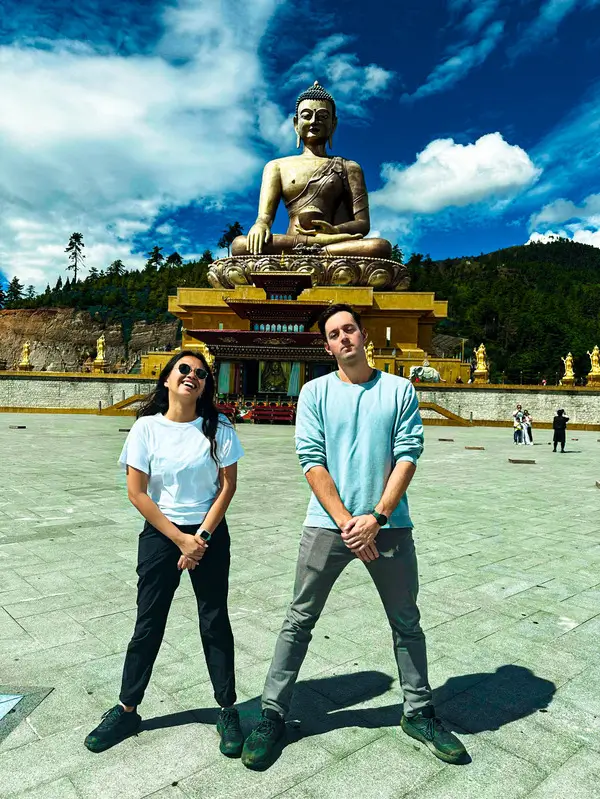
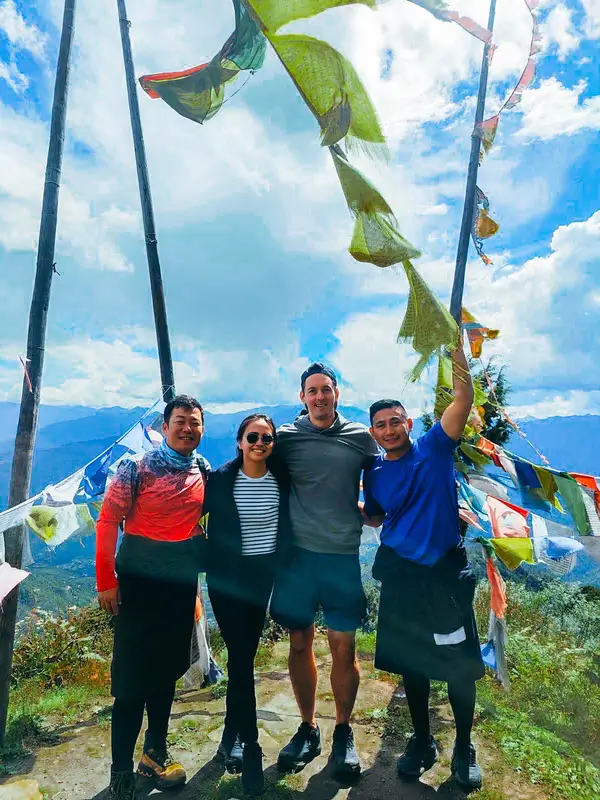

Explore the full collection of guest photos from across Bhutan.
View All Guest Photos
Customise Your
Bhutan Tour Today
Fill in the form and our expert team will get back to you within 24 hours.
More Bhutan Adventure Tours
Cycling through Bhutan
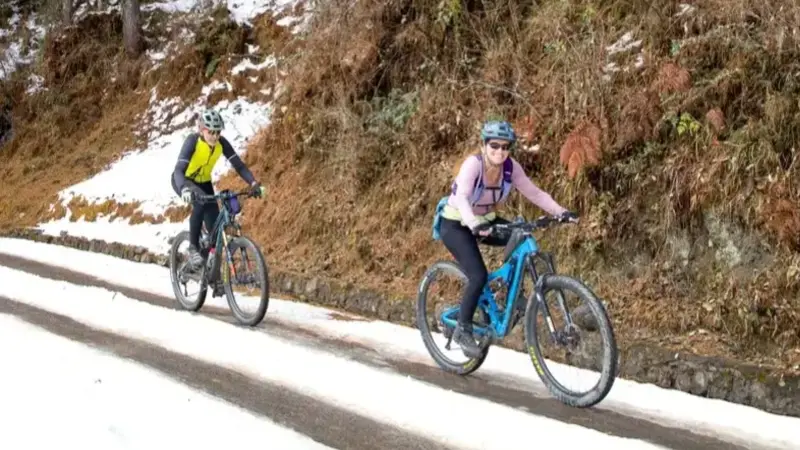
Explore Bhutan's enchanting landscapes on a cycling tour, pedaling through scenic valleys and ancient monasteries.
Fly Fishing Adventure

Explore Bhutan's uncharted waters on our Fly Fishing Tour, surrounded by breathtaking landscapes and experiencing the thrill of angling.