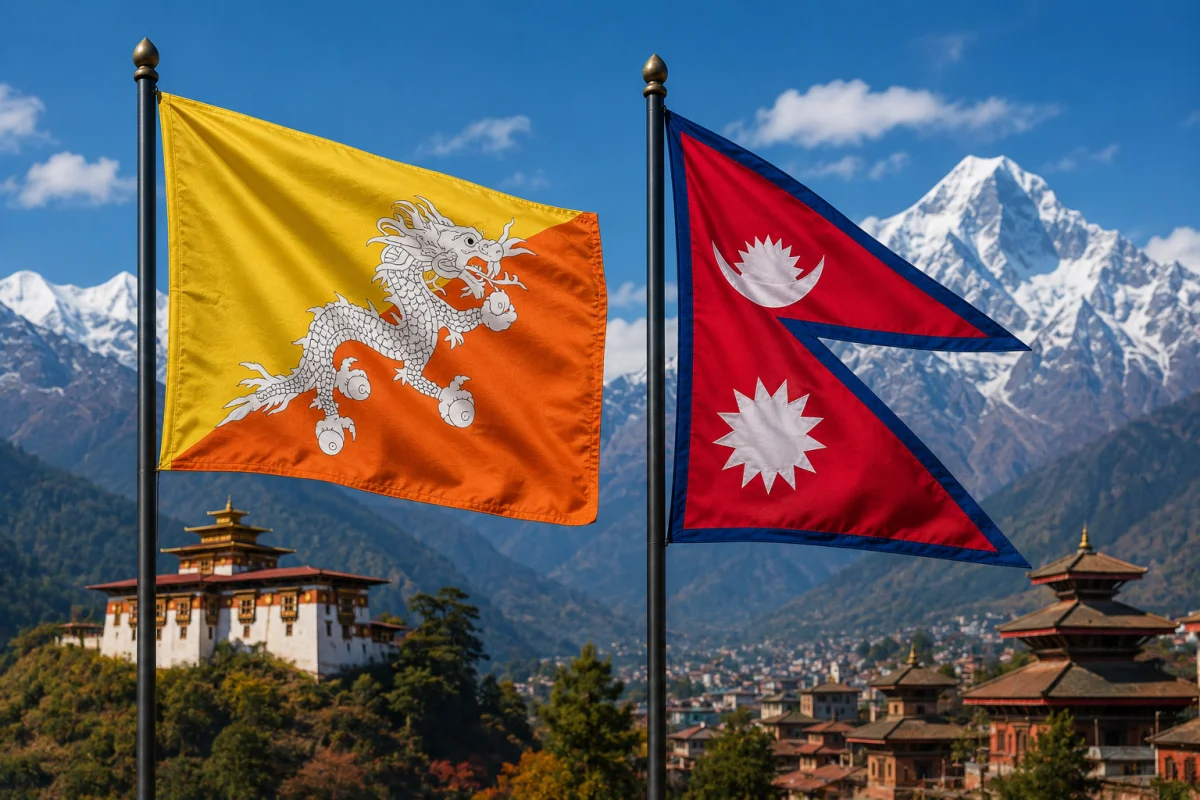
Nepal has around 1.15 million visitors a year. Bhutan has around 210,000.
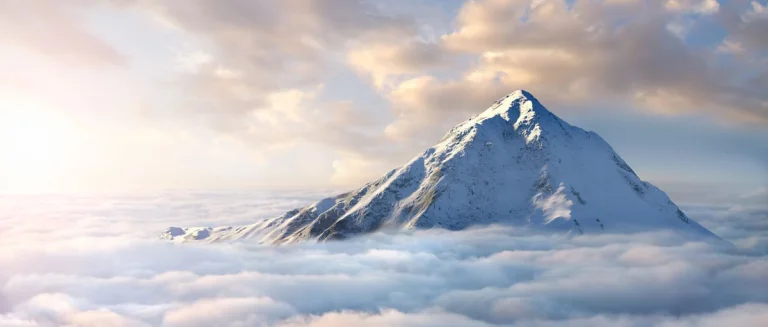
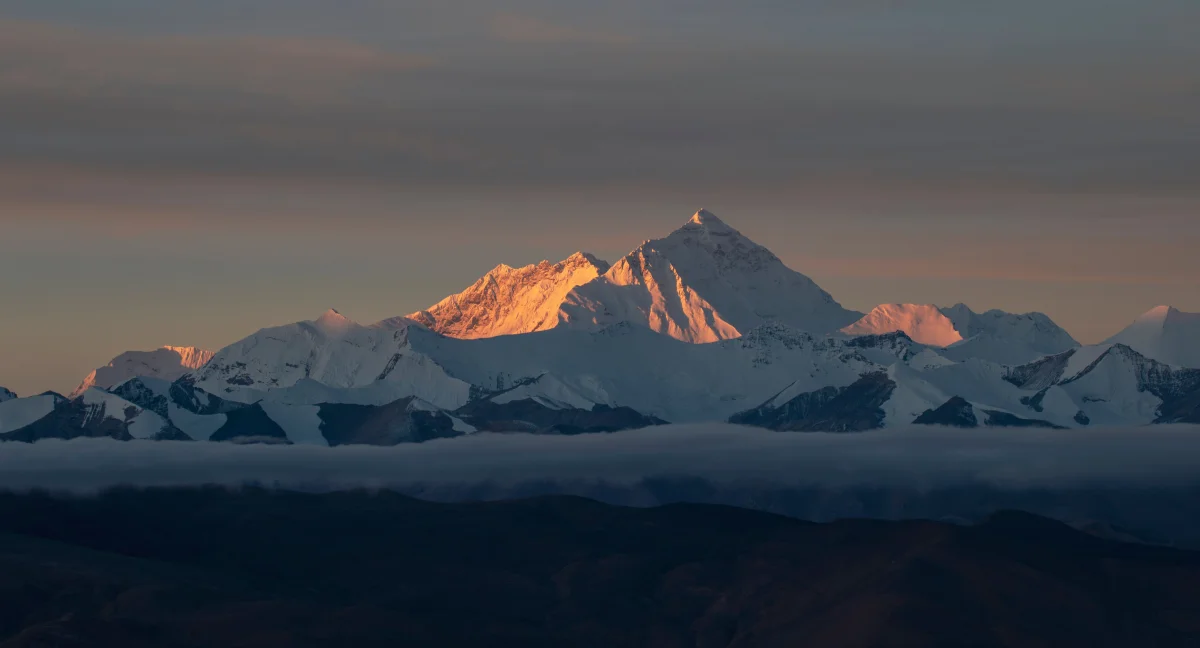
Nepal now also requires guides on regulated trekking routes (since April 2023) — but it still offers far greater flexibility, lower costs, and far more route options than Bhutan. Bhutan requires a licensed guide and USD 100 per night just to be there, with every element pre-arranged. Nepal has Everest. Bhutan has the highest unclimbed peak on Earth — and has deliberately kept it that way because mountains are considered sacred homes of spirits.
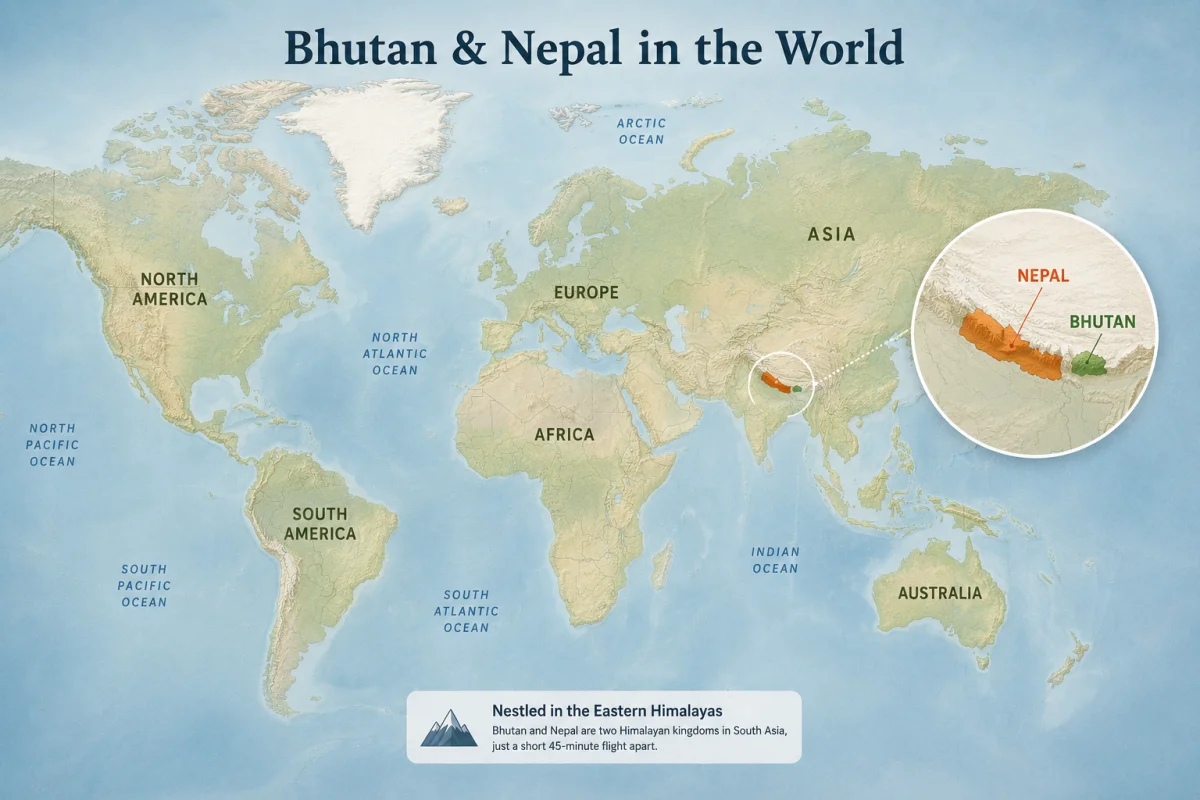
Both countries sit on the same southern slopes of the same Himalayan range, separated by a 45-minute flight. Both have ancient Buddhist monasteries, dramatic mountain scenery, and cultures shaped over centuries by geography and faith. Both will produce travel experiences that people talk about for the rest of their lives.
They are not the same experience. Understanding the difference is the whole point of this guide.
The Fundamental Difference
Before any comparison of costs or trekking routes or visa processes, the most important distinction is philosophical.
Nepal is a country you explore. It has one of the most developed trekking infrastructures in the world — teahouses every few hours on major routes, visa on arrival, dozens of carriers flying into Kathmandu. Since April 2023, all foreign trekkers on major routes must use a licensed guide, but the range of routes, the teahouse infrastructure, the cost flexibility, and the sheer variety of options available mean Nepal still offers far more freedom of movement than almost any other mountain destination. You can land with far fewer advance bookings and build much of your trip on arrival. The country actively invites you to move through it at your own pace.
Bhutan is a country that invites you in. It limits its visitors deliberately. It charges USD 100 per person per night not as a service charge but as a deliberate policy to fund healthcare, education, and environmental conservation while controlling the volume and character of tourism. Every visitor must have a pre-arranged itinerary, and a licensed guide is required for trekking and visits to monuments and religious sites. You can book directly yourself without going through a tour operator. Outside of guided activities, day-to-day movement is relaxed — walking around towns, exploring markets, and wandering independently is entirely fine. The country sets the terms, and those terms are intentional.
This distinction shapes everything else in the comparison.
Cost: Honest Numbers for 2026
Nepal
A budget traveller can get by on USD 50–80 per day including accommodation, food, and local transport for non-trekking travel. For trekking, the mandatory guide requirement (since 2023) adds USD 30–40 per day minimum — pushing the realistic trekking floor to USD 80–120 per day for a solo traveller. Trekking also adds permit costs (typically USD 30–50 for major routes). A mid-range traveller spends USD 100–150 per day overall. Luxury travel in Nepal is affordable by global standards.
Bhutan
The USD 100 per person per night Sustainable Development Fee applies before you spend anything on accommodation, food, or activities. Travellers above 12 pay the full rate; children aged 6–12 receive a 50% discount (USD 50 per night), and children under 6 are fully exempt. For regional tourists (Indian Nationals), the SDF is lower at INR 1200/night per person, and the same age discounts apply. A 3-star private tour package runs approximately USD 150–200 per person per night on top of that. A 7-night Bhutan trip for a solo traveller at moderate standard costs roughly USD 2,500–3,000 excluding international flights.
The USD 100 SDF is not a tourism surcharge. It is the mechanism by which Bhutan remains what it is. Whether that is worth it to you personally is the question.
Trekking: Two Very Different Models
Nepal trekking
- Guided only on all major routes since April 2023 — but self-guided day walks and some minor trails remain accessible
- Teahouse infrastructure on popular trails — accommodation and food every few hours
- The world’s most famous routes: Everest Base Camp, Annapurna Circuit, Langtang
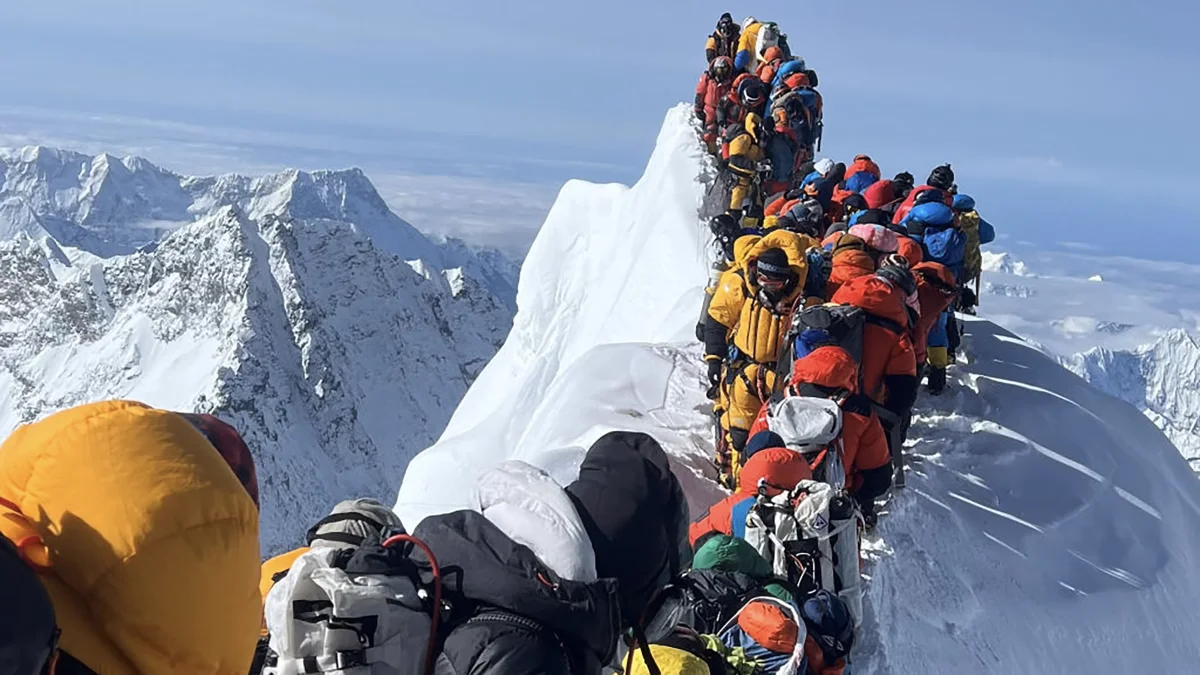
- Some routes crowded during peak season — the famous Everest “traffic jam” photo was taken here
- Budget still possible: the Everest Base Camp trek with a guide runs USD 1,500–2,500 all-in (guide adds USD 400–700 but is now required on regulated routes)
Bhutan trekking
- Fully supported and guided — no independent trekking permitted
- Camp-based: tents, cooks, and horsemen carry everything; no teahouses
- Genuinely quiet trails — on certain trekking paths, you may not pass another group for days
- Maximum altitude: Jomolhari Trek 4,890m; Snowman Trek crosses passes above 5,000m
- Gangkar Puensum (7,570m) is the world’s highest unclimbed peak — Bhutanese law prohibits climbing any mountain above 6,000m out of respect for the spirits believed to inhabit them
The honest summary: Nepal is the world’s premier trekking destination. If trekking is your primary goal, Nepal wins on infrastructure, variety, and cost. If you want supported wilderness trekking with genuine solitude — Bhutan delivers something Nepal’s most popular routes simply cannot.
Culture: Depth vs Variety
Nepal is one of the world’s most culturally diverse countries — more than 125 ethnic groups, a blend of Hindu and Buddhist traditions, seven UNESCO World Heritage Sites in the Kathmandu Valley alone. The cultural experience is rich, varied, and extraordinarily accessible. Nepal’s culture is generous, alive in public space, and available to anyone who shows up. Nepal also has something Bhutan entirely lacks: wildlife safari. Chitwan National Park and Bardia National Park offer genuine big-game experiences — one-horned rhinoceros, Bengal tiger, gharial crocodile, and over 500 bird species. World-class safari lodges operate here at a fraction of African safari costs. If a Himalayan trip that combines mountain trekking with wildlife is what you want, only Nepal offers both.
Bhutan has a single dominant cultural tradition — Vajrayana Buddhist — maintained with unusual coherence across the whole country. Where Nepal’s cultural richness comes from diversity, Bhutan’s comes from continuity. The result is a country that looks and feels unlike anywhere else in Asia.
The honest summary: Nepal offers more cultural variety. Bhutan offers more cultural coherence and arguably greater depth of access — partly because the guide-based model means you never miss context.
The Crowds Question
At Everest Base Camp, the most famous destination in Nepal, you share the trail during peak season with thousands of other trekkers. The experience remains powerful — nothing about crowds makes the Himalayas less extraordinary — but it is a shared experience at significant scale.
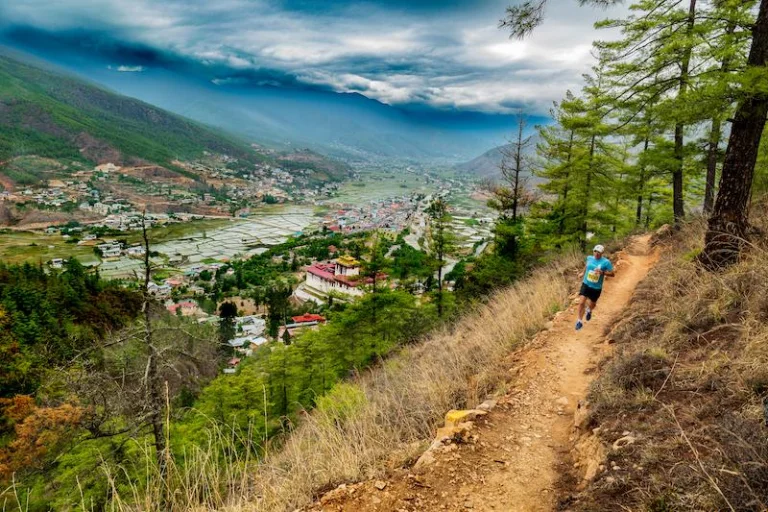
Tiger's Nest, Bhutan's equivalent iconic destination, sees a fraction of the visitors that Nepal's iconic sites attract — not because of daily caps, but because Bhutan's high-value, low-volume tourism policy keeps overall visitor numbers low. On the trail, you walk largely without reference to other visitors. In Bhutan, you can stand in the courtyard of Punakha Dzong on a weekday morning with very few people around you.
If the sense of private discovery matters to you, Bhutan has no equivalent in Nepal.
Accessibility and Logistics
Nepal
Multiple international carriers fly to Kathmandu. Visa on arrival. Guides are now mandatory on all major trekking routes (since 2023), but the permit and booking process is straightforward and far less regulated than Bhutan. You can combine Nepal with India and Bhutan easily. Non-trekking travel remains entirely independent.
Bhutan
Two airlines (Druk Air and Bhutan Airlines) serve Paro on limited routes. Visa must be arranged in advance either on your own or through a licensed operator. No walk-in tourism. Every element must be pre-arranged.
The honest summary: Nepal is significantly more accessible. Bhutan’s logistical constraints are real. For some travellers this is a deterrent. For others it is part of the point — the friction of getting in is part of what keeps the experience on the other side exceptional.
Do Both: The 45-Minute Argument
Kathmandu to Paro is a 45-minute flight. Both countries share the same peak seasons: spring (March–May) and autumn (September–November). These windows offer the clearest mountain views, driest trekking conditions, and the best chance of Bhutan’s major festivals coinciding with your dates. Monsoon (June–August) brings heavy rain to both countries, though Bhutan’s western valleys remain more accessible than Nepal’s high trails. Winter (December–February) is cold at altitude in both countries but works well for cultural visits at lower elevations. Combining them is not complicated — and the seasons align perfectly.
A common combined itinerary: 7–10 days in Nepal (Kathmandu cultural circuit plus an Annapurna or EBC trek) followed by 7–8 days in Bhutan (western circuit plus festival if timing allows). The total trip is 14–18 days and produces a genuinely comprehensive Himalayan experience — the breadth of Nepal’s diversity alongside the depth of Bhutan’s coherence. For Indian travellers: combining both countries is significantly more cost-effective, since Indian nationals pay a reduced SDF of INR 1,200 per person per night rather than the standard USD 100 — a fraction of the cost. Bangladeshi nationals benefit from a special rate of USD 15 per night (for the first 15,000 visitors annually). The combination becomes particularly accessible from northeast India, where both Paro and Kathmandu are within easy reach.
If your budget and time allow it, this is the strongest argument in the comparison: not either/or, but both.
At a Glance: Bhutan vs Nepal
| Bhutan | Nepal | |
|---|---|---|
| Cost (per day) | USD 250+ (SDF + tour) | USD 40–150+ (budget to mid-range) |
| Flexibility | Low — all trips pre-arranged | High — visa on arrival, independent travel |
| Trekking | Guided, camp-based, quiet trails | World-class routes, teahouse infrastructure |
| Crowds | Very low — deliberately limited | High on major routes in peak season |
| Culture | Single tradition, deep coherence | 125+ ethnic groups, enormous variety |
| Accessibility | Limited routes, advance visa required | Many carriers, visa on arrival |
| Best for | Experienced travellers, cultural immersion, privacy | First-timers, trekkers, budget travellers |
Who Should Choose What
Choose Nepal if:
- This is your first Himalayan trip and you want maximum flexibility
- Trekking is your primary goal — specifically Everest or Annapurna routes
- Budget is a primary consideration
- You want relative flexibility — Nepal still offers far more spontaneity than Bhutan, even with the guide requirement on major treks
- You want Kathmandu’s extraordinary concentration of UNESCO-listed monuments
Choose Bhutan if:
- You’ve travelled widely and want an experience that feels genuinely different
- Cultural depth and coherence matter more to you than variety
- You want genuine privacy — uncrowded landscapes and experiences
- You want fully supported travel where everything is arranged for you
- Budget is not the primary constraint
Choose both if:
- You have 14+ days and want the most complete Himalayan experience available
- You’re starting from a gateway city that connects to both (Bangkok, Delhi, Singapore, Kathmandu)
- You’re a photographer or serious trekker wanting both iconic Himalayan routes and Bhutanese solitude
The Honest Bottom Line
Neither country is better. They are different instruments playing in the same mountain range.
Nepal is generous, varied, open, and overwhelming in the best possible way. It will give you Everest and Boudhanath and Indra Jatra and a USD 3 dal bhat that tastes better than it has any right to.
Bhutan will make you feel like the country itself is receiving you — not as a tourist, but as a guest who agreed to come on its terms. The landscape is pristine because it has been deliberately protected. The culture is intact because it has been deliberately preserved. The experience is private because the visitor numbers have been deliberately limited.
The 45-minute flight between them is one of the better uses of 45 minutes available in Asia.
Ready to plan your Bhutan trip?
Browse our Bhutan tour packages or get in touch to start building your itinerary — we’ll handle everything from the SDF to the summit views.