Most visitors to Bhutan arrive at Paro airport — 2,235 metres above sea level — and begin sightseeing the same day. For a significant portion of them, particularly those arriving from sea-level cities, the altitude is immediately noticeable: a slight heaviness in the legs, a dull headache by evening, sleep that feels less restful than usual. This is mild Acute Mountain Sickness (AMS), and it is entirely normal.
What is not always understood: altitude sickness is not confined to trekkers. The standard western Bhutan sightseeing circuit takes visitors to Dochula Pass (3,100m), Bumthang (about 2,600m), and Chele La Pass (3,988m). These are not trekking altitudes — they are driving altitudes. The vehicle gets you there, but your body still has to cope with the reduced oxygen.
This guide covers altitude sickness in Bhutan for all visitors — not just trekkers. What AMS is, why Bhutan's specific itinerary creates risk even for non-trekkers, how to prevent it, how to manage it if it develops, and when descent is the only correct response.
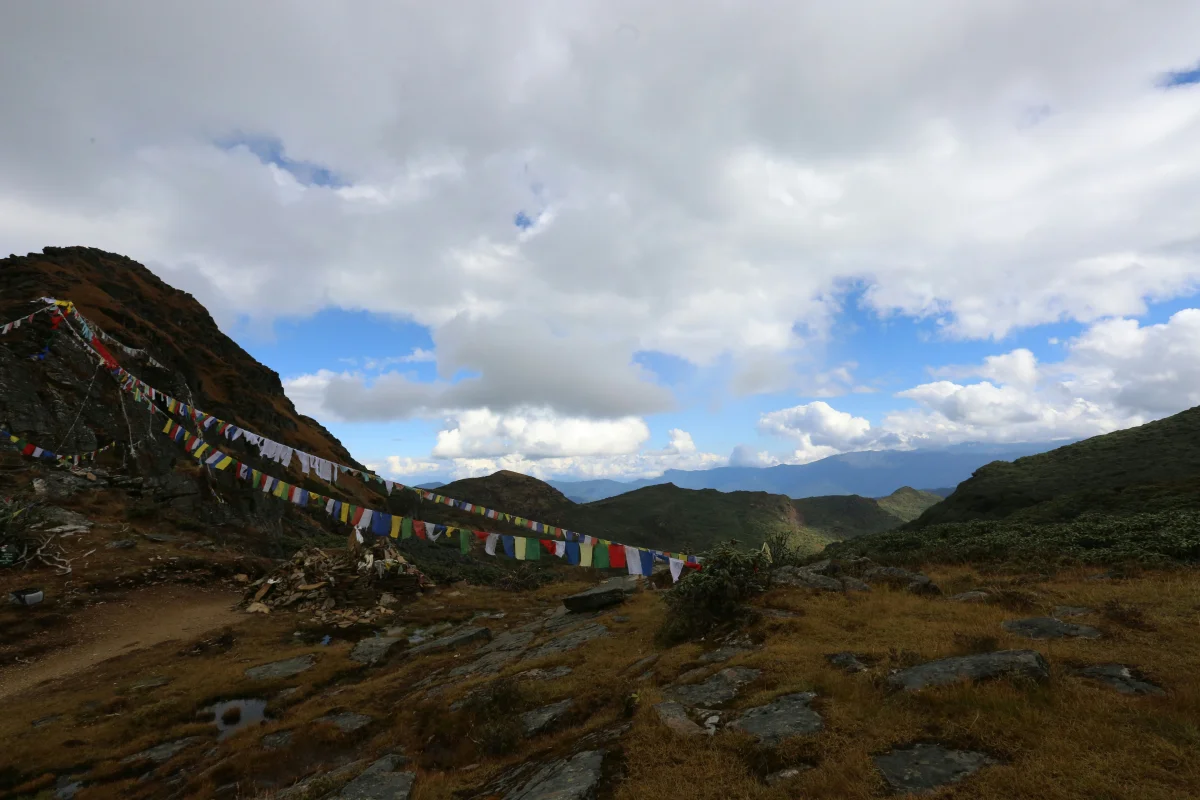 The Altitude Context: Where Bhutan Takes You
Before anything else, it helps to see the numbers in one place.
| Location | Altitude | Who goes there |
| Paro airport & town | 2,235m | Every visitor |
| Thimphu | 2,320m | Every visitor |
| Punakha | 1,200m | Every visitor — lowest point on the circuit |
| Dochula Pass | 3,100m | Every visitor (on the Thimphu–Punakha road) |
| Bumthang / Jakar | ~2,600m | Most itineraries of 7+ nights |
| Chele La Pass | 3,988m | Day trip from Paro — frequently included |
| Druk Path Trek (max) | ~4,200m | Trekkers |
| Jomolhari Base Camp | ~4,080–4,100m | Trekkers |
| Jomolhari Trek — high passes | above 4,700m | Trekkers |
| Snowman Trek — Gophu La | 5,230m | Experienced trekkers only |
The number most non-trekkers don't expect: 3,988m
Chele La Pass is reached by vehicle in under two hours from Paro — a gain of nearly 1,750m in a single morning. It is higher than most points on the Jomolhari Trek. Most visitors who drive there don't think of it as an altitude experience. Their bodies do. Limit time at the summit to 30–60 minutes and descend if any symptoms develop.
What Altitude Sickness Actually Is
Acute Mountain Sickness (AMS) is the body's response to reduced oxygen at altitude. At 3,000m, the air contains approximately 30% less oxygen per breath than at sea level. At 4,000m, it is closer to 40% less. The body compensates by breathing faster and deeper — but this adaptation takes days, not hours.
When you ascend faster than your body can adapt, AMS is the result. The mechanism involves fluid: the brain and lungs respond to low oxygen by retaining fluid, and it is this accumulation — mild in AMS, severe in the two life-threatening complications — that produces the symptoms.
Fitness does not protect you from altitude sickness
AMS is not about cardiovascular fitness. Elite athletes and marathon runners get altitude sickness. Sedentary travellers who ascend slowly do not. The determining factor is the rate of ascent and the body's individual acclimatization response — not how fit you are. This is one of the most important things to understand before any high-altitude trip.
Recognising AMS: The Three Levels
Mild AMS — Very Common, Manageable
Symptoms: persistent headache (the primary diagnostic symptom), fatigue beyond what the day's activity justifies, poor sleep, reduced appetite, mild nausea, dizziness on standing up quickly.
Mild AMS is extremely common in Bhutan's first 24–48 hours. Most visitors experience at least one symptom. The correct response is to rest, hydrate, avoid alcohol, and not ascend further until symptoms resolve. Most mild AMS clears within 24–48 hours as the body acclimatizes.
The headache test
A persistent headache at altitude that does not respond to ibuprofen or paracetamol within 2 hours is AMS. A headache that clears with medication and doesn't return is likely dehydration. The distinction matters for how you manage the next 24 hours.
Moderate AMS — Requires Attention
Symptoms: severe, persistent headache not relieved by medication, significant nausea or vomiting, pronounced fatigue and weakness, difficulty with balance (ataxia), confusion or unusual behaviour, shortness of breath at rest.
Moderate AMS requires stopping any further ascent immediately and monitoring closely. If symptoms do not improve within 12–24 hours of rest at the same altitude, descent is required. Diamox (acetazolamide) is appropriate at this stage if not already being taken.
Do not ascend with moderate AMS
Ascending with moderate AMS symptoms is the most common cause of progression to the severe, life-threatening complications. The rule is absolute: if you feel significantly unwell at altitude, you do not go higher. Not the next morning, not after a rest, not because the summit is close.
Severe AMS — HACE and HAPE — Medical Emergency
High Altitude Cerebral Oedema (HACE) and High Altitude Pulmonary Oedema (HAPE) are the two life-threatening complications of altitude exposure. HACE is fluid accumulation in the brain. HAPE is fluid accumulation in the lungs. Both can develop rapidly and are fatal without descent and treatment.
HACE symptoms — descend immediately
Severe confusion, inability to walk a straight line, extreme headache, vomiting, eventual loss of consciousness. This is a medical emergency. Do not wait to see if it improves. Descend now and contact emergency services.
HAPE symptoms — descend immediately
Breathlessness at rest (not just on exertion), persistent dry cough, pink or frothy sputum, rapid heart rate, blue lips or fingertips. This is a medical emergency. Do not wait. Descend now and contact emergency services.
Neither condition waits for a convenient time. If either is suspected, descent begins immediately — not after a night's rest, not after waiting to see if it improves.
Prevention: What Actually Works
Ascend Gradually
The single most effective prevention strategy. The body needs 24–48 hours at each significant altitude gain to produce additional red blood cells and adapt its respiratory rate. Above 3,000m, the general guideline is to gain no more than 300–500m of sleeping altitude per day.
In Bhutan, this is largely built into well-designed itineraries — the first two nights are typically in Paro (2,235m) or Thimphu (2,350m), with acclimatization time before ascending to higher altitudes. If your itinerary takes you directly from Thimphu to Bumthang on your first day in Bhutan, raise this with your operator before departure. A single night's adjustment matters more than it sounds.
Hydrate Continuously
Dehydration accelerates AMS and is extremely common at altitude. Drier air at elevation increases respiratory water loss. The correct intake at altitude is 3–4 litres of water per day — significantly more than you would drink at sea level. A practical check: urine should be pale yellow. Dark yellow means you are dehydrated.
- Avoid alcohol — particularly in the first 48 hours. Alcohol suppresses breathing, worsens dehydration, and directly impairs acclimatization. A glass of wine at Thimphu's altitude is not dangerous, but drinking to intoxication on the first night is inadvisable.
- Limit caffeine — coffee and strong tea are mild diuretics. Not banned, but moderate consumption.
Diamox (Acetazolamide)
Acetazolamide (brand name Diamox) is a prescription medication that accelerates acclimatization by stimulating breathing. It is the standard preventive medication for trekkers ascending to high altitude.
- Prevention dosage — 125mg twice daily, starting 24–48 hours before ascending to high altitude and continuing for 48 hours at the target altitude. This is the guideline-recommended prophylactic dose per North American and Wilderness Medical Society guidelines. Consult your doctor before use.
- Treatment dosage — 250mg twice daily if AMS develops. Your doctor will advise.
- Side effects — Increased urination (expected), tingling in the fingers and toes (common and harmless), altered taste of carbonated drinks. These are normal and not a reason to stop.
- Contraindications — Sulfa drug allergy (Diamox is a sulfonamide — do not take if allergic). Pregnancy. Kidney or liver disease. Always discuss with your doctor.
- For non-trekkers — Diamox is generally not necessary for visitors staying below 3,500m. For Chele La Pass (3,988m) as a day trip from Paro, the short exposure time means acclimatization medication is less critical than for overnight stays at altitude.
Diamox is not a substitute for gradual ascent
Diamox helps the body adapt faster — it does not allow you to skip the adaptation process entirely. It reduces risk; it does not eliminate it. Travellers taking Diamox still need to ascend gradually, hydrate, and respond to symptoms if they develop.
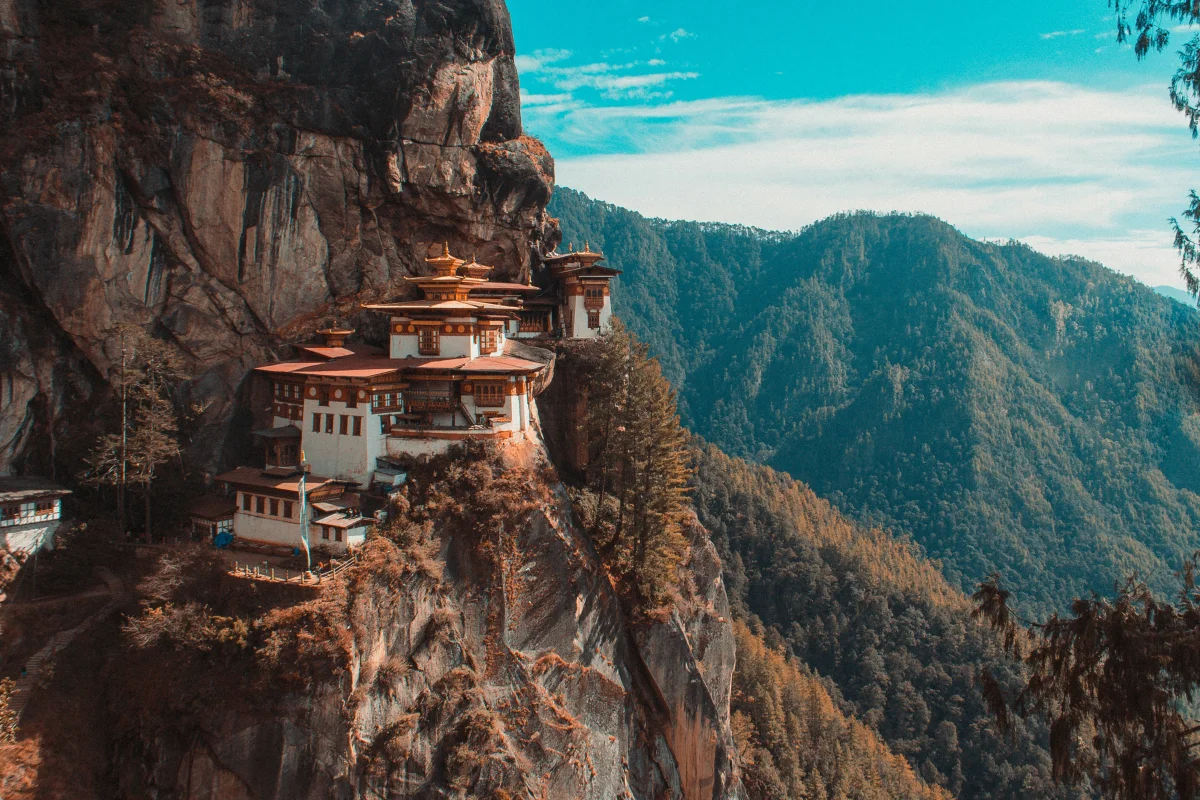 Bhutan-Specific Altitude Risk Points
Dochula Pass (3,100m) — Every Non-Trekking Visitor
The road from Thimphu to Punakha crosses Dochula Pass at 3,100m. Most visitors stop here for the 108 memorial chortens and the Himalayan panorama. If you arrived in Bhutan the previous day and slept at 2,350m (Thimphu), arriving at 3,100m the following morning is within safe parameters for most people. The exposure is brief.
The risk scenario is the visitor who goes directly to Dochula Pass on their very first day in Bhutan, arriving from a sea-level city. A 3,100m altitude on Day 1 of Bhutan — before any acclimatization — is the commonest trigger for headaches in non-trekking visitors. Two nights in Paro or Thimphu before Dochula solves this.
Chele La Pass (3,988m) — Common Day Trip From Paro
Chele La is the highest motorable pass in Bhutan. The vehicle takes you from Paro (2,235m) to 3,988m in approximately 1.5–2 hours — a gain of nearly 1,750m in a single morning. The standard advice is to spend at least one full night in Paro before attempting Chele La, and to limit your time at the summit to 30–60 minutes if any symptoms develop.
Despite the rapid altitude gain, Chele La is a day trip and most visitors return to Paro (2,235m) or Thimphu (2,350m) for the night. The brief exposure reduces risk compared to overnight stays at altitude. That said, people with a history of AMS or sensitivity to altitude should be cautious.
Bumthang / Jakar (~2,600m) — Overnight Stays
Bumthang is comfortable for most visitors after two to three nights in Paro and Thimphu. The transition that more commonly causes problems is the Punakha (1,200m) → Trongsa → Bumthang (~2,600m) route completed in a single day — a gain of around 1,400m combined with many hours of driving and physical fatigue.
Practical tip for the Bumthang day
If your itinerary goes Punakha → Trongsa → Bumthang in a single day, plan for a quiet first evening. Eat lightly, hydrate well, and go to bed early. The altitude gain is manageable, but the combination of altitude, long driving, and physical fatigue amplifies symptoms. A slow, early night usually means a symptom-free morning.
Trekking Altitudes — Know Your Route
For visitors doing any of Bhutan's multi-day treks, altitude planning is essential. The Druk Path Trek reaches approximately 4,200m at Labana Pass. The Jomolhari Trek reaches 4,080–4,100m at Jangothang base camp, with passes above 4,700m on the longer loop. The Snowman Trek crosses Gophu La at 5,230m. For any overnight trekking above 3,500m, Diamox and pre-departure medical consultation are strongly recommended.
If AMS Develops: What to Do
The management protocol for AMS is straightforward, but it requires following the steps in order and not skipping the hard one (descent) when it becomes necessary.
- Stop ascending — No further altitude gain until all symptoms have fully resolved for at least 24 hours.
- Rest — Physical exertion worsens AMS. A rest day at the current altitude gives acclimatization time to catch up.
- Hydrate — 3–4 litres of water or electrolyte drink per day. Urine should be pale yellow.
- Pain relief for headache — Ibuprofen (400–600mg) or paracetamol for symptomatic relief. Not a cure — this manages symptoms while the body acclimatizes.
- Diamox if not already taking — 125mg twice daily at first sign of moderate symptoms, after confirming no contraindications with your doctor.
- Descend if not improving — If symptoms have not improved after 24 hours of rest at the same altitude, descend 500–1,000m. Descent is the only definitive treatment for AMS.
- Tell your guide — Your guide knows the nearest medical facility, the evacuation options, and the road or trail conditions for descent. Do not manage moderate to severe AMS alone.
Descend immediately — do not wait — if any of these appear
Unable to walk a straight line. Confusion or unusual behaviour. Breathlessness at rest. Blue lips or fingertips. These are signs of HACE or HAPE. These are life-threatening emergencies. Get lower now — do not sleep on it, do not wait until morning.
Before You Go: The Preparation Checklist
- See your doctor — Before any Bhutan trip involving altitudes above 3,500m, discuss your health history. Heart disease, severe anaemia, and previous HACE or HAPE significantly increase risk.
- Get Diamox if trekking — Diamox requires a prescription. Obtain it before departure. It is not reliably available in Bhutanese pharmacies outside Thimphu, and you do not want to be looking for it at altitude.
- Arrange travel insurance with evacuation cover — Helicopter evacuation from a remote trekking route costs USD 3,000–8,000 or more. Comprehensive insurance including medical evacuation is not optional for any high-altitude trekking itinerary.
- Tell your guide your relevant health history — Previous AMS, heart or lung conditions, current medications. Your guide needs this information to make good decisions on your behalf if something goes wrong.
- Acclimatize in Paro or Thimphu before ascending — Two nights at 2,235–2,350m before moving to higher altitudes prevents the majority of AMS problems. Resist the urge to push to Bumthang or the high passes on Day 1 or Day 2.
Altitude sickness in Bhutan is largely preventable. The visitors who have problems are almost always those who ascended too fast, didn't hydrate, or ignored early symptoms. The visitors who follow the basic protocols — gradual ascent, consistent hydration, rest when needed, descent if symptoms persist — have extraordinary experiences at extraordinary altitudes. The mountains are genuinely accessible. You just have to give your body time to agree.
Frequently Asked Questions
Will I get altitude sickness in Bhutan?
Possibly — mild AMS symptoms (headache, fatigue, poor sleep) are very common on arrival in Paro (2,235m) or Thimphu (2,350m), especially for people arriving from sea-level cities. Most visitors experience at least one mild symptom. With two nights of acclimatization and good hydration, most people adapt without significant difficulty. Severe AMS is much rarer and typically occurs only with rapid ascent to higher altitudes.
Is Bhutan dangerous for altitude sickness?
Bhutan presents real altitude considerations, particularly for trekkers and for non-trekking visitors visiting Chele La Pass (3,988m) or Dochula Pass (3,100m). With proper preparation — gradual ascent, hydration, rest when needed, and descent if symptoms develop — most visitors have no serious altitude problems. The risk comes from ascending too quickly, ignoring early symptoms, or continuing upward when the body is struggling.
Should I take Diamox for Bhutan?
For the standard non-trekking western Bhutan circuit (Paro, Thimphu, Punakha, Bumthang), Diamox is generally not necessary if your itinerary includes two nights in Paro or Thimphu before ascending. For trekkers going above 3,500m — Druk Path, Jomolhari, Snowman — Diamox is recommended as a preventive measure and should be discussed with your doctor before departure. It requires a prescription and is not reliably available in Bhutan outside Thimphu.
What is the correct Diamox dosage for altitude sickness prevention?
The guideline-recommended prophylactic dose is 125mg twice daily, starting 24–48 hours before ascending to high altitude and continuing for 48 hours at the target altitude. For treatment of AMS symptoms, 250mg twice daily may be used. Always discuss with your doctor before use — Diamox is contraindicated for people with sulfa drug allergies, kidney or liver disease, and during pregnancy.
What altitude is Paro in Bhutan?
Paro airport and town sit at approximately 2,235m (7,332 feet) above sea level. Thimphu is at approximately 2,350m. These are the arrival altitudes for most visitors. They are high enough to cause mild symptoms in people arriving from sea level, particularly if flying in on the first day and beginning sightseeing immediately.
What are the signs of serious altitude sickness?
The two dangerous complications are HACE (High Altitude Cerebral Oedema — fluid on the brain) and HAPE (High Altitude Pulmonary Oedema — fluid on the lungs). Signs of HACE: inability to walk a straight line, confusion, extreme headache, vomiting. Signs of HAPE: breathlessness at rest (not just on exertion), persistent dry cough, pink or frothy sputum, blue lips or fingertips. Both are medical emergencies requiring immediate descent — not rest, not waiting until morning. Descend and seek medical attention.
What is the highest altitude in Bhutan?
Gangkar Puensum at 7,570m is the highest peak in Bhutan and the highest unclimbed mountain in the world. The highest trekking pass accessible to visitors on the Snowman Trek is Gophu La at 5,230m. For non-trekkers, the highest point typically visited is Chele La Pass at 3,988m, reached by vehicle from Paro.
Can I trek in Bhutan if I've had altitude sickness before?
Previous AMS is a risk factor for future episodes but is not an automatic disqualification from trekking. Discuss your history with your doctor before departure. Prophylactic Diamox is particularly recommended for people with a prior AMS history. Choose a trek itinerary with conservative daily altitude gains and build in adequate acclimatization days.