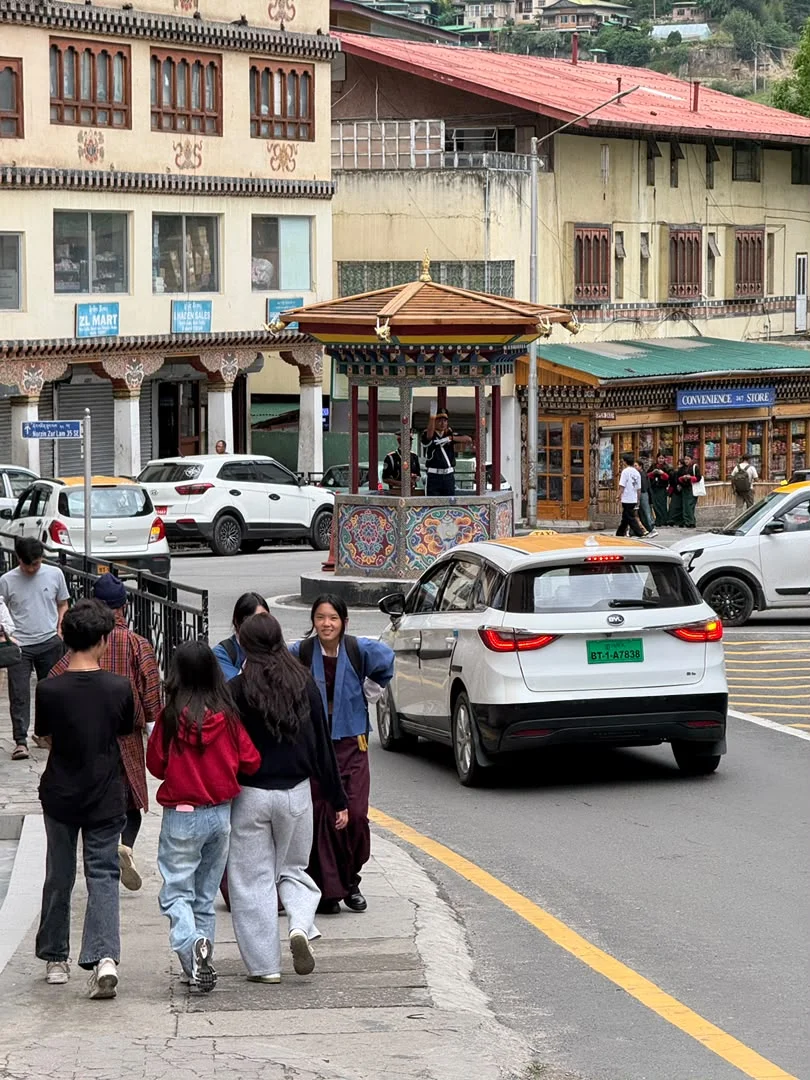
There is a corner in the heart of Thimphu that almost every visitor to our capital stops. Not because of a monument, and not because of a view — but because of a person. An officer of the Royal Bhutan Police, standing inside a small painted booth that looks more like a miniature Lhakhang than a traffic post, directing the flow of cars with calm, deliberate hand gestures. Graceful, almost choreographed. Entirely human.
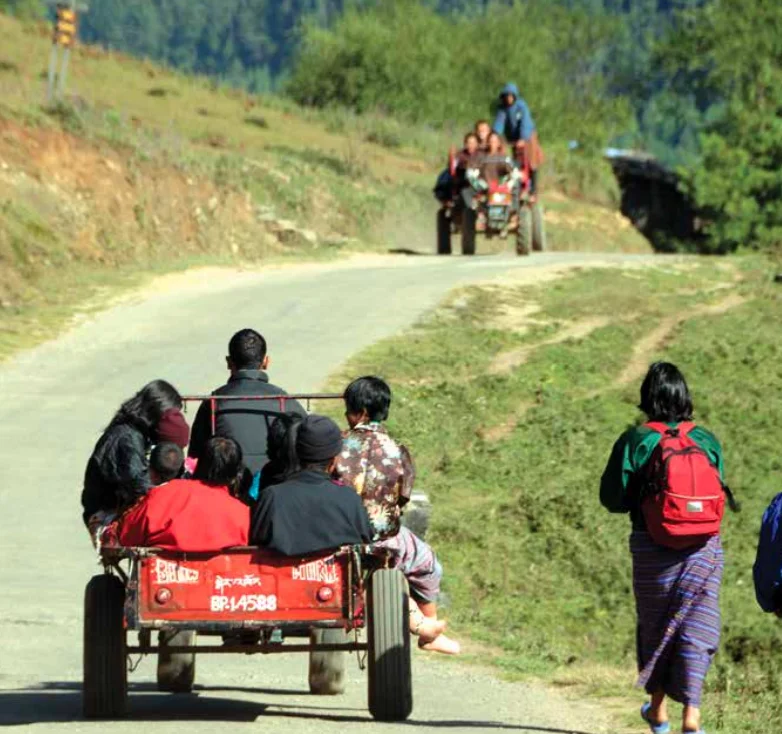
Bhutan is the only country in the world with no traffic lights. As Bhutanese people, this is simply how our roads have always worked — but over the years, explaining it to guests has made us appreciate it in a new way. It is not a gap in our infrastructure. It reflects who we are.
To understand it fully, though, you need to go back much further — to a time when there were no cars here at all, and no roads to put them on.
When Were the First Roads Built in Bhutan?
It may surprise you to learn that Bhutan had no motorable roads until the 1960s. Until 1961, travel across our country was by foot or on mule- or horseback. The journey from the Indian border at Phuentsholing to Thimphu — just over 200 kilometres — took six full days.
Our valleys were connected by footpaths and mule tracks, our dzongs reached by stone steps, our remote communities sometimes weeks away from the capital by foot. This was not poverty or neglect — it was, in many ways, deliberate. Bhutan had long protected itself from the outside world through geography as much as policy.
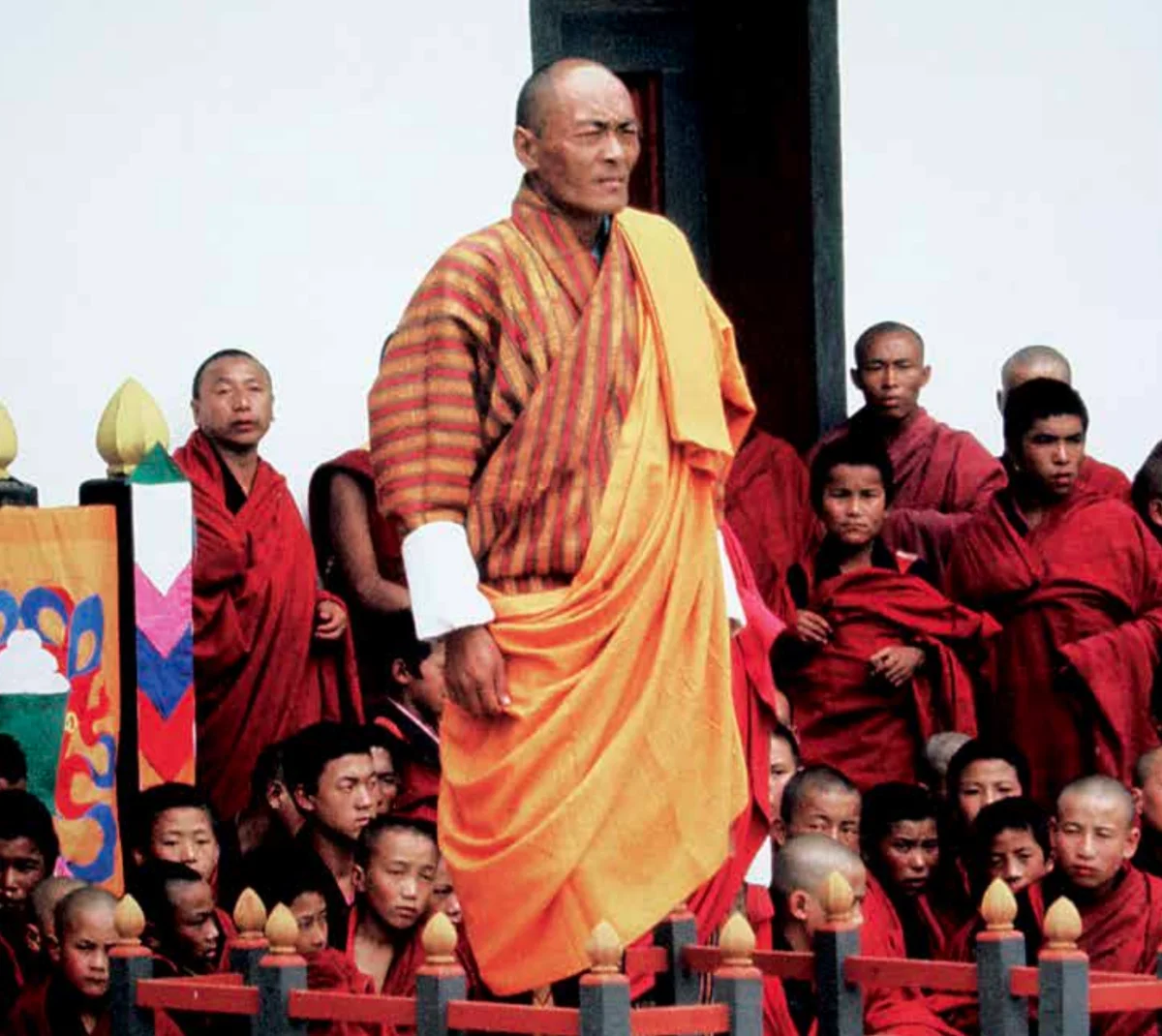
The Third King of Bhutan Jigme Dorji Wangchuk fondly referred to as the Father of Modern Bhutan initiated the road construction which began in October 1960, when work commenced on the 174-kilometre Phuentsholing–Thimphu highway, carved out of the Himalayan hillside in the remarkable time of just 19 months.
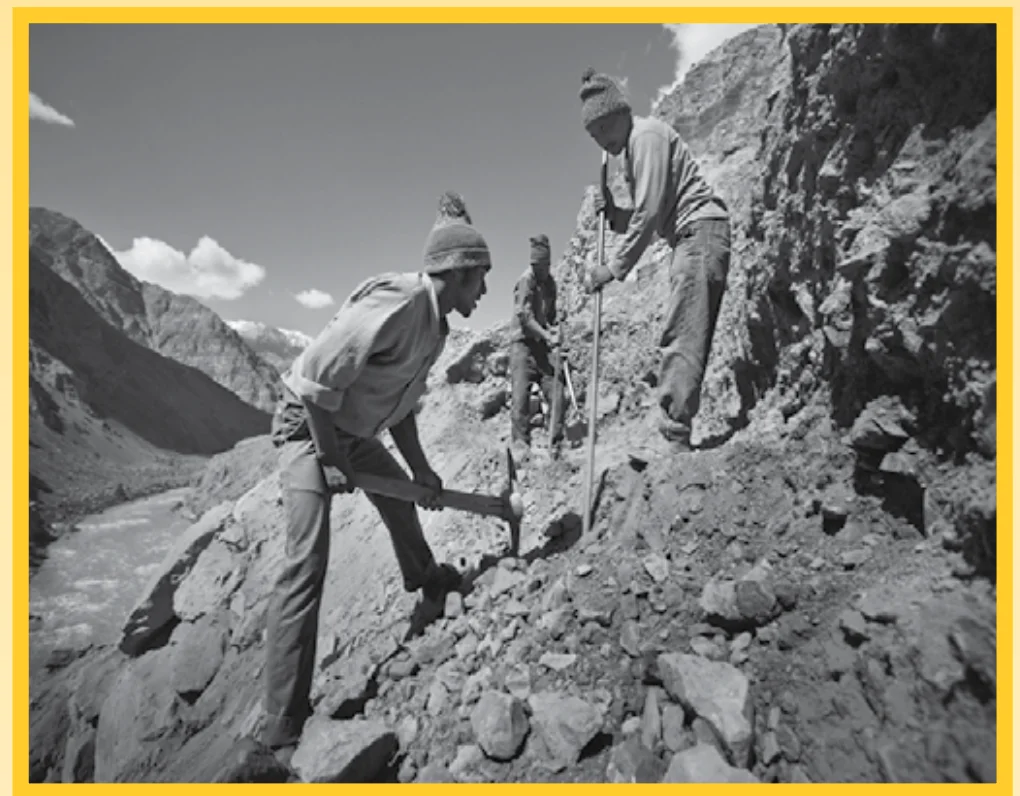
The highway was built largely by hand — with limited machinery and no earthmoving equipment — by Bhutanese labourers working alongside Indian engineers. Every stone removed and every spade of earth turned was done by Bhutanese hands. It is, genuinely, our first act of nation building.
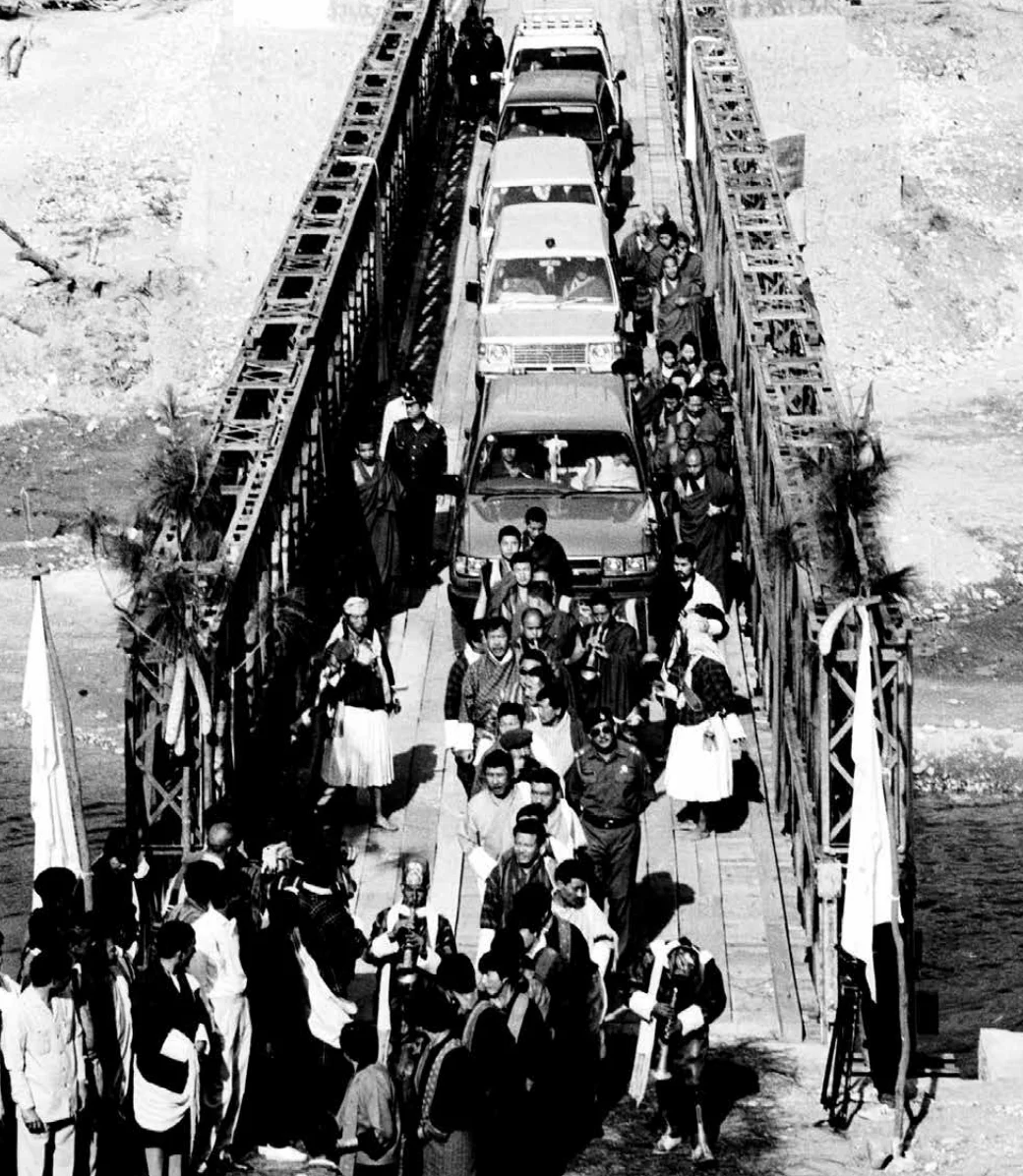
Though the road was complete by May 1962, the formal opening came in 1968 when Indian Prime Minister Indira Gandhi visited Bhutan and cut the ribbon on the Phuentsholing–Thimphu National Highway.
From that first highway, our primary east-west artery — the Lateral Road — was extended over the following decades, eventually stretching approximately 570 kilometres from Phuentsholing in the southwest to Trashigang in the east, passing through Thimphu, Wangdue Phodrang, Trongsa, and Bumthang. It remains the spine of our country.
When Did the First Car Arrive in Bhutan?
The first car was allowed into Bhutan in 1962 — the same year our first highway was completed. Its arrival was considered a significant step toward ending Bhutan's centuries-long geographical isolation.
The story of how ordinary Bhutanese people responded to those first vehicles is one our grandparents still tell. Many people stood by the roadside holding handfuls of grass — offering it to the machine as one might feed an animal, trying to make sense of this strange, roaring thing that had appeared in their valley. There was no fear, particularly. Just the genuine Bhutanese instinct to be hospitable, even toward something entirely unknown.
Today, our roads carry a very different picture. Although we do not manufacture any cars, Japanese, Korean, Indian and recently Chinese electrics are commonly driven. These vehicles of choice for navigating mountain passes and unpaved rural routes. When our guests arrive at Paro Airport, it is usually one of these that meets them on the tarmac. Bhutan has also become a quiet early adopter of electric vehicles — fitting for a carbon-negative nation powered almost entirely by our rivers.
Why Does Bhutan Have No Traffic Lights?
The story begins in 1995, when Thimphu installed its very first traffic light as a pilot experiment. It lasted less than 24 hours. Our residents did not welcome it — they missed the police officers who had been directing traffic at that intersection for years. To the Bhutanese, the lights felt impersonal. Soulless, even.
We are selective about the technologies we let shape our public life. Television and the internet were only introduced in 1999, adopted on our own terms. A blinking machine at a road junction, telling our people when to go and when to stop with no human intelligence behind it. simply did not fit.
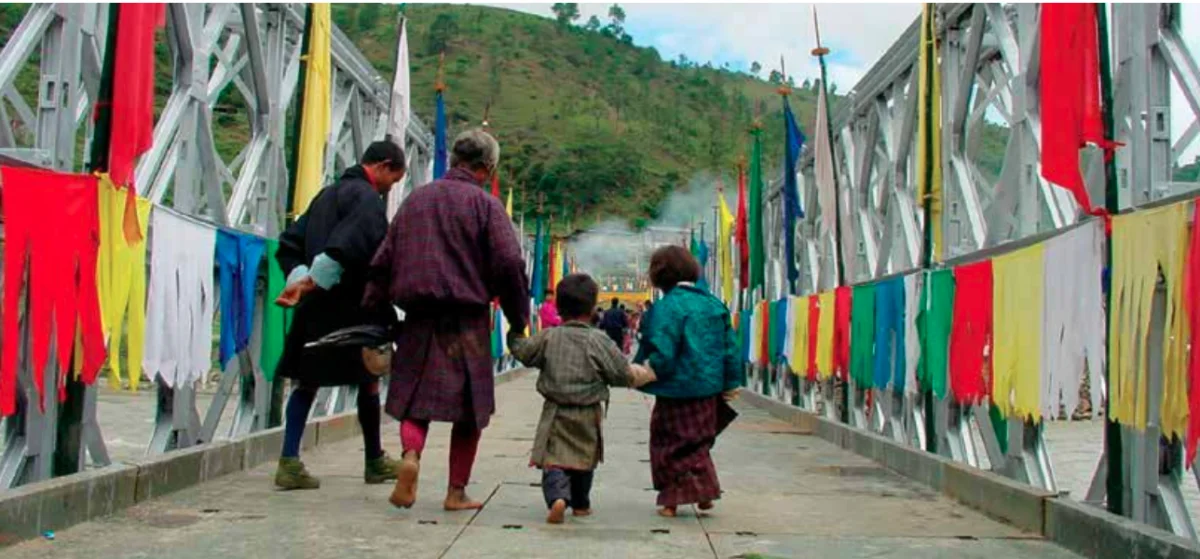
Today, roughly forty specially trained officers of the Royal Bhutan Police manage vehicle movement across Thimphu's central junctions. The booths they operate from are intricately painted structures resembling miniature temples — a deliberate design choice that officials have noted reflects and preserves our cultural identity. For our guests, watching this choreography is often one of the unexpected highlights of a day in Thimphu.
This choice aligns with Bhutan's broader philosophy of prioritizing human interaction and community wellbeing over technological solutions — a concept embedded in our Gross National Happiness framework. The direct involvement of a police officer creates a sense of trust, safety, and personal responsibility that a signal simply cannot replicate.
We should be honest, though: the system faces real pressure. A recent technical study found that manual traffic control is becoming increasingly strained as vehicle numbers grow, with bottlenecks at busy intersections leading to congestion and rising road accident rates. A proposal has been put forward to pilot traffic lights at ten key intersections in Thimphu, designed to balance automation with cultural values. Whether Bhutan eventually returns to traffic lights — on our own terms, in our own time — is one of the more interesting questions currently being debated in our capital.
What Is Traffic Like During Peak Hours?
Thimphu sits in a narrow valley, and that geography creates challenges that no amount of planning fully resolves. Traffic bottlenecks are common during peak hours — typically 8–10 AM and 4–6 PM — around schools, government offices, and commercial areas in the city centre.
Our busiest corridor experiences the highest traffic volumes in the city during these windows, with congestion attributed to heavy inflow from the outskirts, multiple speed bumps interrupting flow, limited diversion routes, and the lack of service lanes for lower-settlement commuters.
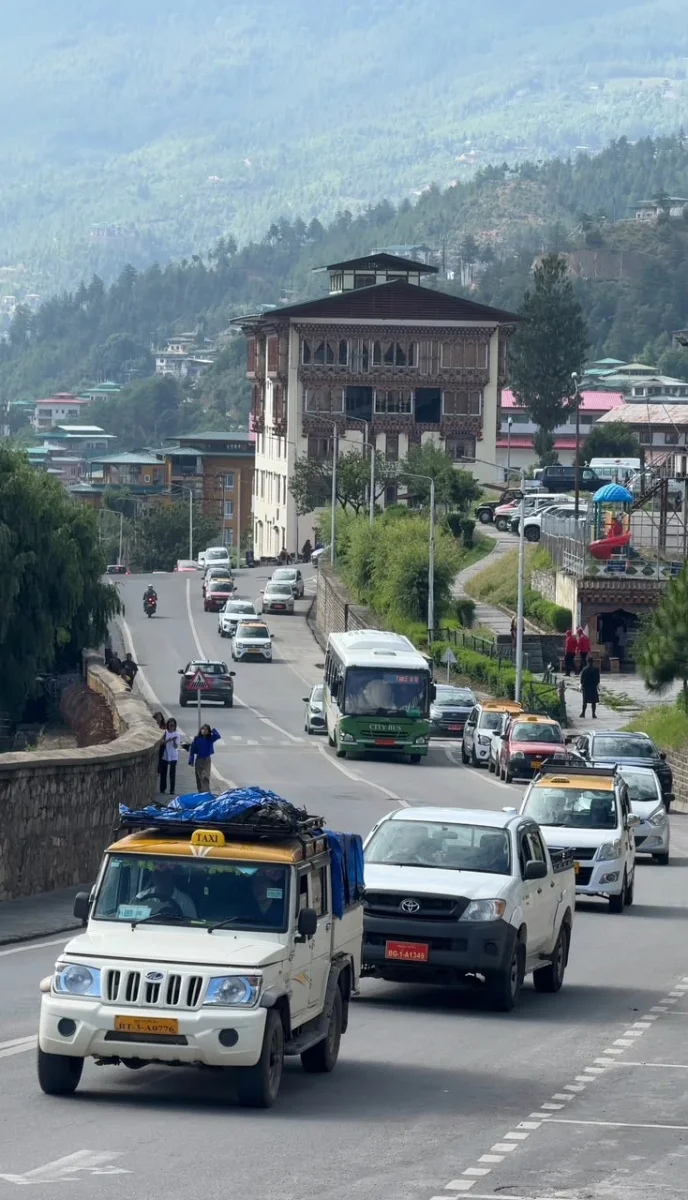
Thimphu Thromde has been actively working to address this — redesigning speed bumps, building underpasses, and piloting a bus priority lane. Progress is steady, if unhurried, which is perhaps very Bhutanese.
For visitors travelling with us, the practical guidance is simple: schedule city sightseeing and transfers outside the morning and evening rush. Mid-morning to mid-afternoon, our capital moves at a calm, pleasant pace. And even at its busiest, Thimphu remains notably free of the horn-blaring frustration you might encounter in Delhi, Kathmandu, or Bangkok. Our drivers are patient. Our roads, at their worst, are still peaceful by most standards.
What Are Bhutan's Roads Actually Like?
Honest answer: our roads are dramatic, beautiful, often narrow, occasionally unpaved, and almost always unforgettable.
Bhutan is a mountainous country where roads climb and descend through valleys, high passes, and sharp hairpin bends. Most are single-lane. The maximum speed limit outside towns is 50 km/h — and on most mountain roads, that already feels optimistic.
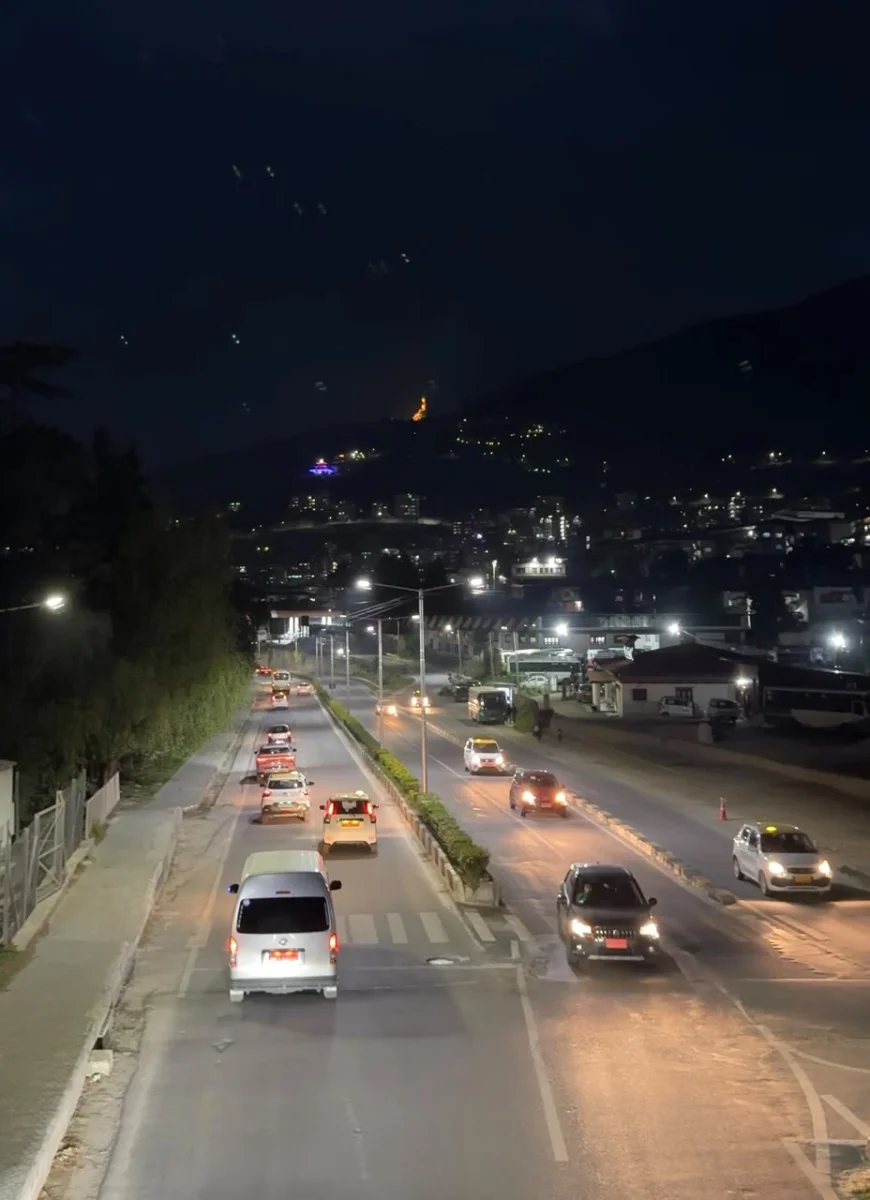
As of 2025, our road network totals more than 18,000 kilometres. Farm roads account for the largest share — over 61% — followed by national highways at around 16% and district roads at 11%. Only about 30% of the overall network is sealed or blacktopped.
Road quality varies significantly by region. Western Bhutan has our most developed network, with paved roads connecting Thimphu to Paro, Punakha, Ha, Chukha, and Phuentsholing. The Paro–Thimphu section is a two-lane highway and is among the best roads in the country. Eastern Bhutan is more remote, with longer travel times and fewer sealed roads — which also means fewer tourists and a rawness of landscape that many of our guests find deeply moving.
Our geology is unstable, and landslides are a regular reality — aggravated by monsoon rains in summer and frost heaving in winter. Teams are stationed at mountain passes year-round to keep roads clear. Guests travelling with us on longer itineraries should always factor in possible delays, and we always plan buffer time on cross-country routes.
Driving through Bhutan is among the most visually extraordinary journeys on earth — prayer flags at every pass, monasteries on ridgelines that seem to belong to another century, rivers catching the morning light far below. Our guests who have driven elsewhere in Asia tell us, consistently, that the roads here feel different. Quieter. More considered. As if the journey itself is the point.
Perhaps it is.
FAQ
Does Bhutan have any traffic lights?
No. Bhutan is the only country in the world without a single traffic light. In Thimphu, traffic is directed by officers of the Royal Bhutan Police working from traditionally designed roadside booths.
When were roads first built in Bhutan?
Bhutan's first paved road — the 174-kilometre Phuentsholing–Thimphu highway — was constructed between 1960 and 1962 and formally opened in 1968.
When did the first car arrive in Bhutan?
The first car entered Bhutan in 1962, coinciding with the completion of our first highway. Early Bhutanese reportedly offered grass to the vehicles, unsure whether they were alive.
What are Bhutan's roads like for tourists?
Most roads are single-lane mountain roads with hairpin bends and breathtaking scenery. Western Bhutan has the best road conditions. All tourists travel with a licensed local operator and experienced driver, so road conditions do not compromise safety or trip quality.
Is there traffic congestion in Thimphu?
Yes, particularly during the morning (8–10 AM) and evening (4–6 PM) rush. Outside these windows, traffic is light and the city is easy to move around.
Will Bhutan ever get traffic lights?
Possibly, on our own terms. A recent proposal suggests piloting lights at ten Thimphu intersections to ease growing congestion while preserving cultural values. No decision has been made and honestly we like it that way.