Bhutan
Spiritual Retreat
Journey within. Find stillness in the last Himalayan kingdom where Buddhism is a way of life.
Bhutan Spiritual &
Wellness Retreat
Bhutan does not sell wellness as a product. It lives it. In a kingdom where Gross National Happiness is the measure of national progress and Buddhism shapes daily life from the first prayer flag at dawn to the last butter lamp at dusk, the conditions for genuine inner transformation are not manufactured — they already exist.
This 8-day retreat is not a spa holiday with a monastery backdrop. It is a carefully designed immersion into Bhutan's living contemplative tradition — morning prayers with resident monks at 5:30am, guided Shamatha meditation in the courtyard of a working monastery, a full Sowa Rigpa (traditional Himalayan medicine) consultation and treatment, a ceremonial hot stone bath (Dotsho) with river-heated stones and wild medicinal herbs, mindful trekking on sacred trails, and the complete stillness of evenings in the Phobjikha and Haa valleys, where the silence is absolute.
You do not need to be Buddhist, experienced in meditation, or physically exceptional. You need only to want to stop — and to let Bhutan show you what stopping actually feels like.
"The purpose of our lives is to be happy."
— His Holiness the Dalai Lama · A principle at the heart of Bhutanese life
Why Bhutan for a
Spiritual Retreat?
A Living Buddhist Kingdom
Bhutan is the only country in the world where Vajrayana Buddhism is the official state religion and a genuine daily practice, not a cultural heritage. Monasteries are active. Monks are working, chanting, debating, and meditating — not performing for tourists. The spiritual energy of Bhutan is real and pervasive.
The World's Only Carbon-Negative Country
Bhutan absorbs more carbon than it produces. Over 70% of the country remains under forest cover. The pristine air, clean rivers, and undisturbed natural landscape create a physical environment that supports stillness and restoration in a way that few places on earth can match.
Gross National Happiness
Bhutan's constitution mandates the pursuit of Gross National Happiness over GDP — a governance philosophy rooted in Buddhist values of compassion, balance, and contentment. This shapes everything from urban planning to daily interaction. The country itself is engineered for wellbeing.
Sacred Sites That Are Still Sacred
Unlike much of Asia, Bhutan's monasteries and lhakhangs are not museums. The rituals performed inside them today are the same rituals performed five hundred years ago. Sitting in meditation within a working monastery changes what meditation feels like.
Low-Impact, High-Value Tourism
Bhutan's Sustainable Development Fee ensures it remains uncrowded. You will not find tour groups at every viewpoint. The solitude that retreat requires is actually available here — in the Phobjikha Valley at dawn, on the Bumdra trail before 7am, in the Haa Valley in the late afternoon.
Traditional Healing That Actually Works
Sowa Rigpa — the Himalayan science of healing — is a 2,500-year-old medical tradition still practised by licensed Drungtsho physicians across Bhutan. The National Institute of Traditional Medicine in Thimphu trains practitioners to the same standard as conventional doctors. This is not alternative medicine in the Western sense; it is primary medicine in Bhutan.
The Dotsho: An Ancient Therapeutic Ritual
The traditional Bhutanese hot stone bath — stones heated in fire, placed in a wooden tub with river water and medicinal herbs — has been used for centuries to treat joint pain, arthritis, and physical exhaustion. After a day of mindful trekking, it produces a state of profound physical relaxation that no spa treatment replicates.
Sound Healing in Its Original Context
The resonance of Tibetan singing bowls, the drone of dungchen horns, the rhythmic percussion of monastery rituals — sound has been used in Himalayan contemplative practice for millennia. Experiencing it in its original sacred context, rather than in a studio, is a qualitatively different thing.
Bhutan's Healing
Traditions
This retreat draws on four distinct healing traditions that have been practised in Bhutan for centuries. Each is integrated into the programme at a moment where it is most meaningful — not as a scheduled activity, but as a genuine experience of what Bhutanese healing actually involves.
Sowa Rigpa — Traditional Himalayan Medicine
A 2,500-year-old system of healing that views the body as a network of energy channels governed by three humours — rLung (wind), mKhrispa (bile), and Badkan (phlegm). A Drungtsho (licensed practitioner) assesses your constitution through pulse diagnosis, urine analysis, and a detailed consultation before prescribing a personalised course of treatment using Bhutan's extraordinary pharmacopoeia of high-altitude medicinal herbs. The retreat includes one full consultation and one treatment session at a government-licensed clinic in Thimphu.
Dotsho — The Traditional Hot Stone Bath
River stones, fire-heated to extreme temperature, are placed into a wooden tub filled with spring water. As they cool, they release minerals into the water. A bundle of wormwood (Artemisia), juniper, and other wild medicinal herbs is added. You soak for 30–45 minutes as fresh hot stones are periodically added. The treatment dissolves muscle tension accumulated over trekking days and induces a state of physical stillness that the mind naturally follows. Two Dotsho sessions are included — one mid-retreat after the Druk Path walk, one on the final evening in Paro.
Shamatha and Metta Meditation
Shamatha (calm-abiding) meditation develops single-pointed concentration by focusing on the breath, a visualisation, or a mantra. Metta (loving-kindness) practice systematically cultivates compassion — beginning with oneself, extending to loved ones, to neutral persons, to difficult persons, and finally to all sentient beings. Both practices are rooted in Tibetan Buddhist tradition and are guided by a local practitioner with genuine monastic training. Sessions run each morning from Day 2 onward, beginning at 30 minutes and gradually extending to 60 minutes by Day 6.
Yoga in the Himalayan Tradition
Yoga in Bhutan is practised differently from the studio culture of the West. It is slower, more contemplative, and closely linked to breath and meditation. Each morning session — held at dawn in the monastery courtyard or beside the river, depending on the day — begins with pranayama (breathwork) and moves into a gentle asana sequence designed to open the body for the meditation session that follows. No prior yoga experience is required. The practice is modifiable for all physical conditions.
Sacred Retreat
Experiences
Morning Prayers with Monks
Rise before dawn and join the resident monks at 5:30am for the morning prayer session — conch shells, butter lamps, chanted sutras, and the first light breaking over the valley.
Guided Shamatha Meditation
Daily guided meditation sessions in monastery courtyards, conducted by a local practitioner with monastic training. Suitable for complete beginners.
Sowa Rigpa Consultation
A full consultation with a government-licensed Drungtsho physician — pulse diagnosis, constitution assessment, and personalised herbal prescription.
Traditional Dotsho Hot Stone Bath
Two full hot stone bath sessions with fire-heated river stones, wormwood, juniper, and medicinal mountain herbs.
Mindful Trek to Bumdra
A guided walking meditation on the sacred Bumdra trail above Paro — pine forests, prayer flags, cliff-edge ridges, and complete silence.
Singing Bowl & Sound Healing
An evening sound healing session using traditional Tibetan singing bowls and Himalayan instruments — vibration therapy in its original cultural context.
Dochula Dawn Vigil
Arrive at Dochula Pass at first light — 108 Druk Wangyal Chortens emerging from mist, the eastern Himalayan peaks revealed one by one.
Butter Lamp Offering Ceremony
Offer 1,000 butter lamps at Gangtey Monastery — a traditional Buddhist dedication ritual for peace and the alleviation of suffering.
Phobjikha Valley Silence Walk
A fully silent morning walk through the Phobjikha wetlands — one of Asia's most tranquil landscapes, home to rare black-necked cranes in winter.
Mani Wall Circumambulation
Walk the sacred kora (circumambulation path) around Punakha Dzong at dawn, turning prayer wheels and reciting the mantra Om Mani Padme Hum.
Organic Bhutanese Healing Cuisine
All meals prepared with locally grown, organic ingredients — red rice, seasonal vegetables, Bhutanese chillies, and warming soups aligned with your Sowa Rigpa constitution.
Evening Dharma Talk
A nightly 30-minute conversation with your guide on a theme from Buddhist philosophy — impermanence, compassion, interdependence, non-attachment.
Retreat
Highlights
Morning Prayers at Working Monasteries
Daily Guided Meditation Sessions
Sowa Rigpa Healing Consultation
Two Traditional Hot Stone Baths
Sacred Bumdra Mindful Trek
Tibetan Sound Healing Session
Dochula Dawn — 108 Chortens
Butter Lamp Ceremony — 1,000 Lamps
Phobjikha Valley Silence Walk
Punakha Dzong Morning Kora
Organic Bhutanese Healing Cuisine
Nightly Dharma Conversations
Available all year round. Autumn (Sep–Nov) brings festival season — maximum spiritual energy and clear Himalayan views. Winter (Dec–Feb) is the season of deep stillness — very few visitors, long quiet evenings, and black-necked cranes in Phobjikha. Spring (Mar–May) offers blossoming rhododendrons on the Bumdra trail and a warming quality of light ideal for morning meditation. Monsoon (Jun–Aug) is lush, mist-covered, and profoundly quiet — the preferred season for serious retreat practitioners.
Retreat
Itinerary
No prior meditation experience is required. Comfortable, loose clothing suitable for yoga and trekking is recommended. The physical demands are easy to moderate — you will walk 2–4 hours on most days on well-maintained trails. Altitude acclimatisation is built into the first two days. Your Sowa Rigpa consultation occurs on Day 2 in Thimphu.
- Arrival & Welcome: Land at Paro International Airport (2,235m) and be received by your guide with a traditional khadar. The drive to your lodge passes farmhouses, prayer flags, and the first willow-lined stretch of the Paro Chhu river.
- Gentle Orientation Walk: A 45-minute acclimatisation walk along the Paro Chhu riverbank — introduced mindfully, with attention to breath, sound, and the quality of Himalayan light.
- Kyichu Lhakhang Visit: Visit one of Bhutan's oldest and most sacred temples — built in the 7th century during the reign of Tibetan Emperor Songtsen Gampo. Sit quietly inside. Light a butter lamp. Begin.
- Introductory Evening Session: A 45-minute introductory session on the week ahead — the meditation practices, the healing tradition, and the intention-setting exercise that begins every Found Bhutan retreat.
- First Morning Meditation: A 30-minute guided Shamatha session at dawn — breath-focus and body-scan. The first formal sitting of the retreat.
- Sowa Rigpa Consultation: A full consultation with a licensed Drungtsho physician at Thimphu — pulse diagnosis, constitution assessment, and a personalised herbal prescription. The most important appointment of the retreat.
- National Institute of Traditional Medicine: A guided visit to understand how Bhutanese healing medicine is produced, classified, and prescribed — one of the most illuminating hours available in Bhutan.
- Memorial Chorten Kora: Walk the circumambulation path around the National Memorial Chorten in Thimphu — joining local Bhutanese completing their daily devotions, turning prayer wheels, and reciting mantras.
- Evening Dharma Talk: First nightly Dharma conversation — the Buddhist concept of impermanence (Anicca) and why it is the most practical philosophical teaching for modern life.
- Dochula Dawn Vigil: Depart Thimphu before first light. Arrive at Dochula Pass (3,100m) as the sun rises over the 108 Druk Wangyal Chortens. On clear mornings, the entire eastern Himalayan range — including Gangkar Puensum at 7,570m — is visible. A full guided meditation session here, in the open air at 3,100m.
- Punakha Dzong Morning Kora: Walk the sacred circumambulation path around Punakha Dzong — built in 1637 at the confluence of the Mo Chhu and Pho Chhu rivers. The kora is walked by Bhutanese each morning as a devotional practice.
- Chimi Lhakhang Walk: A 30-minute walk through rice paddy fields to Chimi Lhakhang — the temple of Drukpa Kunley, the Divine Madman, a 15th-century Buddhist master whose unconventional teachings remain deeply relevant.
- River Meditation: An unstructured hour beside the Mo Chhu — sitting in silence, listening, watching. The simplest and often most powerful session of the retreat.
- Evening Dharma Talk: The Buddhist concept of interdependence (Pratītyasamutpāda) — how everything that exists arises in dependence on conditions, and why this understanding changes how we relate to suffering.
- Gangtey Monastery Morning Prayers: Arrive at Gangtey Monastery (home to Gangtey Trülku, the ninth reincarnation) for the morning prayer session with resident monks — conch shells, thighbone trumpets, and the extraordinary deep-register chanting of the Nyingma tradition.
- Butter Lamp Offering Ceremony: Offer 1,000 butter lamps inside the monastery as a traditional Buddhist dedication for peace, the alleviation of suffering, and the benefit of all sentient beings. One of the most profound ritual experiences in Bhutan.
- Buddhism Teaching Session: A one-hour teaching on the foundations of Vajrayana Buddhism at Gangtey's monastic college (shedra) — conducted by a senior monk in English with your guide translating Dzongkha passages.
- Phobjikha Valley Silence Walk: An entirely silent 90-minute walk through the wetlands of the Phobjikha Valley — no speaking, no devices, no music. One of the most extraordinary hours available anywhere in the Himalayas.
- Evening Sound Healing: A full Tibetan singing bowl sound healing session in your lodge — vibration therapy using traditional bowls tuned to different frequencies, combined with breathwork.
- Drive via Chele La Pass (3,988m): The highest motorable pass in Bhutan — dense forest of fir and rhododendron, prayer flags strung across the ridge, and views across into the Haa Valley below.
- Lhakhang Karpo & Lhakhang Nagpo: Visit the White and Black Temples of Haa — two of Bhutan's oldest sacred sites, built during the reign of Songtsen Gampo. These are among the least-visited and most atmospheric places of worship in the country.
- Forest Meditation: A guided 45-minute walking meditation through the ancient forests above Haa town — pine, fir, and birch, with the sound of the Haa Chhu river below.
- Traditional Hot Stone Bath — Session 1: The first Dotsho of the retreat — fire-heated river stones, spring water, wormwood, juniper, and medicinal herbs. After the day's elevation and walking, the physical effect is profound.
- Evening Dharma Talk: The Buddhist understanding of suffering (Dukkha) — not as pessimism but as the most honest acknowledgement of the human condition, and the path through it.
- Dawn Yoga & Meditation: Final morning session of the formal meditation programme — 60 minutes combining pranayama, yoga, and seated Metta practice. The integration session where the week's practice is brought together.
- Bumdra Mindful Trek: A guided mindful trek on the Bumdra trail above Paro — ascending through rhododendron and pine forest, past prayer flag ridges, to the ancient Bumdra Lhakhang hermitage at approximately 3,800m. Walked in near-silence with attention to breath, foot placement, and the quality of the forest. This is the physical peak of the retreat — challenging enough to be meaningful, accessible enough to be achievable.
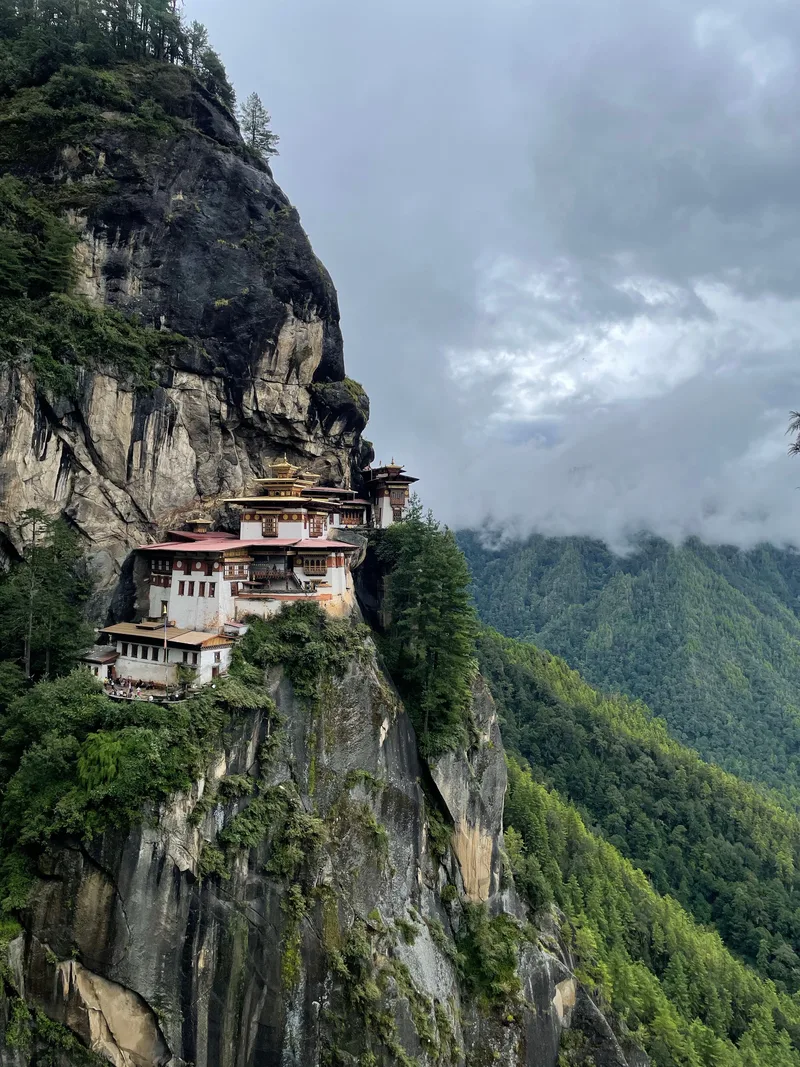
- Descent to Taktsang: The trail descends past a viewpoint of Taktsang Monastery (Tiger's Nest) — the most sacred site in Bhutan, where Guru Padmasambhava meditated in the 8th century and brought Vajrayana Buddhism to the Himalayan world. Sit here for as long as you wish.
- Evening Dotsho — Session 2: The final hot stone bath of the retreat — after the day's trek, this is the most restorative session. Taken in complete silence.
- Early Start: Depart the lodge before other visitors. The trail to Taktsang Monastery begins in pine forest, ascends via switchbacks, and reaches the viewpoint — the most photographed view in Bhutan — typically by 9am, before the crowds.
- Taktsang Monastery: Paro Taktsang (Tiger's Nest) is not merely a beautiful building on a cliff. It is the site where, in the 8th century, Guru Padmasambhava (Rinpoche) flew here on the back of a tigress and meditated in the cave for three months and three days, subduing the demons that prevented the Dharma from taking root in the Himalayan world. To sit inside the meditation cave where this happened is the culminating spiritual experience of the retreat.
- Closing Reflection: An unstructured hour at the viewpoint for personal reflection, journaling, and the integration of the week's experience.
- Farewell Dinner: A traditional Bhutanese dinner with your guide — ezay, kewa datshi, jasha maru, red rice — and a conversation about what you will take home and how you might continue practising.
- Final Morning Practice: An optional 20-minute sitting before breakfast — the first independent session, unguided, as a bridge to continued practice at home.
- Departure Preparation: Your Sowa Rigpa herbal prescription and any remaining remedies are packaged for travel. Your guide provides written guidance on continuing your meditation practice and the diet recommendations from your Drungtsho consultation.
- Transfer to Paro Airport: The drive to the airport passes the fields and farmhouses of the Paro Valley — the same landscape you arrived in eight days ago, seen now with different eyes.
The itinerary is always customisable — extend to 10 or 12 days to include Bumthang's sacred temples, Bumdra overnight camping under stars, or deeper Sowa Rigpa treatment programmes.
Inclusions &
Exclusions
Included
- ✓ Bhutan Sustainable Development Fee (SDF)
- ✓ All meals — breakfast, lunch & dinner (organic, healing-aligned)
- ✓ 7 nights accommodation (retreat lodge & boutique hotels)
- ✓ Licensed expert Bhutanese guide throughout
- ✓ Daily guided meditation sessions (7 sessions)
- ✓ Daily morning yoga & pranayama sessions
- ✓ Two traditional Dotsho hot stone bath sessions
- ✓ Full Sowa Rigpa consultation & one treatment session
- ✓ Tibetan singing bowl sound healing session
- ✓ 1,000 butter lamp offering ceremony at Gangtey
- ✓ Nightly Dharma talks (7 evenings)
- ✓ All internal transport (private vehicle)
- ✓ All monument, temple & monastery entry fees
- ✓ Bhutan visa processing assistance
- ✓ Personalised retreat journal & practice guide
- ✓ Drinking water on all excursions
Not Included
- ✕ International airfare to/from Paro
- ✕ Travel insurance (comprehensive cover recommended)
- ✕ Alcoholic beverages
- ✕ Additional Sowa Rigpa treatments beyond one session
- ✕ Personal expenses and tips
- ✕ Any services not listed above
Retreat
Cost
| Group Size | Price Per Person (USD) | Notes |
|---|---|---|
| Solo Traveller (1 pax) | Contact for quote | Private guide, vehicle & all sessions |
| Couple (2 pax) | Contact for quote | Shared sessions, private rooms |
| Small Group (3–6) | Contact for quote | Group discount applicable |
All prices include Bhutan's Sustainable Development Fee (USD 100/night, fixed until 31 August 2027), all healing sessions, and all meals. Rates vary by season and accommodation grade. The retreat is available year-round and fully customisable in duration and depth. Contact us for a personalised quote.
Payment &
Cancellation Policy
We believe in transparent, fair terms. Please review our complete Payment Terms and Tour Cancellation Policy before confirming your booking.
Read Full PolicyFrequently Asked
Questions
No experience of any kind is required — Buddhist, meditation, or yoga. This retreat is designed for any traveller seeking stillness, renewal, and a genuine encounter with Bhutan's living contemplative tradition. The meditation sessions begin gently and progress at the pace of the group. Many participants have never sat in formal meditation before arriving.
A Dotsho is a traditional Bhutanese therapeutic bath using river stones heated in fire and placed in a wooden tub filled with spring water and medicinal herbs — wormwood (Artemisia), juniper, wild sagebrush, and other plants harvested from Bhutanese hillsides. The stones release minerals as they cool, and the herbs steep in the water. You soak for 30–45 minutes while fresh hot stones are periodically added. The practice is centuries old and is used in Bhutan to treat joint pain, arthritis, skin conditions, and physical exhaustion. Two sessions are included in this retreat.
Sowa Rigpa is the traditional Himalayan science of healing — a 2,500-year-old medical system using herbal medicine, dietary guidance, and therapeutic treatment to restore physical and mental balance. In Bhutan, Sowa Rigpa practitioners (Drungtshos) are trained at the National Institute of Traditional Medicine in Thimphu to government medical standards. A consultation involves pulse diagnosis (reading the radial artery with three fingers to assess the state of the three humours), urine analysis, and a detailed health history interview. From this, your constitution (predominant humour type) is identified and a personalised herbal prescription formulated.
The retreat introduces two primary forms of Buddhist meditation. Shamatha (calm-abiding) develops single-pointed concentration and mental stillness through breath-focus or visualisation. Metta (loving-kindness) systematically cultivates compassion — beginning with oneself, extending outward to loved ones, neutral persons, difficult persons, and finally all sentient beings. Sessions are guided in English by a local practitioner with genuine monastic training, with your guide providing any necessary context. Walking meditation on the Bumdra trail and sitting in monastery prayer sessions are also included.
Easy to moderate. Most walking days involve 2–4 hours on well-maintained trails at altitude (2,200–3,988m). The most demanding day is the Bumdra trek on Day 6 — a 4–5 hour walk with 600m of elevation gain. This is achievable by anyone in reasonable general health. The Dotsho sessions, yoga, and meditation require no physical fitness. Altitude acclimatisation is built into the first two days. If you have specific health concerns, please share them with us when enquiring and we will adjust accordingly.
Yes — completely. The 8-day programme is a well-tested foundation, but we build every retreat around the specific intentions, physical conditions, and interests of the person taking it. Possible extensions include Bumthang Sacred Valley (Day 9–10), overnight camping at Bumdra under the stars, deeper Sowa Rigpa treatment (3–5 sessions), or a structured silent day in the Phobjikha Valley. Contact us and describe what you're looking for — we'll design accordingly.
Real Photos from
Our Guests
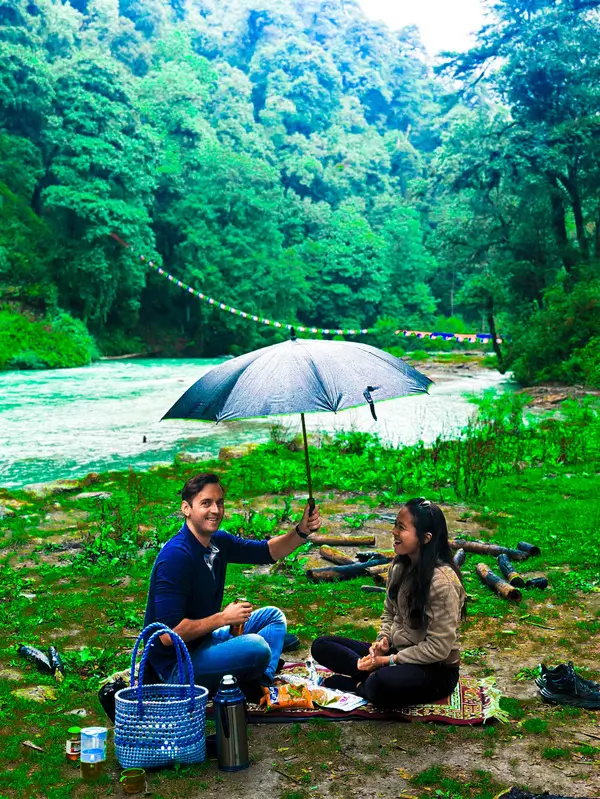
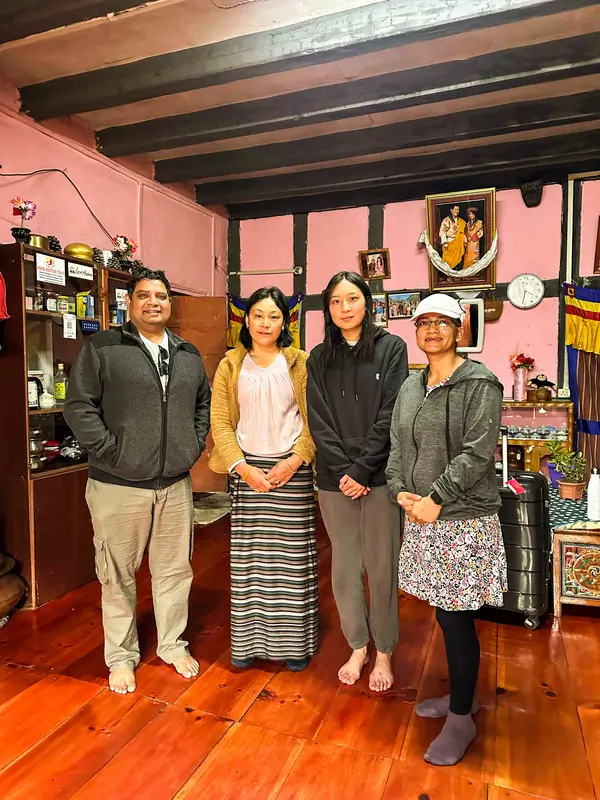
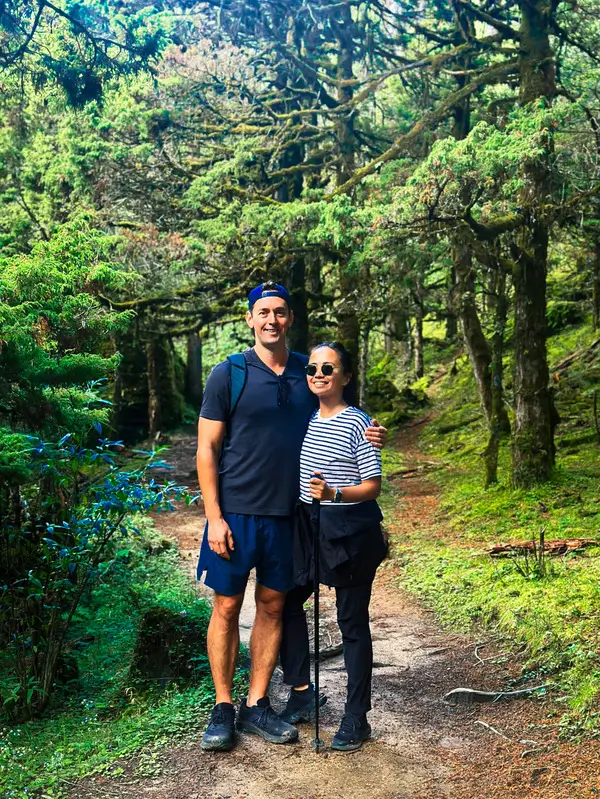
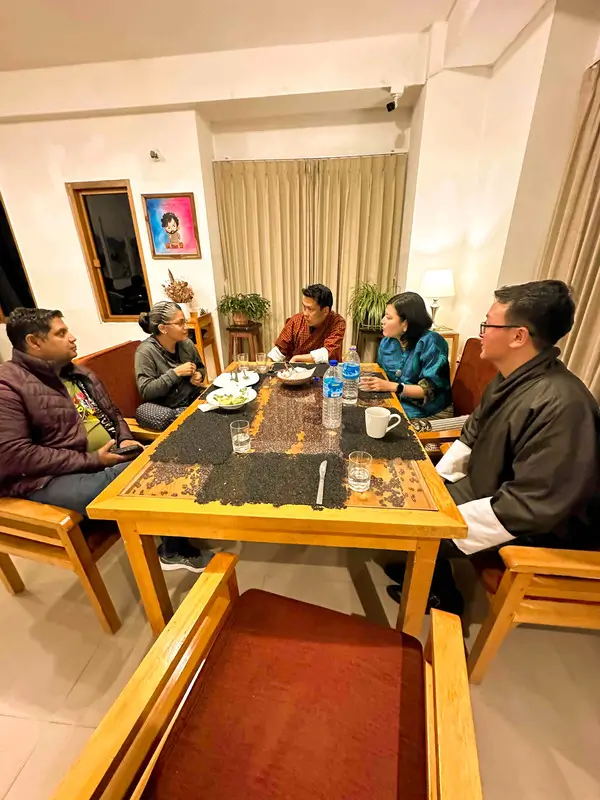
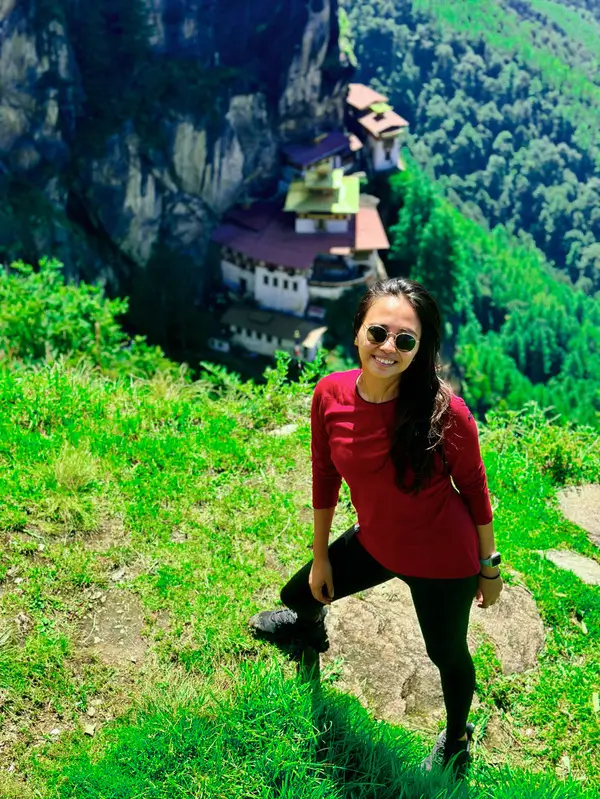
These are real, unedited moments captured by travellers who explored Bhutan with Found Bhutan. Every photo tells a story — and yours is next.
Explore the full collection of guest photos from across Bhutan.
View All Guest Photos
Customise Your
Bhutan Tour Today
Fill in the form and our expert team will get back to you within 24 hours.
Related Experiences
Honeymoon Adventure

Bhutan Honeymoon Adventure isn't just a vacation, it's the beginning of a lifetime of love and adventures together.
