Talo Tshechu
Festival
About the Festival
Talo Tshechu — The Festival of the Zungdra
The Talo Tshechu is a three-day festival held at Talo Monastery (Talo Goenpa) in Punakha district, perched on a ridge at 2,800 metres above the Punakha Valley with commanding views toward the Wangdue Valley to the south. What distinguishes the Talo Tshechu from every other festival in Bhutan is its repertoire: alongside the standard Cham mask dances and Atsara clown performances, the festival features the Zungdra — a form of classical Bhutanese courtly dance and song that is native to Talo and found nowhere else. Each day of the festival closes with the Mani Sum Zungdra songs, leaving the assembled community in a state of deep reverence.
Talo Monastery itself is the most significant and revered monastery in Punakha Dzongkhag. Founded in 1767 by Chogtul Gyalse Jigme Singye — the fourth reincarnation of Lam Thripa and the 18th Druk Desi — it was built as a replica of the great Samye Monastery in Tibet, the first Buddhist monastery ever constructed in the Himalayan world. Talo served as the seat of the successive mind incarnations of Zhabdrung Ngawang Namgyal, unifier and founder of Bhutan. That royal and spiritual lineage is present in everything about the monastery and its festival.
When
March or April
Where
Talo Monastery
For
All Visitors Welcome
Guide Required
Yes — Mandatory
Festival Highlights
What Makes This Festival Special
01
Sacred Mask Dances (Cham)
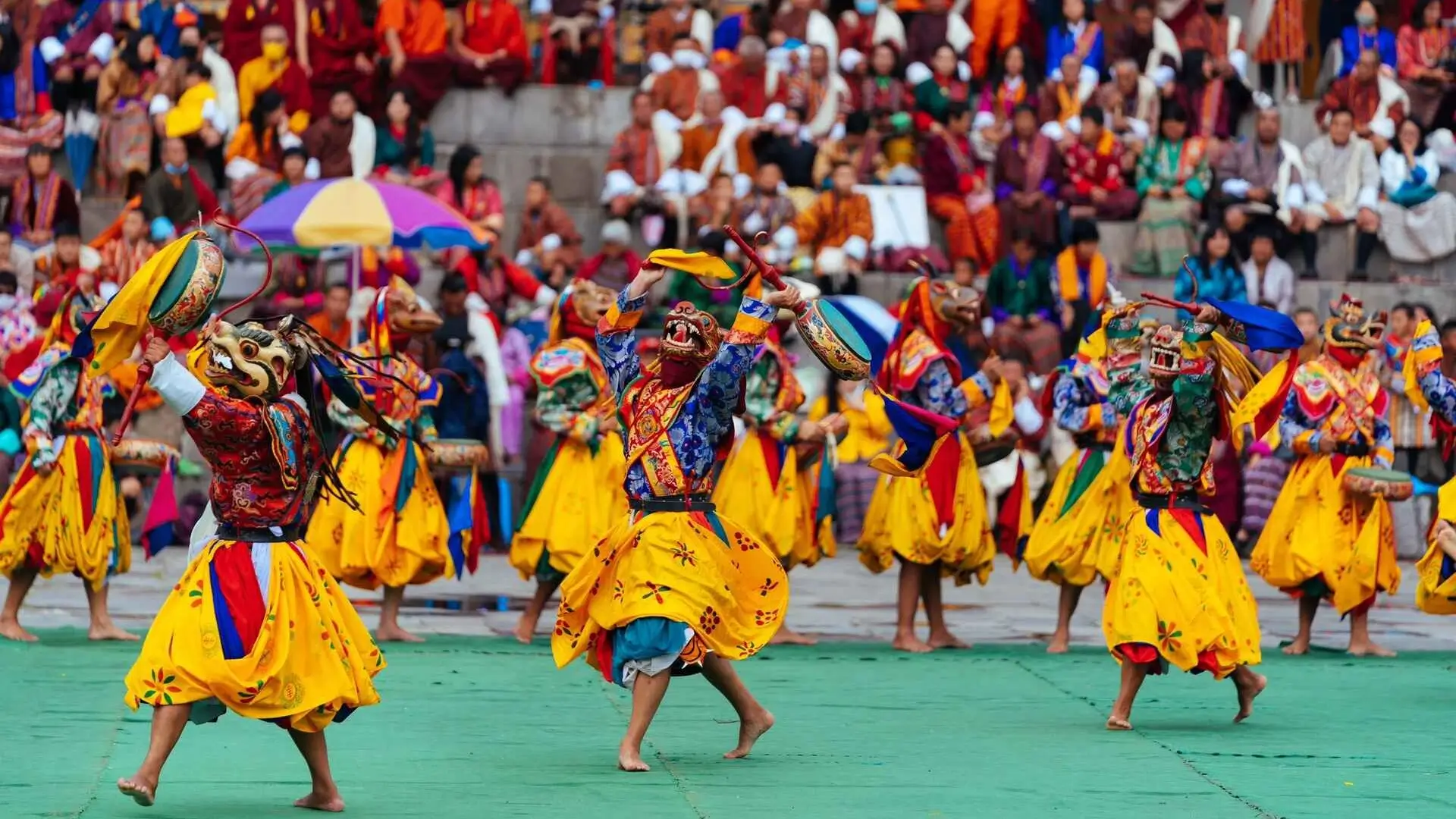
The Talo Tshechu features spectacular Cham dances, performed by monks wearing vibrant costumes and intricate masks. These dances, steeped in Buddhist symbolism, narrate stories of triumph over evil, divine compassion, and the teachings of Guru Rinpoche. At Talo, the performances are intimate — the monastery courtyard is small enough that visitors stand just metres from the dancers.
02
The Talo Zungki Contest
One unique aspect of the Talo Tshechu is the Talo Zungki, an annual beauty contest for the local women of the region. It celebrates their grace, traditional attire, and their role in preserving Bhutan’s cultural identity. Women dress in their finest Kira, are judged on traditional attire, poise, and cultural knowledge, and the winner is celebrated as an embodiment of Talo’s heritage. It is the only beauty contest formally incorporated into a Bhutanese festival.
03
Community Bonding
The festival is a time for locals to come together, reconnect, and strengthen their community bonds. People dress in their finest traditional attire, including the elegant Gho and Kira, and share meals and moments of joy with friends and family. The Mani Sum Zungdra songs sung each evening are one of the most moving communal experiences at any festival in Bhutan.
04
The Zungdra — A Dance Found Only at Talo
The Zungdra is a form of classical Bhutanese courtly dance and song rooted in the aristocratic traditions of the Punakha Valley. Unlike the Cham dances, which are religious and performed by monks in masks, the Zungdra is performed by laypeople in elegant traditional dress, moving in slow, graceful formations to the accompaniment of lutes and voice. It is one of the rarest performance traditions in Bhutan.
05
Seat of Zhabdrung’s Mind Incarnations
Talo Monastery was not merely an important religious site — it was the institutional home of the successive mind reincarnations of Zhabdrung Ngawang Namgyal, the great 17th-century lama who unified Bhutan. That the monastery is built as a replica of Samye — the first Buddhist monastery in the Himalayas — reflects the ambition and reverence of its founders.
06
Witness Stunning Landscapes
The Talo Monastery provides panoramic views of the Punakha Valley, making the festival a treat for both the soul and the senses.
Practical Information for Visitors
Plan Ahead
The festival draws large crowds, so book your trip early to secure accommodations and passes and flight tickets.
Arrive Early
Once you are in Bhutan, try to arrive early at the Festival location. The best spots to view the performances fill up quickly.
What to Wear
While attending a festival, it’s important to dress respectfully. Bhutanese people wear their traditional Gho and Kira during Festivals, and it’s customary for visitors to dress modestly. Avoid wearing revealing clothing and wear comfortable, modest layers — March and April at 2,800m can be cool, especially in the early morning. The walk to the monastery from the road takes about 30–45 minutes uphill, so wear sturdy shoes. The views from the monastery justify every step.
Photography
Photography is allowed at most festivals, but it’s always polite to ask before taking pictures, especially of monks or religious figures. Be respectful of the rituals, and avoid using flash photography during performances. Also, the compact courtyard of Talo Monastery means close-range photography of the dancers is very achievable. A standard zoom lens is sufficient. Ask your guide before photographing during the Mani Sum songs in the evening.
Engage a Guide
A knowledgeable guide can enrich your understanding of the rituals and their significance. Also a certified tour guide is mandatory to attend festivals and visit most of the major tourist attractions and monuments in Bhutan
Explore Beyond the Festival
Include visits to nearby attractions like the Fertility Temple (Chimi Lhakhang), Khamsum Yulley Namgyel Chorten (Stupa), Longest Iron Suspension Bridge in Bhutan, and more...
Food Options
Bhutan offers a diverse range of food options, from delicious traditional Bhutanese dishes to international cuisines, including plenty of vegetarian choices to suit every taste.
Respect Local Customs
Follow the guidance of your guide and observe the rules of the Temple (Lhakhang) premises.
The Festival & the Monastery
Talo Monastery — A Replica of Samye, Seat of Zhabdrung’s Line
Talo Monastery (Talo Sangngak Choling Dzong) stands on a ridge on the west side of the Punakha Valley, at 2,800 metres, north of the Nalanda Buddhist Institute. It was founded in 1767 by Chogtul Gyalse Jigme Singye — the fourth reincarnation of Lam Thripa and the 18th Druk Desi of Bhutan — and built as a deliberate replica of the Samye Monastery in central Tibet. Samye, founded in the 8th century, was the first Buddhist monastery ever constructed in the Himalayan world; its replication at Talo speaks to the ambition of the monastery’s founders and its intended significance within Bhutanese religious life.
Talo served as the seat of the successive mind incarnations of Zhabdrung Ngawang Namgyal — the great 17th-century lama, scholar, and statesman who unified the previously fragmented kingdoms of Bhutan into a single state. The mind reincarnations of the Zhabdrung were one of three streams of his reincarnation (the other two being speech and body), and the Talo line was considered the principal seat of that lineage. The monastery is accordingly the most historically significant monastic institution in Punakha Dzongkhag and one of the most important in Bhutan.
The monastery is a three-storey Drukpa Kagyu structure. Only the outer courtyard is accessible to visitors; the inner sanctums remain restricted. From the courtyard and the ridge above, the views extend across the entire Punakha Valley to Punakha Dzong at the rivers’ confluence and south toward Wangdue Phodrang. It is one of the finest viewpoints in central Bhutan.
The Three Days of the Talo Tshechu
The Talo Tshechu runs for three days, typically in late March or early April, following the Bhutanese lunar calendar. The first two days are devoted primarily to the Cham dances — the Shana Cham (Dance of the Black Hats), the Guru Tshengye Cham, and the Raksha Mangcham — performed by monks of the monastery in the small courtyard. The Atsara clown figures appear throughout, their comic interventions providing relief and ritual protection between the more solemn dances.
Each day closes with a performance unique to Talo: the Mani Sum Zungdra. The Zungdra is a form of classical Bhutanese courtly song and dance rooted in the aristocratic culture of the Punakha Valley. Performers dressed in elegant traditional attire move in slow, measured formations, singing the sacred Mani Sum — a long liturgical text invoking the blessings of Chenrizig (Avalokiteshvara), the Bodhisattva of Compassion. The effect is profoundly different from the dramatic spectacle of the Cham dances: contemplative, refined, and deeply moving. The Mani Sum Zungdra is a tradition specific to Talo, found at no other festival in Bhutan.
On one of the three days, the Talo Zungki beauty contest is held. Local women dress in their finest Kira and traditional jewellery and are assessed on the elegance of their attire, their poise, and their knowledge of local cultural traditions. The contest is warmly celebrated as a community occasion. It is the only formally incorporated beauty contest within a Bhutanese religious festival.
Getting to Talo Monastery
Talo Monastery is about 20km from Punakha town, reached by a road that climbs into the hills west of the valley. The drive takes approximately one hour. From the road, a 30–45 minute uphill walk through pine forest and farmland leads to the monastery. The walk is steep but manageable, and the increasing views over the valley make it worthwhile. Most visitors combine the Talo Tshechu with the Punakha Tshechu, held a few weeks earlier at Punakha Dzong, for a comprehensive Punakha festival experience.
Things to Do in Punakha Around the Festival
- Punakha Dzong — the most beautiful dzong in Bhutan, at the confluence of the Pho Chhu and Mo Chhu rivers. The Punakha Tshechu is held here a few weeks before the Talo Tshechu — attending both is one of the finest festival pairings available.
- Chimi Lhakhang — the fertility temple of Drukpa Kunley (the Divine Madman), on a hillock across the fields from the main road, a 20-minute walk through rice paddies. A pilgrimage site for couples seeking children, with some of the most irreverent and joyful religious iconography in Bhutan.
- Khamsum Yulley Namgyal Chorten — a 30-minute hike above the Mo Chhu valley. Built by Her Majesty the Queen Mother Ashi Tshering Yangdon Wangchuck. The views of the Punakha Valley from the top are exceptional.
- Punakha suspension bridge — one of the longest traditional suspension bridges in Bhutan, 160 metres across the Pho Chhu just downstream from the dzong.
- Mo Chhu rafting — gentle white-water rafting on the Mo Chhu river, suitable for all experience levels. A half-day activity easily arranged through Found Bhutan.
When is this Festival in 2026?
The Talo Tshechu Festival Bhutan is held annually following the Bhutanese lunar calendar. Contact us for confirmed dates and to book your trip well in advance — festival time is the busiest travel period in Bhutan.
Get Festival Dates & BookBook Your Festival Tour with Found Bhutan
Everything handled — visa, SDF, flights, accommodation, certified guide, and festival access.
Seamless Planning
We handle your Bhutan visa, SDF, flights, accommodation, certified guide, meals, and in-country transportation from arrival to departure.
Personalised Itineraries
Festival days combined with the experiences that matter most to you — treks, monasteries, village visits, or simply time to absorb Bhutan at your own pace.
Expert Local Guides
Our certified guides know every dance and every ritual. They bring the festival alive with context, stories, and insider access you won't find on your own.
You're a Guest, Not a Client
At Found Bhutan, we build relationships — not transactions. Many of our travellers return year after year, and many become lifelong friends.
Book Early
Festival tours sell out months in advance. Early bookings secure the best accommodation and guarantee your place at one of Bhutan's most extraordinary events.
Licensed & Local
Found Bhutan is a fully licensed Bhutanese tour operator. We are local, accountable, and deeply invested in showing you Bhutan at its most authentic.
Customise Your
Bhutan Tour Today
Fill in the form and our expert team will get back to you within 24 hours.
Stay in the loop
Travel stories from the Last Shangri-La
Join fellow Bhutan enthusiasts. Get our latest guides, travel tips and exclusive insights delivered to your inbox.
No spam, ever. Unsubscribe anytime.