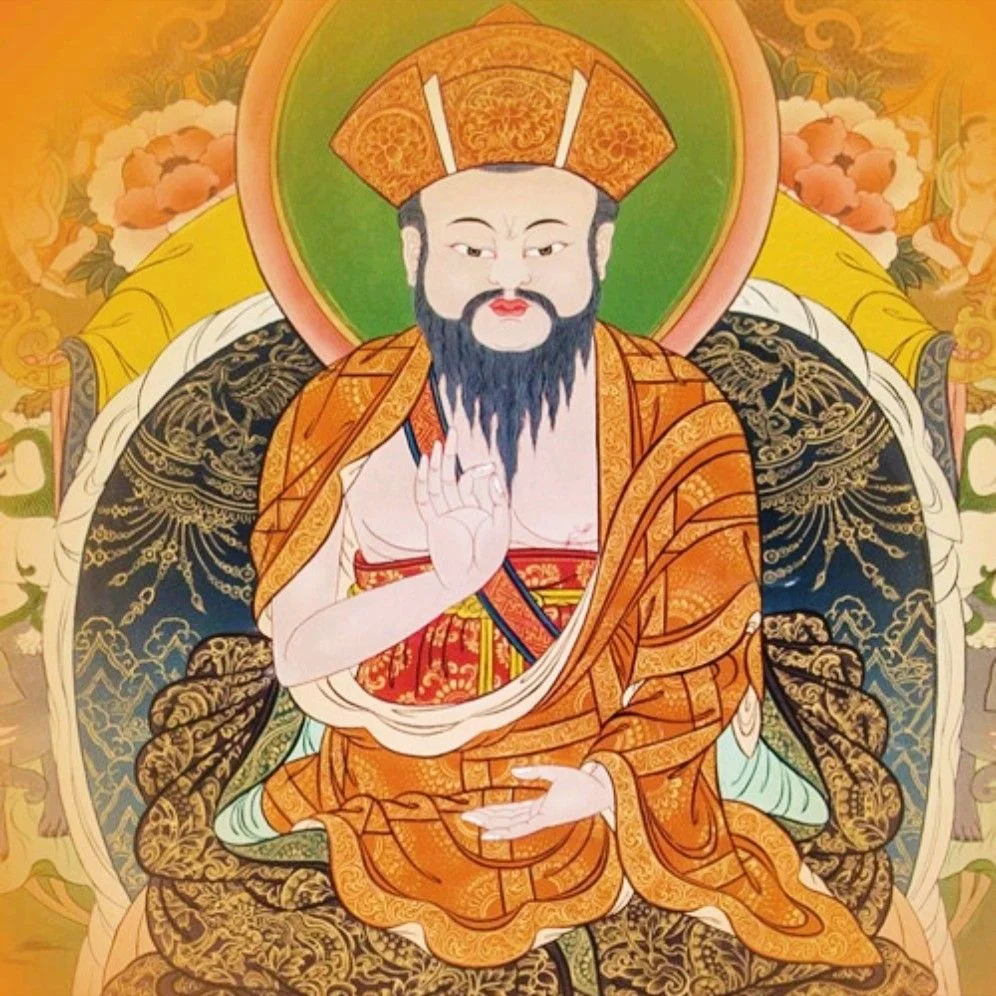
Bhutan did not exist before 1616.
There were valleys — Paro, Thimphu, Punakha, Bumthang, Trongsa — each with its own rulers, its own religious communities, its own political arrangements. Competing Buddhist lineages held influence in different regions. The Himalayas provided geographic separation. The concept of a single unified nation called Bhutan was not yet an idea anyone had successfully brought into reality.
In 1616, a 22-year-old Tibetan monk crossed the high Himalayan passes and entered western Bhutan. Within 35 years, he had unified those valleys under a single authority, repelled a series of Tibetan invasions, built a network of fortresses that still define the country’s landscape today, established a system of governance that endured for three centuries, and created a cultural identity — the language, the dress code, the legal framework, the festival tradition — that modern Bhutanese still live within.
His name was Ngawang Namgyal. History knows him as Zhabdrung Rinpoche — a title meaning “at whose feet one submits.” He is revered in Bhutan as the country’s founder and, in the traditional hierarchy of Bhutanese reverence, is placed third in importance only after the Buddha and Guru Rinpoche.
For anyone planning a journey to Bhutan, understanding Zhabdrung is not background reading. It is the reading that makes every dzong, every festival, every encounter with Bhutanese culture intelligible. Everything visible in Bhutan today — the fortresses, the dress, the dances, the governance — exists because of choices this man made in the 17th century.
Who Was Zhabdrung Ngawang Namgyal?
Ngawang Namgyal was born in 1594 at Ralung Monastery in southern Tibet — the traditional seat of the Drukpa Kagyu school of Tibetan Buddhism. Through his father, Mipham Tenpai Nyima, he was a direct descendant of Tsangpa Gyare, the 12th-century founder of the Drukpa lineage. From early childhood, he was recognized as the reincarnation of Kunkhyen Pema Karpo — the 4th Gyalwang Drukchen — and was enthroned as the hereditary prince of Ralung Monastery.
That recognition, however, immediately created the conflict that would shape the rest of his life.
A rival candidate — Gyalwa Pagsam Wangpo — had also been put forward for the same reincarnation lineage, backed by the politically powerful Tsang rulers of central Tibet. The dispute was not purely religious. It was deeply political. The Tsang Desi threw his weight behind Pagsam Wangpo and eventually demanded that Ngawang Namgyal surrender Ralung’s most sacred relics — including the Rangjung Kharsapani, a self-manifested image of Avalokiteshvara believed to have emerged from the hair of Tsangpa Gyare himself — to the rival claimant.
Ngawang Namgyal refused. The Tsang Desi then prepared to send armed guards to arrest him.
According to Bhutanese tradition, at this critical moment he received a visionary sign — a dream in which the guardian deity Mahakala appeared in the form of a raven, directing him south toward Bhutan. In 1616, carrying the sacred Rangjung Kharsapani and the relics of the Drukpa lineage, he left Tibet and entered Bhutan through the Haa district in the west. He would never return.
Few people who leave their homeland under political duress end up founding a nation. That is precisely what Zhabdrung did in Bhutan.
Before Zhabdrung: What Bhutan Was
It is worth pausing to understand what Zhabdrung actually arrived to.
Bhutan in 1616 was not a country in any meaningful sense. The valleys were politically independent. Local rulers — the Penlops and regional nobles — controlled their own territories. Several Buddhist traditions were present, including the Nyingma, Sakya, and Barawa sects, none of which were unified under a single religious authority. The Drukpa Kagyu that Zhabdrung represented had a presence, but was not dominant.
Unifying such a landscape required more than military force. It required legitimacy — the kind that only a recognized spiritual figure of the highest order could provide. Zhabdrung had exactly that. As the recognized head of the Drukpa lineage, he commanded genuine reverence from the existing Drukpa communities in western Bhutan. His approach was patient and methodical: he built alliances, extended spiritual patronage, and used diplomacy alongside strategic military organization.
What he achieved over the following decades was, by any measure, an extraordinary political and cultural construction.
His First Foothold: Cheri Monastery
Before Zhabdrung built a single dzong, he established a monastery.
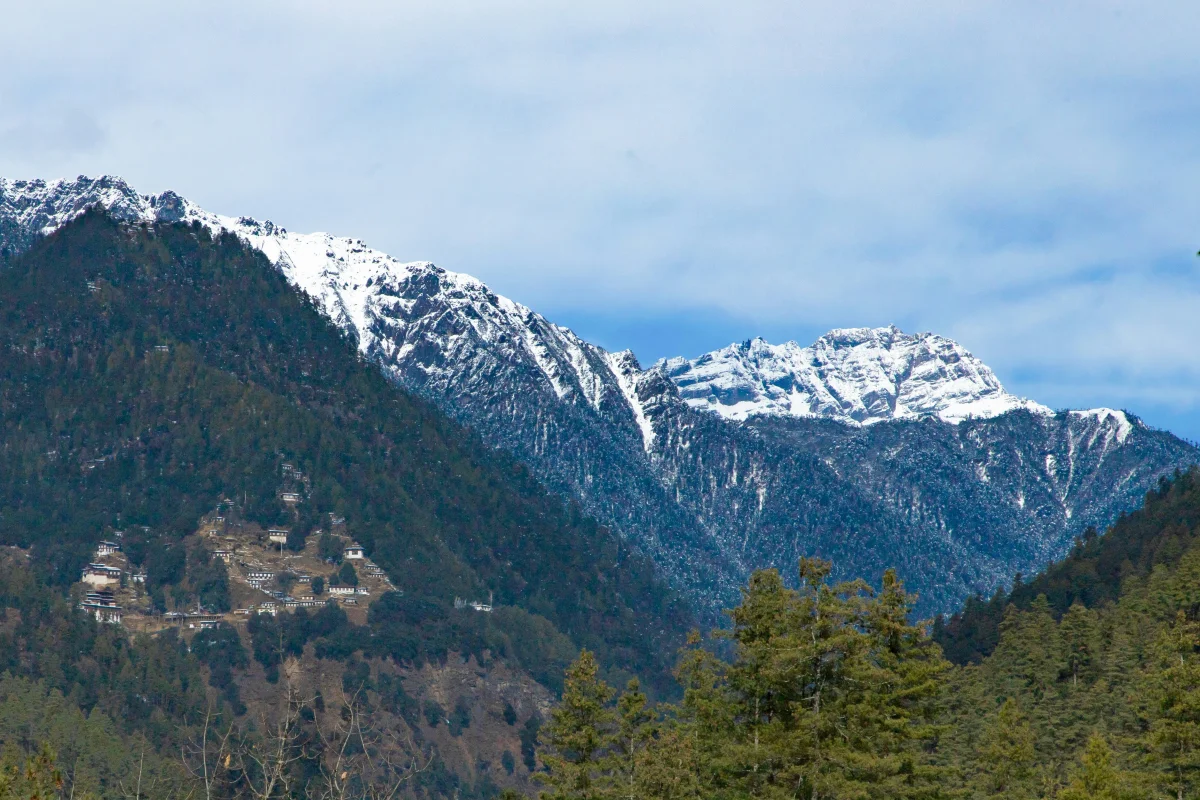
In 1620, four years after arriving in Bhutan, he founded Cheri Monastery — also known as Chagri Dorjeden — at the head of the Thimphu Valley. This was the first monastery he established in Bhutan and it served as his initial base of operations, his centre of retreat, and the origin point of the first organized Drukpa monastic community in the country.
He spent three years in strict retreat at Cheri, and it was here in 1623 that he formally established the first Drukpa monastic order in Bhutan, beginning with a community of 30 monks. For travellers visiting Thimphu today, Cheri Monastery is a rewarding half-day excursion — a quiet, significant site that predates all of Bhutan’s famous dzongs and represents the quiet beginning of a national transformation.
The Dzongs: Architecture as Statecraft
Zhabdrung’s most visible and enduring legacy is Bhutan’s network of dzongs — and the concept he brought to their design.
Dzongs had existed in Bhutan before Zhabdrung arrived. What he created was something new: a dzong that functioned simultaneously as a monastery, a fortress, and an administrative centre. He understood, with the instinct of a genuine political architect, that physical infrastructure is how you make a state tangible. An agreement exists only as long as all parties agree to it. A fortress on a ridge above a valley exists regardless.
Simtokha Dzong (1629)
In 1629, Zhabdrung built Simtokha Dzong — the first dzong of the unified Bhutanese state, located on a projecting ridge approximately five kilometres south of modern Thimphu. Its strategic position controlled the route between the Paro Valley to the west and the Trongsa Valley to the east — the two most significant regions of Bhutan. Whoever held Simtokha controlled the movement of people across the country.
Simtokha remains the oldest surviving dzong in Bhutan in its original form, and today houses one of the country’s premier institutes for Dzongkha language study.
Punakha Dzong (1637–38)
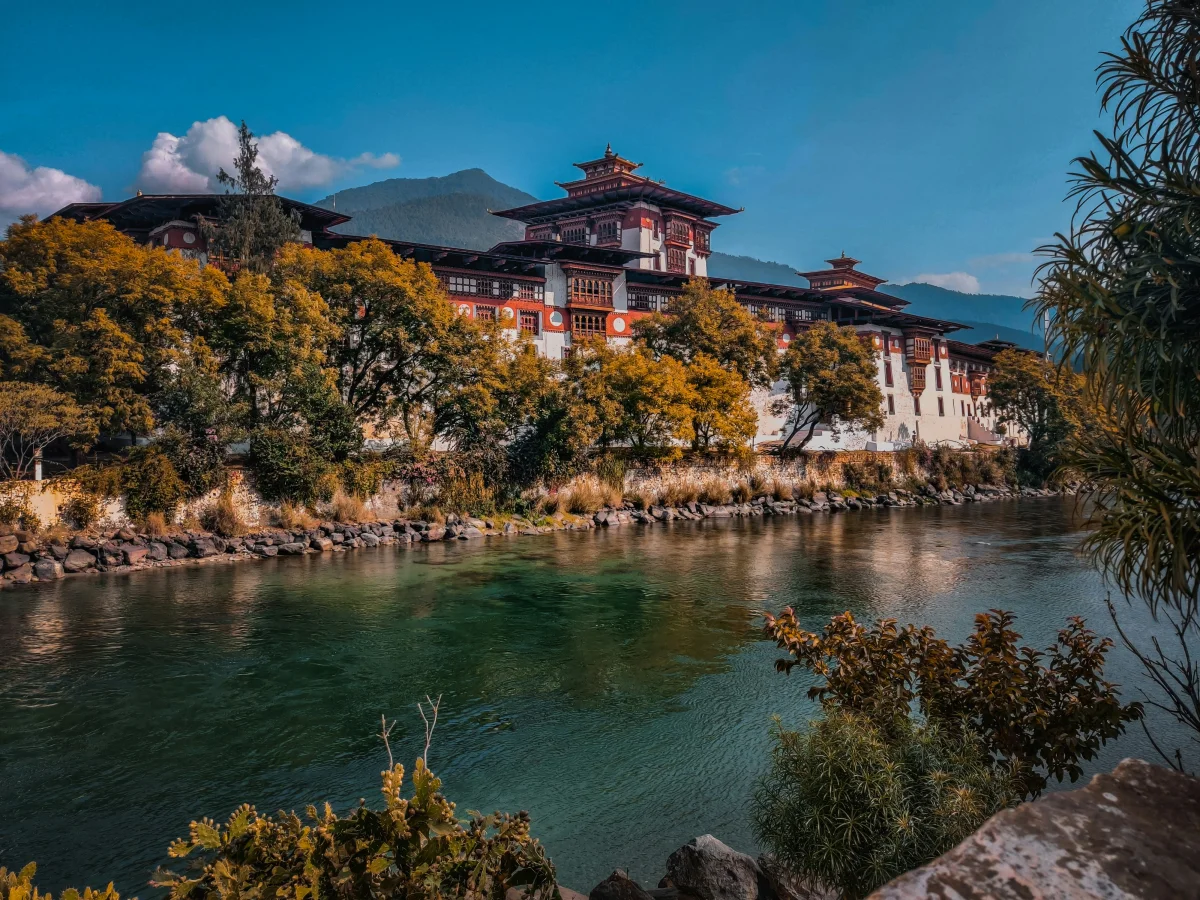
The most important dzong associated with Zhabdrung — and the most beautiful in Bhutan — is Punakha Dzong, built in 1637 and completed in 1638. Located at the confluence of the Pho Chhu (male river) and Mo Chhu (female river), it fulfilled a prophecy attributed to Guru Rinpoche, who had foretold that a person named Namgyal would build a fortress at a hill resembling a sleeping elephant between two rivers.
Punakha Dzong became the seat of the Bhutanese government and the location of the country’s most sacred relics, including the Rangjung Kharsapani that Zhabdrung had carried from Tibet. Zhabdrung himself spent his final years here and died within its walls in 1651. The dzong served as Bhutan’s capital and seat of government until 1955, when the capital moved to Thimphu.
Today Punakha Dzong remains the winter residence of the Je Khenpo — Bhutan’s chief abbot — and the setting for the Punakha Drubchen and Punakha Tshechu, two of Bhutan’s most significant annual festivals. The Drubchen in particular includes a dramatic reenactment of the Tibetan invasions — a living piece of history staged in the very dzong that withstood those invasions.
The Wider Dzong Programme
Zhabdrung’s dzong-building programme extended throughout Bhutan. Each structure was positioned with careful strategic intent:
- Trongsa Dzong — built above the gorge controlling east-west movement through the country
- Rinpung Dzong in Paro — the dzong that visitors approaching through the Paro Valley see against the mountains
- Wangdue Phodrang Dzong — commanding the confluence of the Puna Tsang Chhu and Dang Chhu
- Dagana Dzong — guarding the southern border regions
A number of further dzongs were constructed by Zhabdrung’s successors in the decades immediately following his death, extending the administrative network he had designed across the full breadth of Bhutan.
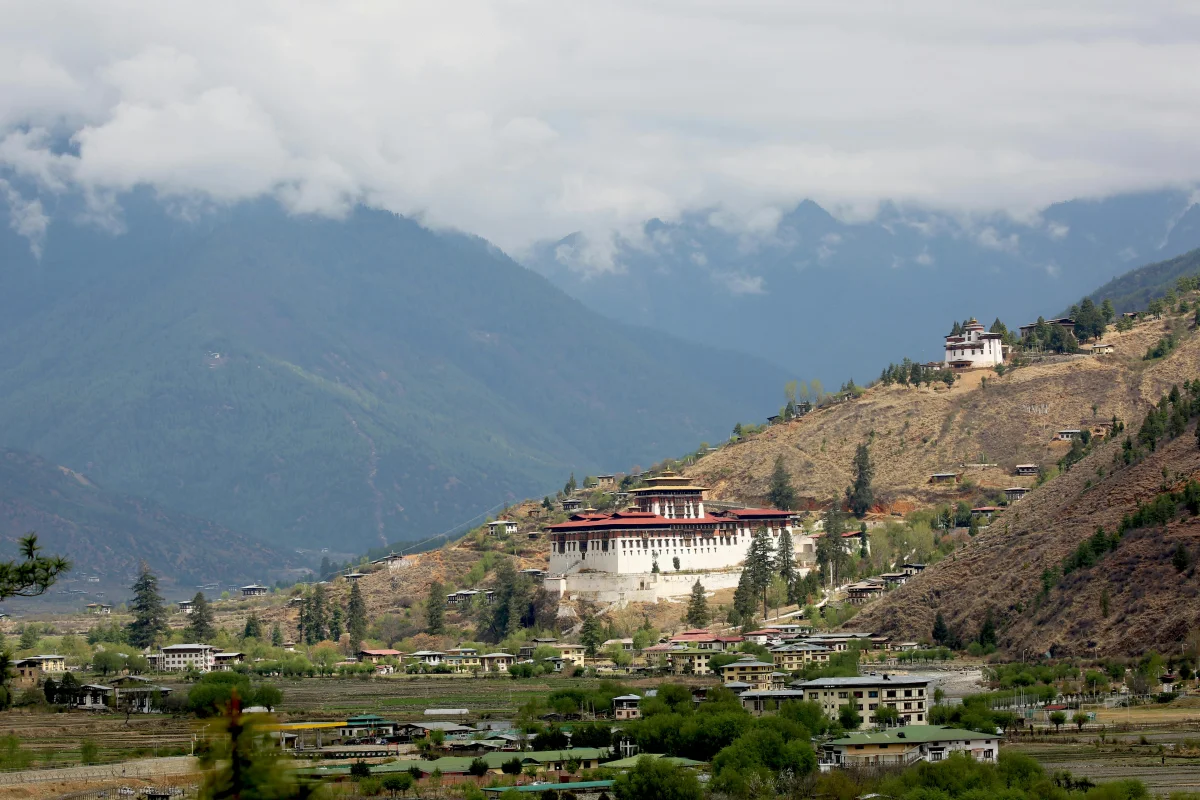
Four centuries after their construction, these dzongs still house district administrations, still shelter monastic communities, and still function as the physical statements of sovereignty Zhabdrung designed them to be. Very few political systems produce architecture that continues serving its original purpose after 400 years.
The Tibetan Invasions
The establishment of an independent Bhutanese state was not achieved without military resistance. The Tsang rulers of Tibet — the same faction that had driven Zhabdrung out — repeatedly attempted to destroy the new state he was building.
Between 1627 and 1647, Tibetan forces launched multiple invasions of Bhutan. The record shows attempts in 1627, 1629, 1631, 1634, 1639, and a combined Mongol-Tibetan invasion in 1643–44. Each was repelled.
The dzongs Zhabdrung had built were central to this military success. Positioned to control mountain passes, river confluences, and valley routes, they gave Bhutanese defenders a structural advantage over invading forces that had to cross the Himalayas and advance through terrain they did not control.
The 1643–44 invasion was the most formidable — a joint force mobilised by Gushri Khan of Mongolia and the Tibetan authorities. Its defeat effectively ended the external military threat to the Bhutanese state. Tibet never attempted a full invasion of Bhutan again.
This military dimension of Zhabdrung’s achievement is often understated in accounts that focus primarily on his religious role. Without the successful defence of the Bhutanese state during these decades, none of the cultural, legal, or institutional legacy would have survived.
The Dual System of Governance: Chhoesid Nyiden
Among Zhabdrung’s institutional creations, the most enduring was the dual system of governance known as chhoesid nyiden — the separation of spiritual and temporal authority within a single state.
Under this system, two parallel hierarchies governed Bhutan:
- The Je Khenpo — the Chief Abbot — led the monastic establishment and spiritual affairs
- The Druk Desi — the temporal regent — administered secular governance
Both derived their authority from Zhabdrung’s legacy and remained accountable to the succession of his reincarnations. The logic was specific to the Bhutanese situation: in a country unified through religious authority, concentrating all power in a single office created dangerous instability. Dividing it between two institutions created checks on each.
This system shaped Bhutan’s governance for three centuries. When the Wangchuck family consolidated power and Bhutan became a monarchy in 1907, and later a constitutional democracy in 2008, the structural distinction between the monastic body (led by the Je Khenpo) and the secular government remained — a direct descendant of Zhabdrung’s original design.
The Creation of Bhutanese Cultural Identity
Zhabdrung did not simply unify territory and defend it. He created a distinct Bhutanese civilization — one consciously differentiated from the Tibetan culture from which it was derived.
Driglam Namzha
The code of etiquette and public conduct that governs Bhutanese behaviour in public, government, and religious settings was formalized under Zhabdrung. It included the national dress — the gho for men and the kira for women — as a mark of Bhutanese identity, as well as the rules of conduct in dzongs, courts, and public gatherings. Bhutanese etiquette that visitors still encounter today has its roots in Driglam Namzha.
The Tsa Yig Legal Code
Zhabdrung established a unified legal framework for the country — the Tsa Yig — covering criminal justice, property rights, and civic conduct. It was distinct from Tibetan legal tradition and created a specifically Bhutanese jurisprudence.
Dzongkha
Zhabdrung’s promotion of the western Bhutanese dialect as the language of government, ceremony, and education laid the foundation for what became Dzongkha — Bhutan’s national language today.
The Festival Tradition
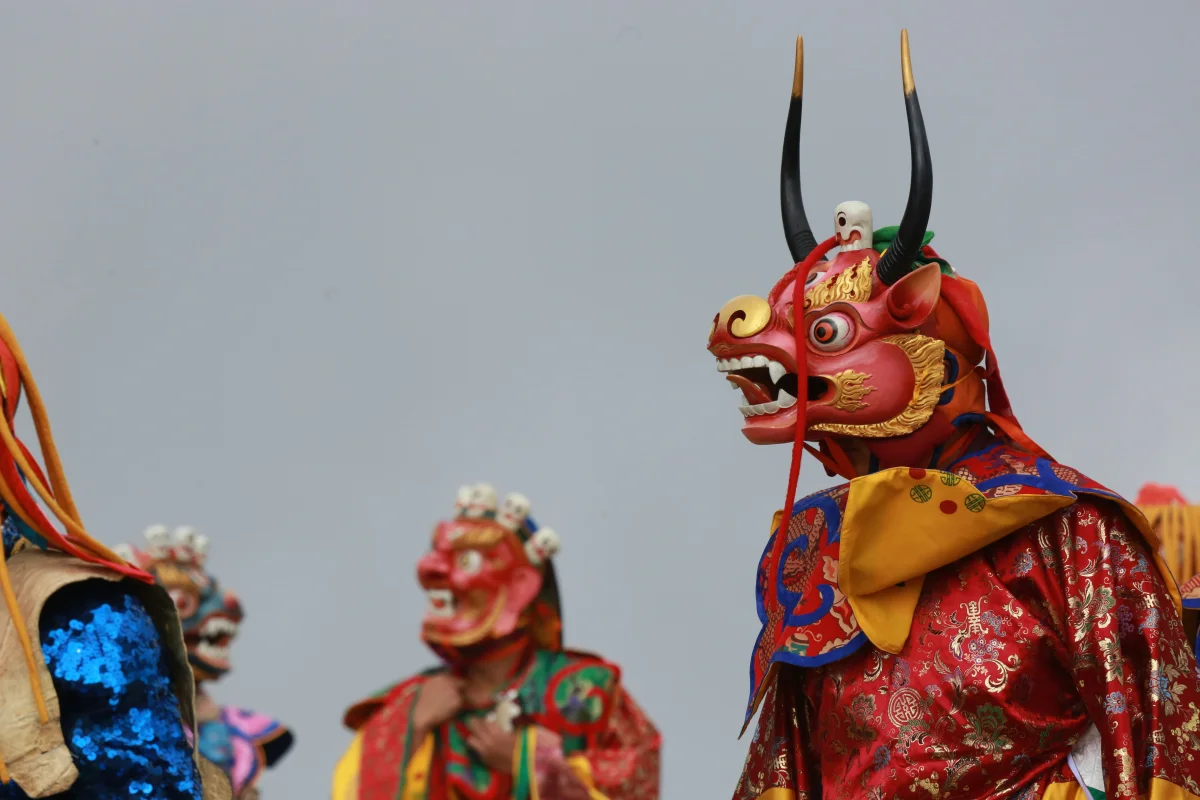
The Tshechu system — the annual festival calendar observed across every dzongkhag in Bhutan — was established under Zhabdrung’s patronage. The specific repertoire of cham (mask dances), the lunar calendar of festivals, and the religious programme of the major Tshechus were formalized during his era. When travellers attend the Thimphu Tshechu, the Paro Tshechu, or any of Bhutan’s regional festivals, they are watching what Zhabdrung established in the 17th century.
Druk Yul — Land of the Thunder Dragon
The Drukpa Kagyu tradition that Zhabdrung brought from Tibet derives its name from the dragon thunder of the Himalayas — Druk. Under his governance, Bhutan took this name: Druk Yul, the Land of the Thunder Dragon. It has kept it ever since.
The Mystery of His Death
Zhabdrung died at Punakha Dzong in 1651, at approximately 57 years of age. He had spent 35 years in Bhutan.
His death was not announced.
In 1651, his closest attendants declared that Zhabdrung had entered a period of strict, silent meditation retreat in a sealed chamber of Punakha Dzong and was not to be disturbed. Edicts continued to be issued in his name. The official position of the Bhutanese state was maintained: Zhabdrung was in retreat. To all outward purposes, he still lived.
This concealment held for 54 years. Only in 1705 did the ruling authorities formally acknowledge his death.
The reason was political survival. The legitimacy of the entire Bhutanese state — its governance system, its legal authority, its religious hierarchy — rested on Zhabdrung’s continuing presence. Announcing his death risked plunging the young nation into the succession conflicts and factional instability that had plagued the Himalayan region before his arrival. The concealment worked, after a fashion: by the time the truth was acknowledged, the state had proved capable of functioning in his absence.
The 54-year concealment is the most unusual chapter of Zhabdrung’s biography — and also the most revealing. No other single fact better demonstrates how central his authority was to the political system he built.
After Zhabdrung: Two Centuries of Conflict
The two centuries between Zhabdrung’s death and the establishment of the monarchy in 1907 were among the most turbulent in Bhutanese history. The dual system he had designed began to fracture. The regional Penlops — the governors of Trongsa, Paro, and Dagana — repeatedly competed for the position of Druk Desi, and the country endured recurring civil conflict between rival factions.
It was Ugyen Wangchuck, the Trongsa Penlop, who finally reunified the country. Through a combination of military success and diplomatic skill — including a crucial role as mediator between British India and Tibet — he consolidated authority across all the major regions. In 1907, he was crowned the first hereditary Druk Gyalpo — Dragon King — restoring centralized governance to the institutional framework Zhabdrung had originally designed.
The monarchy Ugyen Wangchuck founded continues today under His Majesty Jigme Khesar Namgyel Wangchuck, the fifth Druk Gyalpo. The dzongs Zhabdrung built are still the seats of district administration. The Je Khenpo still leads the monastic body. The festival calendar Zhabdrung established is still observed. The continuity across four centuries — through civil conflict, colonialism on its borders, monarchic consolidation, and democratic transition — is the measure of how durable his original construction was.
Experiencing Zhabdrung’s Legacy in Bhutan Today
For travellers visiting Bhutan, Zhabdrung’s legacy is not historical background — it is the texture of the country you are moving through. Here are the places and experiences where his influence is most directly felt.
Punakha Dzong
The most important site for any traveller interested in Zhabdrung is Punakha Dzong. He built it, lived in it, died in it, and his sacred remains are preserved in its innermost chapel. The Rangjung Kharsapani that he carried from Tibet — the relic whose surrender he refused, setting in motion the entire chain of events that brought him to Bhutan — is also kept here. Walking through Punakha Dzong’s courtyards is the closest a traveller can come to the physical world Zhabdrung created.
The Tshechu Festivals
Attending any of Bhutan’s major Tshechu festivals — particularly the Punakha Drubchen with its reenactment of the Tibetan invasions, or the Thimphu Tshechu with its great Thongdrol — connects you directly to traditions he formalized. The cham dances performed at every Tshechu across Bhutan trace their choreography and religious programme back to this era.
Simtokha Dzong
Just five kilometres south of Thimphu’s city centre, Simtokha Dzong is easily combined with any Thimphu day tour. As the first dzong Zhabdrung ever built — and the oldest surviving dzong in Bhutan in its original form — it carries a weight of historical significance that its modest scale does not immediately suggest.
Cheri Monastery
For travellers who want to go deeper, Cheri Monastery above the Thimphu Valley is a rewarding half-day trek. Founded by Zhabdrung in 1620 — before any of the great dzongs — it is where the transformation of Bhutan actually began, in a small monastic community of 30 monks on a forested hillside.
Paro Valley
Zhabdrung entered Bhutan through the Haa district, but it is Paro that most travellers encounter first — and where Rinpung Dzong, one of the first fortresses built under his programme, stands above the valley. Paro is also the entry point for the Paro Tshechu, one of the most celebrated festivals in the Bhutanese calendar.
Bumthang — The Sacred Heartland
Zhabdrung’s influence is felt nowhere more deeply than in Bumthang, Bhutan’s spiritual heartland. The valley’s ancient temples and monasteries predate even Zhabdrung, but it was his unification of the country that brought them under a single religious and political framework. The Jambay Lhakhang Drup festival and other Bumthang Tshechus trace directly to the festival traditions he established.
Bhutanese Dress and Etiquette
Every time you see a Bhutanese person in a gho or kira — particularly in a dzong, government building, or formal setting — you are seeing Driglam Namzha in practice. The etiquette guidelines for visiting Bhutan’s dzongs and monasteries reflect rules that trace directly to Zhabdrung’s era.
Why Zhabdrung Still Matters
It is easy to treat historical founders as distant figures whose significance is mainly ceremonial. Zhabdrung is different.
The dzongs still stand. The dual spiritual-secular structure — transformed but recognizably descended from his design — still governs. Driglam Namzha still shapes public conduct. Dzongkha is still the national language. The Tshechu calendar is still observed, its dances still performed in the same dzong courtyards he built. The country you visit when you travel to Bhutan is, in the most concrete and literal sense, his creation.
The continuity is not accidental. It reflects the robustness of the systems he built — systems that survived 200 years of civil conflict after his death, the transition to monarchy in 1907, and the transition to constitutional democracy in 2008. For travellers, this continuity is also what makes Bhutan feel unlike anywhere else in the Himalayas. The cultural coherence is real. It was designed.
In 1616, a 22-year-old monk arrived through the Haa district with a disputed reincarnation claim, a sacred relic wrapped in cloth, and no particular reason to succeed where everyone before him had failed. By the time he died in 1651, he had built a nation. By the time his death was acknowledged in 1705, that nation had proved capable of surviving without him.
That is an extraordinary thing to be able to say of any person, about any country, four centuries later.
Frequently Asked Questions
Who founded Bhutan?
Zhabdrung Ngawang Namgyal is widely recognized as the founder of Bhutan. He arrived from Tibet in 1616 and spent 35 years unifying the country’s valleys, building the dzong network, and establishing the cultural and legal foundations that modern Bhutan still rests on.
When did Zhabdrung arrive in Bhutan?
He arrived in 1616, at the age of 22, entering Bhutan through the Haa district in the west after leaving Tibet under political duress.
What does Zhabdrung Rinpoche mean?
Zhabdrung is a Tibetan honorific meaning approximately “at whose feet one submits” — a title of supreme religious and temporal authority. Rinpoche means “precious one,” a standard honorific for high lamas.
What is Druk Yul?
Druk Yul means “Land of the Thunder Dragon” — Bhutan’s traditional name. The Drukpa Kagyu school that Zhabdrung brought from Tibet derives its name from the dragon thunder of the Himalayas (Druk), and under his governance Bhutan adopted this name.
Why was Zhabdrung’s death kept secret?
The entire legitimacy of the Bhutanese state rested on his authority. Announcing his death in 1651 risked destabilizing the young nation through succession disputes. His attendants declared he had entered strict meditation retreat, and this position was maintained for 54 years — until 1705, when his death was formally acknowledged.
Where did Zhabdrung die?
He died at Punakha Dzong in 1651. His sacred remains are still preserved in the innermost chapel of Punakha Dzong, which remains an active religious and administrative centre.
Which dzong did Zhabdrung build first?
Simtokha Dzong, built in 1629 approximately five kilometres south of Thimphu, was the first dzong built by Zhabdrung — and the first dzong in Bhutan to combine both monastic and administrative functions. It is the oldest surviving dzong in Bhutan in its original form.
Can travellers visit the dzongs associated with Zhabdrung?
Yes. Punakha Dzong, Simtokha Dzong, Trongsa Dzong, Rinpung Dzong in Paro, and Wangdue Phodrang Dzong are all accessible to visitors as part of a guided tour. They remain active religious and administrative centers.
How do I plan a trip to Bhutan that focuses on history and culture?
A cultural tour of Bhutan centered on Zhabdrung’s legacy would include Punakha Dzong, Simtokha Dzong, Cheri Monastery, and at least one Tshechu festival. Our team at Found Bhutan can design an itinerary around your interests and the festival calendar.