In the mid-19th century, a powerful Bhutanese warlord went to war wearing a helmet shaped like a raven’s head. He was Jigme Namgyel — the man who would keep Bhutan independent from the British — and the helmet was not merely armour. It was a sacred object designed by his lama to invoke the protection of Gonpo Jarodongchen, the raven-headed guardian deity of Bhutan. It was said that he never lost a battle while wearing it.
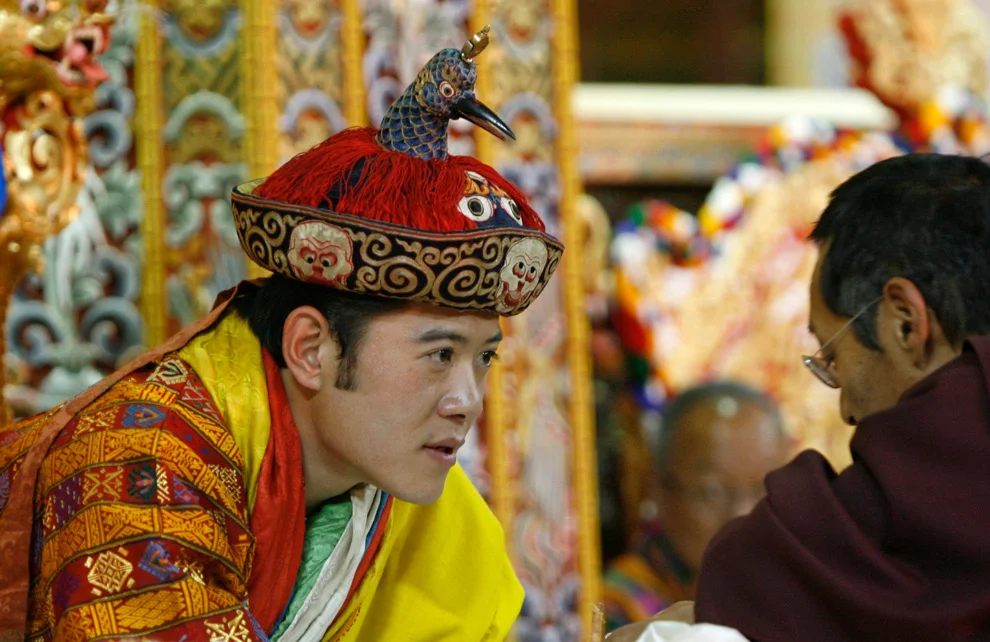
That battle helmet became the Raven Crown. And the Raven Crown became the defining symbol of the Wangchuck dynasty that followed. This is why, uniquely among the world’s national birds, the raven does not simply appear on a coat of arms or a flag — it sits on the royal crown itself.
The raven was officially designated Bhutan’s national bird in 2006. It is known locally as Jarog.
| Quick Facts: Bhutan’s National Bird | |
| Common name | Raven (Tibetan Raven) |
| Local name | Jarog (also Jaroq) |
| Scientific name | Corvus corax tibetanus |
| Family | Corvidae (crow family) |
| Length | ~ approx. 60 cm |
| Wingspan | Up to 120 cm |
| Weight | Up to 1.4 kg |
| Habitat in Bhutan | High-altitude valleys above 2,000 m — Thimphu, Bumthang, Haa |
| Status in Bhutan | Year-round resident |
| Officially designated | 2006 (under Fourth King, Jigme Singye Wangchuck) |
| Guardian deity linked | Gonpo Jarodongchen (Raven-headed Mahakala) |
| Appears on | The Raven Crown — symbol of Wangchuck dynastic authority since 1907 |
The Raven and Gonpo Jarodongchen
The raven’s significance in Bhutan derives directly from its association with Gonpo Jarodongchen — the raven-headed manifestation of Mahakala, one of the most powerful dharma protectors in Tibetan Buddhism and the chief guardian deity of Bhutan.
Mahakala in this form is depicted with the head of a raven on a wrathful deity’s body. The association connects the raven — one of the most intelligent birds in the natural world — with divine protection, supernatural power, and the spiritual authority of the state.
Gonpo Jarodongchen is part of a sacred protective trinity alongside Yeshey Gonpo (Mahakala) and Palden Lhamo (Mahakali), all three believed to safeguard the king and the people of Bhutan from harm. In Bhutanese tradition, when a raven is seen before a journey or important undertaking, it is considered a sign of Gonpo Jarodongchen’s presence and blessing. Ravens are not simply respected in Bhutan — they are understood to be potential manifestations of divine presence.
The Legend of Zhabdrung and the Raven
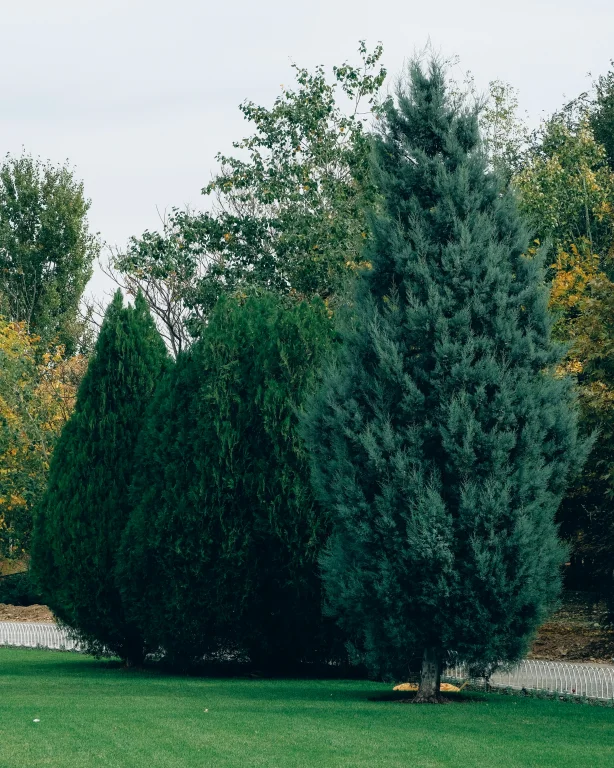
Before Jigme Namgyel’s battles, the raven’s sacred role in Bhutan was established by an earlier and more fundamental story. The night before making his historic journey from Tibet to Bhutan, Zhabdrung Ngawang Namgyel (1594–1651) — the Tibetan Buddhist lama who unified Bhutan as a nation-state — had a dream in which a large black raven flew southward into what is now Bhutan. In the dream, he followed it across the mountains until it landed on a cypress tree. Waking, he understood the raven as Gonpo Jarodongchen himself, guiding him to his destined home. He made the journey, and the raven-guided route led him to Pangri Zampa, a monastery 8km north of present-day Thimphu. There, the raven is said to have vanished into the trunk of a cypress tree that still stands in the monastery courtyard today.
That cypress tree is considered sacred. Visitors to Pangri Zampa — now Bhutan’s Royal College of Astrology, open to visitors and about 30 minutes from central Thimphu — can stand beside it. The dream is documented in a biography written by one of Zhabdrung’s own students, making it one of the earliest written records of the raven’s role in Bhutanese spiritual life.
This divine guidance is believed to have set the conditions for the establishment and unification of the Bhutanese state. The same protective force was invoked by Jigme Namgyel two centuries later. Oral testimony recorded at Gangté monastery describes what happened when Jigme Namgyel called upon Gonpo Jarodongchen before marching out of Trongsa to face the British: “The altar shook and a raven accompanied him all the way to the battlefield.” The raven-faced Mahakala has been the protector of Bhutan’s rulers ever since.
| The Raven Crown |
| The Raven Crown’s origins predate the Wangchuck dynasty. The first prototype was designed as a battle helmet for Jigme Namgyel (1825–1881) — father of the first king, and the powerful Trongsa Penlop who successfully resisted British attempts to subdue Bhutan — by his Tibetan root lama Jangchub Tsundru (1817–1856). Designed as a tantric protective object to invoke Mahakala’s power, Jigme Namgyel wore it in battle and considered it his lucky protector. |
| When Ugyen Wangchuck was crowned first King of Bhutan on 17 December 1907 at Punakha Dzong, he elevated the raven helmet into royal regalia — a satin and silk crown surmounted by the raven’s head, with an upturned circular rim embroidered with tantric skeletal heads — as the unique symbol of Wangchuck dynastic authority. The crown’s history across the five kings is more nuanced than is commonly told. The Second King, Jigme Wangchuck (1926–1952), often wore a different crown — embroidered with jewels and thunder dragons — and during his reign a new variant of the raven crown was made in which the skeletal heads were replaced by the garuda bird. The reason recorded in royal archives: the esoteric skeletal imagery had come to remind observers of modern danger signs. The Third King, Jigme Dorji Wangchuck (1952–1972), appears in historical records never to have worn a raven crown. The Fourth King, Jigme Singye Wangchuck, wore it on very few public occasions. What each generation shared was not daily use but the crown’s continuous sacred significance — present, protective, and the defining symbol of royal authority even when not on a royal head. |
| For the coronation of the Fifth King, Jigme Khesar Namgyel Wangchuck, at Tashichho Dzong in Thimphu on 6 November 2008, a new crown was specially created. It returned to the original tantric symbolism: two layers in the rim, with skeletal heads on the inner rim and a garuda flanked by thunder dragons on the outer. The raven head is surmounted by a crescent moon and sun disc. The materials of the crown were blessed in the presence of the Zhabdrung’s remains at Punakha Dzong before the coronation, imbuing it with the protective power the crown is traditionally believed to carry. |
 The Raven in Nature
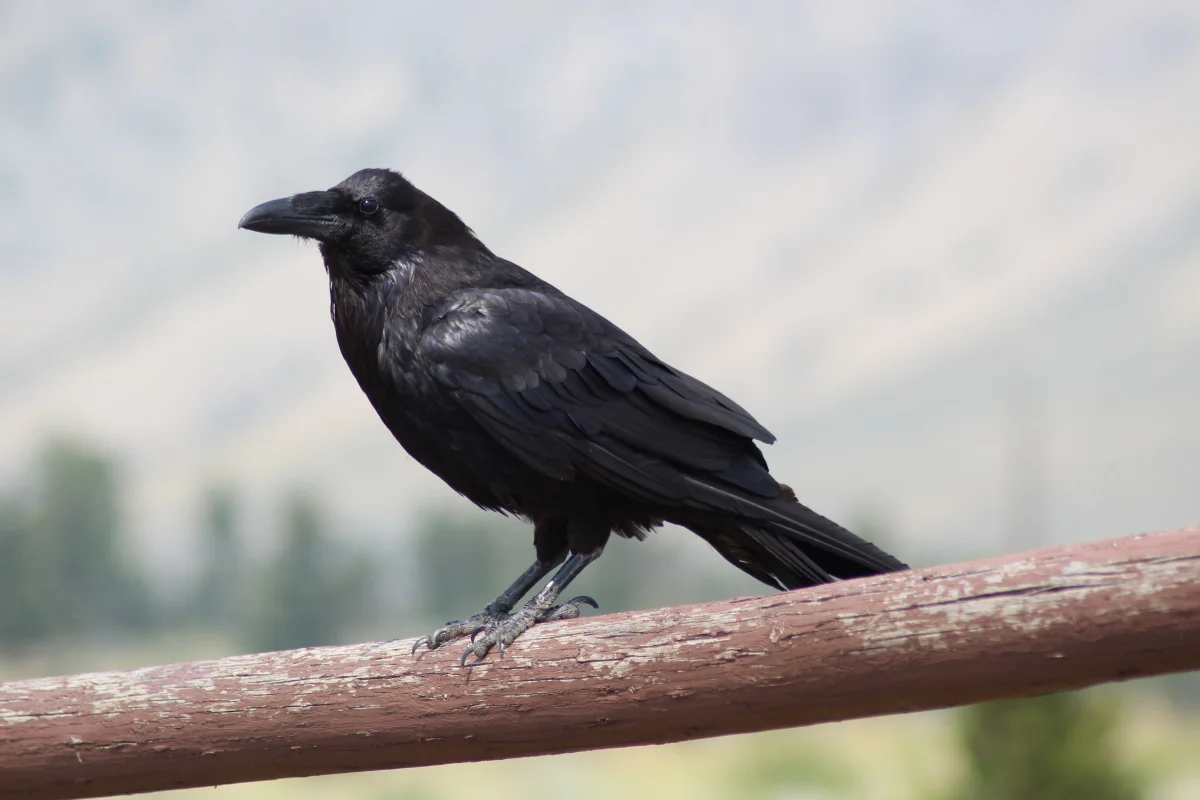
The national bird of Bhutan is specifically the Tibetan raven (Corvus corax tibetanus) — a high-altitude subspecies of the common raven found across the Tibetan Plateau and the southern Himalayan slopes. It is the largest member of the crow family and one of the most cognitively sophisticated birds in the world, having demonstrated tool use, future planning, and complex social reasoning in scientific studies.
- Size: Approximately 60 cm in length with a wingspan up to 120 cm. Noticeably larger and bulkier than the common jungle crow, with a deep curved bill, shaggy throat hackles, and a distinctive wedge-shaped tail in flight.
- Habitat: Higher-altitude areas above 2,000 m — Thimphu, Bumthang, Haa, and the mountain valleys. Year-round residents. Relatively uncommon compared to lower-elevation crows.
- Behaviour: Highly social, form long-term pair bonds, and communicate with a complex range of deep vocalisations. Opportunistic omnivores, frequently seen near human habitation and religious sites. Females lay 5–6 eggs in February; chicks hatch after 19–23 days and remain in the nest up to 42 days.
- Intelligence: Capable of solving multi-step problems, recognising individual human faces, and planning for future events. Their intelligence reinforces their symbolic association with divine wisdom in Bhutanese tradition.
- Protection: Harming a raven is considered a grave cultural and spiritual offence. Traditional belief holds it attracts greater misfortune than harming a hundred monks. Historically, killing a raven was a capital crime.
Raven vs Crow: How to Tell Them Apart in Bhutan
Both ravens and jungle crows (Corvus macrorhynchos) are common black birds in Bhutan, and visitors — and even experienced travellers — frequently confuse them. The distinction matters: when your guide says “that’s a raven on the dzong wall,” knowing what to look for makes the moment far more meaningful.
| Feature | Raven (Corvus corax tibetanus) | Jungle Crow (Corvus macrorhynchos) |
| Size | ~60 cm long, up to 120 cm wingspan | ~45 cm long, ~100 cm wingspan |
| Bill | Large, thick, curved — almost oversized for the head | Smaller, slimmer, relatively straight |
| Tail in flight | Wedge-shaped — pointed like a diamond | Fan-shaped — rounded or straight across |
| Throat feathers | Shaggy hackles — ruffled and beard-like | Smooth and flat-lying |
| Call | Deep, resonant cr-r-ruck | Sharper, higher-pitched caw |
| Flight style | Soars and glides; acrobatic in high winds | More direct flapping flight |
| Habitat in Bhutan | Higher altitudes: Thimphu, Bumthang, Haa (above 2,000 m) | Lower elevations, forests, towns |
| Sacred status | National bird; manifestation of guardian deity | Common; no special religious status |
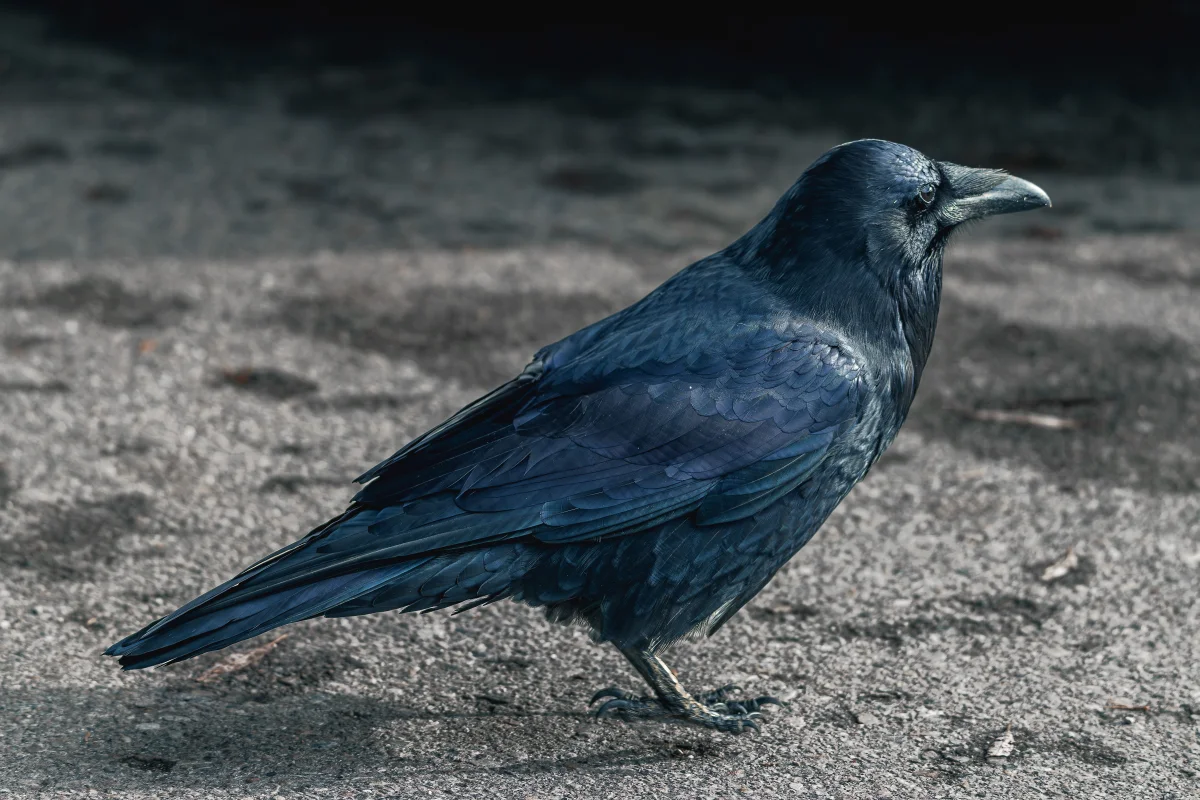
The single most reliable field mark at a distance is tail shape: ravens have a clear wedge or diamond-pointed tail in flight; crows fan out evenly. Up close, the raven’s shaggy throat hackles and heavy curved bill are unmistakable once you’ve seen them once.
 Ravens at Bhutan’s Dzongs and Monasteries
Visitors to Bhutan’s major dzongs — Punakha, Tashichho Dzong in Thimphu, Paro Dzong — frequently notice ravens perched on the dzong walls or circling overhead. Their presence at sacred sites is considered auspicious, consistent with their association with Gonpo Jarodongchen. Ravens have nested at Bhutanese dzongs for generations, and their departure from a site is considered an ill omen.
The sight of a raven — particularly near a dzong or monastery — is pointed out by Bhutanese guides as a meaningful encounter rather than a casual bird sighting. Whether or not the visitor shares the belief, understanding it changes the quality of attention brought to the moment.
Bhutan for Birdwatchers: The Raven in Context
Bhutan is one of Asia’s premier birdwatching destinations, with over 700 recorded species across its dramatic altitudinal range — from subtropical foothills to Himalayan high-altitude zones. For serious birders, the country offers the chance to see species almost impossible to find elsewhere: black-necked cranes wintering in Phobjikha Valley, rufous-necked hornbills, Ward’s trogon, and the beautiful Himalayan monal pheasant.
The Tibetan raven is itself a target species for high-altitude birding in Bhutan. But the national bird is more than a tick on a list: seeing a raven perched on a dzong wall, understanding the legend of Zhabdrung and the deity it represents, and knowing it’s the same bird on the king’s crown transforms a bird sighting into a cultural encounter. Found Bhutan offers dedicated birdwatching tours combining high-altitude species with the cultural context that makes Bhutan’s wildlife unique.
Best season for high-altitude birding: October to April, when clear skies and reduced vegetation make observation easier and migratory species are present. The black-necked cranes arrive in Phobjikha in late October and depart in February — their arrival and departure are celebrated with a local festival commonly named as the Black-Necked Crane Festival.
The Raven in Bhutanese Art and Architecture
For visitors, the raven is not only an outdoor encounter — it appears throughout Bhutanese sacred art and architecture in ways easy to miss without context.
- Thangka paintings: Gonpo Jarodongchen appears in thangkas — the traditional Bhutanese scroll paintings on silk or cotton depicting Buddhist deities and protective figures. These are displayed in monastery shrine rooms and sold in craft shops across Thimphu and Paro. A thangka depicting the raven-headed Mahakala is among the most powerful protective images in Bhutanese Buddhism.
- Monastery murals: The interior walls of Bhutan’s dzongs and lhakhangs (temples) are covered in elaborate murals depicting the full Buddhist pantheon, including protector deities. Mahakala in his raven-headed form appears in the gonkhang (protector deity chapel) of many major dzongs — a chamber typically at the back of the dzong compound and off-limits to casual visitors, but sometimes accessible on guided tours.
- The Raven Crown itself: Replicas and artistic depictions of the Raven Crown appear in museums, cultural centres, and royal memorial sites. The National Museum in Paro and the Folk Heritage Museum in Thimphu both offer context on Bhutanese royal history and symbols.
- Dzong architecture: The raven’s presence on dzong walls is not coincidental — the dzong was designed as both a seat of government and a sacred fortress under the protection of the guardian deity. Looking up at a raven perched on a dzong parapet is, in Bhutanese understanding, looking at the deity’s emissary guarding the building it was built to protect.
The Raven in Bhutanese Festivals
The raven’s protective role is invoked explicitly during several of Bhutan’s major religious festivals:
- Punakha Drubchen: Commemorates Zhabdrung Ngawang Namgyel’s victory over invading forces. The raven is invoked during rituals as a symbol of protection for the king and people.
- Paro Tshechu: Traditional mask dances recount stories from history including Zhabdrung’s dream of the raven that guided him to Bhutan.
- Jambay Lhakhang Drup: Offerings are made to deities associated with ravens during prayers for protection and prosperity at one of Bhutan’s oldest temples.
- Chorten Kora Festival: The festival invokes protective spirits including Gonpo Jarodongchen through prayers involving ravens.
Frequently Asked Questions
What is the national bird of Bhutan?
The raven (Corvus corax tibetanus) is the national bird of Bhutan, officially designated in 2006. It is associated with Gonpo Jarodongchen — the raven-headed manifestation of Mahakala, Bhutan’s chief guardian deity — and is depicted on the Raven Crown, the defining symbol of Wangchuck dynastic authority since 1907.
Why is the raven on the king’s crown?
The Raven Crown represents Gonpo Jarodongchen, the raven-headed guardian deity of Bhutan. The crown’s origins go back to Jigme Namgyel (1825–1881), who wore a raven battle helmet designed by his lama Jangchub Tsundru. Ugyen Wangchuck elevated it to royal regalia at his coronation on 17 December 1907 at Punakha Dzong, and the crown has been the defining symbol of Wangchuck dynastic authority ever since. A new crown was made for the Fifth King’s coronation at Tashichho Dzong on 6 November 2008, with its materials blessed in the presence of the Zhabdrung’s remains at Punakha Dzong.
What is Gonpo Jarodongchen?
Gonpo Jarodongchen is the raven-headed manifestation of Mahakala — the chief guardian deity of Bhutan. Together with Yeshey Gonpo and Palden Lhamo, this deity forms a sacred protective trinity believed to safeguard the king and people of Bhutan. Ravens are understood as potential earthly manifestations of this deity.
When was the raven officially designated Bhutan’s national bird?
The raven was officially designated in 2006, under the leadership of the Fourth King, Jigme Singye Wangchuck.
What is the difference between a raven and a crow in Bhutan?
Both species are present in Bhutan. The raven (Corvus corax tibetanus) is significantly larger, with a heavy curved bill, shaggy throat hackles, and a wedge-shaped tail in flight. The jungle crow (Corvus macrorhynchos) is smaller, with a slimmer bill, smooth feathers, and a fan-shaped tail. Ravens inhabit higher altitudes (above 2,000 m); crows are found at lower elevations. See the comparison table above.
Where can visitors see ravens in Bhutan?
Ravens are commonly seen at Bhutan’s major dzongs and monasteries, particularly in higher-altitude areas such as Thimphu, Bumthang, and Haa. They are year-round residents and frequently perch on dzong walls and rooftops. Any dzong visit in Bhutan is likely to include a raven sighting.
Is it illegal to harm a raven in Bhutan?
Harming a raven is considered a serious cultural and spiritual offence in Bhutan. Historically, killing a raven was a capital crime. Traditional belief holds that harming a raven attracts greater misfortune than harming a hundred monks, reflecting the bird’s sacred status as a manifestation of the kingdom’s guardian deity.